When to Let a Pickleball Lob Bounce: A Safer Overhead Decision
A practical guide to pickleball overhead footwork: turn early, track the lob, choose the right retreat, set a balanced contact, and recover for the next ball.
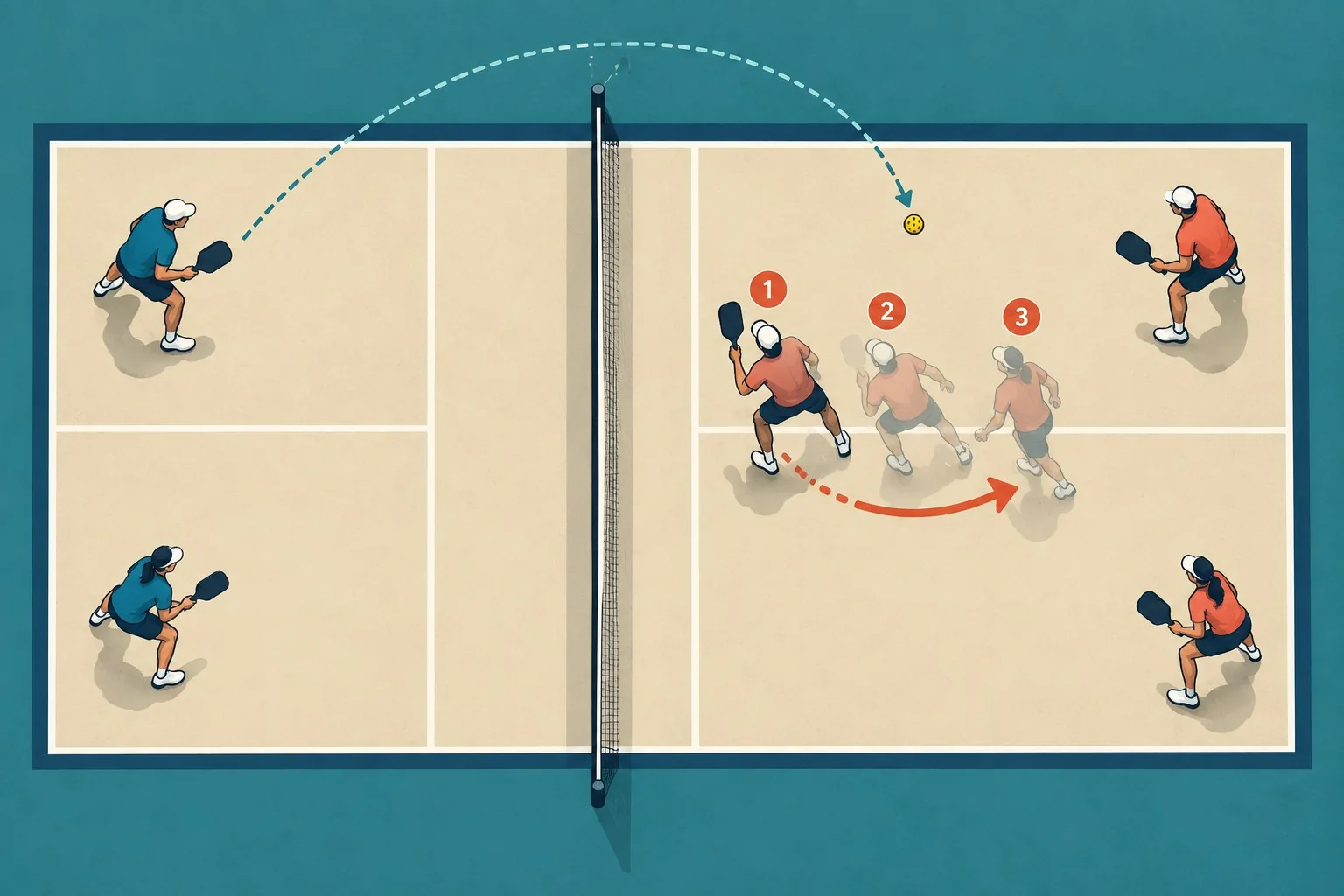
The when to let a pickleball lob bounce begins before the swing. When an opponent sends a lob over your head, your first job is to create time and balance. Turn, track the ball, move to the right contact zone, and only then decide whether the overhead is available. A clean recovery is more valuable than a desperate smash.
Read the lob and make the first move
As soon as the ball rises, keep your paddle up and identify its direction. Do not run straight backward while facing the net. That backpedal leaves your hips locked, narrows your base, and makes a fall or late contact more likely. Instead, use a drop step: send the foot on the travel side back and rotate your hips so your body becomes side-on to the path of the ball.
For a short retreat, follow the turn with quick shuffle steps. If the lob is deep or clearly moving away, let the drop step flow into a crossover run. The crossover covers more ground, while the side-on posture lets you keep seeing the ball over your shoulder. Stay light on the balls of your feet and avoid stopping until you have reached a useful position.
Your partner also needs an early call. Say “mine” or “switch” before both players commit to the same ball. In doubles, the player with the better route may be the diagonal partner, especially when the original defender would need a full turn. Communication prevents hesitation and protects the open court.
Build the overhead from a balanced position
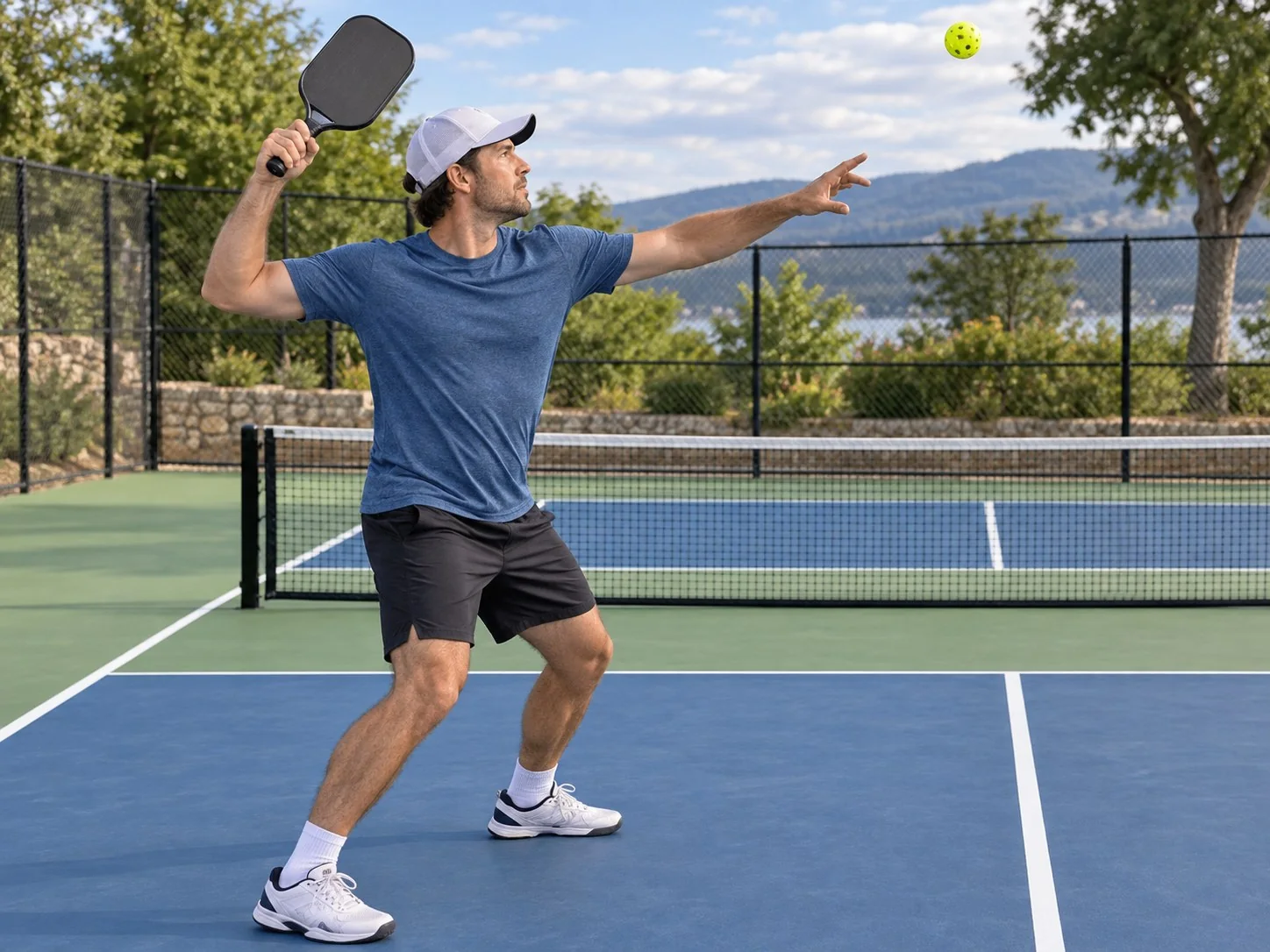
When you arrive, place the ball slightly in front of your hitting shoulder rather than directly behind your head. Raise the non-paddle hand toward the ball; it helps you track the flight and keeps your upper body organised. Load the paddle near the ear with a compact motion, keep the eyes on contact, and let the legs and torso support the swing instead of trying to manufacture everything with the arm.
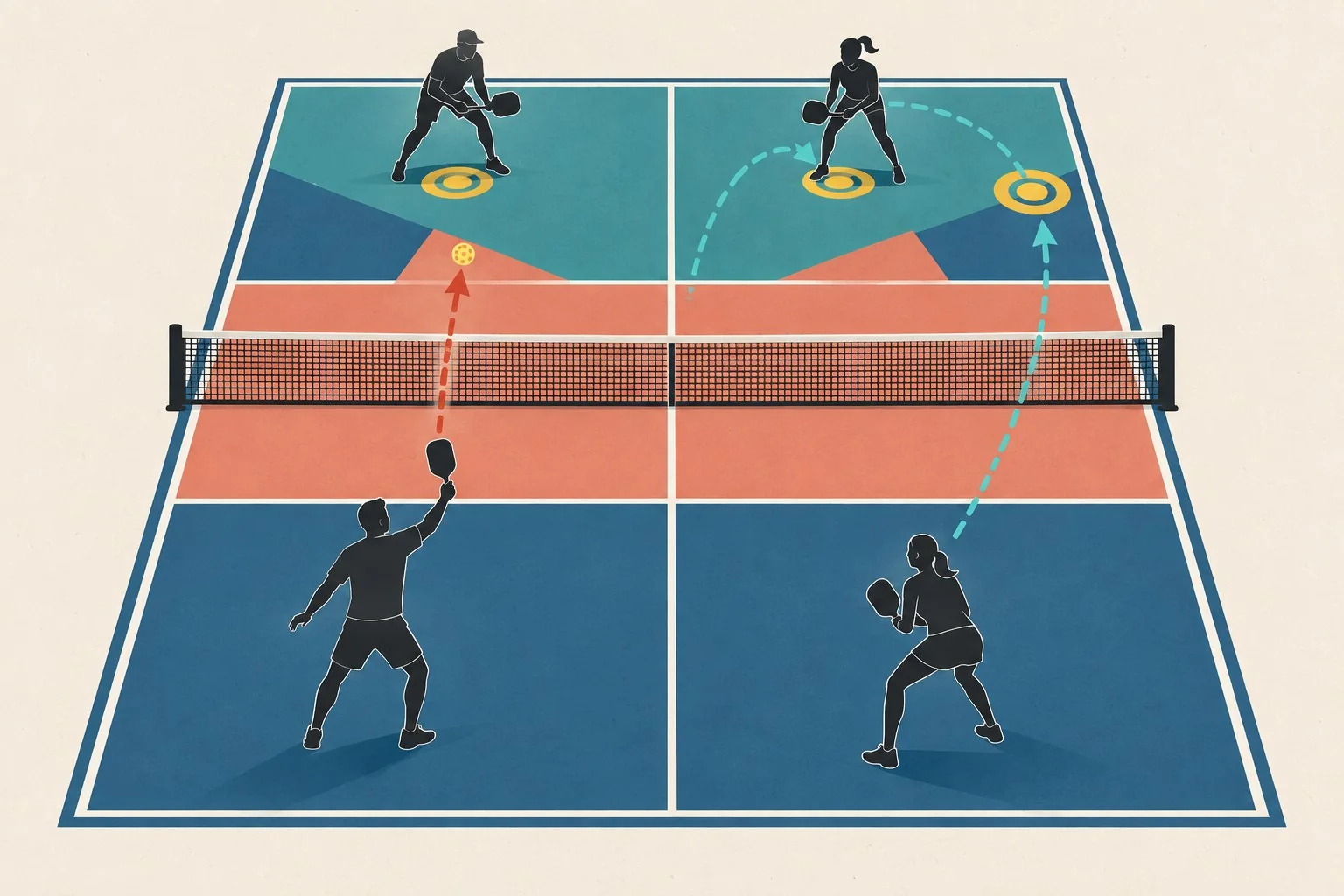
You do not need maximum pace on every overhead. Look first for an opponent’s feet or open court. A controlled, deep shot is often harder to handle than a flat blast aimed at a ready defender. Finish with enough forward momentum to stay upright, then recover toward a ready position. If the next ball may be a lob, do not admire the shot; reset your feet immediately.
Know when to let the lob bounce
The airborne overhead is attractive, but it is not compulsory. Let the ball bounce when it is drifting deep, your balance is still moving backward, visibility is poor, or the ball is likely to land out. After the bounce, choose a controlled drive, drop, or high defensive ball and rebuild the point. Giving up one instant of attack is better than offering a weak popup.
Practice this decision without rushing. Begin with shadow repetitions: turn, shuffle, set, point, swing, and recover. Then have a partner toss lobs at three depths. For short lobs, stop and freeze in the overhead stance. For medium lobs, add the swing at half pace. For deep lobs, practise letting the ball bounce and recovering behind a controlled reply. Finish with live points in which a successful repetition requires both a playable shot and a balanced recovery.
Common errors are easy to recognise: backpedaling, dropping the paddle while running, letting the ball get behind the shoulder, swinging at full force while drifting, and standing still after contact. Correct them in that order. Better pickleball overhead footwork gives the swing room to work, protects your balance, and keeps you ready for the next exchange.