The 8-Minute Pickleball Warm-Up Before Your First Game
A practical eight-minute pickleball warm-up that progresses from light cardio to mobility, joint preparation, and court-specific activation.
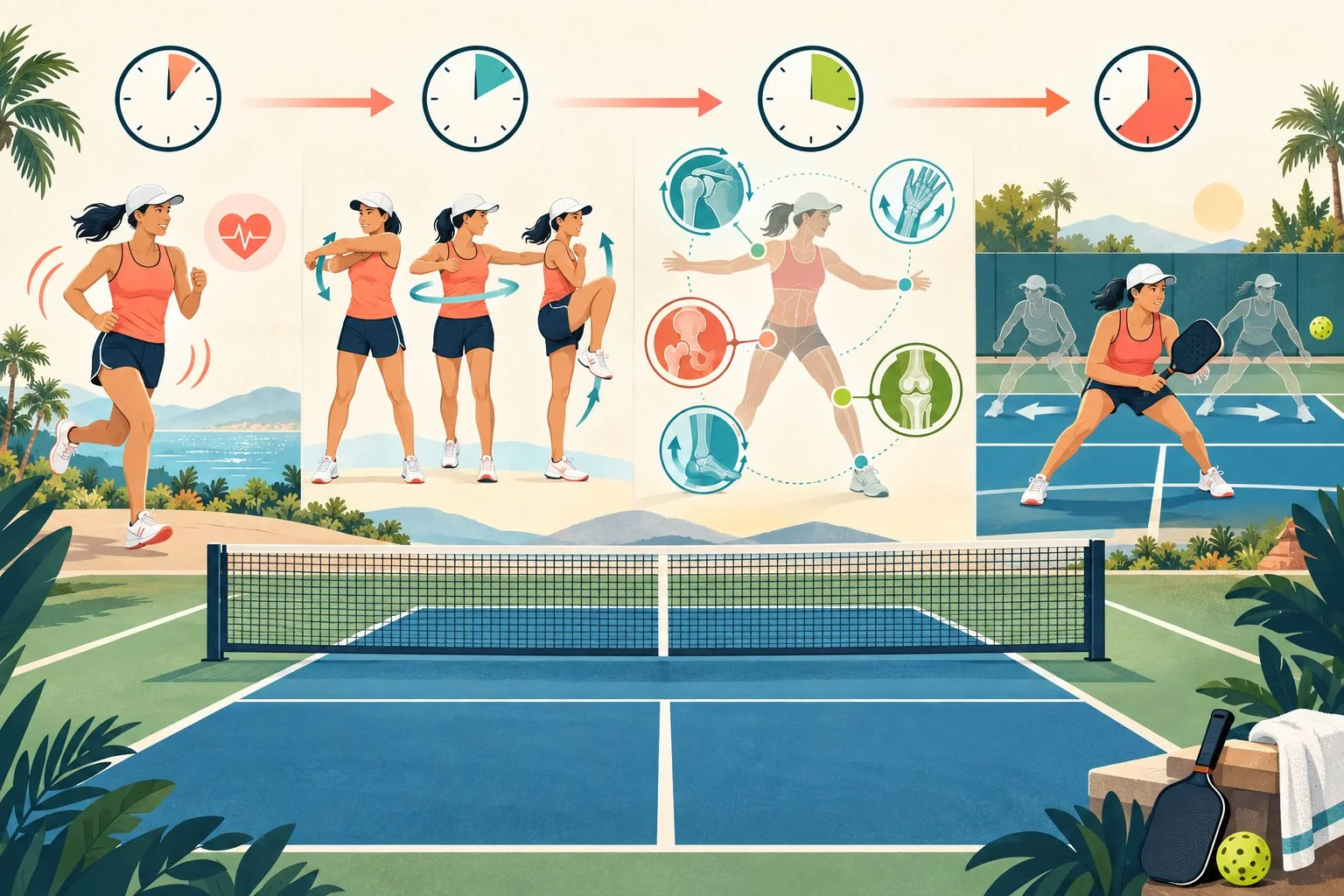
An effective pickleball warm-up should raise your temperature, open up the joints you will use, and finish with movements that look like the game. The goal is to feel alert and mobile without arriving at the first point tired. An eight-minute sequence works well when you move continuously and keep every exercise controlled.
Minutes 1–2: raise your pulse
Start with a brisk walk or easy jog along the baseline. Keep the pace light enough to speak in short sentences. Add high-knee marching with relaxed arm swings, then use short lateral shuffles in both directions. Stay tall through the torso and let the feet land quietly rather than turning the opening minutes into conditioning work.
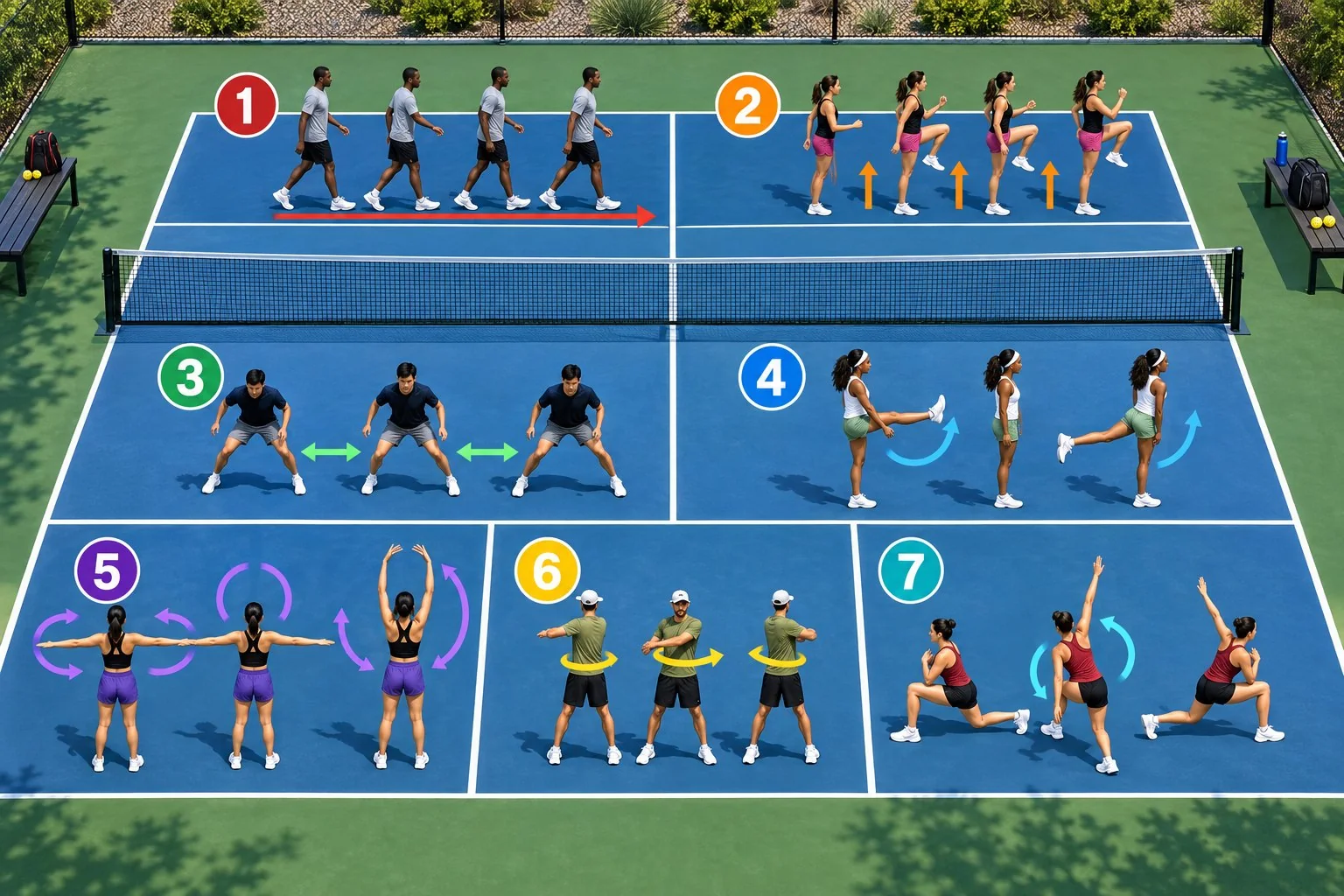
This opening stage wakes up the hips, shoulders, ankles, and coordination system. It also gives you a quick check of the surface under your shoes. If an ankle, knee, or shoulder feels unusually stiff, reduce the range of motion and spend extra time moving gently before you add speed.
Minutes 3–4: move through useful ranges
Keep the body moving with forward-and-back leg swings, followed by lateral leg swings. Hold a fence or net post lightly if needed, but do not force the height. Add arm circles, torso rotations, and a walking lunge with a comfortable rotation toward the front leg. Finish this block with ankle circles and a few calf raises.
Dynamic mobility is more useful before a match than settling into long, passive stretches. The point is to explore the ranges you will need for reaching, turning, shuffling, and lowering into a shot while preserving a springy feeling in the legs. Smooth repetitions matter more than maximum range.
Minutes 5–6: prepare the joints
Now give the smaller moving parts deliberate attention. Flex and extend the wrists, rotate the forearms through pronation and supination, and make gentle elbow circles. Add cross-body shoulder movements and a few shoulder-blade squeezes. Finish with slow bodyweight squats and hip circles, keeping the knees tracking comfortably over the feet.
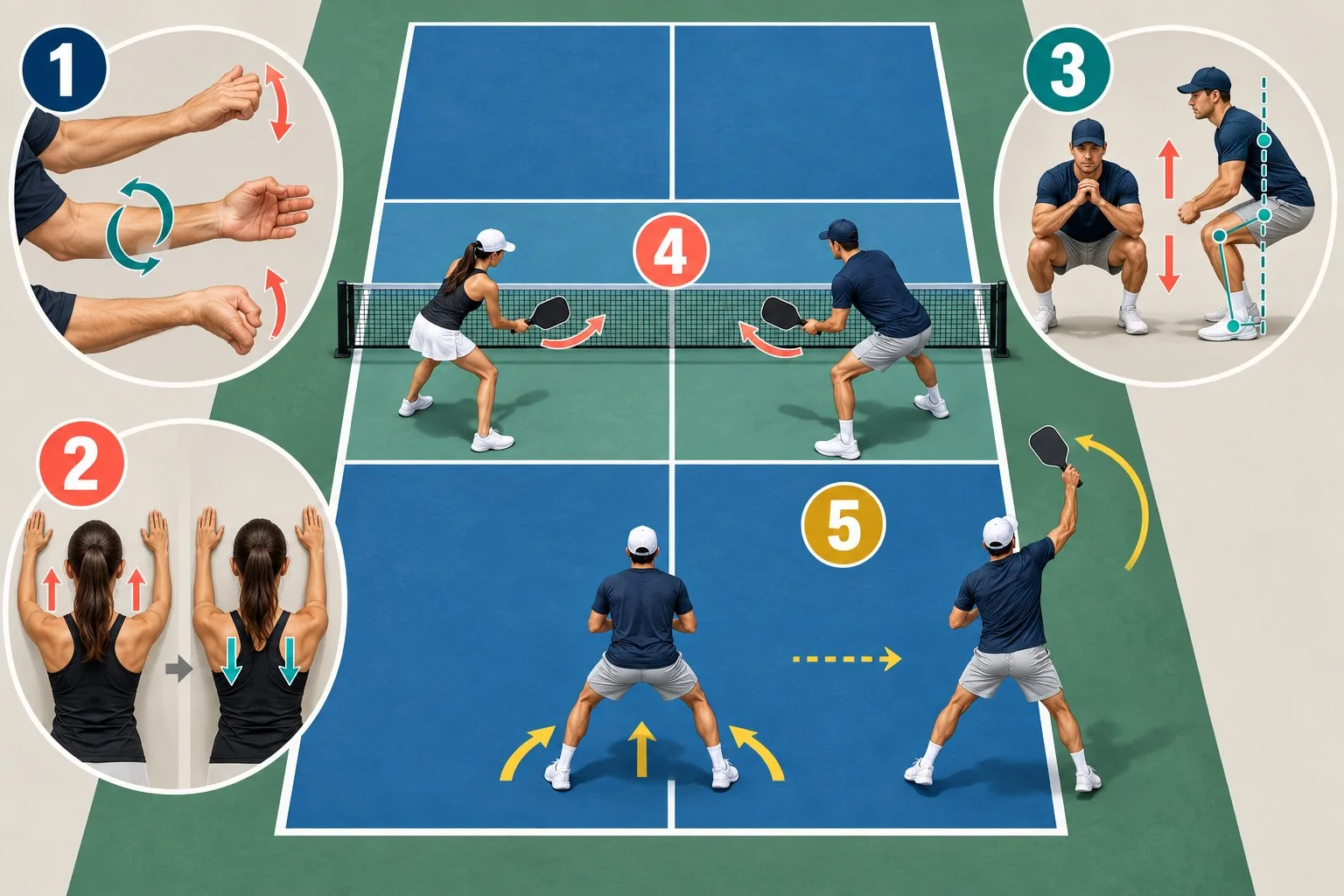
This is a preparation block, not a test of flexibility. Avoid bouncing, painful end ranges, or forcing a joint to crack. If you have a known injury, use the movement limits and instructions supplied by your clinician rather than copying a general warm-up.
Minutes 7–8: rehearse pickleball movement
Use the final two minutes to make the warm-up specific to the match. Shadow a few forehands and backhands with compact swings, then rehearse split-step footwork for a volley. Add controlled shadow overheads without chasing maximum reach. If you like a paddle-based coordination cue, practise a relaxed figure-eight drop and catch, keeping the motion easy and safe around other players.
Finish feeling ready, not depleted. If you only have three minutes, keep the same order in miniature: brisk movement, arm and torso motion, leg swings and squats, then a few shadow dinks. Static stretching can wait until after play, when the body is warm and the session is over.
A repeatable warm-up is easier to follow than an ambitious routine you skip. Move from pulse raising to mobility, then joint preparation and court-specific activation. That sequence gives your first rally a better chance of starting with balanced feet, responsive shoulders, and clear movement decisions.