ATP Geometry in Pickleball: Wait, Swing, Recover
A practical guide to the around-the-post shot: recognize the geometry, wait for late contact, aim for the legal landing zone, and recover.
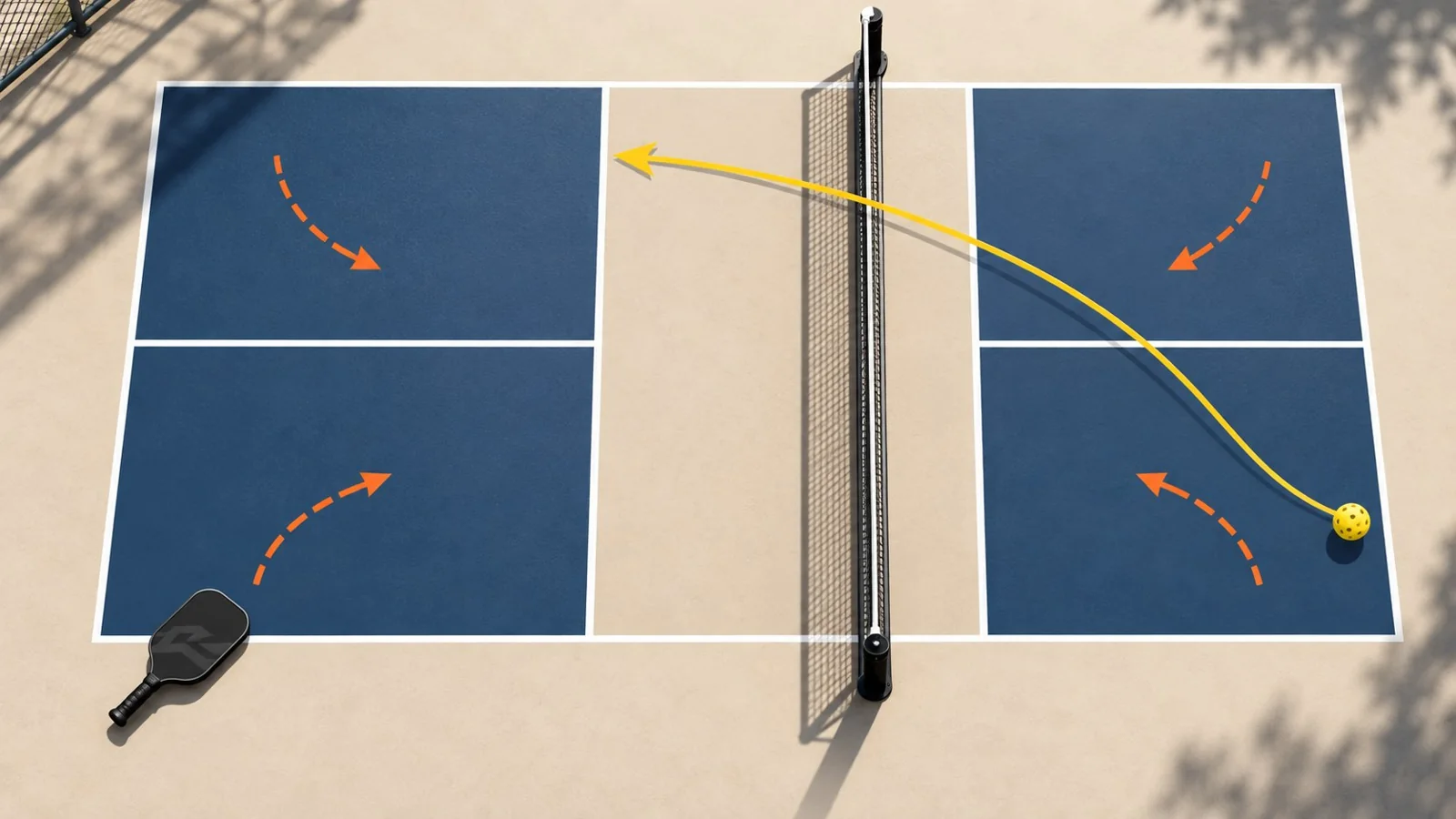
An around-the-post shot, often called an ATP, is a rare pickleball opportunity created by extreme width. Instead of forcing the ball over the net, you send it outside the net post and back into the opponent’s court. The shot looks spectacular, but the real skill is recognizing when the geometry is available and resisting the urge to swing too early.
Read the opportunity before you chase it
An ATP starts with an angled ball that pulls you beyond the sideline. A sharp crosscourt dink is the classic trigger, although a drive can create the same opening. If the ball is only slightly wide, stay disciplined: a normal crosscourt return may still be the higher-percentage choice. The post gap must be genuinely open, and the ball must remain reachable.
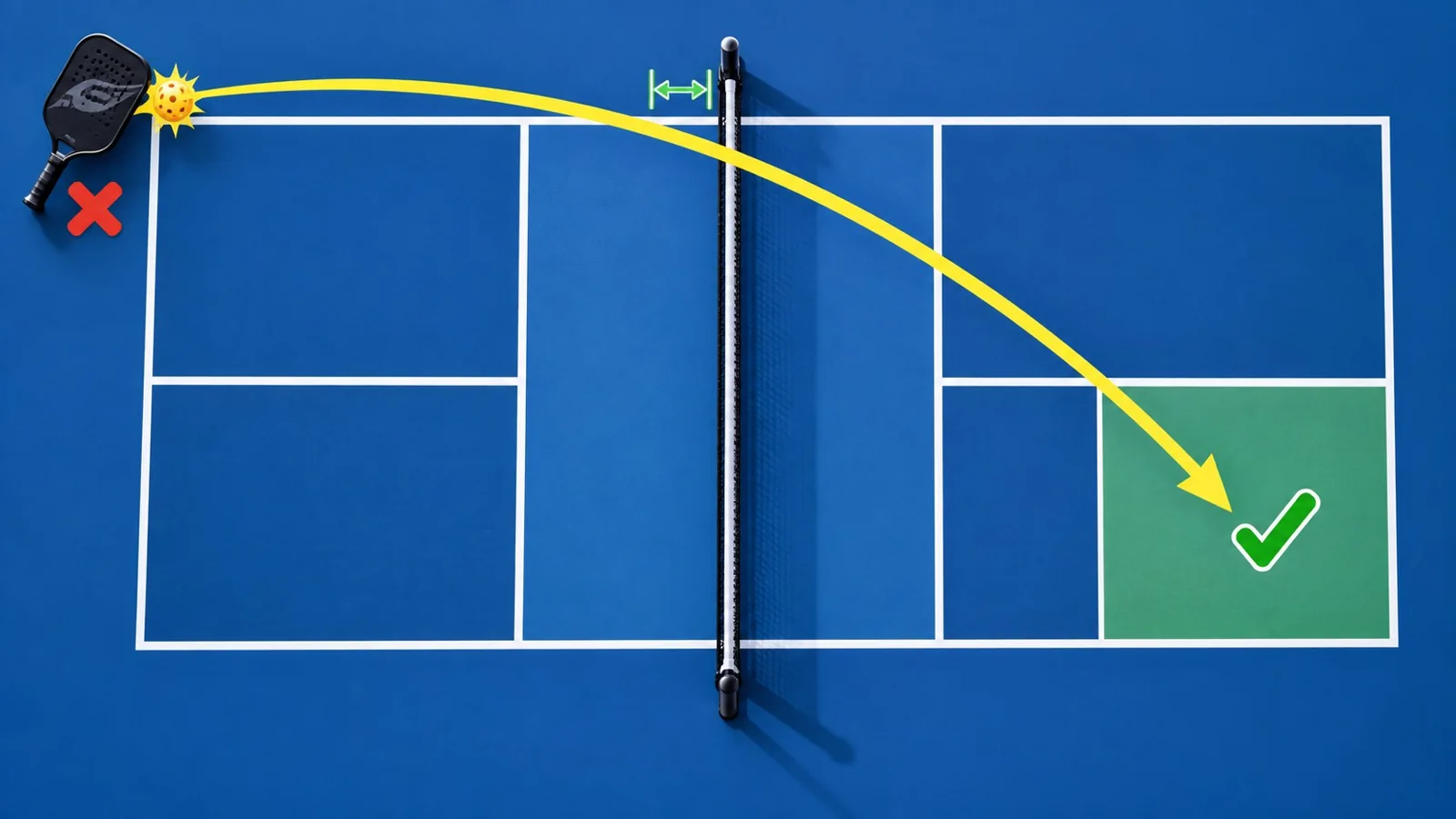
Track the ball’s lateral movement rather than stopping at the sideline. Move parallel to the line and create room for the paddle to travel. The farther the ball moves outside the court, the more useful the angle can become. This is why an ATP is not simply a desperate reach; it is a decision based on the ball’s position relative to the post.
Wait, then contact outside the post
The counterintuitive cue is patience. Many attempts fail because the player contacts the ball while it is still too close to the court. Let it travel until the post is no longer blocking the intended line. The late contact may feel uncomfortable, but it usually opens a cleaner route around the post.
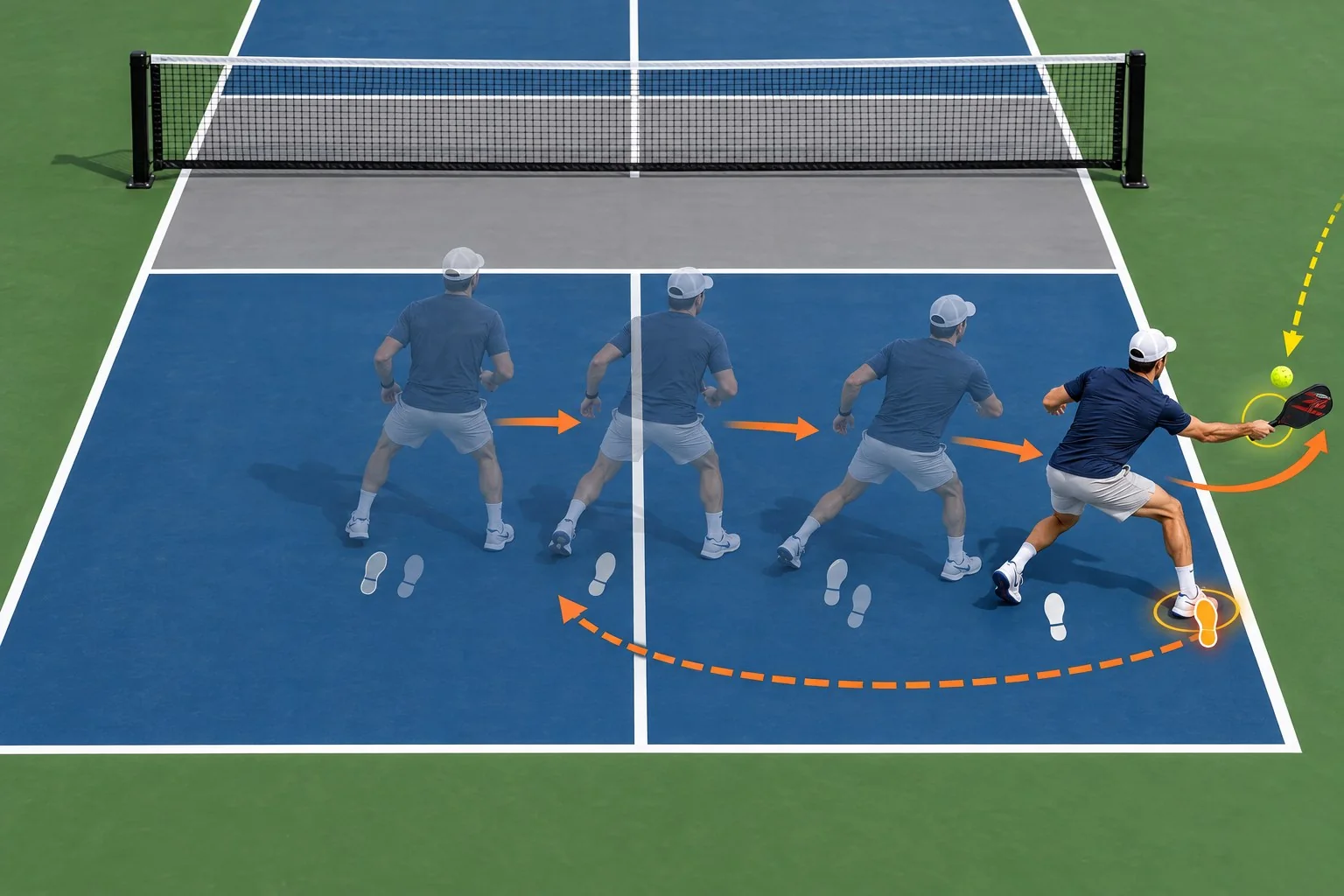
Use a committed outside-in swing. Meet the outer side of the ball around waist height when possible, keep the paddle face slightly open, and finish toward the opponent’s diagonal service box. This is a placement swing rather than a wild power shot. A hesitant push often leaves the ball short or wide, while an exaggerated swing makes control difficult.
The ball does not need to travel over the net, but it still has to land in the correct court. Watch the diagonal landing area, not only the post. A ball that clears the post and lands outside the sideline or beyond the baseline is still out. Avoid touching the net, post, or opponent’s court while the ball is live.
Recover after the highlight
An ATP takes you far from your normal position, so recovery begins as soon as the ball leaves the paddle. Finish under control, turn back toward the middle, and sprint along a route that protects the most dangerous open space. In doubles, your partner should recognize that the center may be exposed and adjust without abandoning the opposite side entirely.
Practice the movement before chasing perfect winners. Start with footwork only: push laterally, plant the outside foot, pause, and recover. Then add progressively wider feeds. Ask a partner to vary the width so you must decide whether the ball is truly an ATP opportunity. Record a short set of attempts and check whether you are contacting too early, moving too little, or failing to recover.
The most common errors are predictable. Early contact leaves the post in the way. A normal crosscourt swing sends the ball toward the middle instead of around the post. Attempting the shot on a ball without enough width creates unnecessary misses. Finally, admiring a successful ATP can give away the next exchange. Read the geometry, wait for the opening, commit to a controlled path, and get back to a balanced court position.