Backhand Dink in Pickleball: Five Fixes for Reliable Kitchen Control
A practical guide to making the backhand dink calmer and harder to attack through five mechanical fixes and a three-stage practice plan.
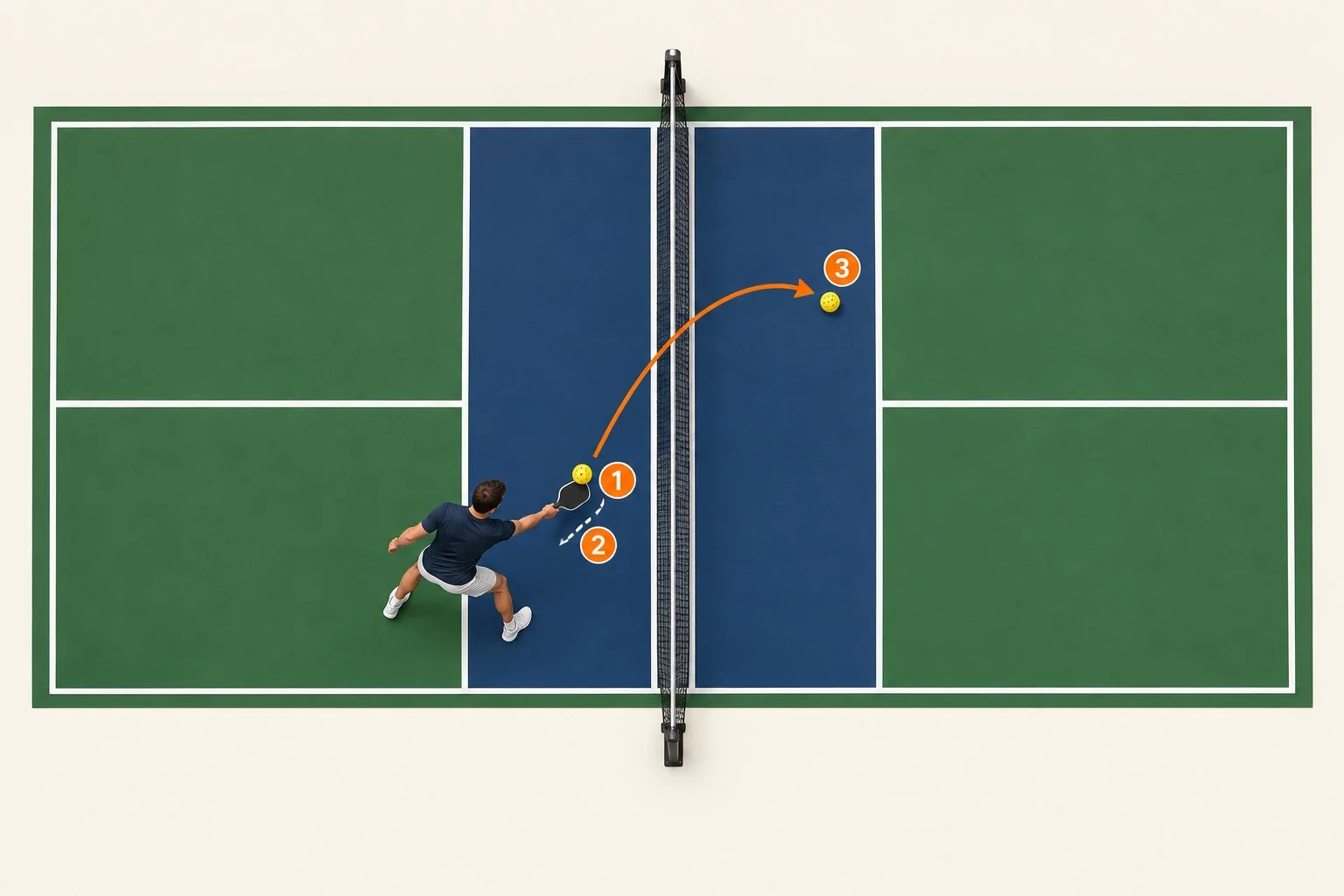
A reliable backhand dink in pickleball is less about a clever wrist action than about arriving in the right place with a quiet paddle. From the kitchen line, the goal is simple: clear the net with modest margin, land the ball in the non-volley zone, and keep it low enough that the opponent cannot attack comfortably. When the shot pops up, floats, or dies in the net, the cause is often structural rather than mysterious.
What a Backhand Dink Should Do
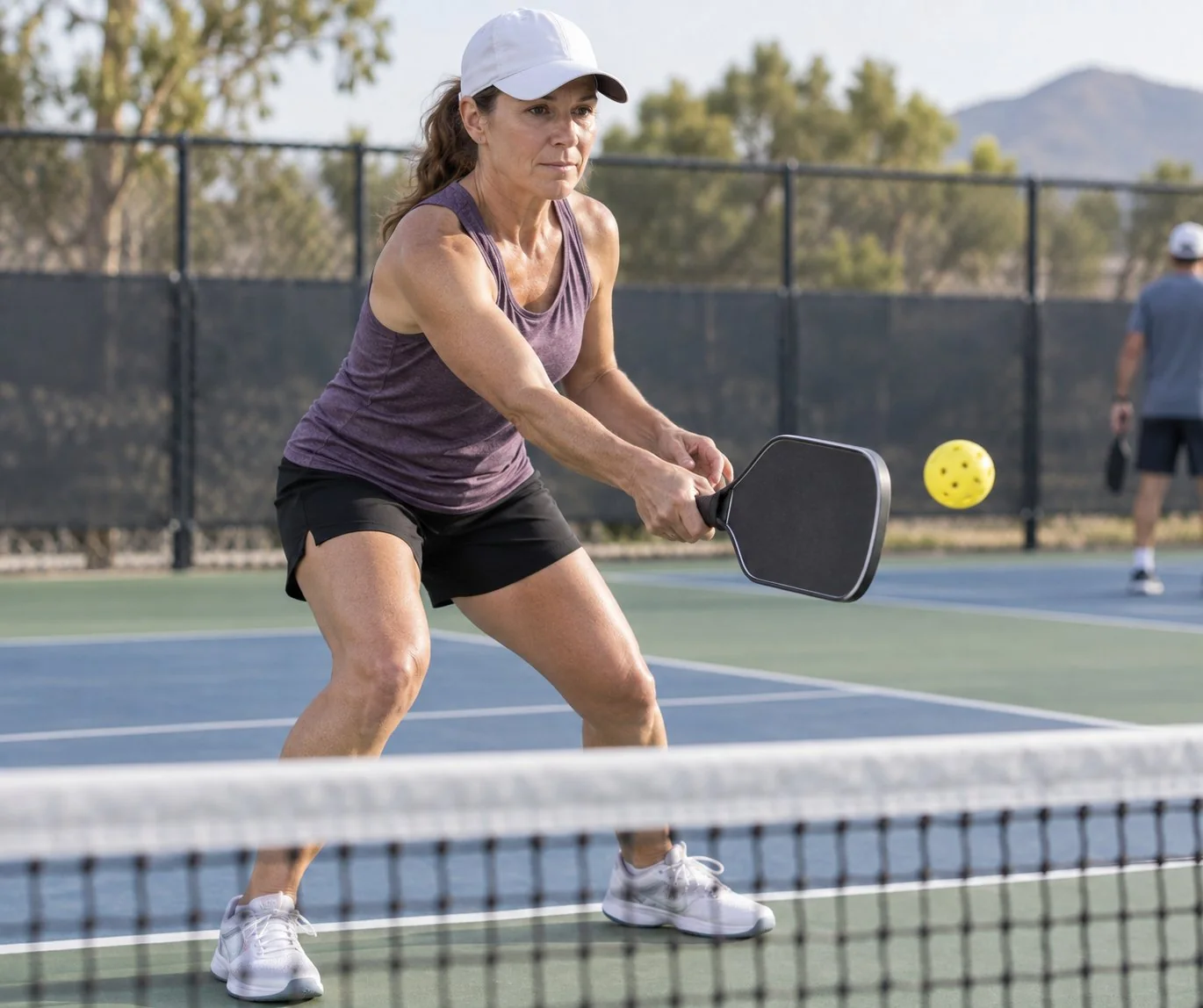
The ordinary backhand dink is the control shot you use when the ball arrives at a manageable height and you have time to organize your body. Start with a balanced, athletic stance and keep the paddle in front of the torso. A slightly open face provides lift; it should not be opened late with a wrist flick. Contact belongs in front of the body, usually just inside the outside foot, so the paddle can guide the ball toward a safe kitchen target.
A good dink feels calm and almost boring. The ball travels on a quiet path, clears the net, and drops before the opponent can step in. If you are pulled outside your comfortable frame or the ball is already behind you, treat that as a spacing and footwork problem rather than trying to rescue it with the hand.
Five Fixes for a More Reliable Backhand Dink
1. Stop over-cutting the ball
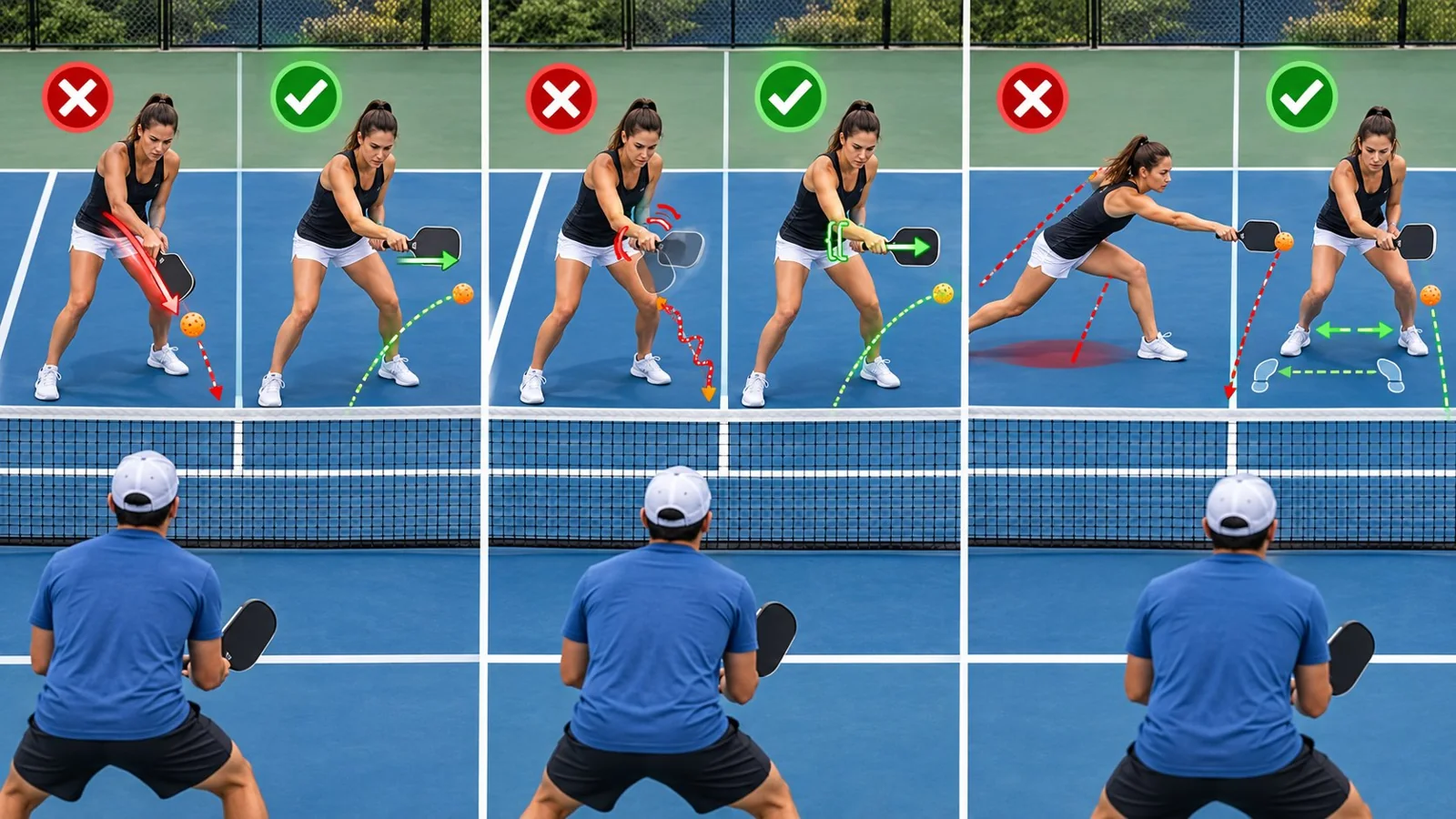
A dramatic high-to-low slice often adds unwanted lift. Preset the paddle face earlier and use a compact, mostly forward path. Let the angle create the shape instead of trying to manufacture spin with a steep chop. Run three rounds of ten cooperative crosscourt backhand dinks and count any ball that hangs or sits up as a failed repetition, even if it lands.
2. Keep the elbow from steering
An elbow that repeatedly bends and straightens changes the paddle geometry during contact. Keep the arm structure quiet and let the shoulder and body position carry the small motion. This is not a rigid lock; it is a repeatable shape. In a shoulder-pendulum drill, freeze the elbow angle and hit 25 crosscourt dinks. Track pop-ups, then repeat with modest changes in ball height without adding pace.
3. Preset a stable wrist
A neutral or flicking wrist invites last-second improvisation. Set the wrist slightly back with the paddle tip above the wrist, then allow the shoulder to guide the stroke. Quiet does not mean squeezing hard: a relaxed grip lets you absorb the ball. If one dink flies and the next dies, review the wrist before searching for a new swing.
4. Move before reaching
When the ball pulls wide, use short lateral steps and bring the outside foot close enough to reclaim the contact point. Reaching leaves the body behind the paddle, shifts balance, and forces a compensation swing. Feed ten balls slightly wider on each side; the repetition counts only when the feet move before contact and the ball is struck in front. Keep the chest level and do not accelerate the arm just because the feet had to travel.
5. Stay low without folding at the waist
Straight knees shrink the contact window for low balls. Bend the knees, keep the chest reasonably tall, and let the legs create space. Your eyes should stay level through contact rather than popping upward. Play ten crosscourt dinks while keeping the head and chest quiet; restart if the posture rises dramatically.
A Three-Stage Practice Progression
Begin with stationary crosscourt dinks from the kitchen line. Set the feet before the ball arrives, prepare the slightly open face, keep the elbow and wrist quiet, and make contact in front. Use three rounds of twelve repetitions; restart a round after two pop-ups. The purpose is a repeatable shape, not a creative winner.
Next, add small lateral movement. Ask a partner to vary width but not pace. Use short side steps, preserve the same contact point, and reset whenever the drill turns into reaching and rescue. If the ball repeatedly contacts beside the body, stay at this stage until the feet are winning the race.
Finally, play a live exchange using backhand dinks only. No speed-ups and no running around routine balls to steal a forehand. Count how many rallies stay low and difficult to attack for at least five contacts. This last stage tests whether the mechanics survive changing rhythm and competitive pressure.
Quick Troubleshooting Checklist
If the ball floats, check for a late open face or excessive cutting. If it alternates between long and short, check the wrist and elbow. If contact drifts beside the body, move earlier. If low balls feel panicked, lower the knees before changing the swing. You do not need to ban slice or force a two-handed dink; first make the standard backhand dink stable, forward, and repeatable. Once that foundation feels trustworthy, more advanced rolls and flicks can be added without asking them to repair a broken structure.