Backhand Punch Volley: Stay Square and Attack With Control
Build a controlled backhand punch volley: stay square, keep the wrist stable, punch forward, target the feet, and know when to attack or reset.
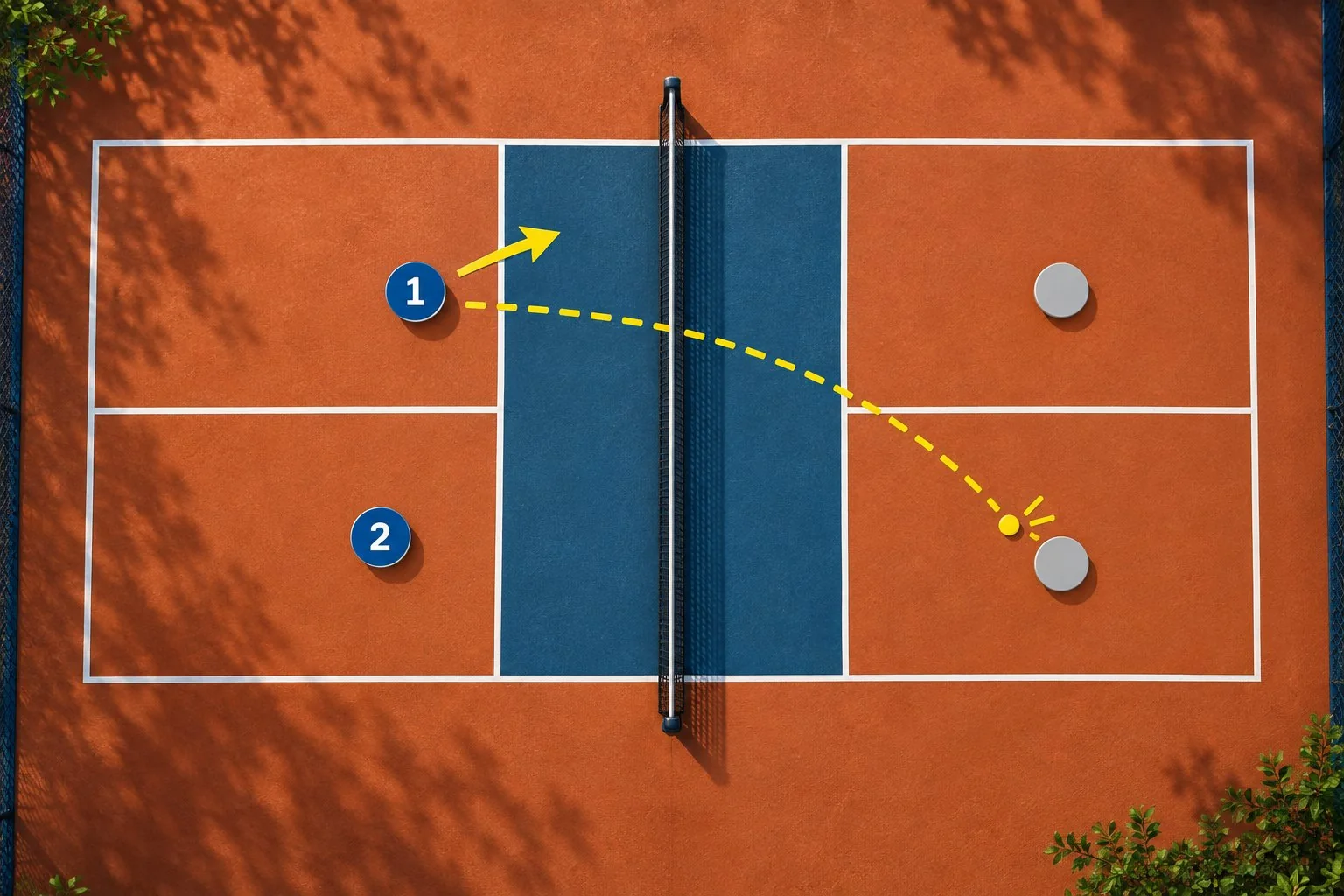
The pickleball backhand punch volley is a compact attacking shot played before the ball bounces near the kitchen line. It is not a desperate poke and it is not a full swing. The goal is to take a manageable ball early, keep the paddle face stable, and send the reply low enough to make the opponent lift or defend. Good execution comes from a square base, a firm neutral wrist, and a short punch forward.
Fix the setup before adding pace
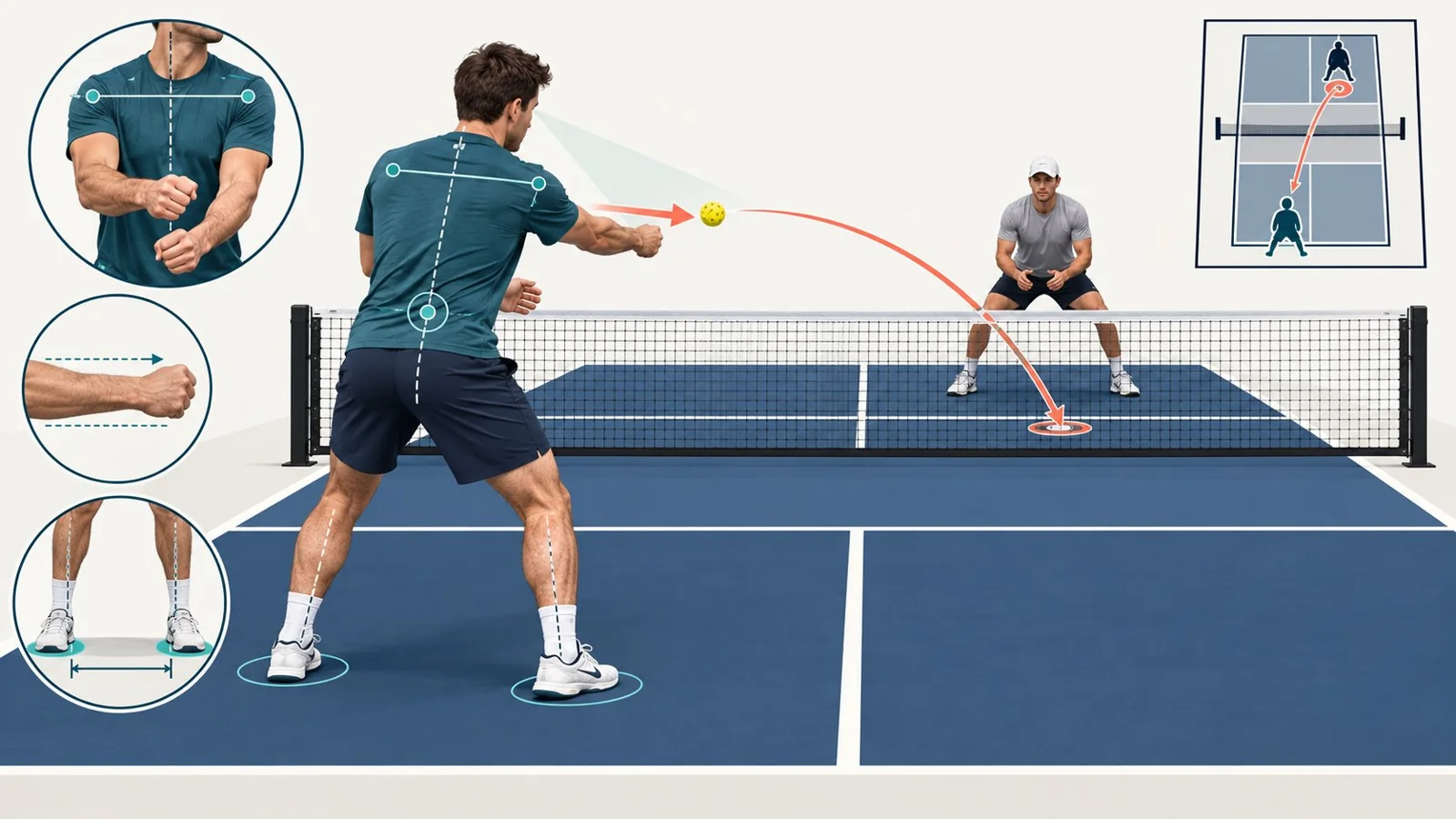
Start in a balanced kitchen-line stance with soft knees, the paddle held in front, and the shoulders generally facing the net. Keep the feet planted or use a small adjustment step rather than turning sideways for a bigger swing. Staying square leaves the body ready for either side and lets the forward punch create pressure without excessive rotation.
Use a comfortable neutral or continental-style grip and avoid squeezing hard. The wrist should remain firm enough that the paddle face does not collapse, while the arm stays relaxed enough to react. Think of the forearm, wrist, and paddle as one stable line. A broken wrist tends to open the face, float the ball, and give the opponent an easy reply.
Punch forward and choose the right target
The motion is short and direct. Keep the elbow close, extend forward from the elbow and shoulder, and finish with the paddle pointing toward the target. Do not roll the wrist, lift the ball with a scoop, or rotate the whole body sideways. The incoming pace often supplies much of the energy; your job is to redirect it with control.
Aim down toward the opponent’s feet when the ball arrives at a hittable height. A low reply forces them to contact from below net height and protects your advantage at the line. If the ball arrives around shoulder height, keep the elbow in and the punch compact while directing the ball down. A ball that comes directly at your body calls for a small protective movement: bring the paddle up to cover the midsection, remain square, and punch through rather than backing away.
The shot is not always an attack. A slower, low ball can invite a firm punch, but a fast ball, awkward height, or poor body position may call for a softer reset instead. Read the opportunity before committing. Attack when you are balanced and the ball is available; neutralize when the contact is rushed or unstable.
Practise pressure without losing control
Begin with slow feeds at the kitchen line. Keep the paddle in front, use a compact punch, and send each ball toward a broad target at the opponent’s feet. Increase speed only after the wrist and paddle face remain stable. Add shoulder-high feeds and body feeds separately so you can learn the small adjustment without turning the drill into a scramble.
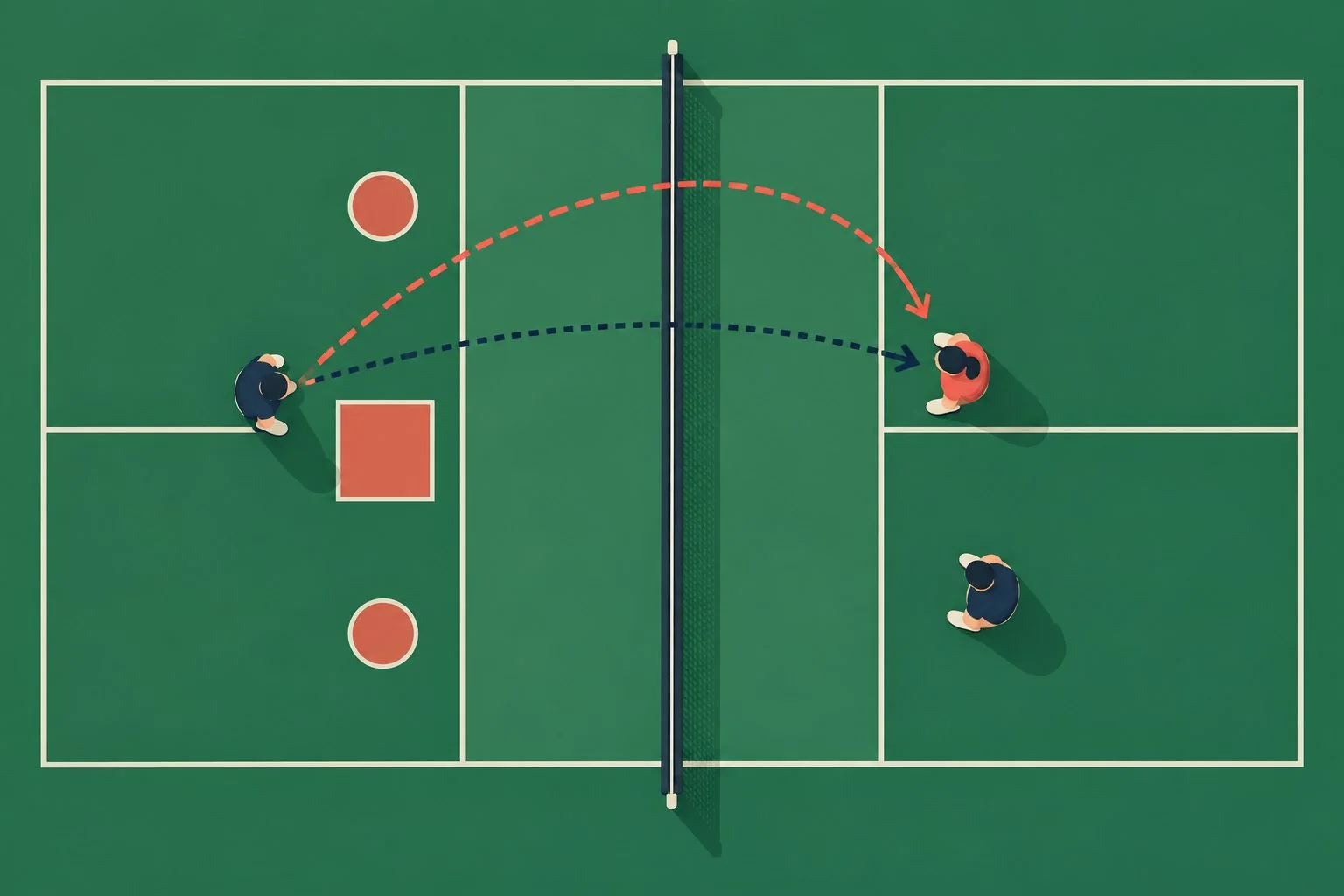
A useful partner drill alternates backhand balls across three locations: moderate crosscourt, directly at the body, and slightly wide. Reset your stance after every contact and keep your eyes on the opponent’s paddle instead of admiring your shot. For solo practice, use a wall at a comfortable distance and repeat short forward contacts with a quiet face.
Watch for four common errors. If the ball floats, check for a collapsing wrist or an open face. If it goes wide, you may be late or turning the paddle across the body. If the elbow drifts away, shorten the motion and bring the paddle back in front. If you keep resetting balls that could be attacked, practise identifying low, slow, balanced opportunities before the feed arrives.
A reliable backhand punch volley turns kitchen exchanges into controlled pressure. Stay square, keep the wrist stable, punch forward instead of swinging, target the feet, and recover immediately for the next ball.