Durable Grit Pickleball Paddle: What Matters
A practical guide to durable grit, surface wear, roughness measurements, certification, and choosing a paddle for your playing frequency.
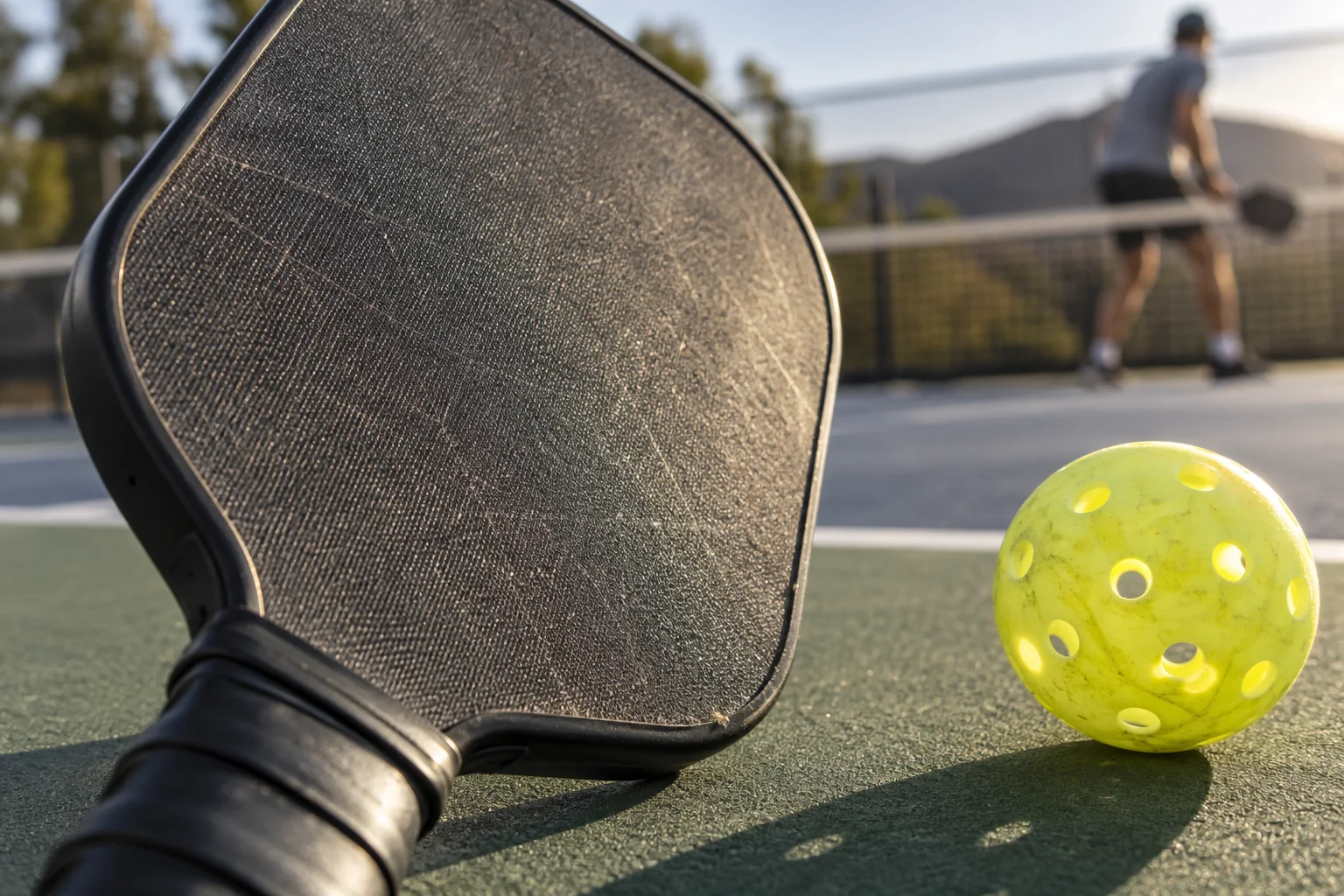
A durable grit pickleball paddle uses a textured face designed to keep producing spin after repeated play. The useful question is not whether a label says “durable,” but how the texture is made, how much remains after wear, and whether the paddle is approved for the tournaments you enter.
What is durable grit on a pickleball paddle?
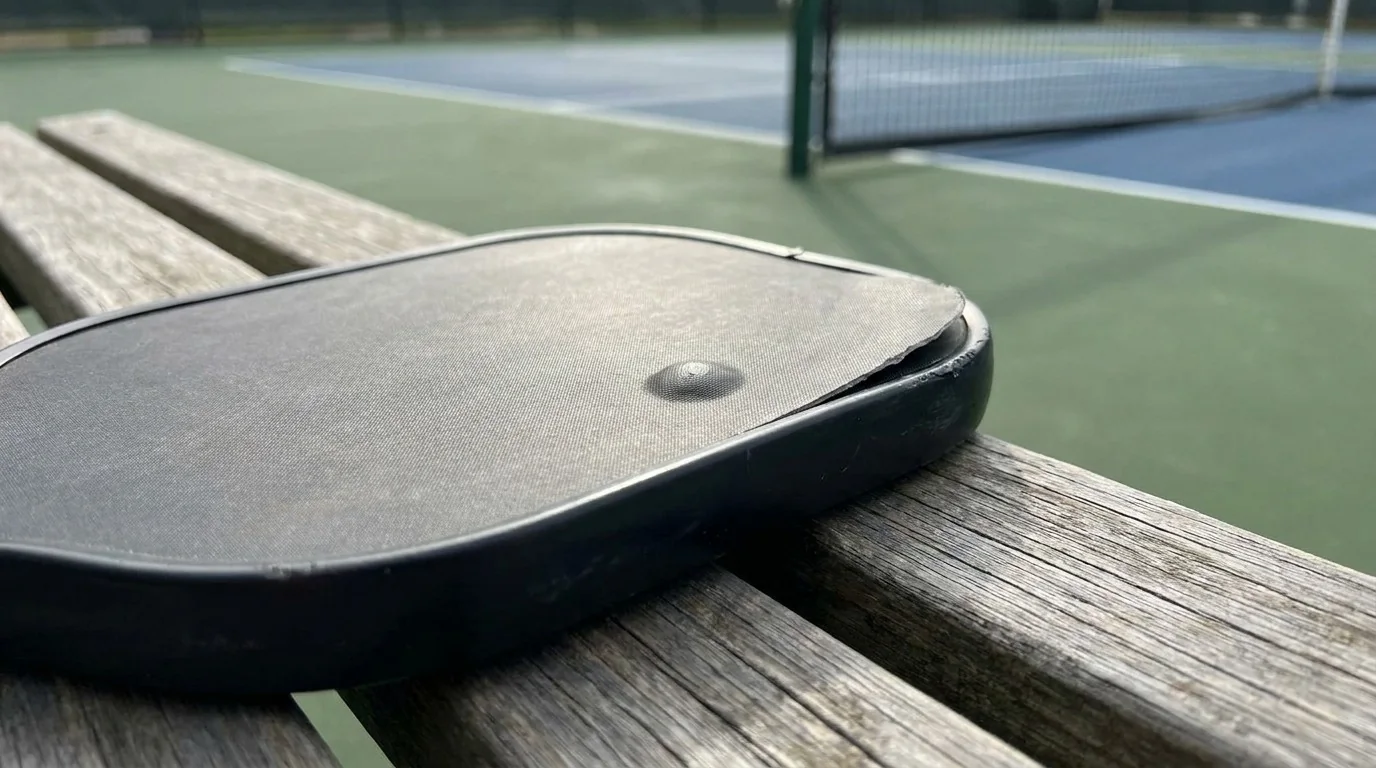
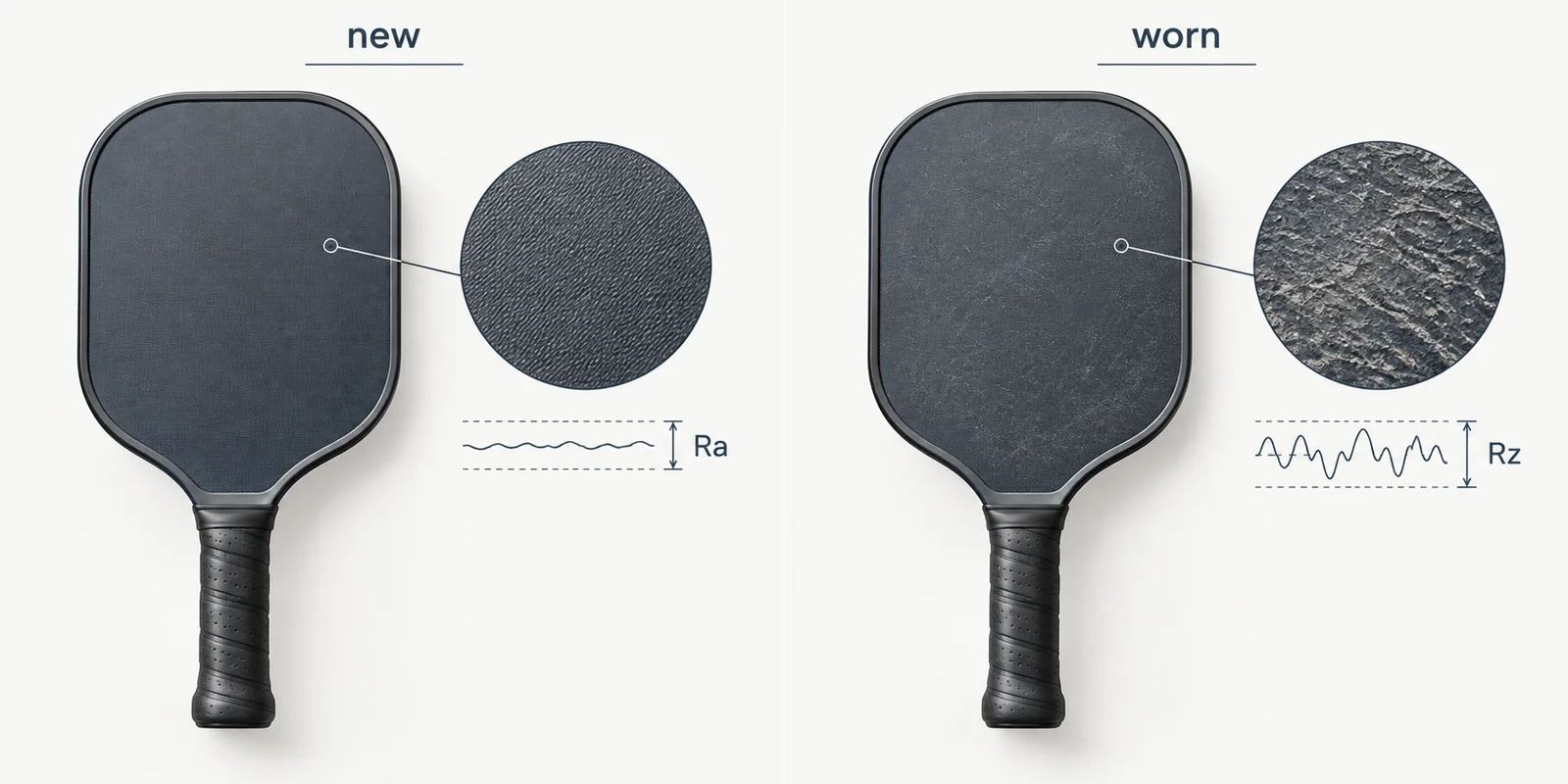
Traditional raw carbon fiber gets much of its spin from a rough resin texture left by the peel-ply manufacturing process. Repeated contact with the ball gradually smooths that texture. The paddle may look intact while drives, rolls, and resets produce less bite.
Durable grit is a group of surface designs intended to slow that loss. Some manufacturers embed harder particles into the textured layer. Others spray a coating over the face, add protective material, or use ceramic-like components. These are construction approaches, not a guarantee of identical performance.
A useful example is surface retention. If a face begins with a roughness reading of 7.0 and retains 90%, the remaining reading is 7.0 × 0.90 = 6.3. That result describes measured texture, not a promised spin percentage, because ball, technique, temperature, and contact angle still affect the shot.
How is paddle grit durability tested?
Pickleball Effect describes using a profilometer, an instrument that drags a fine stylus across the face, to record roughness before and after controlled abrasion cycles. The test gives a repeatable comparison, although no accelerated machine perfectly recreates every player’s court time.
Two measures matter. Ra is average roughness across the measured path. Rz is the average distance between high peaks and low valleys, so it can reveal whether aggressive peaks remain even when average texture is moderate. Reading both avoids judging a face from one number alone.
For instance, a paddle with Ra 6.52 and 95% Ra retention keeps about 6.19 units after the test: 6.52 × 0.95 = 6.194. A second paddle starting at Ra 8.13 but retaining 98% ends near 7.97. The second face starts and finishes rougher, but that still does not settle comfort or legality.
Which durable grit surfaces held texture in testing?
The cited test reported these comparisons after accelerated wear: 11SIX24 HexGrit retained 98% of Ra and 93% of Rz; HPC Blue Endurance retained 97% and 92%; Six Zero Diamond Tough retained 95% and 92%; Spartus PermaGrit retained 93% and 87%; Thrive Ignite Raw + Coat retained 90% and 88%; and Selkirk InfiniGrit retained 90% and 85%. The reported raw-carbon average retained 81% of Ra and 82% of Rz.
Treat the table as one test set, not a universal ranking. It compares selected paddle surfaces under one method. A higher starting Ra can feel grippier, while a lower starting value with strong retention may deliver a steadier, milder feel over time.
Are all durable grit paddles legal for tournaments?
No. The source distinguishes USA Pickleball approval from United Pickleball Association approval. USAP uses surface-roughness limits, while UPA-A uses an outcome-based spin test. A face can therefore pass one organization’s process and fail the other’s.
The reported HexGrit and Blue Endurance surfaces were UPA-A approved but not USAP approved at the time of the test. Diamond Tough, PermaGrit, Thrive Ignite, and InfiniGrit were listed as approved by both. Rules and equipment lists can change, so check the governing body for your event before purchasing.
How should frequent and casual players choose?
Players on court four or five times each week have more reason to value retention than a spectacular first-day texture. A face retaining 98% in the cited test and one retaining 82% may diverge more clearly after heavy use than during a short demo.
A casual player who plays once weekly and replaces a paddle every year or two may reasonably prioritize grip comfort, maneuverability, and price. Tournament players should put approval first, then compare texture, control, swing feel, and warranty terms.
Durable grit paddle checklist
- Identify whether the face is infused, coated, or another construction.
- Look for before-and-after Ra and Rz data rather than a slogan alone.
- Compare retention, starting texture, comfort, and swing feel.
- Confirm the approval list for your tournament organization.
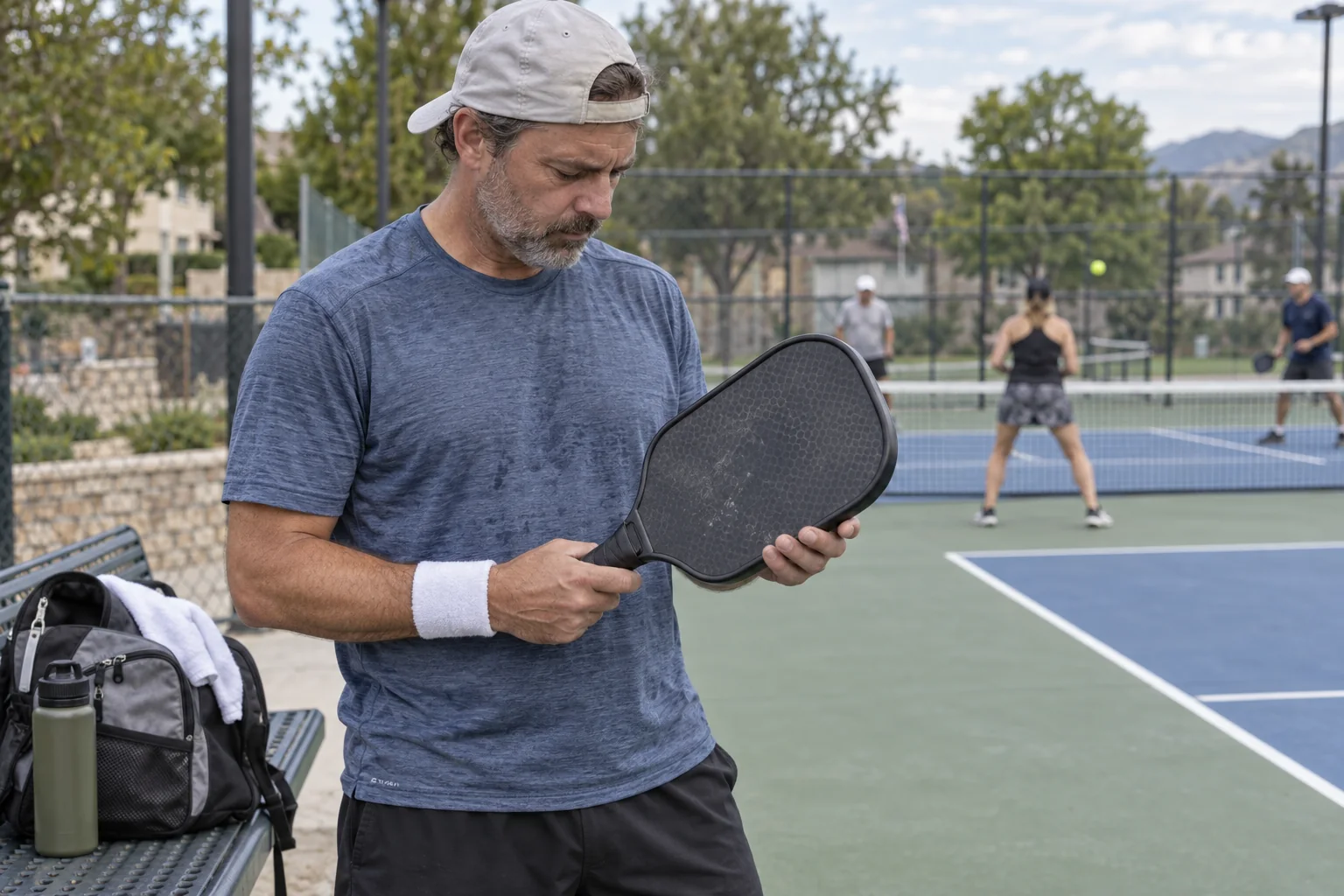
- Inspect the face regularly for smoothing, chips, cracks, or delamination.
- Keep the paddle away from unnecessary heat, impacts, and abrasive storage.
Durable grit addresses a quiet form of wear: the paddle gradually loses surface texture before the damage is obvious. Use measured retention as one input, not the entire buying decision, and match the face to how often you play and where you compete.