Forehand Dink Drop Step: Keep Wide Balls in Front
A practical guide to the forehand dink drop step: create space for wide crosscourt balls, keep contact in front, and practise recovery.
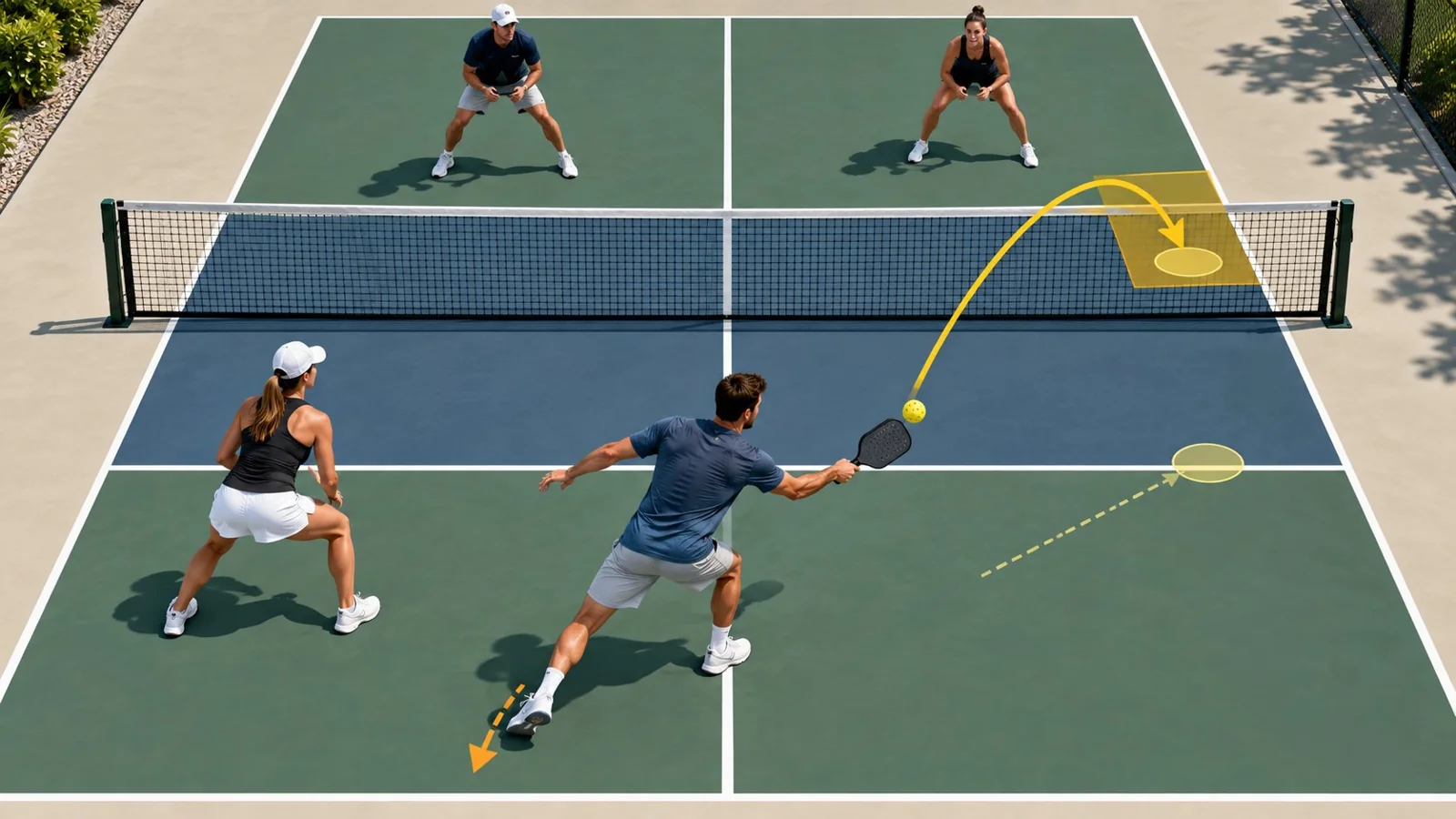
Wide crosscourt dinks are often lost before the paddle ever reaches the ball. The player sees the ball moving outside the body, steps sideways to chase it, and ends up reaching beside or behind the hip. The result is familiar: a pop-up, a ball that drifts wide, or a rushed contact that gives away the kitchen. The fix is not a bigger swing. It is a small diagonal drop step that creates room and keeps contact in front.
Why the usual sideways step fails
At the non-volley zone, many players think in only three directions: forward, sideways, or straight back. A wide forehand dink needs a more specific route. For a right-handed player, when the ball travels wide to the forehand side and slightly behind the ready position, the right foot should move back and outward rather than tracking parallel to the net.
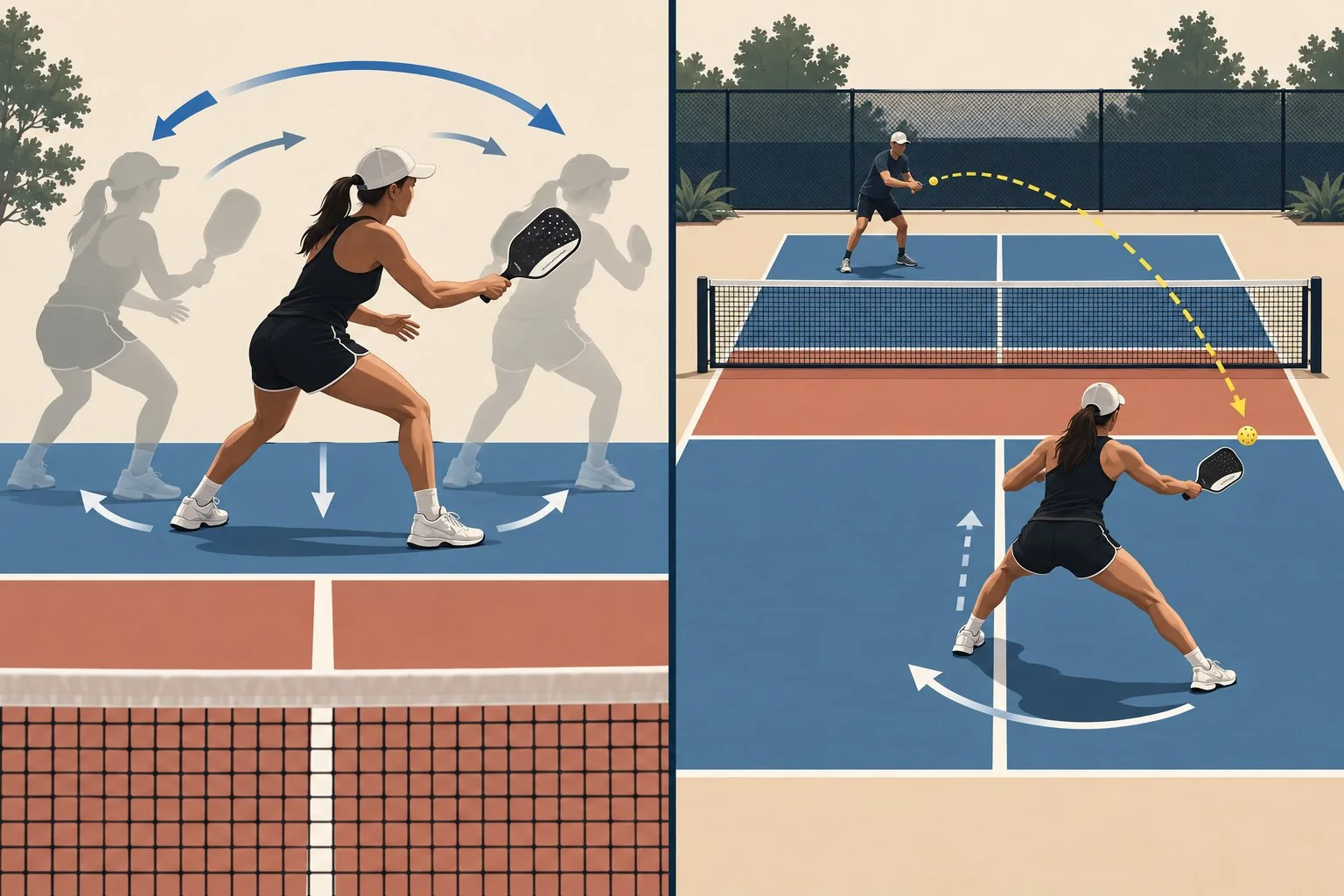
A sideways step follows the ball but does not create space from it. The ball arrives next to the body, where the arm is crowded and the paddle has little freedom to guide the angle. The diagonal step moves the body away from the ball's line while preserving a usable contact window. Think of the movement as a spoke from your starting point: the correct spoke for this ball points backward and outward.
Build the drop step
Start in a neutral kitchen-line position. Keep your shoulders and hips generally parallel to the net, feet about shoulder-width apart, knees bent, and paddle in front. Do not pre-turn toward the crosscourt corner; you need to remain ready for a ball that comes closer or changes direction.
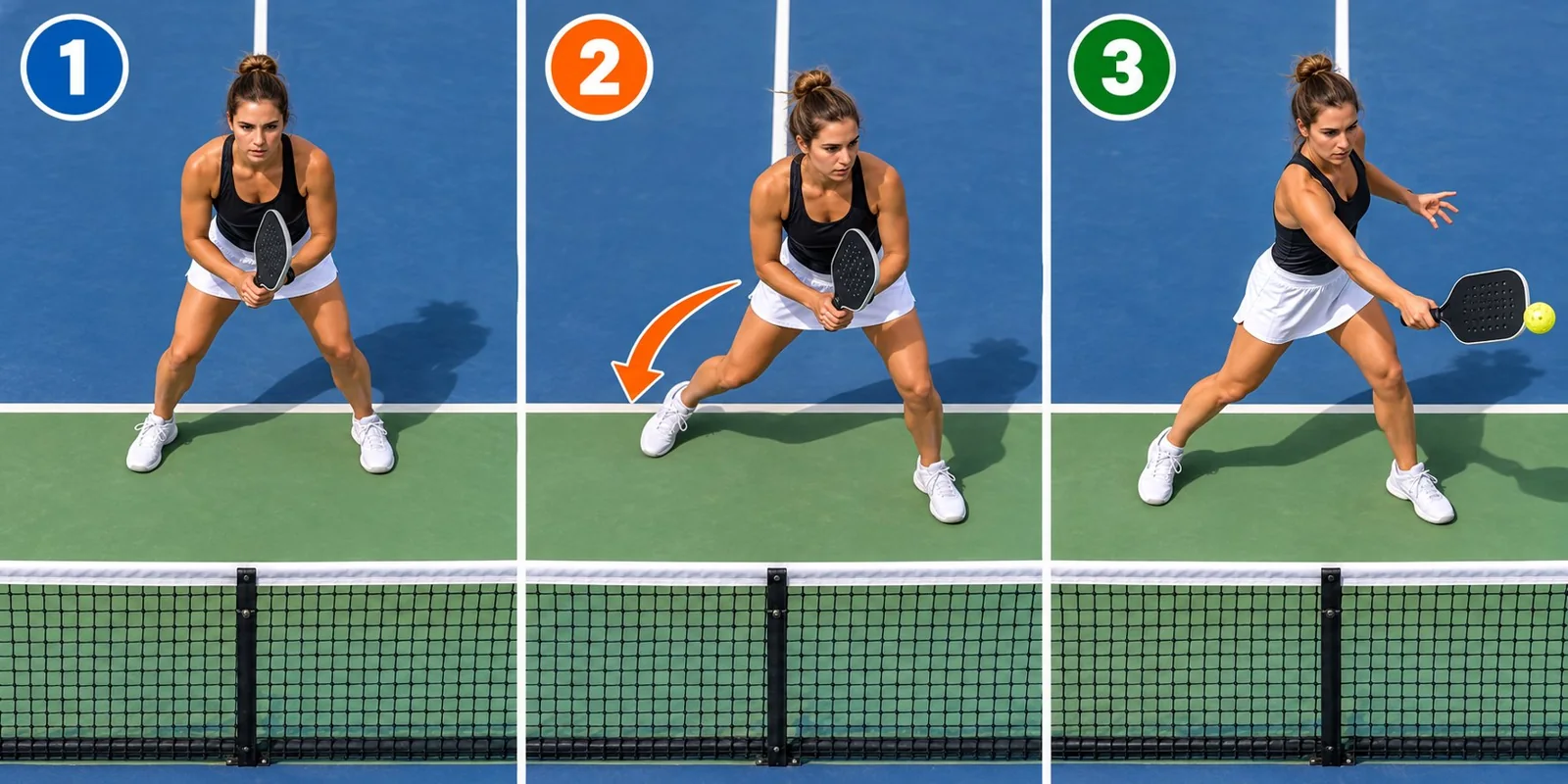
When you recognize the wide dink, make a short half-step with the outside foot. For a right-handed forehand, that is normally the right foot. Place it back and diagonally outward, then let your weight settle onto it. Keep the other foot grounded as an anchor so you can make a small adjustment instead of hopping or lunging. Stay low while you move. The step should feel like a controlled weight shift, not a retreat from the rally.
Your goal is simple: the ball should meet the paddle in front of the body, not beside the hip and never behind it. Once the space is available, use the same calm dink motion you would use on a comfortable ball. Keep the preparation compact, let the shoulder and arm guide the paddle, and avoid trying to rescue poor spacing with a wrist flick. The feet create the opportunity; the hands finish it.
Keep balance through contact and recovery
The drop step is useful only if it leaves you ready for the next ball. Avoid lifting both feet or leaning your chest away from the court. A low base and a grounded anchor foot help you absorb the movement. After contact, make small recovery steps toward your neutral kitchen position. Do not rush all the way back to a fixed spot if the next ball is already moving; recover enough to remain balanced and able to respond.
Pay attention to what happens when the technique breaks down. A pop-up usually means the ball reached the side of the body. A wide miss often means the player lunged parallel to the ball. A rushed short hop can mean the player tried to take the ball early without first creating space. In each case, review the feet before changing the swing.
Practice the movement in stages
Begin without a ball. Stand at the kitchen line, rehearse the ready position, and repeat the small backward-and-outward step while keeping the knees bent. Make twenty controlled repetitions on the forehand side, then reset to neutral each time. The purpose is to make the direction familiar without adding speed.
Next, ask a partner to feed wide forehand balls that land slightly behind your starting line. Ignore placement at first. Read the ball, drop step before contact, and make a comfortable dink. Add a recovery cue after every feed: finish balanced, return toward neutral, and prepare for the next ball.
Only after the movement is reliable should you add more demanding targets or controlled topspin. If the ball is too far away for an attacking dink, choose a safe, low reply and recover. The drop step is not a default step for every forehand; it is a specific answer to a ball that is wide and beginning to get behind you.
The lasting lesson is straightforward: move away from the ball's line before you swing. When the ball stays in front, your contact becomes calmer, your direction becomes more predictable, and the wide crosscourt dink stops feeling like a desperate reach.