How to Hit a Drop Volley in Pickleball: Soft Hands, Contact and Kitchen Placement
A practical guide to using the drop volley against deep drives, with soft-hands technique, placement and drills.
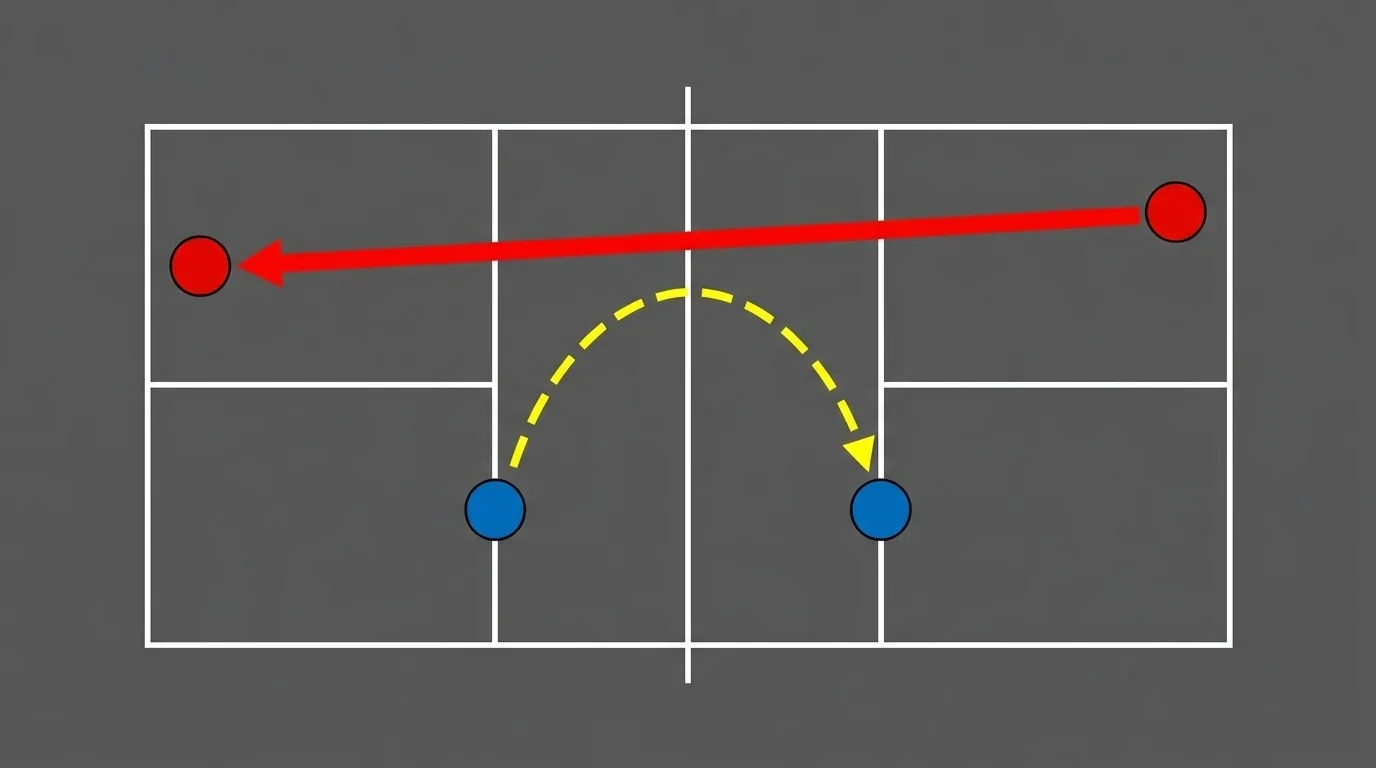
What is a drop volley?
A drop volley is a soft shot taken out of the air near the non-volley zone line. Instead of matching an opponent’s drive with pace, you absorb the incoming energy and guide the ball gently into the opponent’s kitchen. It is different from a dink because the ball has not bounced, and different from a third-shot drop because the contact happens near the net.
When the shot makes sense
The drop volley works best when your opponent is deep or moving backward and your incoming ball arrives at a manageable height. It can disrupt a pattern of firm volleys and force the opponent to sprint forward.
Do not use it automatically. If the opponent is already near mid-court or moving forward, a soft ball may give them an easy attack. If you are stretched or off balance, a block volley or reset is usually safer.
Step 1: Soften the grip
Use soft hands. A grip pressure around 2–3 out of 10 lets the paddle give slightly at contact and absorb pace. Keep your normal ready grip while reading the ball, then relax before contact. Do not squeeze hard and hope to take speed off afterward.
A useful practice constraint is to hold the paddle mainly with the thumb and index finger for a few repetitions. The instability teaches your hand not to punch the ball. Return to a normal grip once you can feel the softer contact.
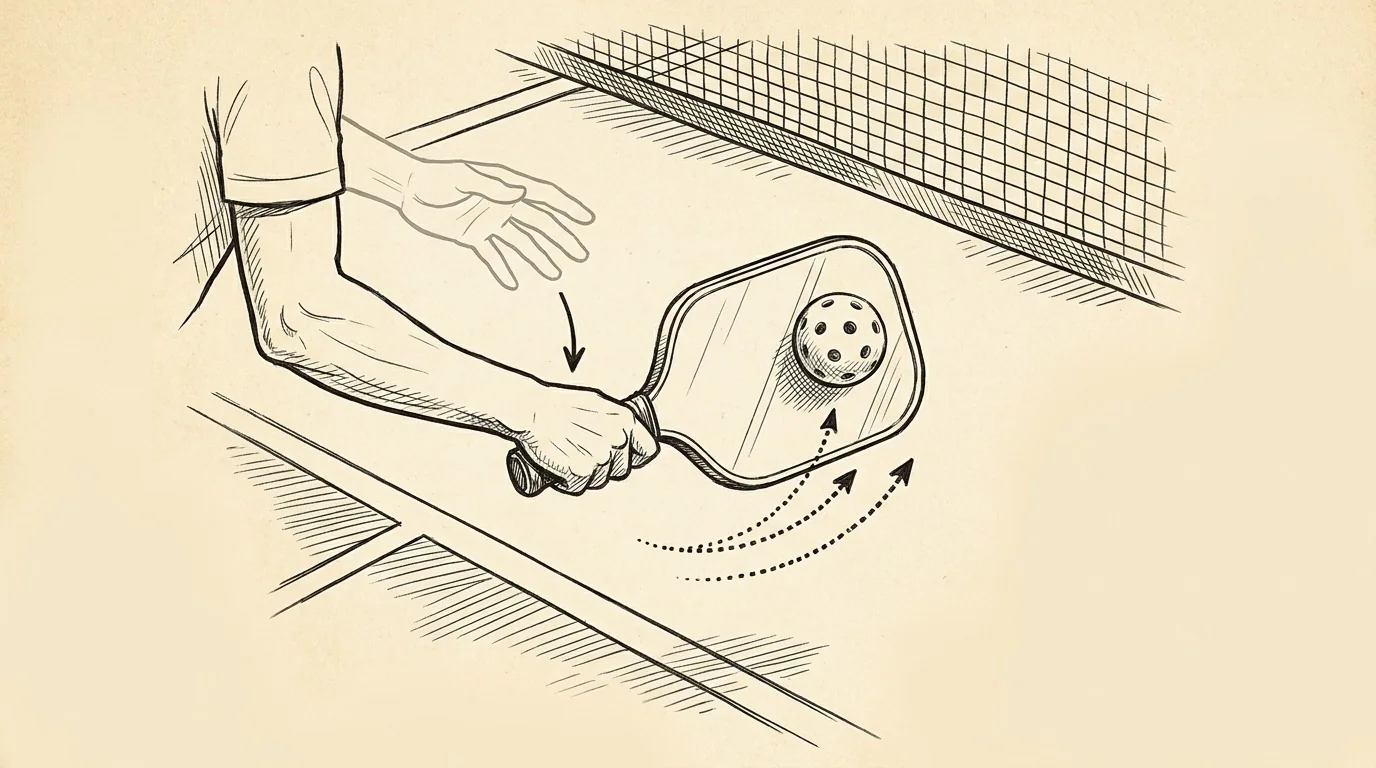
Step 2: Meet the ball in front
Keep the paddle in front of your body and contact the ball in front of your lead foot. The paddle face should be slightly open—just enough to create a gentle arc over the net. There is almost no backswing. Think of catching the ball with the paddle rather than swinging through it.
Too much opening sends the ball long. Too little face angle sends it into the net. Your goal is a quiet, stable contact, not a hard push.
Step 3: Land the ball shallow in the kitchen
Aim for the first two or three feet of the opponent’s kitchen, close to the net but with enough clearance to stay safe. The ball should clear the tape by a small margin, land low and bounce shallow. A drop that lands deep in the kitchen gives the opponent more time and height to attack.
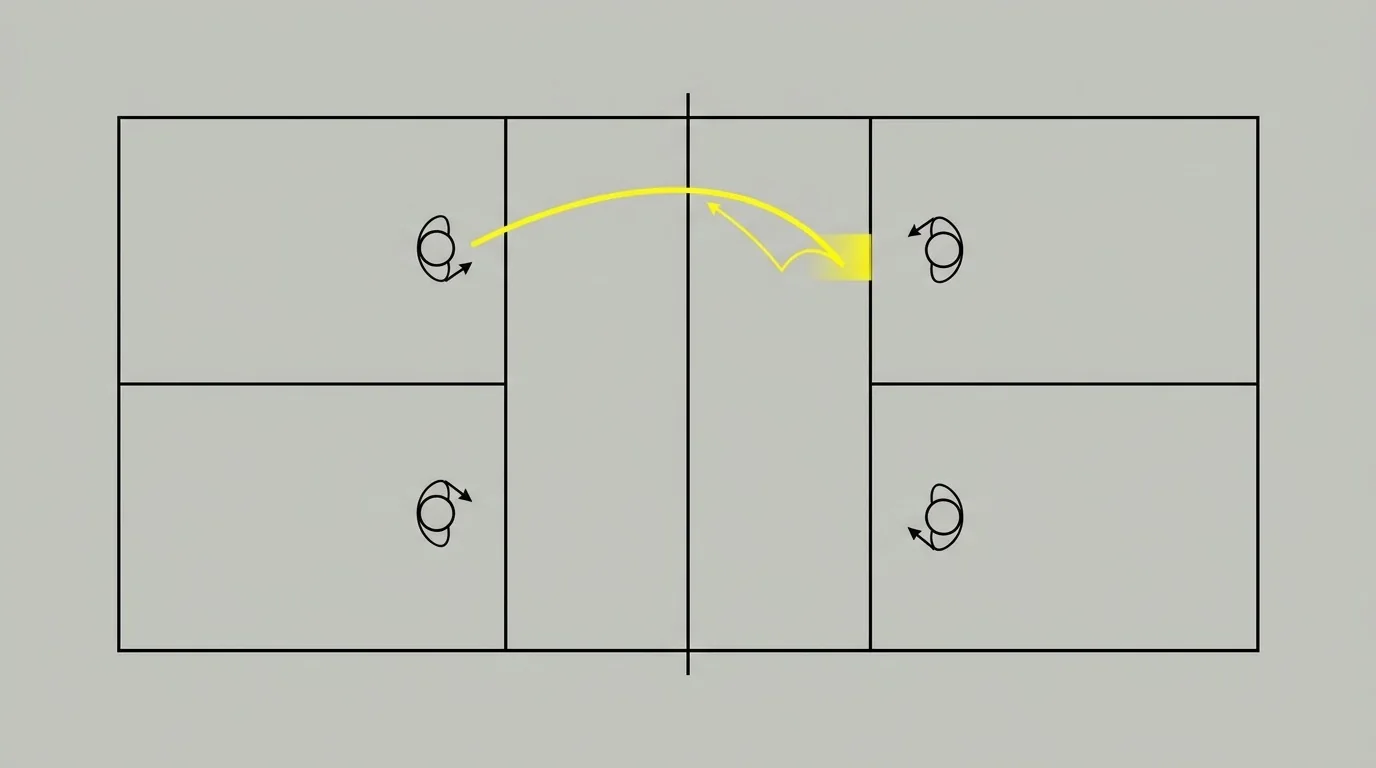
Step 4: Be ready for the next ball
A drop volley does not always end the rally. Recover to a ready position immediately and expect the opponent to reach, dink or pop the ball up. Keep your paddle in front and watch their contact instead of admiring the drop.
Drop volley or punch volley?
Read the incoming ball and the opponent’s position. A manageable waist-high drive with a deep opponent can be softened into a drop volley. A high, fast or difficult ball may call for a firm punch or block instead. The safest choice is the one you can execute while balanced.
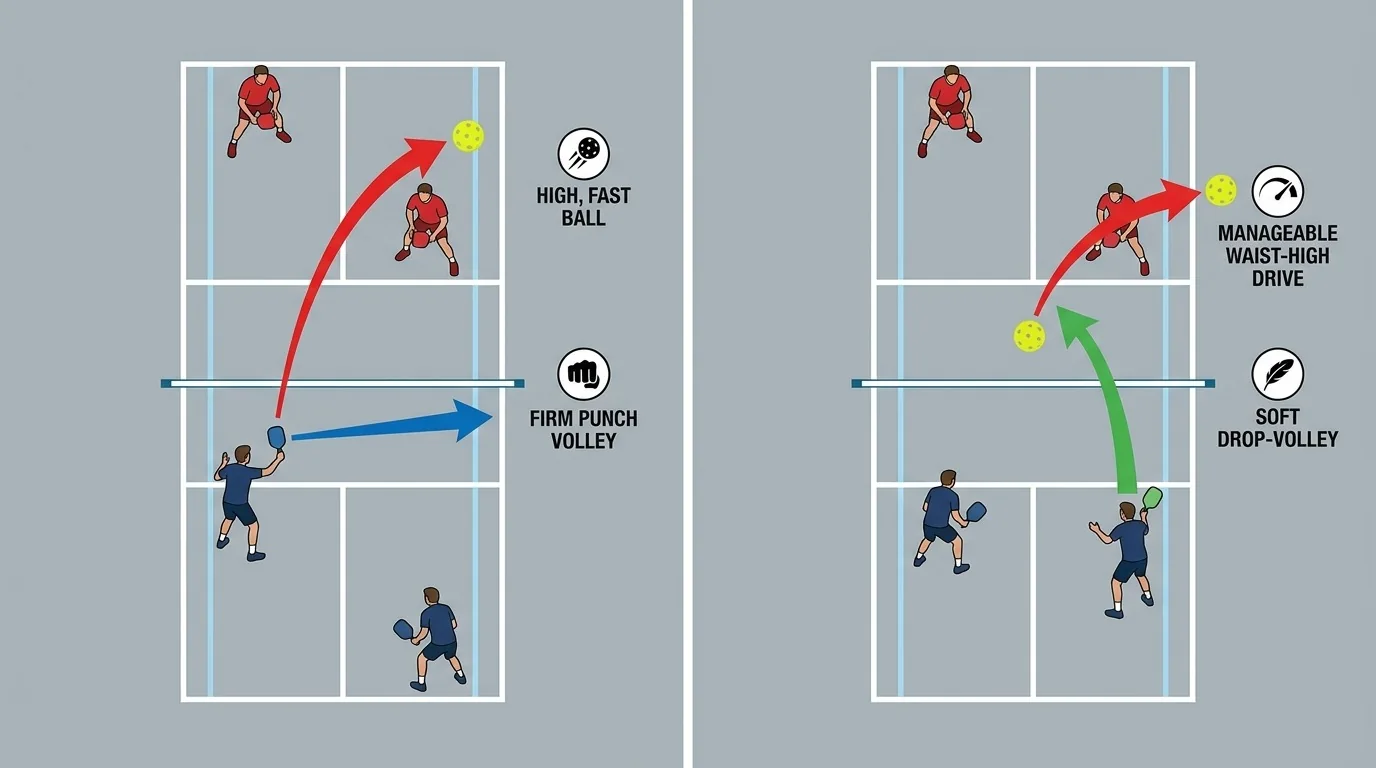
Use the drop as a change-up after you have shown firm volleys. Pressure first makes the soft placement harder to anticipate.
Drills for soft hands
Finger-off-grip drill
Have a partner feed moderate balls from the opposite kitchen line. Hit gentle drop volleys while keeping only the thumb and index finger connected to the grip for 10–15 repetitions. Then return all fingers to the handle without tightening your hand.
Wall volley reset
Stand about 8–10 feet from a wall and absorb soft volleys into a low target near the base. Focus on a quiet paddle face, consistent contact in front and a low return.
Live decision drill
Start with both teams in position. Have the feeder vary the ball height and pace. Choose a drop volley only when the ball is manageable and the opponent is deep; otherwise use a block or punch.
Common mistakes
- Gripping too tightly and sending the ball long.
- Taking a backswing instead of absorbing pace.
- Contacting beside or behind the body.
- Opening the paddle face too much.
- Dropping to an opponent who is already moving forward.
- Forgetting to recover after the soft shot.
Quick checklist
- Is the opponent deep or moving backward?
- Is the incoming ball manageable?
- Can I contact out in front while balanced?
- Is my grip soft before contact?
- Is the paddle face only slightly open?
- Will the ball land shallow in the kitchen?
- Am I ready for the next reply?
A reliable drop volley is less about a big swing than about reading the situation, absorbing pace and placing the ball low. Build soft hands first, then add the decision-making that makes the shot useful in a real rally.