Pickleball Around-the-Post Shot: Read the Angle and Recover
A practical guide to the around-the-post pickleball shot: read the opening, create angle with balance, practise the decision, and recover safely.
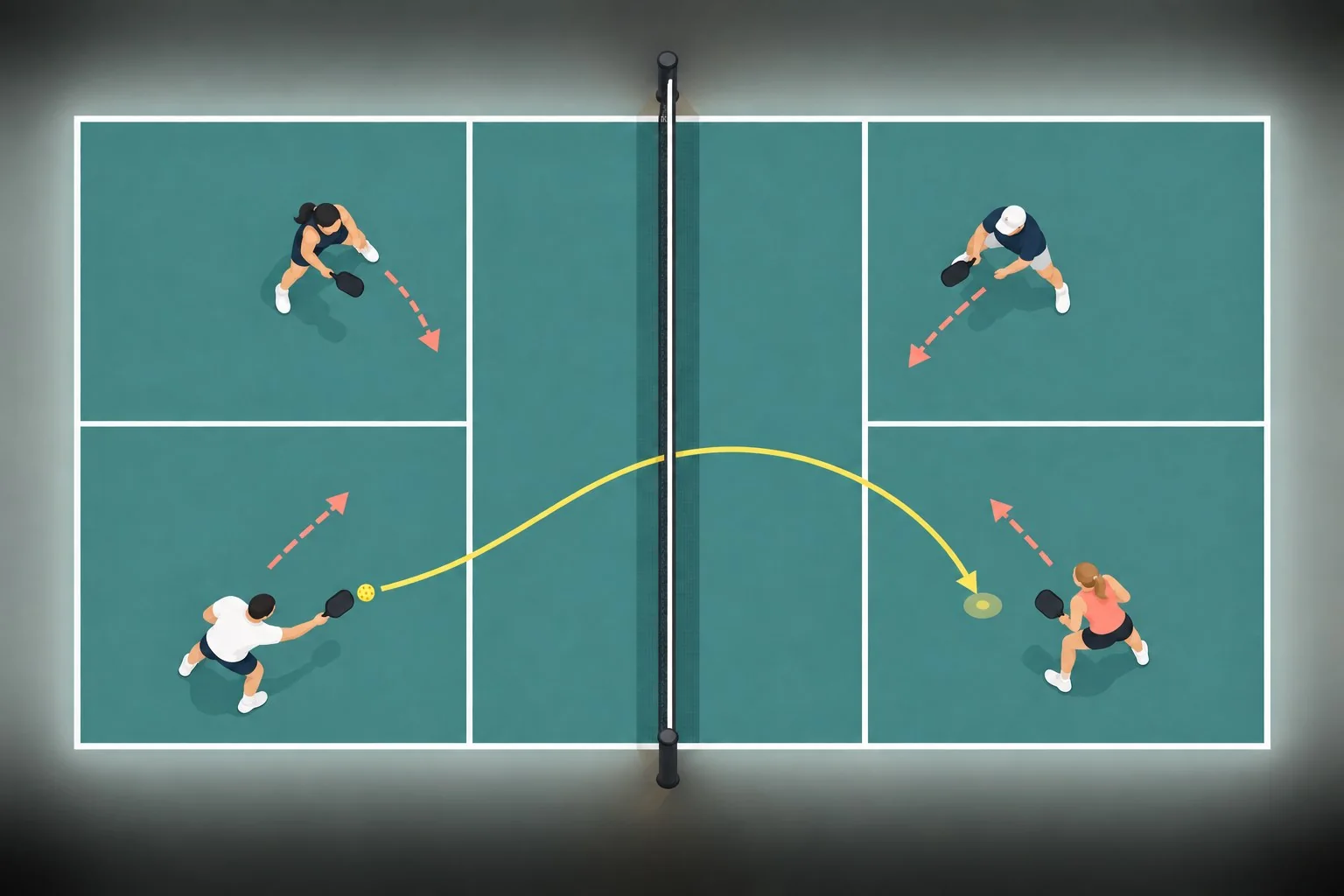
An around-the-post shot is one of pickleball’s most satisfying solutions: instead of sending the ball over the net, you send it around the outside of the post. It is not a trick to force on every wide ball. It is a low, angle-dependent option that works only when your position, the ball, and the opponent’s court all line up. The safest way to learn it is to treat it as a reading and recovery skill first, then add pace.
Read the opening before you swing
The opportunity usually appears after a ball pulls you or your opponent wide. From near the sideline, look past the outside of the net post and check whether the opponent’s court offers a real landing window. The ball must travel around the post and still land inside the opponent’s court. If the angle is blocked, the post is too close to your contact, or you are falling away, choose a safer crosscourt or lob instead.
Do not confuse an around-the-post shot with a ball that crosses above the net. The defining feature is the route around the post. Because the ball is travelling outside the usual net opening, net height is no longer the main obstacle, but sideline depth and control become more important. You still need a legal contact and an in-bounds target.
Use your opponent’s position as a second cue. A player who is waiting in the middle may leave the wide court exposed, while a player already covering the sideline may make the shot unwise. Scan the available space before committing. A spectacular angle that lands near the opponent’s paddle is not automatically a good decision.
Build the shot with balance and margin
Move to the ball with small adjustment steps and create space between your body and the contact. A cramped swing makes it difficult to send the ball outward around the post. Keep the paddle face stable, make contact in front when possible, and use a compact swing that follows the intended path. You are shaping the angle more than trying to overpower the ball.
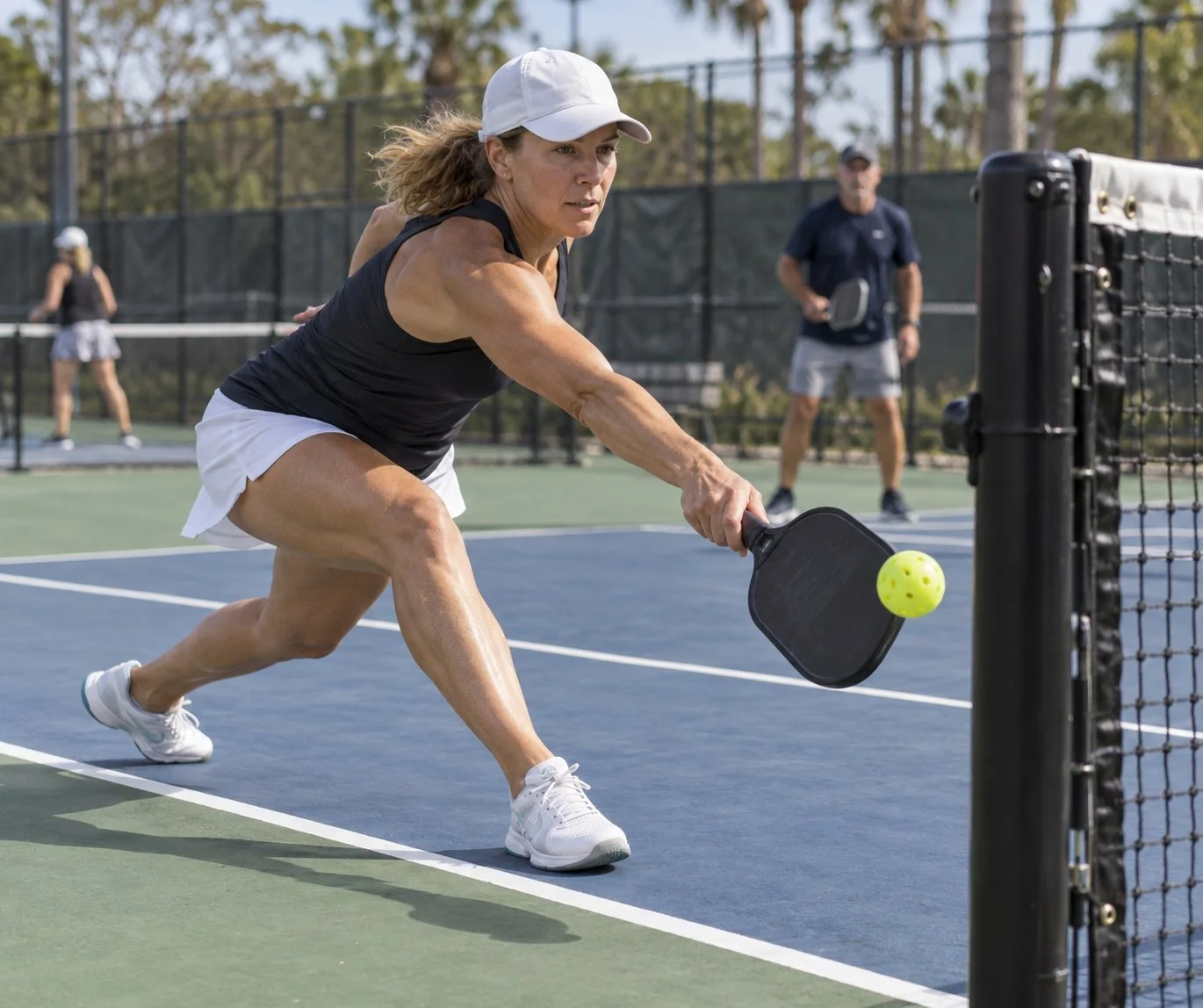
Contact height changes the decision. A ball that is low and wide may require a controlled lift with enough clearance from the surface. A ball at a comfortable height gives you more options, but it can also tempt you to swing too hard. Start with a generous target well inside the opponent’s court. Once you can repeat the route, gradually explore wider angles.
Your margin is three-dimensional: leave space from the sideline, keep the ball low enough to limit an easy reply, and avoid a contact point so far behind you that balance disappears. The best attempt is one you can make while staying stable enough to recover. If the ball is behind your shoulder or your feet are still moving, a defensive shot is usually the higher-percentage choice.
Recover instead of admiring the angle
The shot does not end when the ball clears the post. Push back toward a useful court position immediately and expect the opponent to reach, counter, or send the ball back with a different angle. If you hit from deep in the court, recover toward the middle while keeping the ball in view. If you were pulled wide near the kitchen, recover without crossing into your partner’s path.
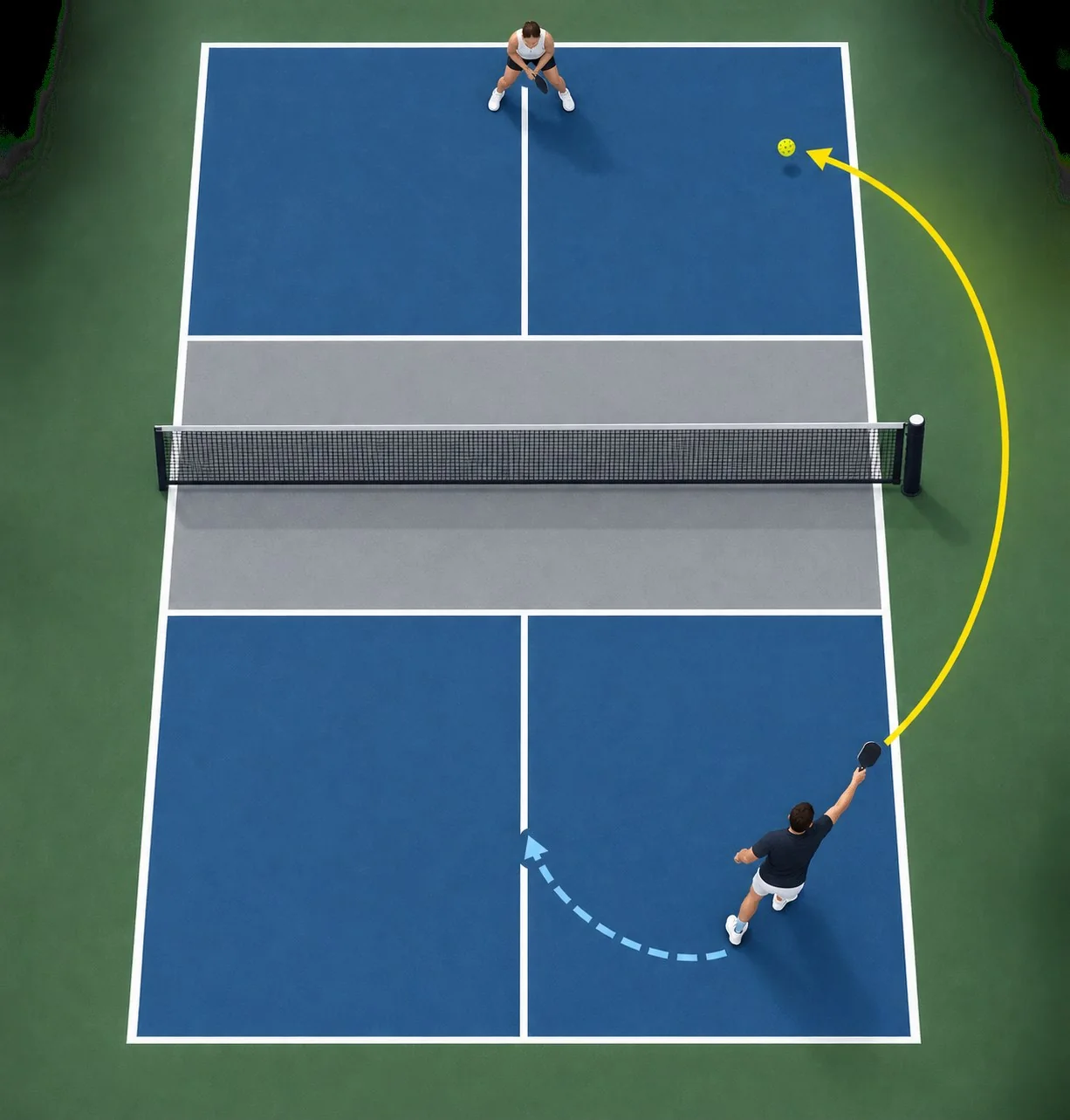
In doubles, communicate before chasing a wide ball. The player with the clearest route should call it, while the partner protects the middle and watches for a quick reply. After the shot, rebuild spacing rather than both players drifting toward the sideline. A brilliant angle followed by an open center can give away the advantage.
Practise the decision in stages
Begin without opponents. Place a target in the far court and have a partner feed balls that bounce wide. First practise moving, stopping, and shadowing the swing around the post. Then hit at moderate pace, counting only balls that travel around the post and land in a safe area. Do not chase the line while learning the route.
Next, add a decision feed. The partner alternates between a ball with a clear angle and one that is too low, too deep, or too close to the body. Attempt the around-the-post shot only on the first type; use a controlled reset or lob on the others. This teaches your eyes to select the opening instead of treating every wide ball as an invitation.
Finally, play points with one condition: the shot is available only when the angle is genuinely open. After every attempt, evaluate contact balance, landing margin, and recovery position. The goal is not to collect highlight shots. It is to recognise the right window, send the ball through it with control, and remain ready for the next exchange.