Pickleball Backhand Dink: Height, Contact, and Control
A practical guide to the pickleball backhand dink: create space, contact in front, clear the net with margin, choose useful targets, and recover.
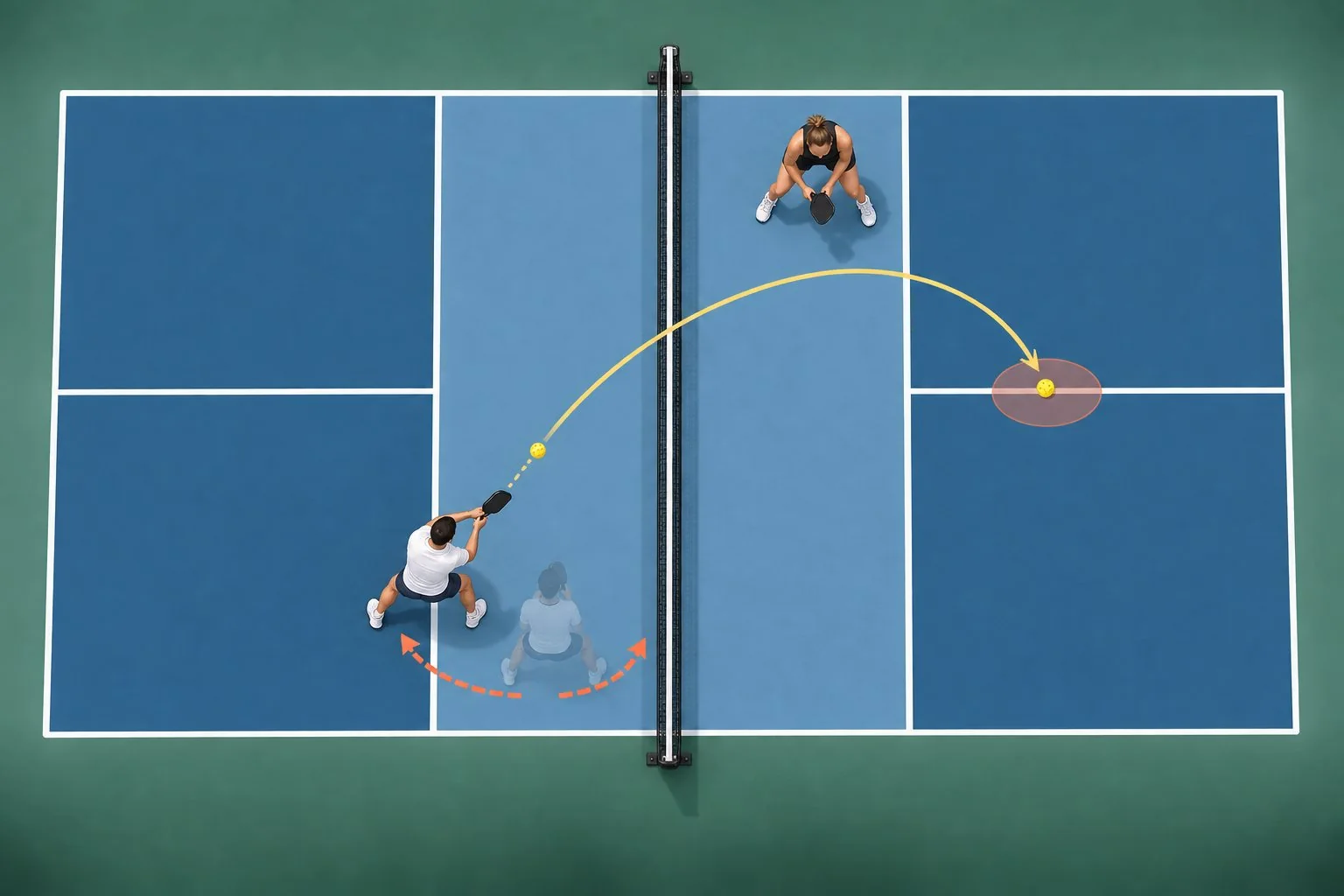
The backhand dink is a control shot, not a miniature backhand drive. From the non-volley line, you are trying to send the ball over the net with enough margin, let it land in the opponent’s kitchen, and stay balanced for the next exchange. The stroke can be one- or two-handed, but the priorities are the same: create space, prepare early, contact in front, and recover your ready position.
Start with a stable base and early preparation
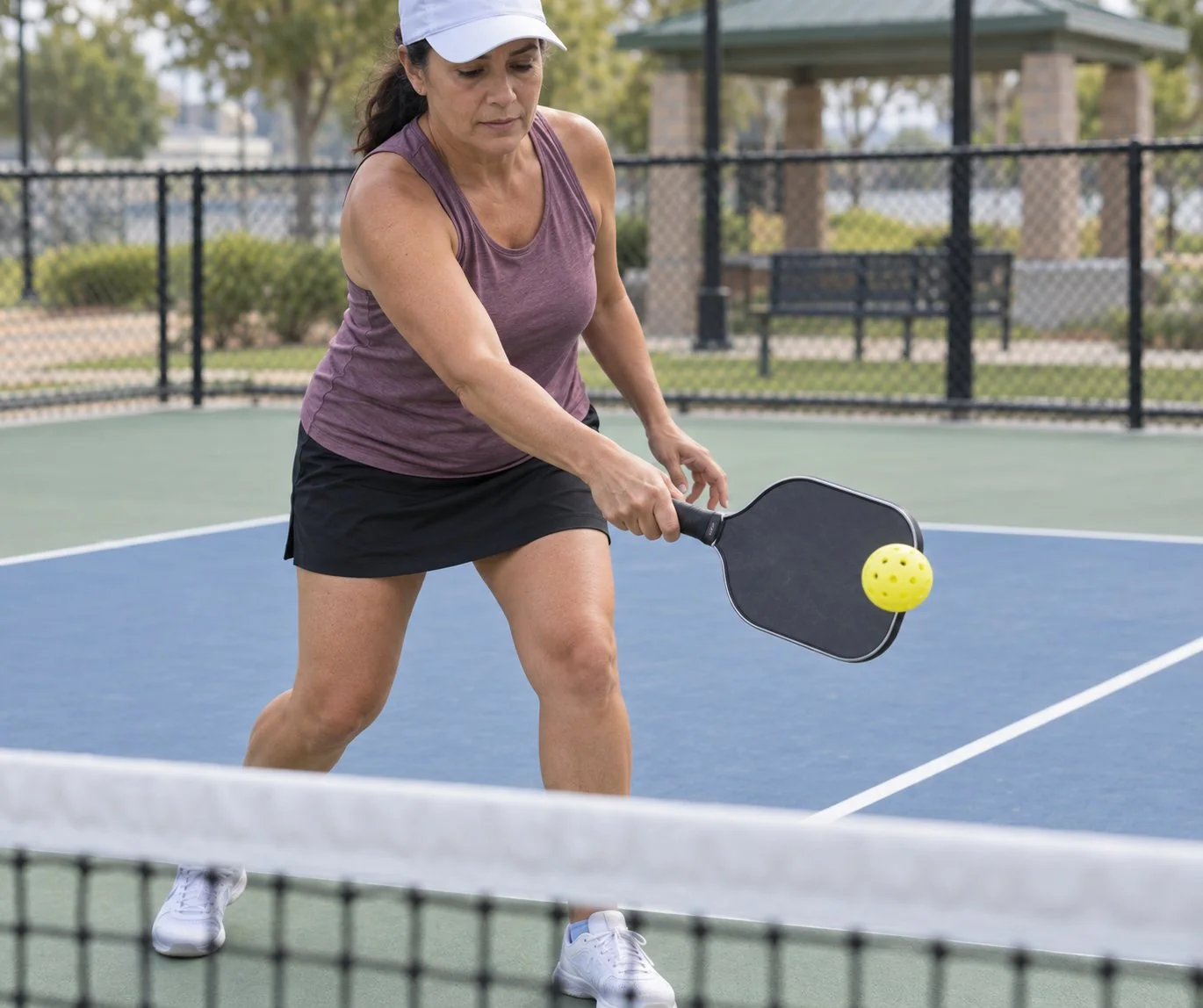
Begin in a compact ready stance with soft knees, your weight centred, and the paddle in front of your torso. As the opponent’s ball travels, turn your shoulders and bring the paddle into position without a large backswing. A two-handed backhand can add stability; a one-handed version can give you reach and feel. Neither grip fixes poor footwork or a late contact point.
Move your feet before you reach. If the ball is slightly wide, use a small shuffle or adjustment step to place your body behind the intended contact. Keep enough distance that the paddle can travel freely. Crowding the ball often opens the face or pulls the contact behind you, producing a pop-up or a dink that dies in the net.
Control height, pace, and landing space
Use a quiet paddle face and a short, smooth swing. The ball should rise just enough to clear the net and then descend into the kitchen. A little extra net clearance is sensible when you are stretched or late, but an exaggerated arc gives the opponent an easier attack. Think about the ball’s landing and the quality of your next position rather than trying to make every dink skim the tape.
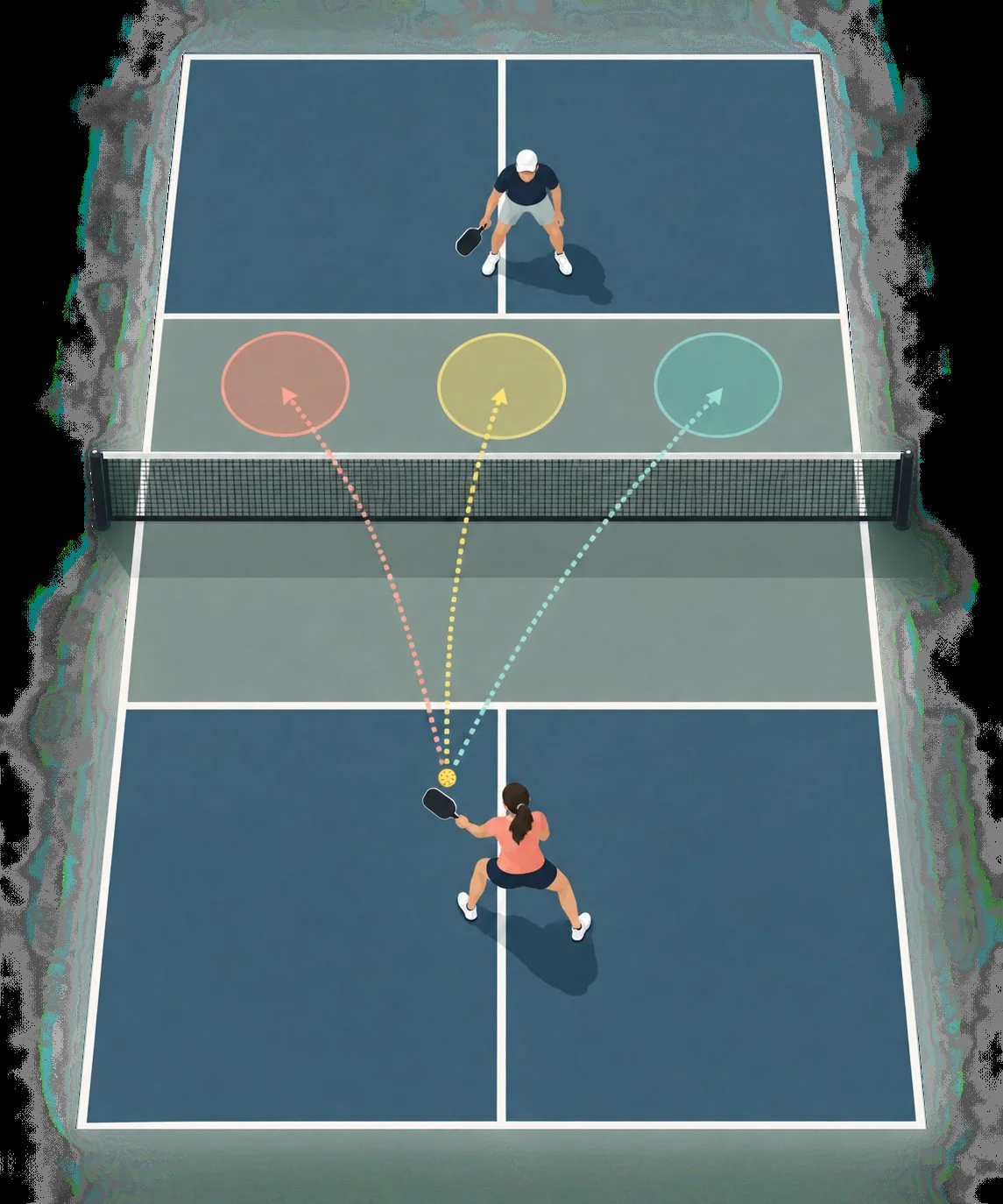
Start with a generous crosscourt or middle target. Crosscourt gives the ball more distance and usually more room for error; the middle can create hesitation between opponents. As your control improves, move the target toward a player’s backhand or outside foot. Change direction only when your contact is balanced and the ball is high enough to travel safely.
A useful check is the bounce. If the ball lands in the kitchen and rises at the opponent’s comfortable strike height, reduce the upward lift or soften the pace. If it clips the net, create slightly more margin with your contact and trajectory. Do not solve every miss by swinging harder.
Recover after every dink
The stroke is only half the skill. After contact, return the paddle to a neutral ready position and make a small recovery step if the ball pulled you sideways. Keep your eyes on the opponent’s paddle, not on your own ball. Their contact is your cue to split step, so you can respond to a counter, a dink to your feet, or a change of direction.
Avoid leaning over the kitchen line while you hit. Your feet may be close to the line, but your balance should remain available for the next ball. If you are pushed wide, play a higher-margin dink and recover toward the space you need to cover with your partner rather than chasing a tiny angle.
Practise touch before adding decisions
First, rehearse ten shadow dinks: ready stance, shoulder turn, small adjustment, contact in front, finish, and recovery. Then have a partner feed predictable balls to your backhand side. Use a large kitchen target and count only repetitions that clear the net, land in the zone, and leave you balanced.
For the next round, vary the feed width and height. Move your feet instead of reaching, and keep the backswing compact. Finally, add a decision: play crosscourt when the ball is low or wide, use the middle when opponents are split, and change direction only from a comfortable contact. The goal is not to hit a winner; it is to make a repeatable choice under changing conditions.
Common corrections are simple. If the ball floats long, reduce the face angle or upward lift. If it falls into the net, check that contact is not too far behind you. If you pop the ball up, quiet the hands and finish more toward the target. A reliable backhand dink comes from calm preparation, precise spacing, useful margin, and immediate recovery.