Pickleball Backhand Recovery: Finish Balanced for the Next Ball
Learn a complete pickleball backhand recovery sequence: prepare early, finish under control, and move to a ready position after contact.
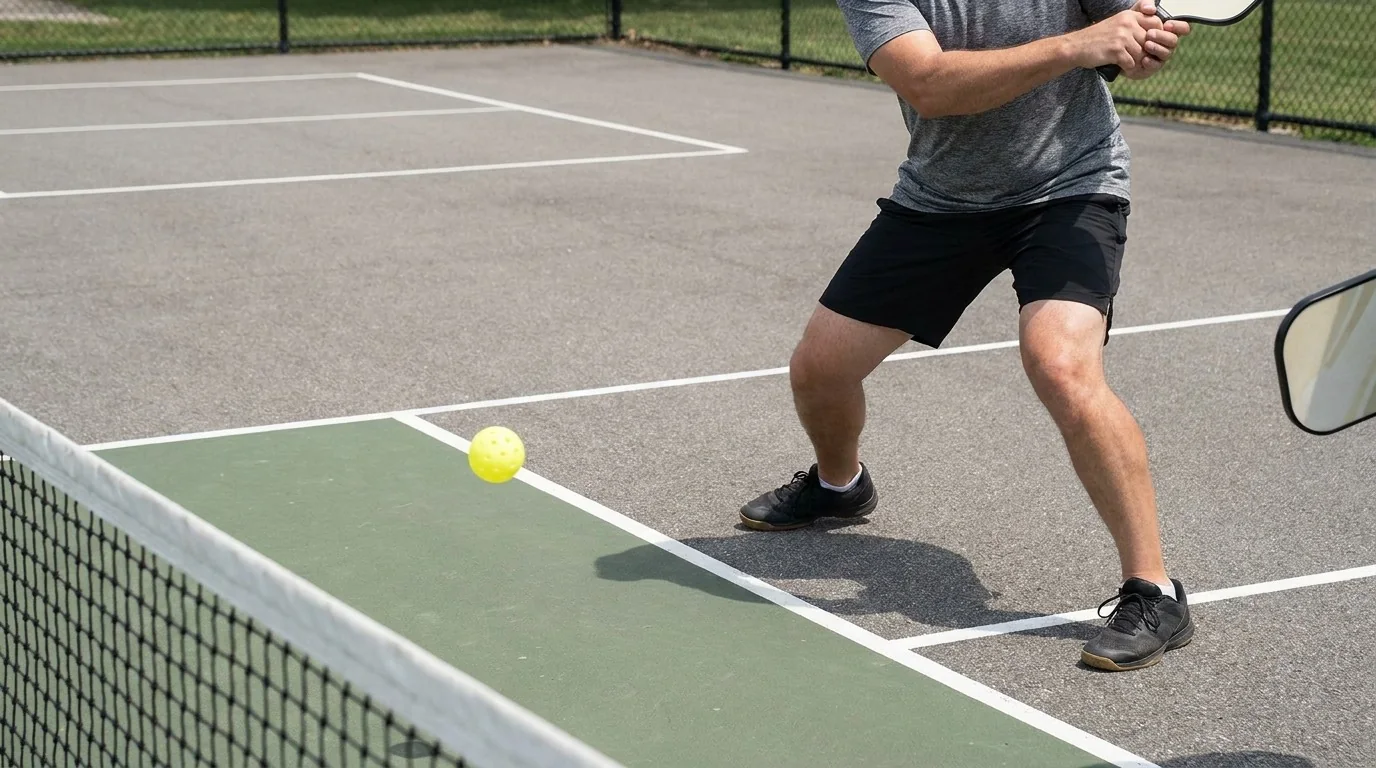
A pickleball backhand recovery does not end when the ball leaves the paddle. The finish should leave you balanced enough to read the opponent, protect your court position, and prepare for the next contact. A compact backhand and a controlled recovery are one sequence, not two separate skills.
Build a repeatable backhand shape
Start with the paddle prepared in front of the body and turn the shoulders before the ball reaches you. Keep the swing compact enough that the contact stays in front rather than beside your hip. A stable base gives the stroke room to travel without forcing the arm to rescue a late ball.
For a two-handed backhand, let the non-dominant hand support the turn and guide the paddle through contact. For a one-handed backhand, keep the preparation simple and avoid opening the shoulder too early. In either case, the useful check is the same: contact in front, eyes level, and no lunge that carries you past the ball.
Finish without falling away
After contact, allow the paddle to finish naturally while keeping your chest and weight under control. Do not let a large follow-through pull you backward or rotate you away from the next ball. The finish can be compact when the exchange is quick; it only needs to support the direction and height you chose.
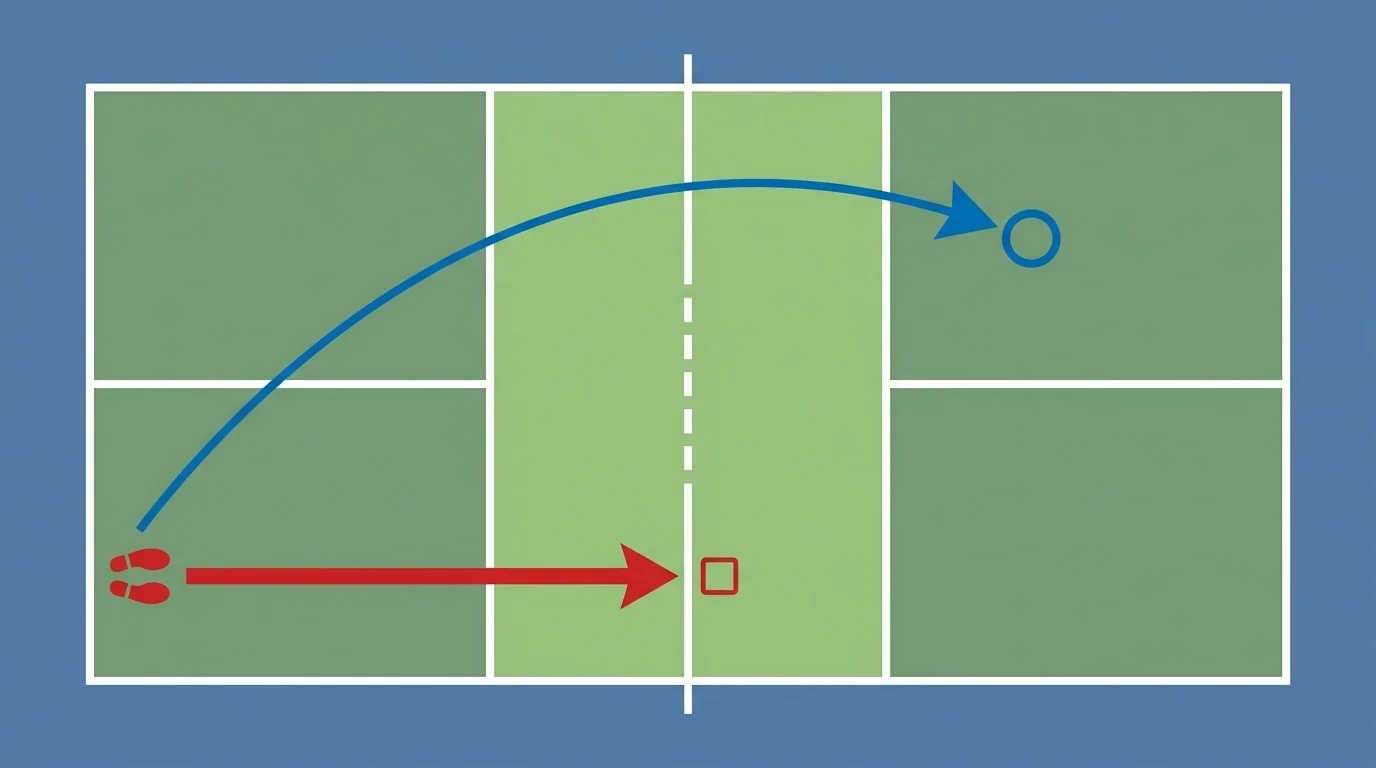
Your feet should begin the recovery as soon as the shot is safely away. If you are near the baseline, regain a position that covers the likely reply without abandoning depth. If you are closer to the kitchen, recover with small steps and return the paddle to a ready position rather than admiring the shot.
Match recovery to the quality of the ball
A deep, controlled backhand may give you time to move forward, but do not advance automatically. Read the opponent’s contact and keep enough space to respond. A shorter or weaker ball can justify a measured step in; a strong reply calls for a balanced base and a ready paddle.
In doubles, protect the space beside your partner while recovering. Move with awareness rather than drifting across the middle. The best recovery is the one that keeps your next decision available.
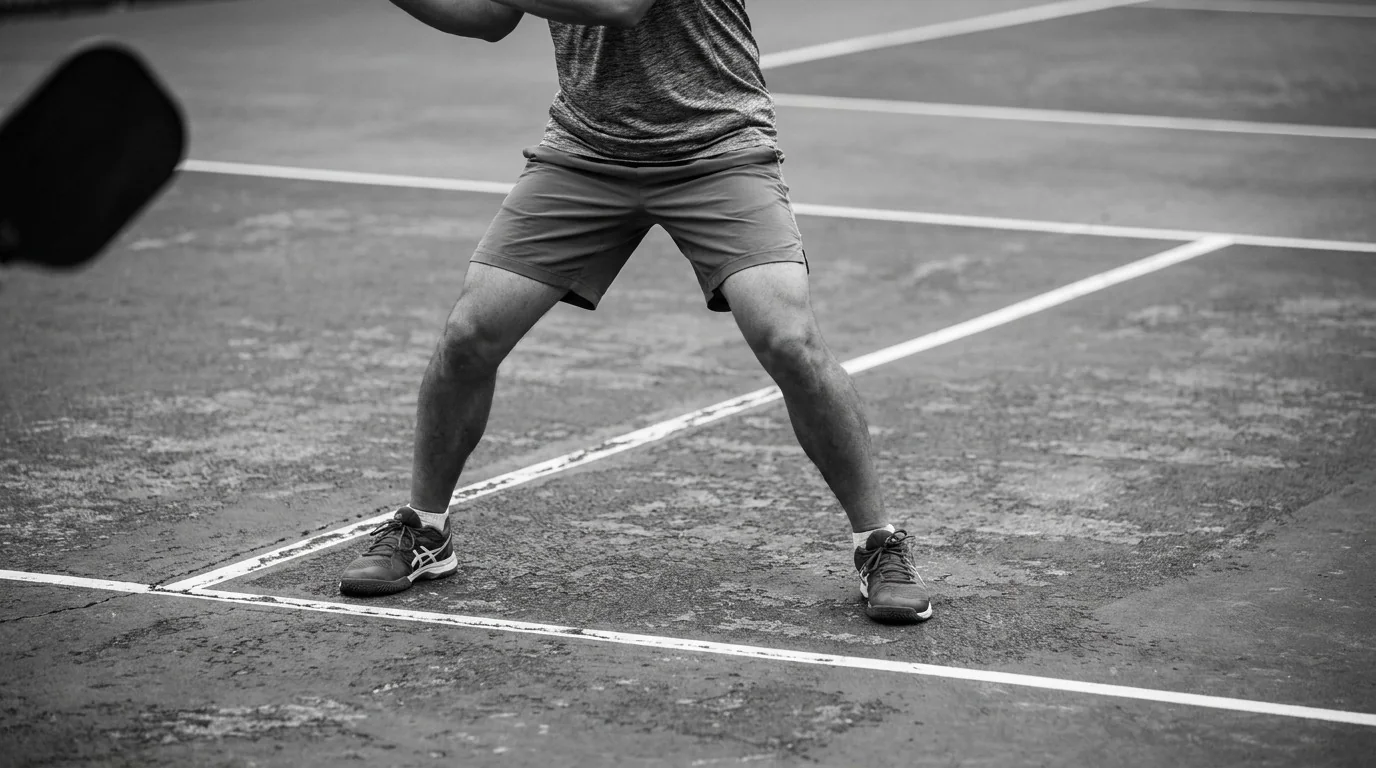
Practise the whole sequence
Begin with cooperative feeds and rehearse three checkpoints: turn early, contact in front, and finish balanced. Then add a recovery marker on the court. After each backhand, move to the marker with small steps, stop under control, and show a ready paddle before the next feed.
To make the drill more realistic, vary the feed between comfortable and wide balls. On a wide ball, move the feet before extending the arm. If balance disappears, reduce the pace and rebuild the sequence. Count repetitions only when the stroke and the recovery both remain controlled.
Common errors include preparing late, reaching with a straight arm, over-rotating after contact, and watching the result instead of recovering. Keep the backhand compact, finish under your center, and let the next ball—not the previous shot—guide your position.