Pickleball Backhand Shoulder Turn: Build a Reliable Three-Shot Foundation
Learn how an early shoulder turn prepares the pickleball backhand drive, drop, and dink, then build the pattern with progressive drills.
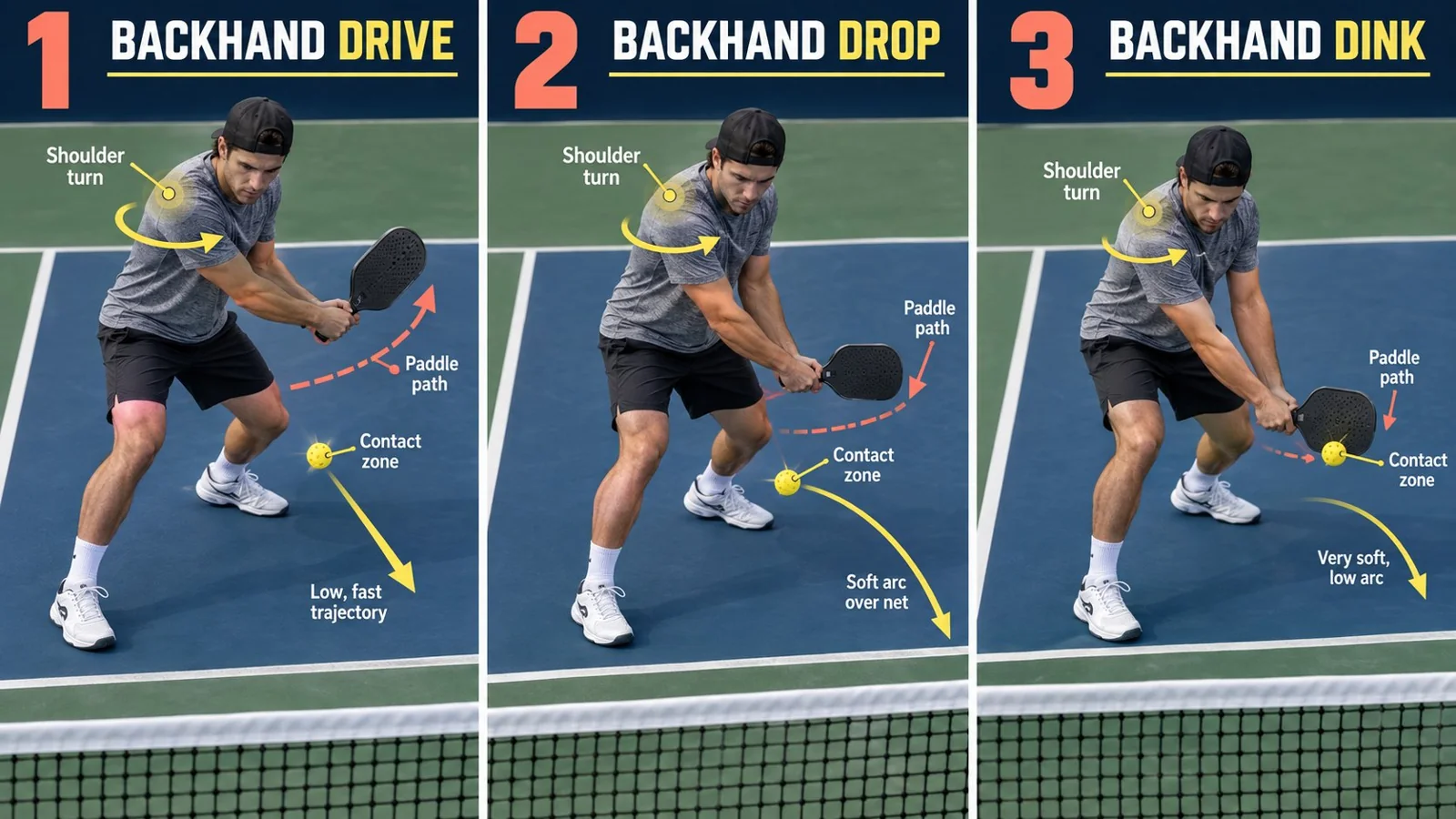
A reliable pickleball backhand begins before the forward swing. The most useful preparation is an early shoulder turn that places the body sideways and sets the paddle before the ball reaches the hitting zone. This creates room for rotation and leverage instead of forcing the arms to manufacture every bit of pace.
Make the shoulder turn your first checkpoint
Start in a balanced ready position with the paddle in front and the knees relaxed. As soon as you recognize a backhand, turn the shoulders and hips together. Let the non-dominant side lead the preparation; the paddle travels back as part of the turn rather than being pulled behind you in a separate, oversized backswing.
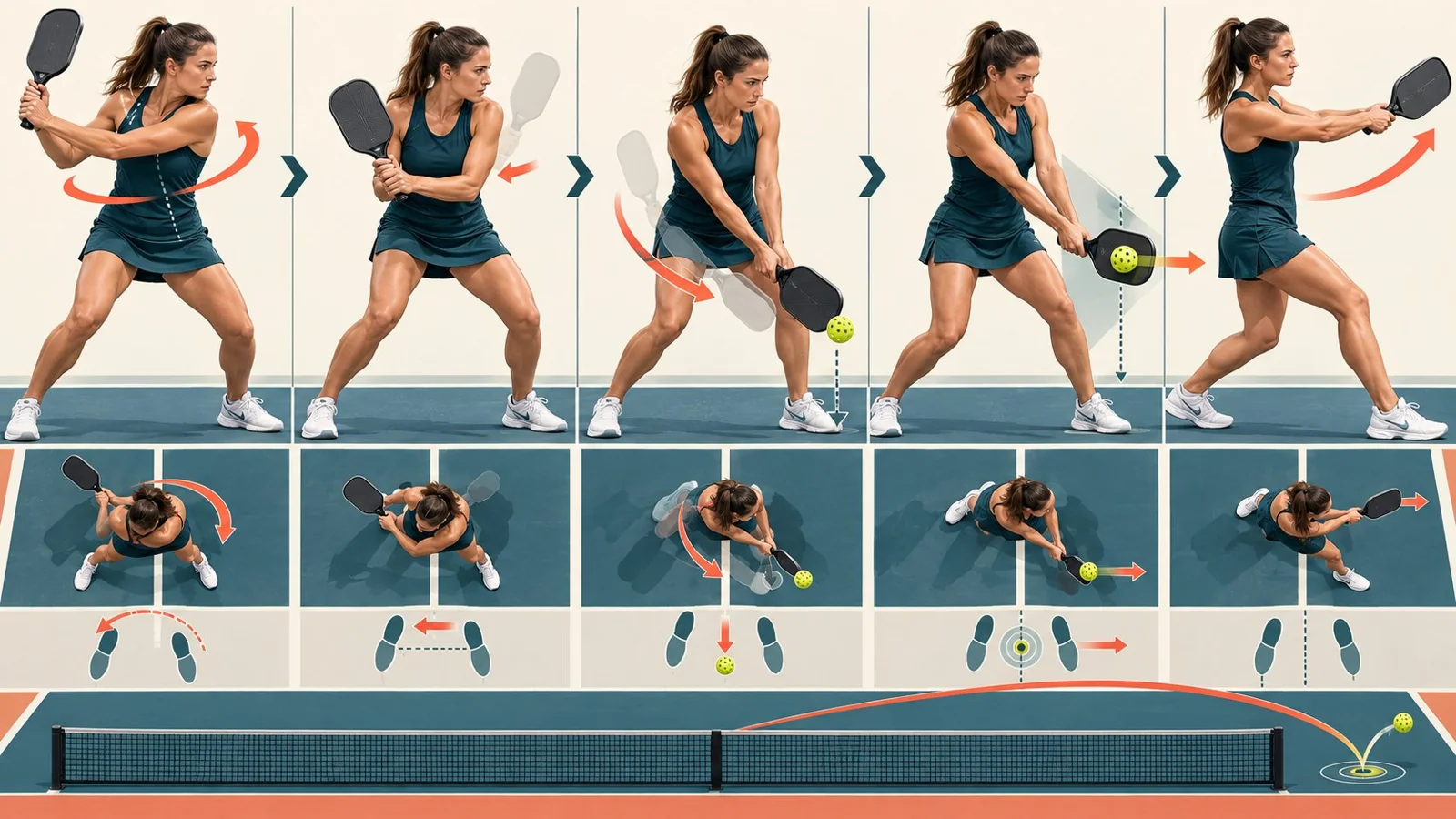
The turn should make the body feel loaded, not twisted. Keep the preparation compact and preserve a comfortable distance from the ball. If you arrive still facing the net with the paddle unset, the stroke becomes an emergency arm swing. If you turn too far, you may lose the ability to adjust to a ball that changes direction.
From this prepared position, think in five connected checkpoints: turn, takeback, drop, contact, and extension. The paddle may point toward the back fence during the takeback, then fall slightly below the ball before moving forward. Contact should happen in front of the body, away from the torso. Continue through the ball instead of lifting and stopping immediately. The finish is a consequence of the sequence, not a pose to force.
Adapt the same preparation to three shots
For a backhand drive, use the full body turn and a forward swing that penetrates through the contact point. The goal is not a giant backswing. Keep the motion compact, create pace from the legs and torso, and finish with enough shape to keep the ball controlled. Practise the drive only after the turn and contact are repeatable at moderate speed.
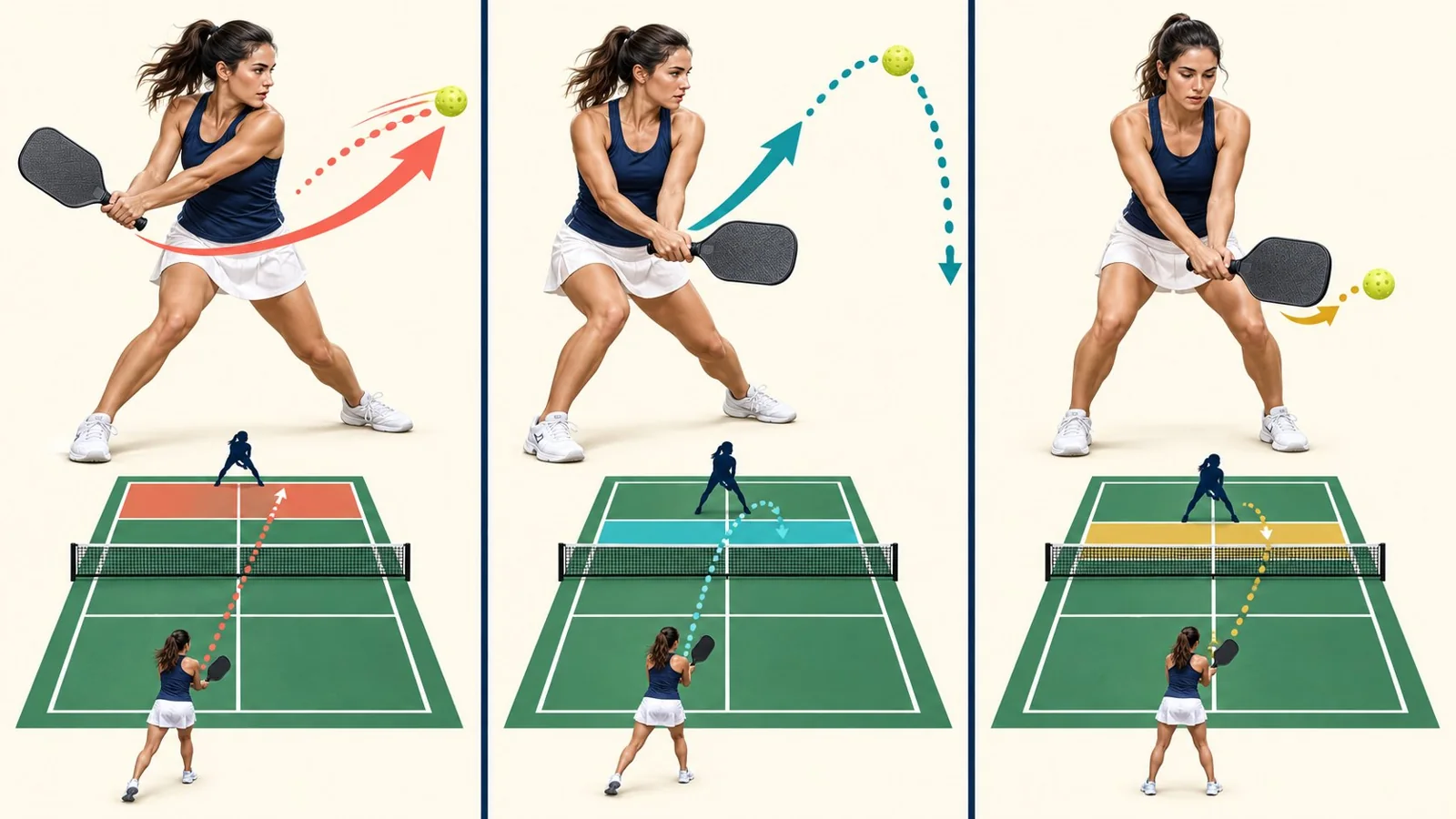
The backhand drop uses the same preparation but changes the direction and speed of the swing. Rather than driving forward aggressively, lift under the ball with a softer, more upward path. Give the shot useful net margin while you learn it; a controlled ball that clears the net gives you another decision, whereas a rushed ball into the net ends the exchange.
At the kitchen, the backhand dink needs a smaller adjustment. Turn the upper shoulder, but keep the lower body more square and the paddle in front of the wrist. Open the face slightly and let the ball leave the paddle without trying to steer it with a busy wrist. A full body rotation or a paddle taken too far behind the hand can jam the contact and make the ball pop up.
The three shots share the same preparation, but their swing paths and targets are different: drive through the ball, lift the drop with margin, and keep the dink compact at the kitchen.
Choose one or two hands with a purpose
A two-handed backhand gives many developing players stability and control. The dominant hand stays lower on the handle while the non-dominant hand guides the preparation and much of the forward action. Players with a long racket-sport background may prefer one hand, especially for reach and touch on a drop. The useful test is not fashion: choose the grip that lets you turn early, contact in front, and recover without tension.
Build the pattern with progressive drills
Begin with shadow swings. Turn the shoulders, set the paddle, pause, then rehearse contact and extension without a ball. Next, use the top hand alone to hit gentle forehands; this helps you feel how the non-dominant hand contributes to a two-handed stroke. Add both hands and repeat the same compact sequence.
For a second drill, complete the backhand swing and briefly wave with the dominant hand. The playful cue encourages the top hand to finish the movement instead of letting the lower arm take over. Keep the swing relaxed and stop if the finish becomes cramped.
Finally, work from the kitchen toward the baseline. Start with controlled backhand dinks, take one step back after a successful repetition, and change the goal as the distance increases. Reverse the route by beginning deeper and moving forward again. Add live feeds only after the preparation remains early under moderate pace.
The common errors are avoidable: running around every backhand, arming the ball without turning, and slowing down from fear of missing. Make the shoulder turn the first commitment, then let the feet create space and the hands complete a prepared stroke. With repetition, the backhand becomes an option you can trust rather than a side of the court you avoid.