Pickleball Ball Care: Clean, Store, and Replace Balls at the Right Time
A practical pickleball ball-care routine for matching indoor and outdoor balls, cleaning them gently, storing them away from temperature extremes, and spotting replacement signs.
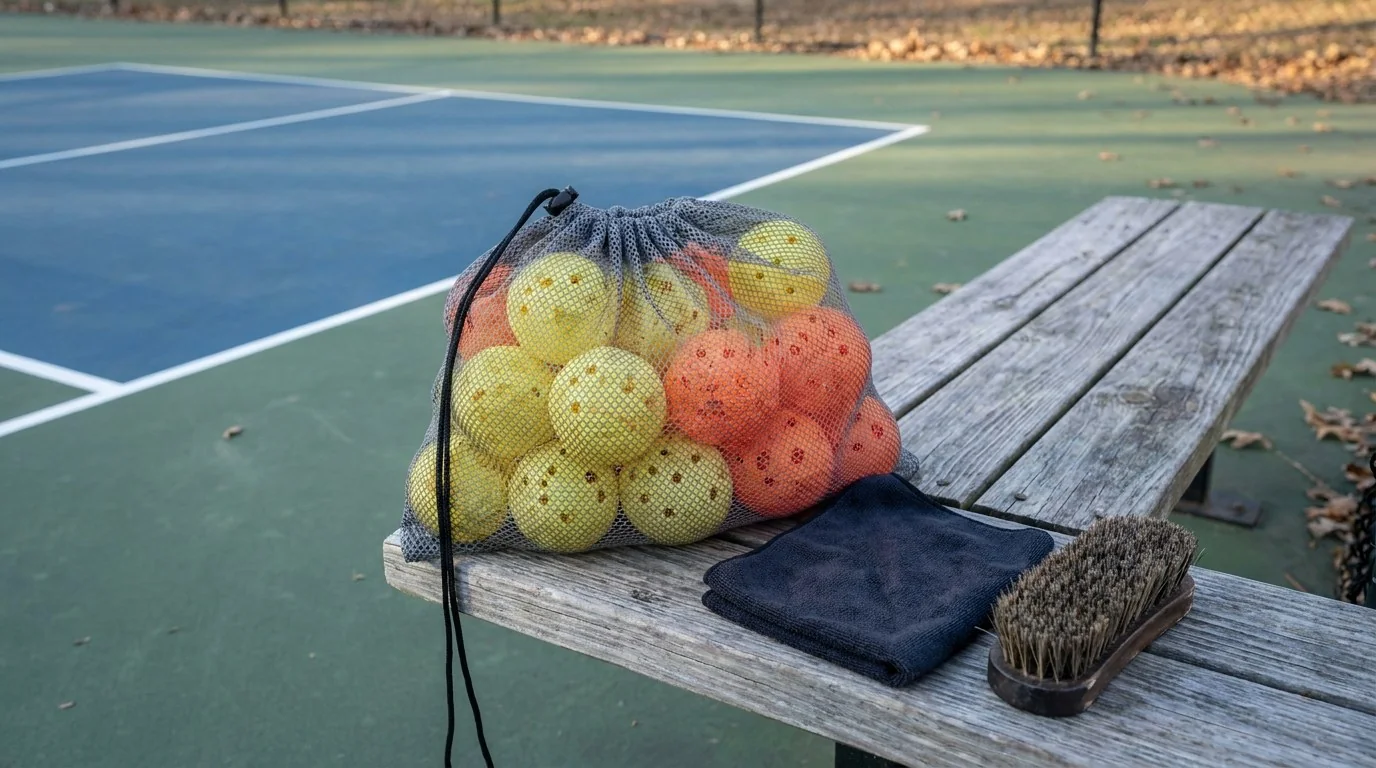
Pickleballs are simple pieces of equipment, but the plastic changes as the ball takes impacts, meets different court surfaces, and sits in heat or cold. A short care routine helps keep the bounce, sound, and flight more consistent. It also tells you when washing the surface is no longer enough and the ball should leave match play.
Match the ball to the playing surface
Indoor and outdoor pickleballs are built for different conditions. Indoor balls are usually softer and have larger holes, which suits smooth gym floors. Outdoor balls are designed for rougher surfaces and wind, but asphalt, concrete, and repeated hard contact place more stress on the shell. Use the type intended for the venue instead of asking one ball to perform well everywhere.
Keep several balls in rotation when you can. Switching them between games spreads the impacts instead of wearing out one ball during every session. You usually do not need to mark each ball for recreational play. Put older practice balls in one group and keep the newest, most consistent balls for games where their behavior matters.
Remove dirt gently
After dusty outdoor play, wipe the ball with a soft cloth. If grime has collected on the surface or in the holes, use lukewarm water with a small amount of mild soap. Rinse away the soap film and dry the ball thoroughly with a towel. The goal is to remove dirt without changing the shape or texture of the plastic.
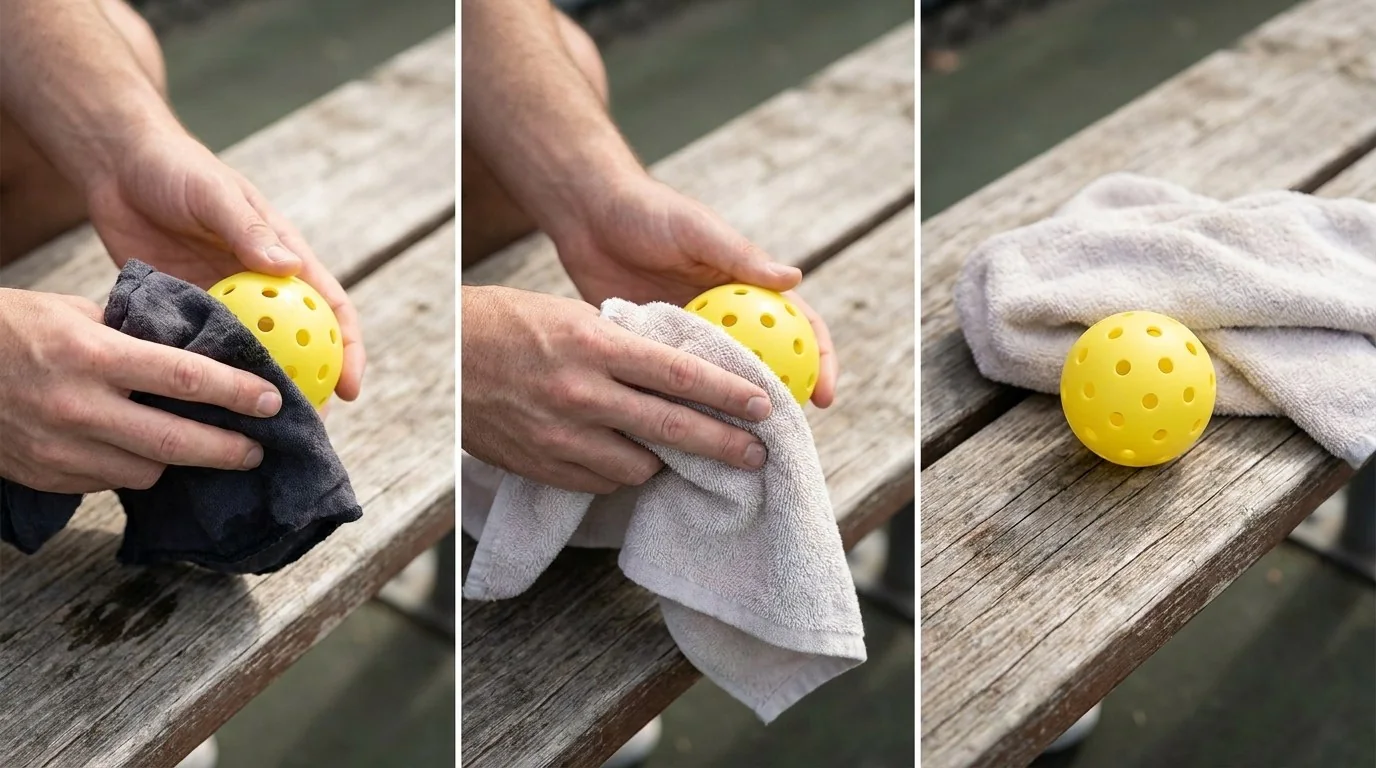
Avoid solvents, bleach, abrasive powders, sandpaper, and stiff or aggressive brushes. They can alter the plastic or leave residue that changes how the ball feels and travels. Do not put a wet ball straight into a closed bag. Let it air-dry fully in a ventilated place before you store it.
Keep heat, cold, and sun away
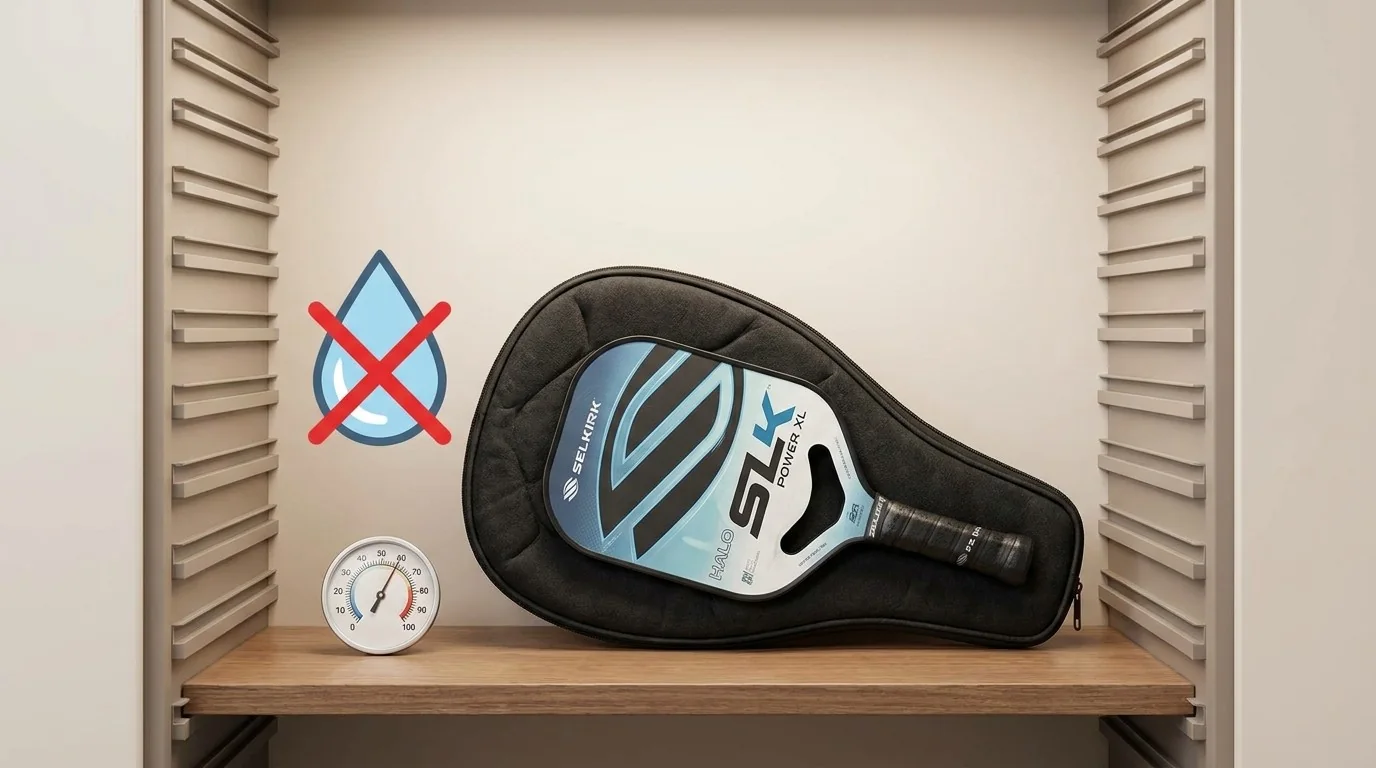
Store dry balls in a cool, dry place out of direct sunlight. A stable indoor temperature is a better choice than a car trunk, hot garage, attic, or freezing shed. Heat can soften plastic and encourage deformation. Cold can make it more brittle, increasing the chance of a crack when the ball is struck. Repeated temperature swings can also stress the material as it expands and contracts.
A mesh bag or ventilated container works well once the balls are dry. Do not compress a large set into a small compartment, and keep the balls away from wet towels or damp clothing. When travelling, place the container inside your gear bag rather than on a dashboard warmed by the sun.
Inspect the ball before play
Look around the holes and seam for hairline cracks, splits, rough chips, or a section that is no longer round. If the shape is difficult to judge, roll the ball across a flat surface and watch for a wobble. During warm-up, notice any unexpected change in bounce, sound, flight, or contact feel. An inconsistent ball can make normal shots seem unreliable and can affect the quality of a whole game.
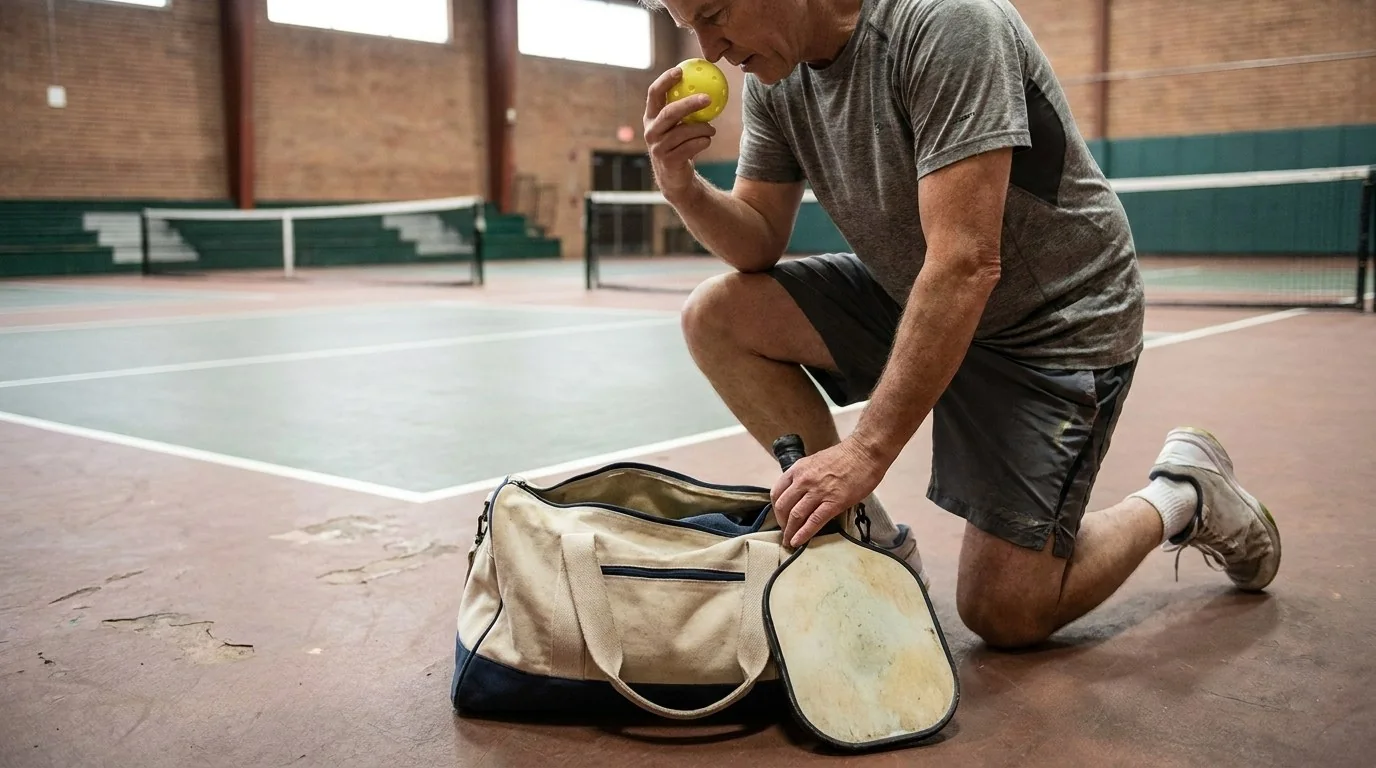
Remove a cracked ball from match rotation. Tape or glue may hold a damaged shell together temporarily, but it changes the surface and does not restore dependable behavior. If a visibly damaged ball is still safe to use, place it with practice equipment. Otherwise discard it. In cold weather, inspect more often because brittle plastic can fail without much warning.
Use a simple replacement checklist
- Choose an indoor or outdoor ball that fits the court.
- Wipe off dust and use mild soap and water only when needed.
- Dry every ball completely before putting it away.
- Store the set in a cool, dry, shaded, ventilated place.
- Rotate the balls and check the holes, seam, shape, bounce, and sound.
- Replace a ball when cracks, deformation, or inconsistent performance appear.
Care will not make a worn ball new again. It can, however, prevent avoidable damage from heat, moisture, dirt, and poor storage. Keep the routine practical, remove compromised balls promptly, and begin each session with equipment that behaves predictably.