Pickleball Paddle Sweet Spot: Find Consistent Contact Without Chasing Claims
Learn what the pickleball paddle sweet spot feels like, how to map your own face, and how to build more consistent contact without chasing universal claims.
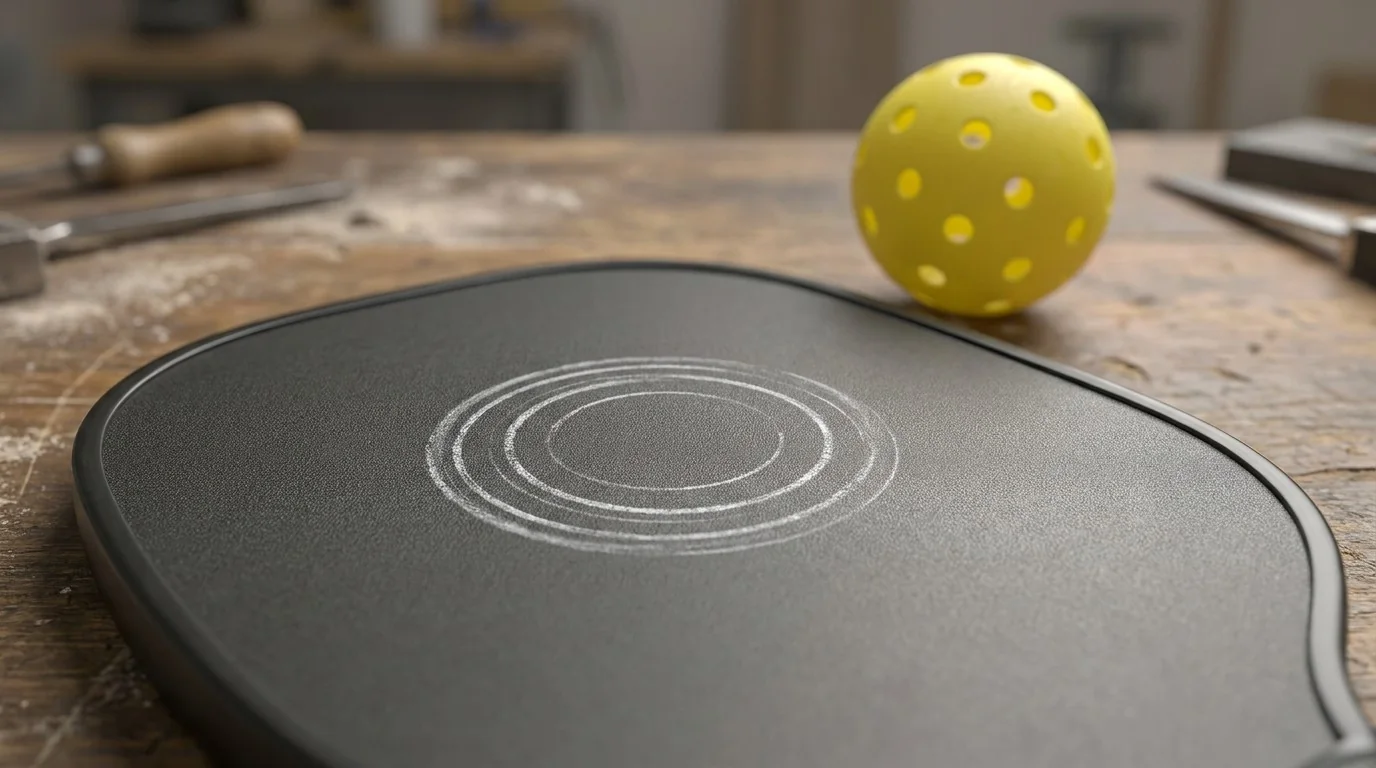
The sweet spot is not a magic dot printed on every pickleball paddle. It is the part of the face where contact feels especially solid and predictable for that paddle and that player. When you miss it, the paddle may feel hollow, vibrate more, or send the ball with less useful pace or direction. The exact area depends on the paddle and on how you swing, so the practical goal is not to chase a manufacturer slogan. It is to learn where your own paddle gives you the most repeatable contact.
What the sweet spot tells you
Players use “sweet spot” as shorthand for a better-feeling contact area, but it does not mean one universal point or guarantee of power, accuracy, or comfort. Paddle construction, shape, weight, and other design features affect how the face responds. Your grip, contact location, and swing also change what you feel.
A centered strike often sounds and feels more solid. A hit toward another part of the face may feel dull, vibrate, or sting the hand. Those sensations are useful feedback, not a laboratory measurement. Treat them as clues that help you improve contact rather than as proof that one location is best for every shot.
Map your paddle with controlled feedback
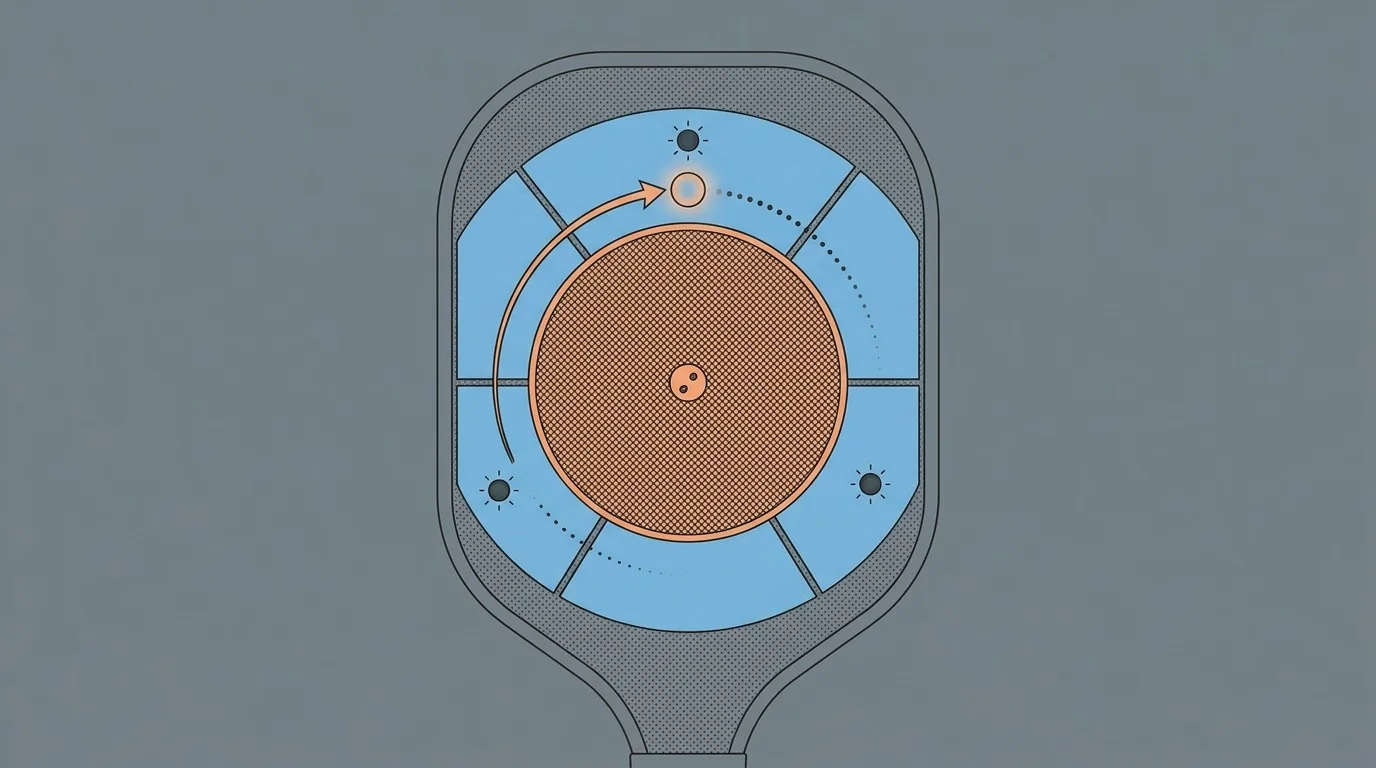
Start with a dry paddle and a familiar ball. Stand in a clear space and use a controlled tap or gentle feed, not a full-power swing. Keep the stroke and grip as similar as you can while you vary the contact location slightly across the face. Notice three things: the sound, the vibration in your hand, and whether the ball leaves on a predictable path.
You are looking for a pattern, not a single perfect mark. Repeat the test at the upper, lower, left, and right portions of the face, then compare those contacts with the middle area. If one place feels solid more often, use that information when you prepare for the next ball. Do not treat a single tap as a final verdict.
Keep the experiment safe and simple. Use enough room for the ball, avoid swinging near another player, and stop if the paddle or your hand feels damaged. This is a feel check, not a reason to strike the face harder.
Build contact that stays in front
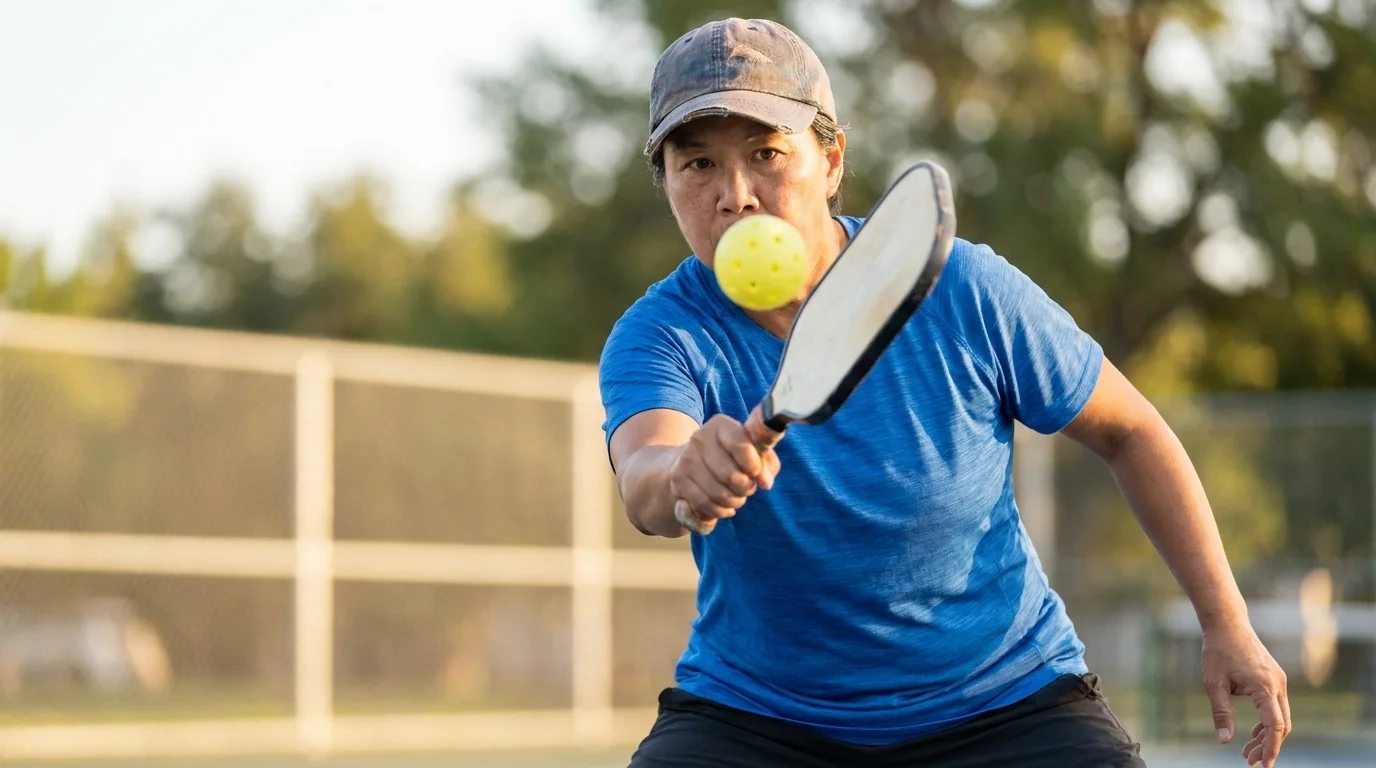
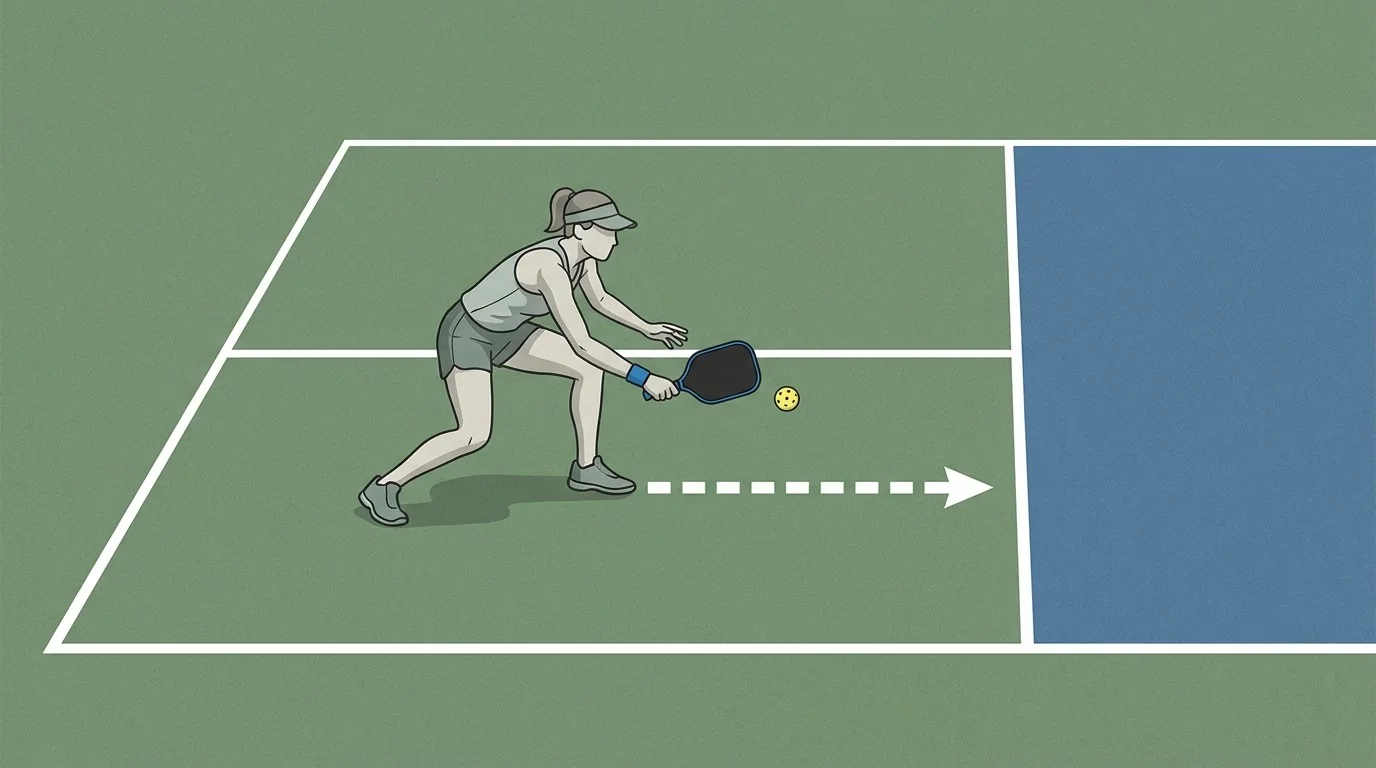
The best way to find the sweet spot during play is to improve the space around contact. Prepare the paddle early, move your feet instead of reaching, and meet the ball in front of your body when the shot allows it. Keep the grip pressure appropriate for the shot and return the paddle to a ready position after contact.
Use short feeds first. Have a partner send comfortable balls to the same side while you focus only on meeting the ball cleanly. Then vary the height and direction slightly. If you keep missing toward the edge, check whether your feet stopped too far away, whether the ball got behind you, or whether the paddle started too low. Adjust the setup before trying to swing harder.
A simple practice progression
- Find the feel. Use gentle taps to compare the centre and outer parts of the face.
- Repeat the contact. Ask for comfortable feeds and keep your preparation and finish compact.
- Add movement. Take small adjustment steps before contact instead of stretching from a fixed stance.
- Add decisions. Alternate a soft shot and a firmer shot while keeping the same balanced contact habits.
- Review the feedback. Note which misses feel hollow, vibrate, or lose direction, then correct your feet or preparation first.
The aim is not to make every ball touch one tiny location. Good players still hit off-centre contacts, especially under pressure. The useful skill is recognising the feel of a stable strike, giving yourself enough space to find it more often, and choosing a controllable shot when the ball arrives outside that window.
Common mistakes when chasing the sweet spot
Swinging harder. More speed does not repair late footwork or a ball that has moved behind you. Build room first.
Assuming the centre is identical on every paddle. Use your own controlled feedback. Do not copy a fixed location from another model or player.
Treating a single test as proof. Sound and vibration can change with the ball, grip, stroke, and contact point. Repeat the pattern before changing equipment.
Ignoring warning signs. A persistent sharp sting, a damaged face, or a loose handle is not a normal sweet-spot lesson. Stop and inspect the paddle before continuing.
A paddle’s sweet spot is best understood as a repeatable contact area, not a promise on a box. Learn the feel, create space with your feet, and use the feedback to make your next contact more predictable.