Pickleball Ball Consistency: Test Bounce and Replace Uneven Balls
A practical pre-play routine for checking pickleball roundness, bounce, surface, and storage condition.
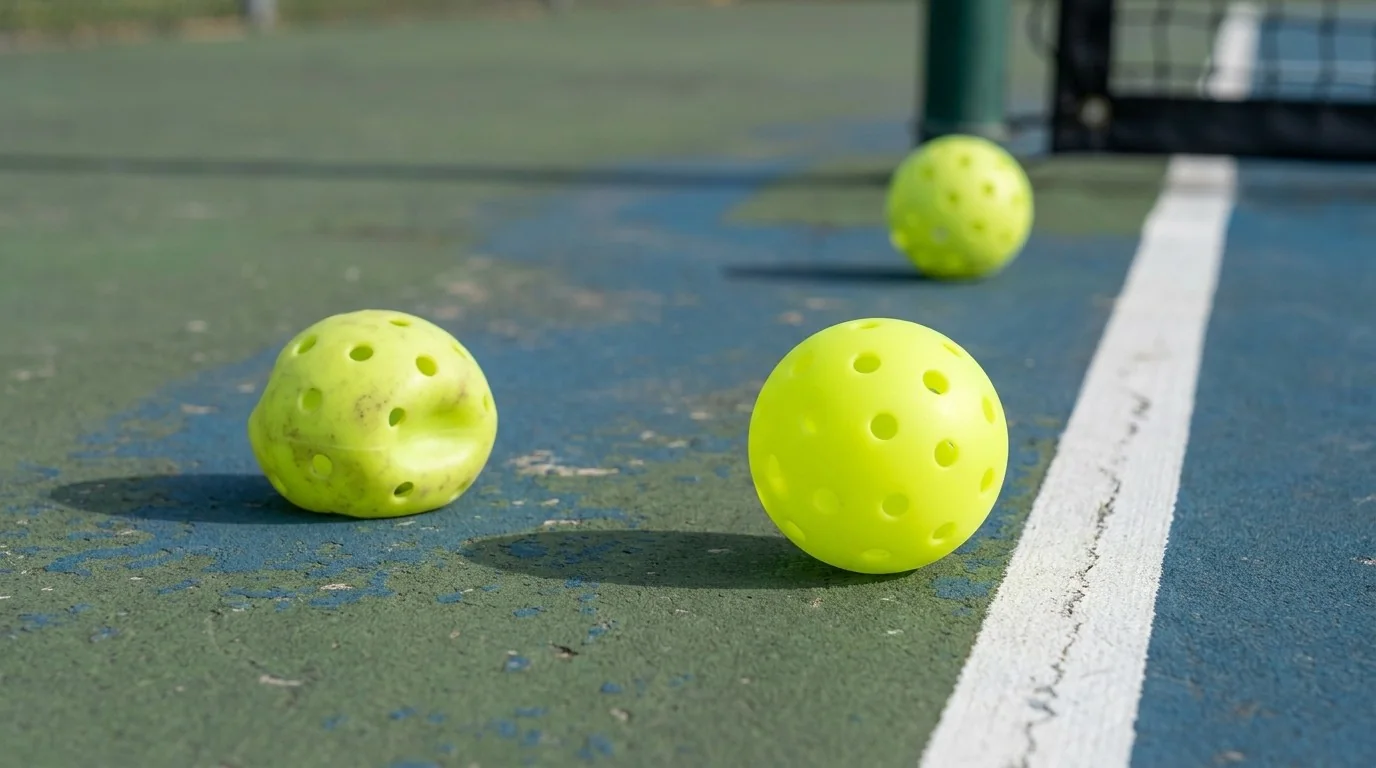
A dependable rally starts with a ball that behaves the same way from one exchange to the next. Checking pickleball consistency is not a search for the newest-looking ball. The useful questions are whether it is round, intact, and suited to the playing surface and conditions. A short inspection before practice or a match can keep one damaged ball from changing the bounce of the entire session.
Check the ball before play
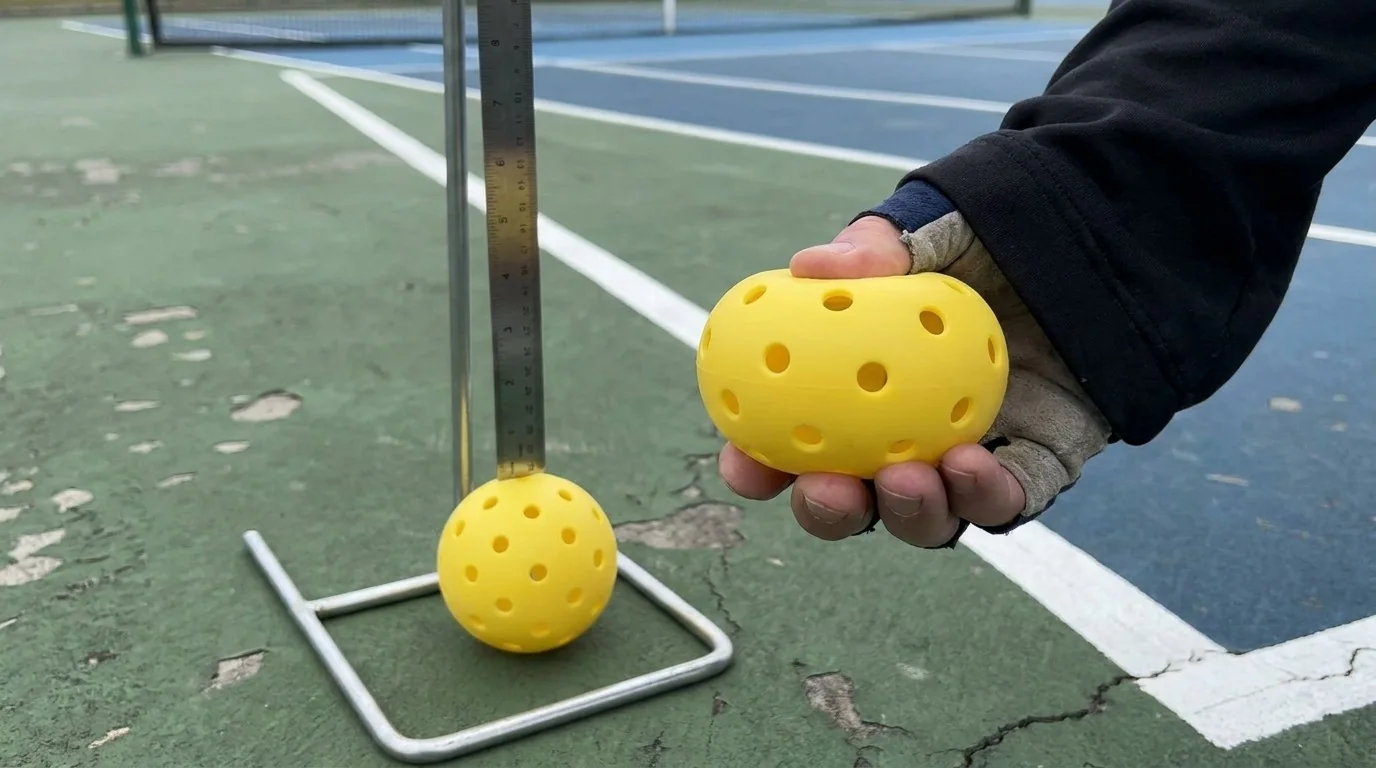
Roll the ball across a flat surface and watch its path. Does it travel smoothly, or does it wobble? A pronounced wobble does not identify the exact defect by itself, but it is a good reason to inspect the ball more closely. Turn it in your hand and look for deep cuts, splits, heavy scuffing, or a seam that has started to open. Minor cosmetic marks are not automatically disqualifying. Damage that changes the ball's shape or bounce matters more.
The ball also needs to fit the setting. Indoor and outdoor pickleballs are made for different environments, and approved models can differ in hole pattern and flight. When consistency matters, use the ball specified by the event, facility, or playing group instead of mixing unrelated balls.
Compare the bounce in a repeatable way
Drop the ball from the same height onto the same hard surface and compare it with a ball you trust. Hold both from a consistent point, release without adding force, and pay attention to the first bounce. This is only a screening test: temperature, the surface, and the release height can all affect the result. If the behavior looks unusual, repeat the comparison rather than deciding from one drop.
A ball that bounces much lower, much higher, or less predictably than the comparison ball needs another inspection. Do not try to repair a split or reshape a deformed ball for serious play. Set a questionable ball aside for casual practice, or discard it once it can no longer provide a dependable bounce.
Inspect wear after each session
Heat, cold, rough courts, hard impacts, and pressure during storage can all change a ball over time. Collect the balls after play instead of leaving them in direct sun or under heavy objects. Store them dry and avoid conditions that could soften, crack, or deform the plastic.
Build a simple ball routine
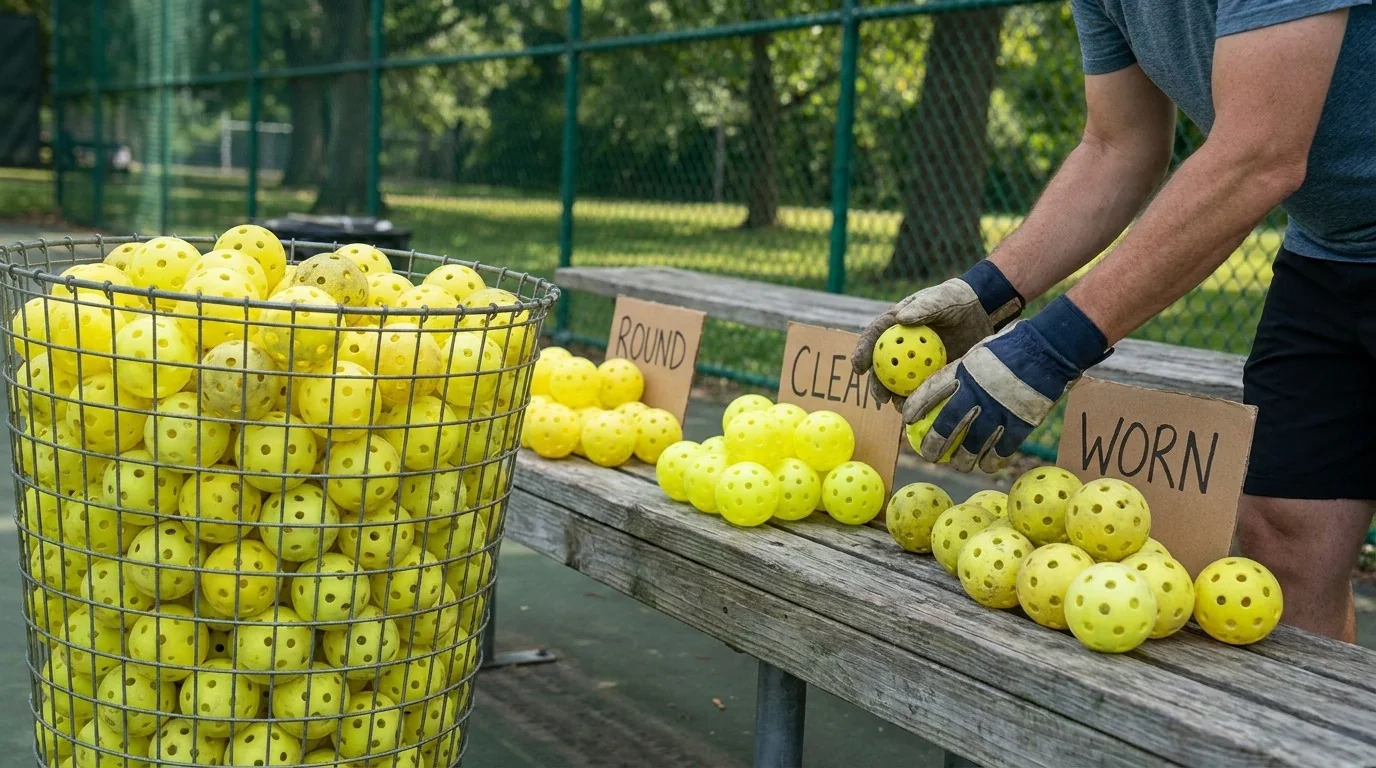
Before play, confirm the ball type, roll it briefly, and inspect it for splits or a changed shape. During a session, replace a ball when its bounce or flight changes noticeably; do not wait for a visible crack. Keep a small group of comparable balls together. You can mark practice balls mentally or physically only when the marking does not affect play or conflict with event rules.
Consistency is practical. It lets players focus on height, depth, spin, and placement instead of reacting to a surprise bounce. Check the ball, respect the playing environment, and replace it when its condition begins to change the rally.
If you are preparing for organized play, read the event instructions before bringing a substitute. A tournament may specify the approved ball or require the selected ball to remain in use, so personal preference cannot override the organizer's choice. For a recreational session, agreeing on one comparable ball type at the start makes the same inspection routine useful for everyone.