Pickleball Ball Tracking: See the Contact, Not Just the Flight
Learn how to track an opponent’s paddle and ball through contact, read height and direction, and train sharper pickleball reactions with practical drills.
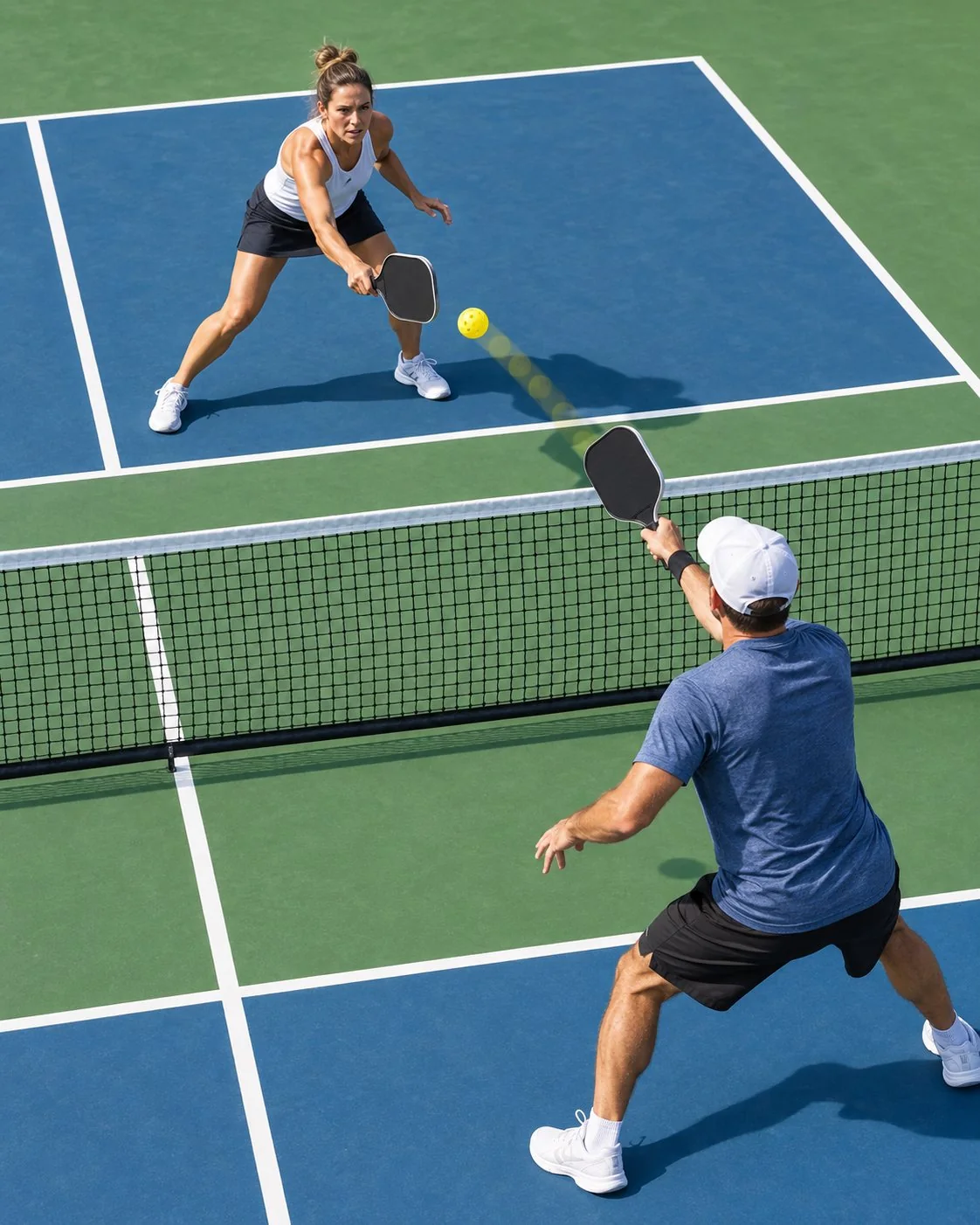
The pickleball ball tracking is a practical rally skill: keep your eyes connected to the opponent’s paddle and the ball through contact, then use that information to choose your feet, paddle preparation, and target. Many players watch only the ball after it leaves the paddle. By then, the most useful clues about height, speed, and direction have already passed. Better tracking does not mean staring without blinking; it means using the right visual cue at the right moment.
Build a quiet tracking habit
Start in a comfortable ready position with your paddle in front and your head still. As the opponent prepares, watch the shoulder turn and paddle path. Keep that visual connection through contact, then shift attention to the ball’s first flight. The sequence is simple: read the preparation, confirm contact, then move.
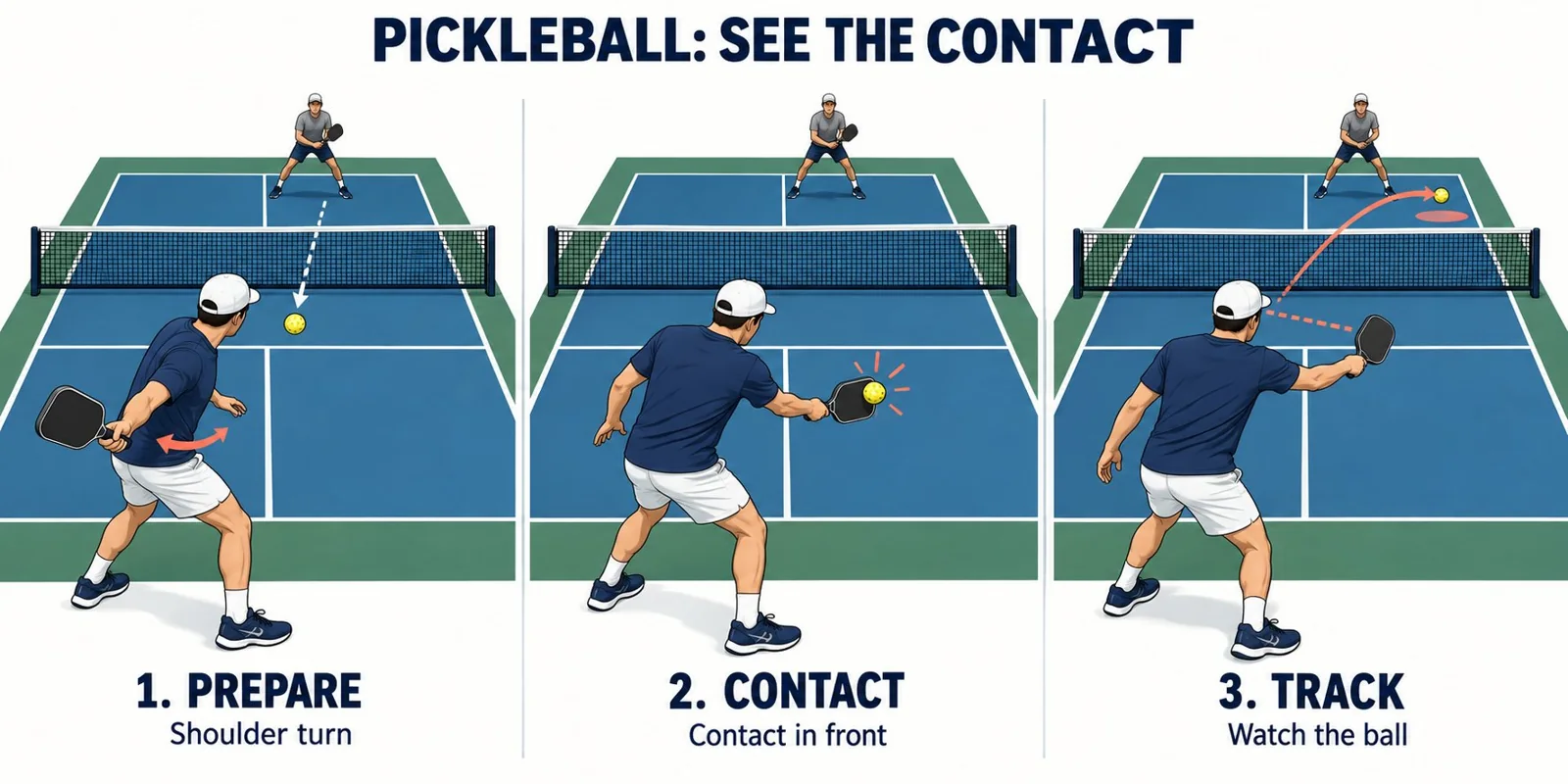
Do not chase the ball with your head. A quiet head keeps your eyes level and makes depth easier to judge. Your body can move while your gaze remains stable. When the paddle face opens, expect a higher or softer trajectory; when the swing is compact and forward, prepare for pace. These are cues, not guarantees, so let the actual ball confirm the decision.
Avoid staring at one part of the opponent’s body. Use the hitter’s chest and paddle arm as a wide visual frame, then pick up the ball immediately after contact. This helps you see whether the shot is headed at your body, toward the sideline, or into the middle without turning late.
Turn what you see into a decision
At the kitchen, tracking helps you prepare before a speed-up or angled dink arrives. Keep the paddle up, soften your knees, and read the opponent’s contact rather than leaning toward the side you expect. If the ball comes at your body, shorten the swing and protect your space. If it travels wide, move your feet first and keep the contact in front.
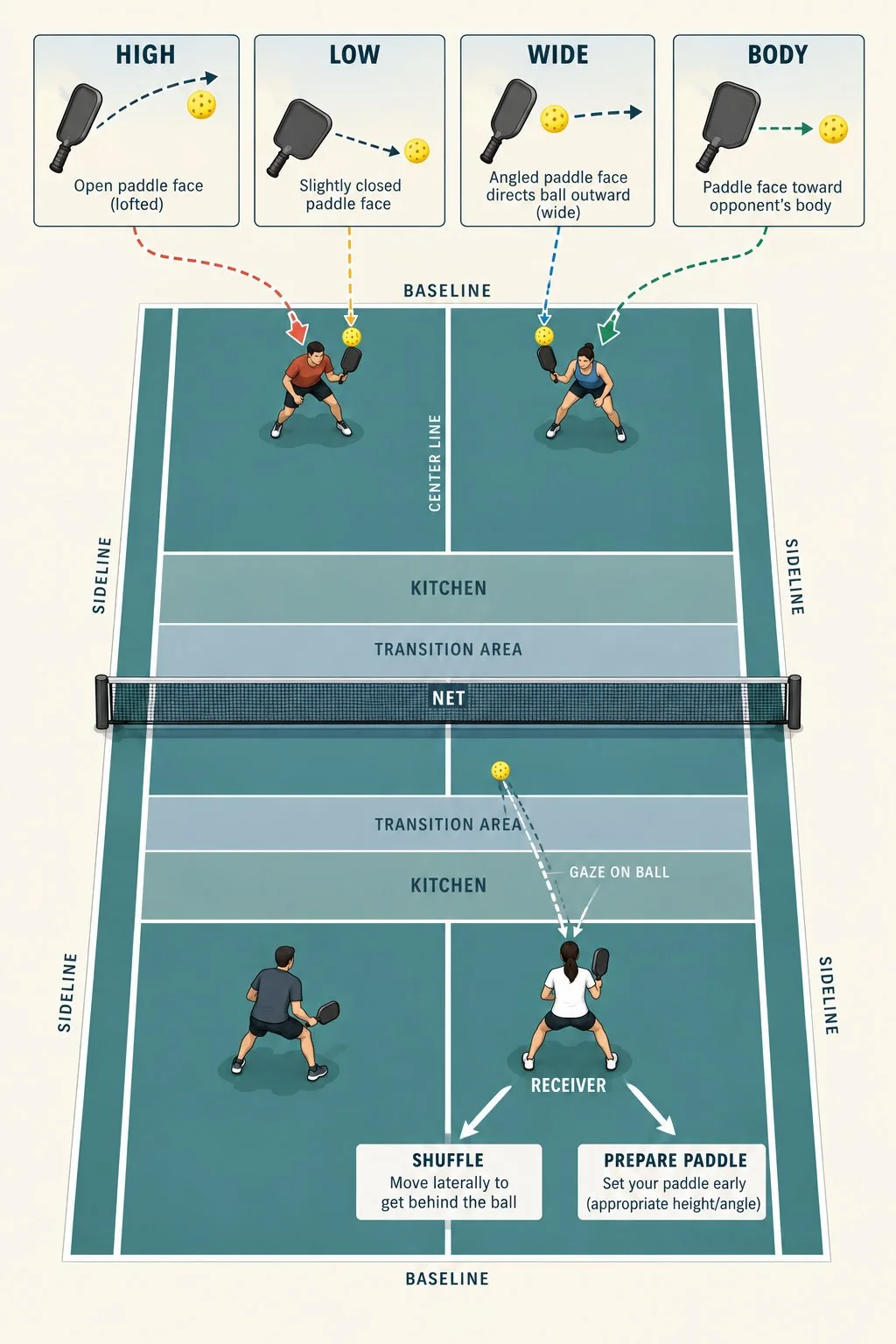
The same habit matters on the return. Watch the server’s contact, then follow the ball’s height and depth. A deep serve may require more preparation and a compact return; a shorter ball gives you time to step in. In transition, tracking prevents a common error: moving forward while looking away from the opponent. See the contact, then choose whether to reset, block, or continue forward.
Do not confuse early reading with guessing. Your goal is to prepare broadly while keeping options open. Track height, depth, and direction, then let your feet and paddle respond to the ball you actually receive.
Three drills for better tracking
Start with a contact-only drill. Have a partner make slow shadow swings or gentle feeds while you call out “ready,” “contact,” and then the ball’s direction. Keep the paddle still until contact. Complete 20 repetitions, then switch sides. The purpose is to connect your words and eyes to the hitter’s action.
Next, add a decision drill. Your partner varies between a high ball, a low ball, a wide ball, and a body ball. You do not need to hit hard: prepare the paddle and take the first appropriate footwork step. Call “attack,” “reset,” “block,” or “move” only after seeing the contact. This discourages premature guesses.
Finally, play short live points with one constraint: after every opponent contact, name the ball’s height and direction before your next shot. Keep the pace moderate enough to maintain a quiet head. Remove the spoken cue when the visual habit becomes reliable.
Common mistakes include watching only the ball, turning the head sharply, reacting to the opponent’s backswing as if it were contact, and guessing the direction too early. Slow the rally down, watch the paddle through the strike, confirm the flight, and let the feet follow the information. With regular practice, pickleball ball tracking becomes part of your rally rhythm and makes every reaction more deliberate.