Pickleball Contact Height: Match Paddle Angle to Ball Height
Match paddle angle to contact height in pickleball: lift low balls, stabilize waist-height contact, and attack higher balls only with balance.
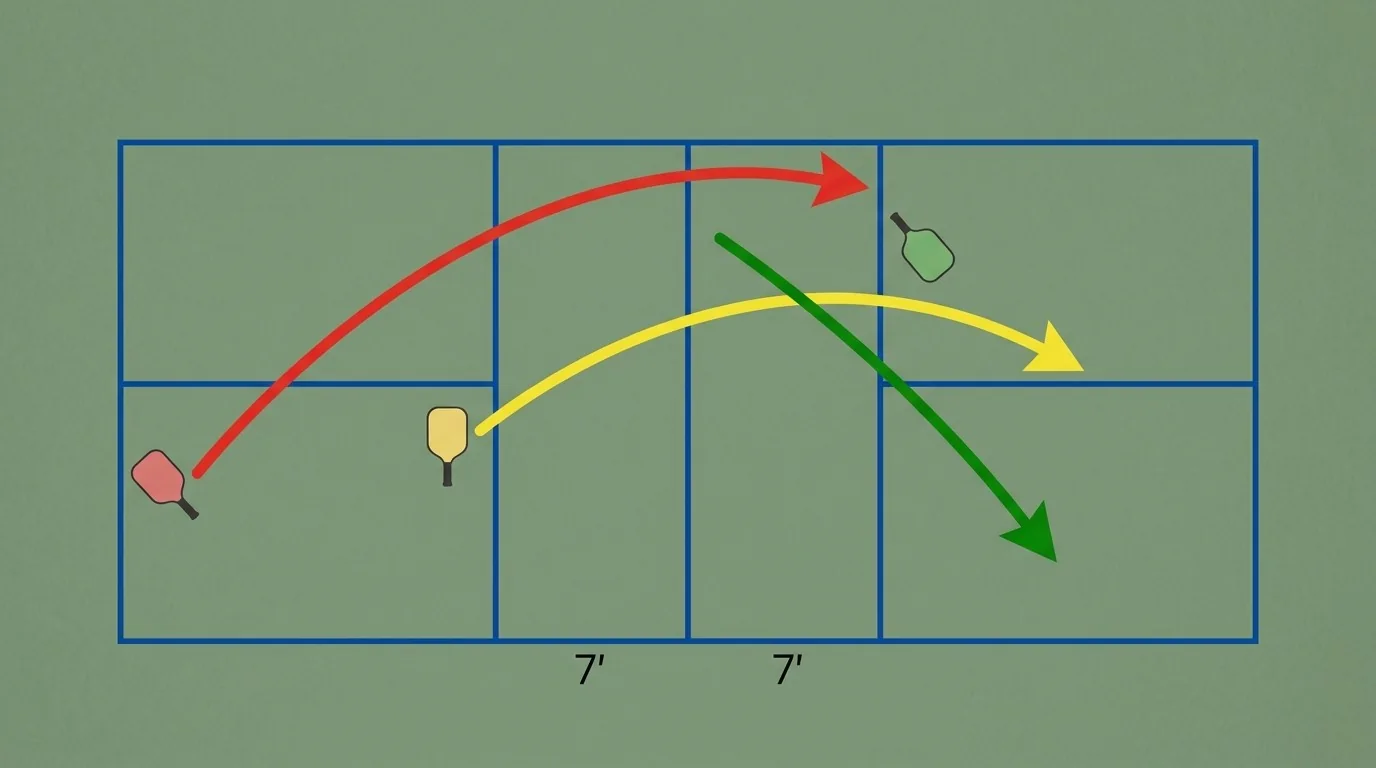
Contact height changes the shot before the swing even starts. A ball below the net, one around waist height, and one above the net ask for different paddle-face decisions. Read the height, make room with your feet, and choose an angle that gives this ball a useful path rather than trying to use one setting for every exchange.
Read the ball before setting the face
Prepare early enough to see where the ball will meet you. Is it still rising? Will it arrive level with your body? Has it climbed above the net? That read tells you how much lift or forward direction the shot needs. The goal is not to hold a permanent paddle angle. It is to present a stable face for the ball in front of you.
A low ball generally needs more lift and more net margin. A waist-high ball can travel on a flatter path when the face stays quiet. A ball above the net may support a firmer or slightly downward action, but only if your feet are set and the contact point is comfortable.
Low contact: add height without popping up
When the ball is below the net, do not try to force it downward. Bend through your legs, move close enough to keep contact in front, and allow the face enough openness to create a safe arc. Keep the swing compact. A larger backswing does not repair late feet or an unstable contact.
Choose a landing area with room inside the lines. If the ball keeps catching the net, check whether the face is too closed or whether contact is too low and late. If the ball floats, reduce the lift and improve your balance instead of simply swinging harder.
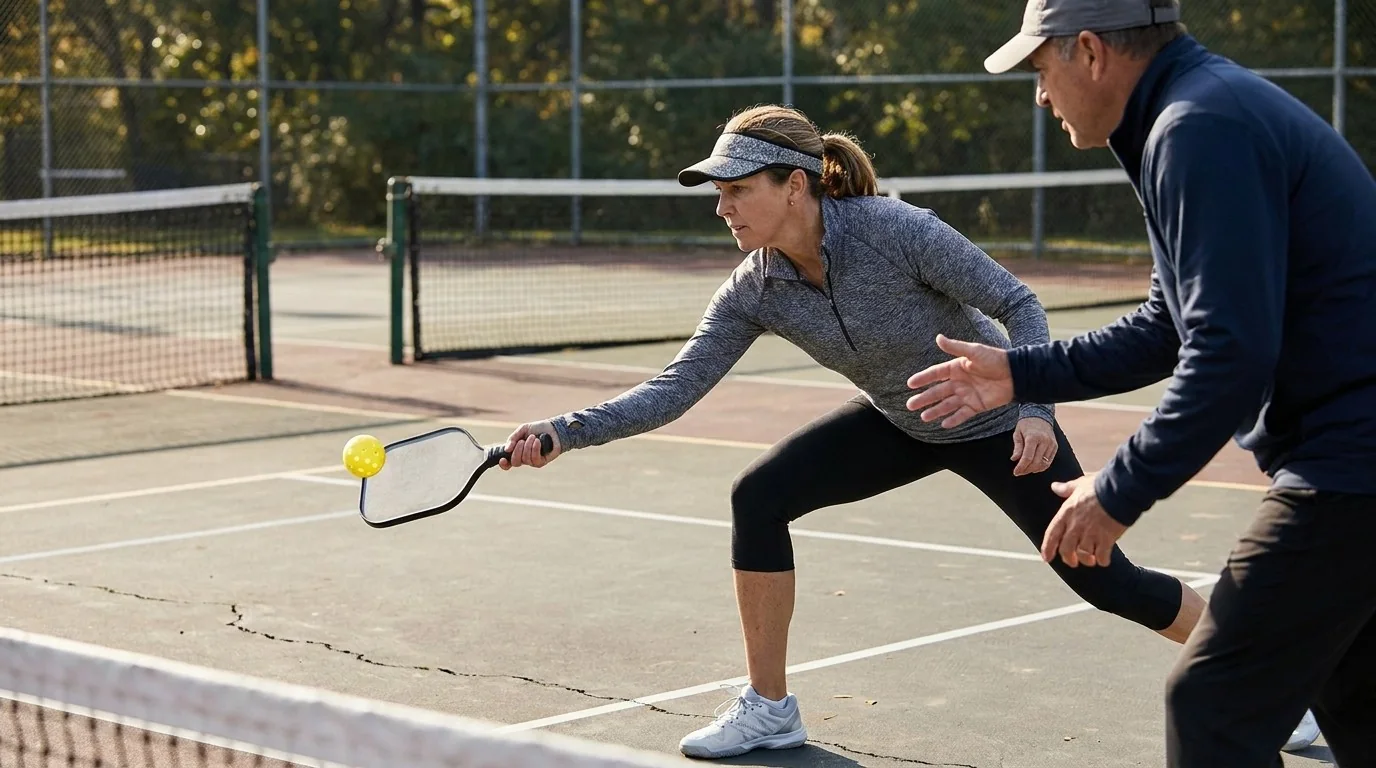
Waist contact: keep the path neutral
At a comfortable waist height, keep the paddle in front and let your body turn or move behind the ball. A mostly neutral face can support a controlled drive, a firm push, or a softer shot. Let the opponent's position and the ball's speed decide which option makes sense; not every waist-high ball needs pace.
Contact in front gives you more control over direction. When you reach behind your body, the face can open or close unexpectedly, making the result harder to repeat. Use small adjustment steps so the ball arrives in the same workable window as often as possible.
Higher contact: decide before accelerating
A ball above the net can be attackable, but height alone is not a reason to overhit. Check that your feet are set, the ball is clearly above the net, and the opponent is not already prepared for the reply. A compact punch or controlled roll may be the better choice when the ball is moving quickly or your balance is changing.
Keep the target practical. The middle, an opponent's hip area, or open court can be more useful than a tiny corner. The face angle, contact point, and target need to agree. Changing only one of them while ignoring the others creates avoidable errors.
Use a five-part contact-height routine
- Locate the ball. Decide whether it is below, near, or above your comfortable contact height.
- Set your feet. Take a short adjustment step so the ball does not force you to reach.
- Choose the face. Add lift for a low ball, keep the face stable for a waist ball, and attack a higher ball only when it is genuinely available.
- Keep a margin. Leave room over the net and inside the lines.
- Recover ready. Bring the paddle back in front and prepare for the next contact.
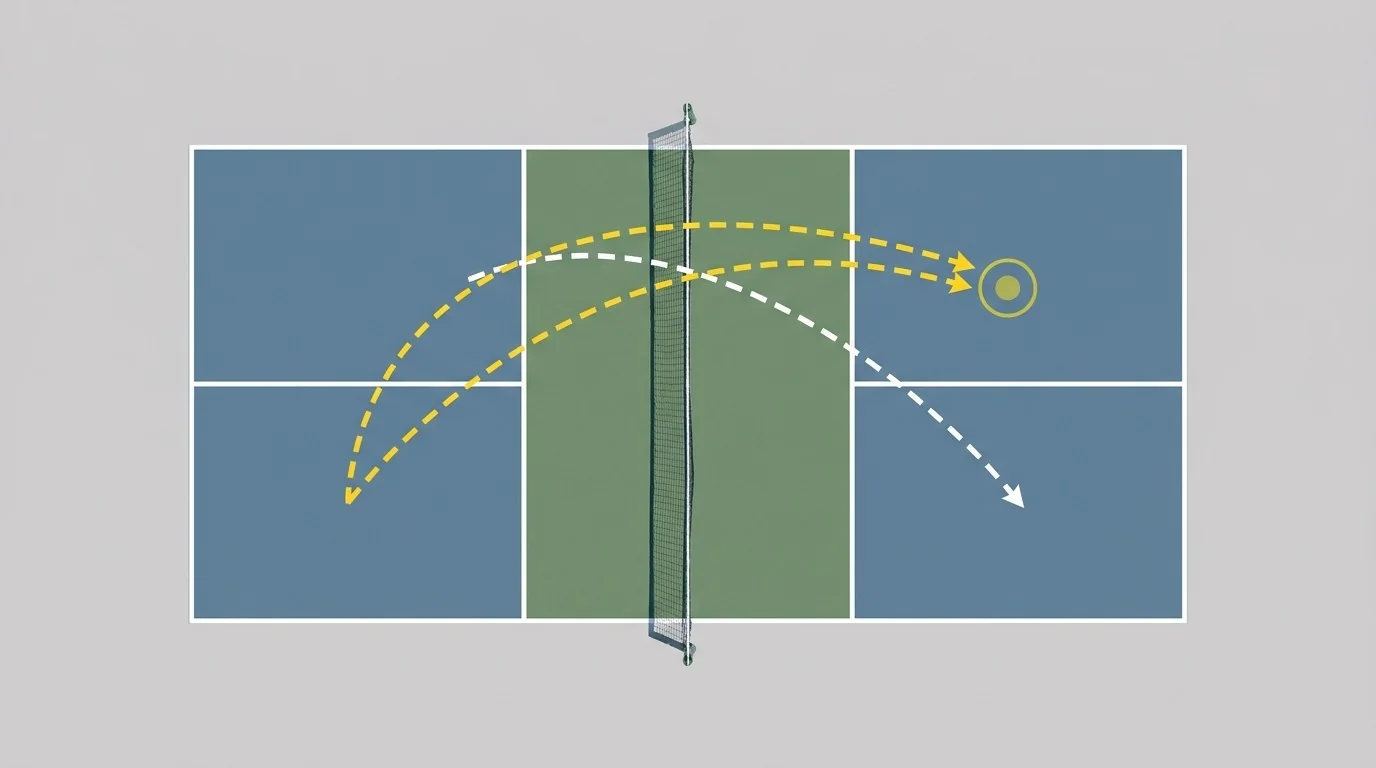
Practise the three heights
Ask a cooperative partner to feed low, waist-high, and higher balls. Start with the low feeds and count only balls that clear the net and land in. Then alternate low and waist feeds without announcing the height. Finish with higher feeds, choosing a firmer shot only when your feet are set and the ball is clearly attackable.
Keep the target zones broad while you learn the read. Note the error pattern instead of guessing: net balls often point to insufficient lift or late contact, while high floating balls can come from too much face opening or a posture that falls backward. The point of the drill is to connect what you see with the smallest useful adjustment.
There is no universal paddle angle for every contact. Match the face to the ball's height, your contact position, your balance, and the target. Read first, adjust your feet, make a compact choice, and recover for the next shot.