Pickleball Court First-Aid Stations: A Safer Community Setup
A practical guide to placing and maintaining pickleball court first-aid stations without blocking gates, hiding emergency information, or disrupting shared play.
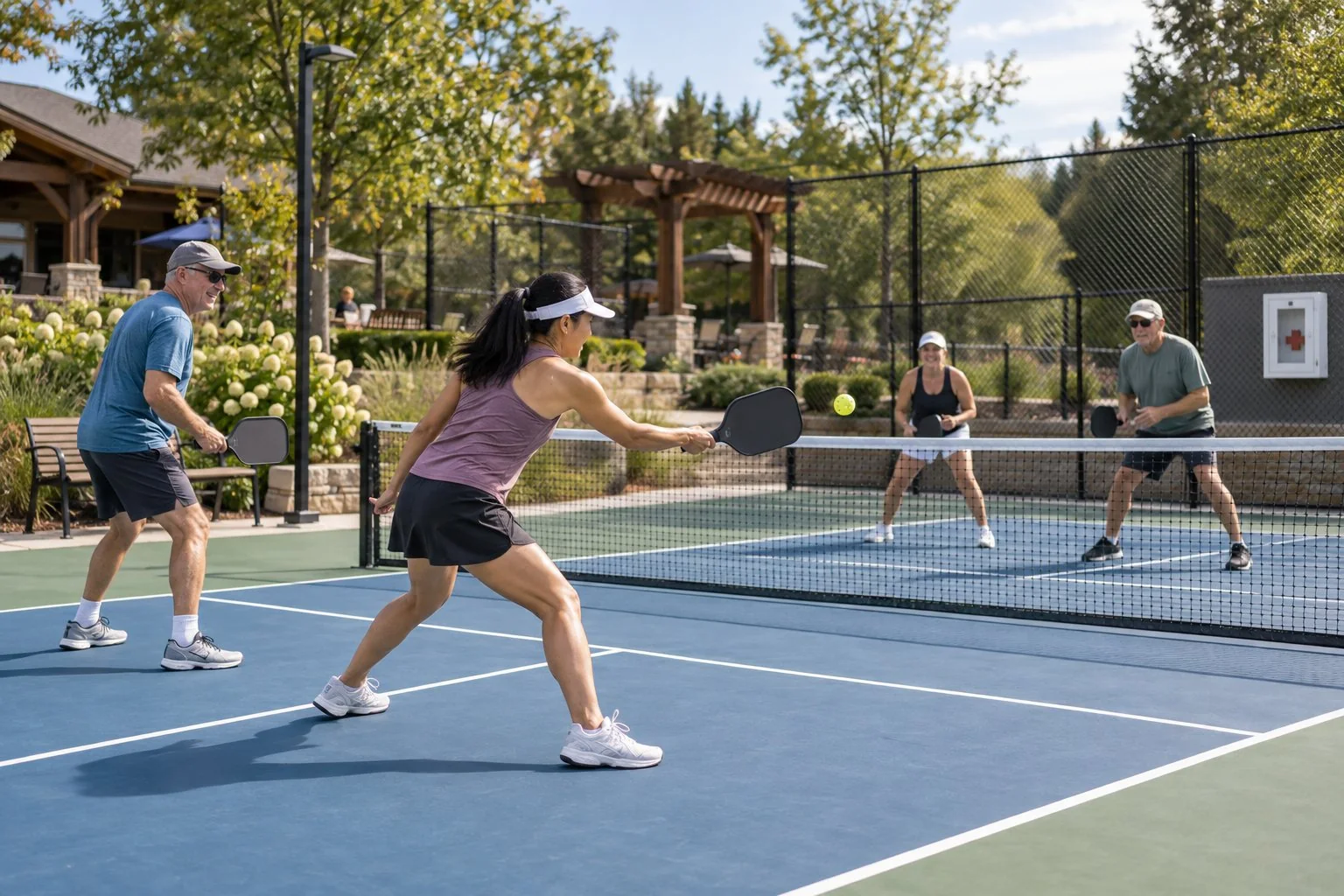
A first-aid station can make a pickleball facility more prepared, but its location matters as much as the supplies inside. Put it in the wrong place and players may lose time searching, block a gate, or crowd a narrow walkway during an incident. A simple plan keeps basic care visible, accessible, and easy to check without pretending that a kit replaces emergency services.
Choose a location people can reach quickly
Place the station outside the court enclosure or beside the main circulation route, where it is visible from the entrance and waiting area. Players should be able to reach it without crossing an active court or walking behind a server. Avoid locked rooms, crowded equipment closets, and corners hidden by benches or fencing. The route should remain open when several courts are busy.
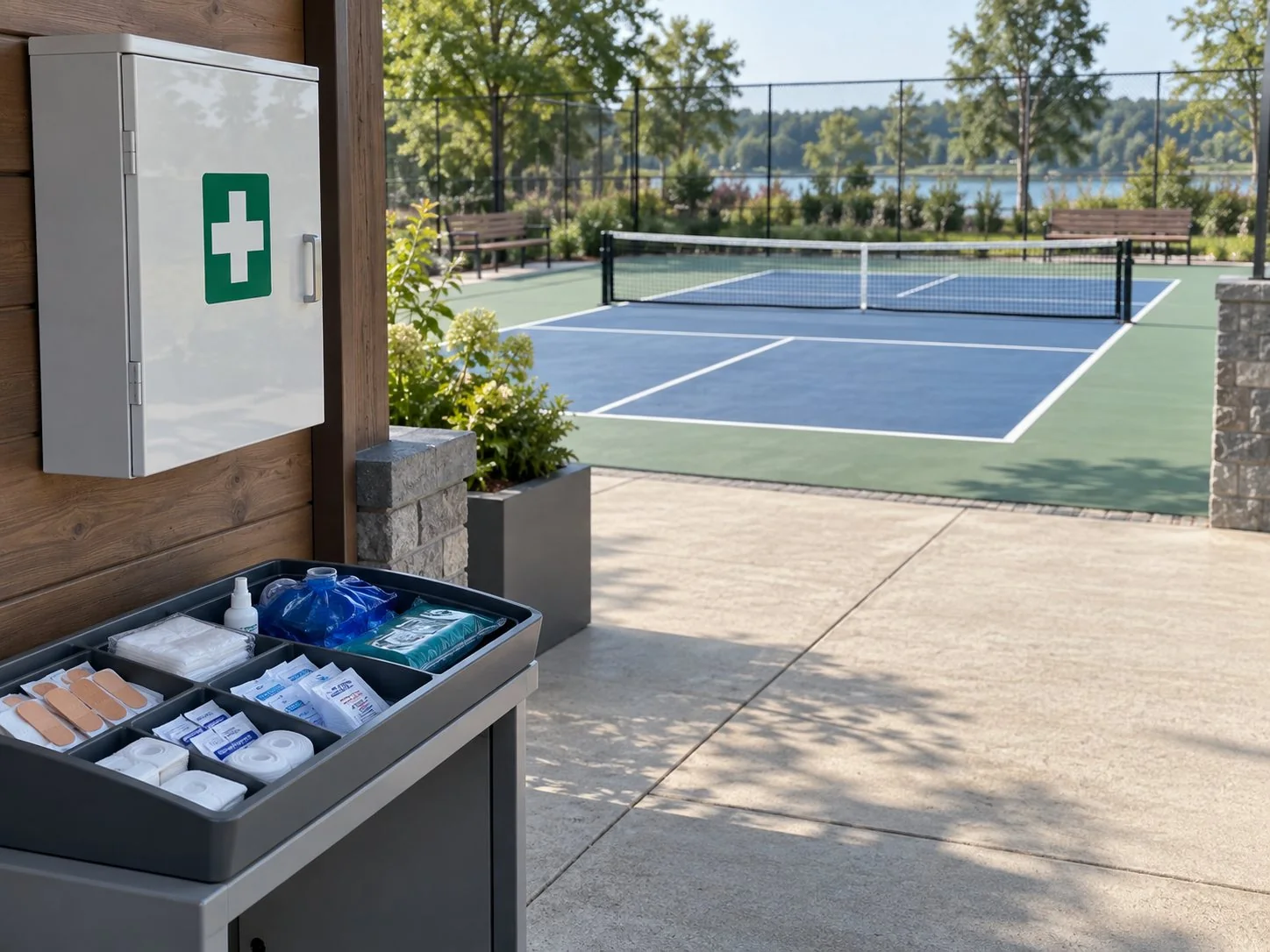
Use clear, plain signage and keep the cabinet or box at a reachable height. Include the facility address and emergency instructions nearby, since a first-aid kit is for immediate basic response, not diagnosis. If the site has an automated external defibrillator or other specialised equipment, mark its location separately and follow the required local maintenance and training rules.
Keep a little space in front of the station so a helper can open it, kneel, or assist someone without blocking a gate. Do not place it beside loose balls, cleaning chemicals, or a wet area. A dry, shaded, well-lit position protects the contents and makes the station easier to use after an evening session.
Stock the kit and protect privacy
Choose supplies that match the facility’s ordinary risks and local guidance. Basic wound dressings, gloves, cleaning wipes, cold packs, and simple instructions may be useful, but do not add medication unless the facility has a clear policy for storage and use. Check packaging dates, seal condition, and missing items on a set schedule, and record who completed the check.
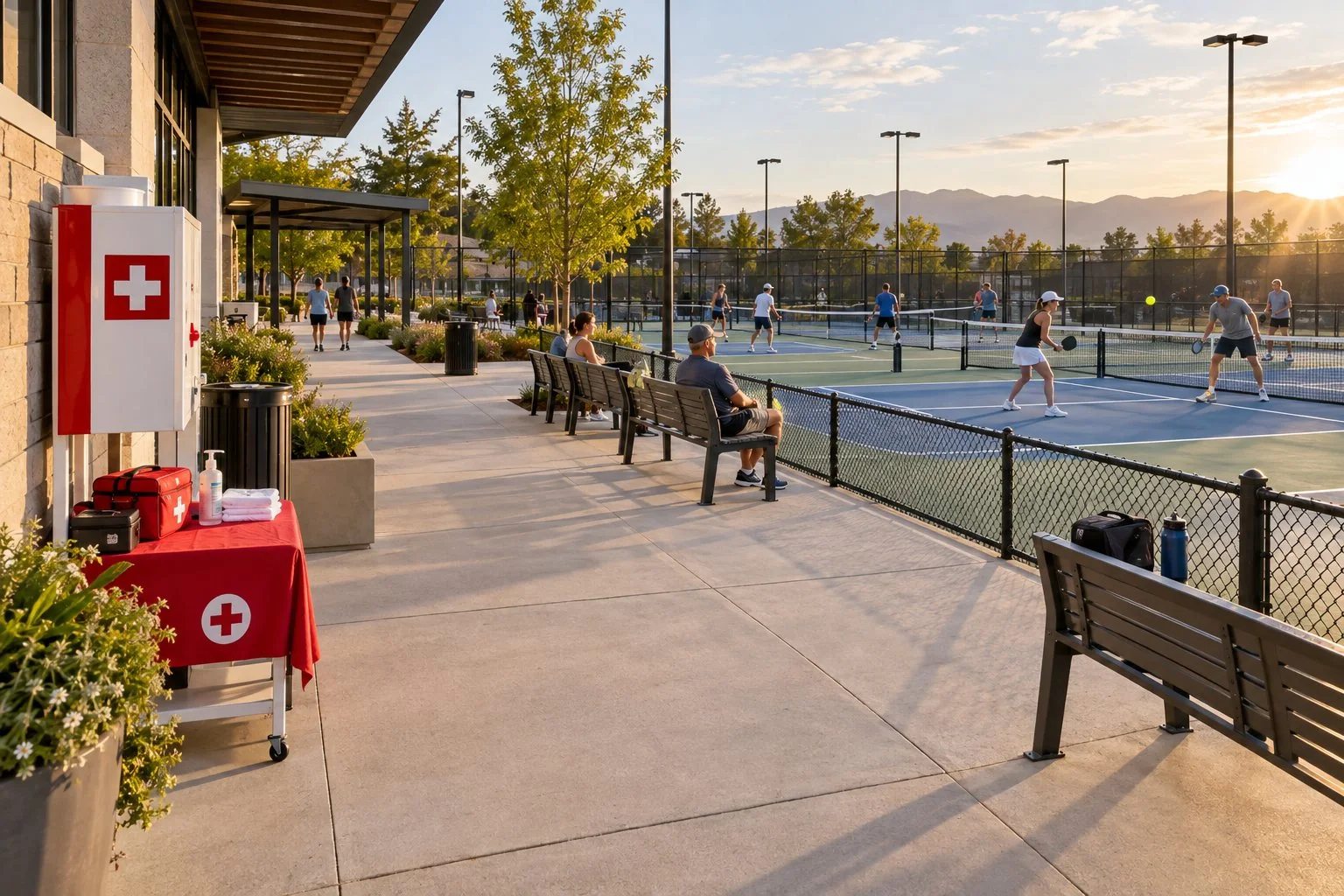
A small privacy screen or a nearby quiet area can help when someone needs to clean a wound or steady themselves, while still keeping the station easy to find. The privacy area should not narrow the accessible route or conceal a person from staff. Ask before assisting, explain what you are doing, and call emergency services for serious injury, breathing trouble, chest pain, loss of consciousness, or any situation beyond basic first aid.
Keep a phone or reliable communication method available according to the facility plan. Post the site address and court number in a place that can be read quickly. Volunteers should know who calls for help, who meets responders at the entrance, and who keeps other players clear. A calm division of roles is more useful than a crowded group giving conflicting directions.
Make checks part of normal court care
Inspect the station before peak sessions and after any use. The checklist can include cabinet access, visible signage, lighting, dry surroundings, intact seals, stocked supplies, emergency information, and a clear path from each court. Replace used or damaged items promptly and keep a simple log so the next volunteer knows what changed.
Tell players where the station is during clinics, leagues, and community open play. A short orientation prevents the delay of asking around after someone slips or strains something. Keep the message practical: where to go, who to tell, and when to call emergency services. Do not encourage players to treat significant injuries themselves or return to play before they are ready.
The best first-aid setup is visible, reachable, dry, stocked, and supported by a clear response plan. Test the route with a busy court, a waiting queue, and someone carrying equipment. If a helper can reach the supplies without crossing a rally or blocking emergency access, the station is serving the whole pickleball community well.''