Pickleball Court Lighting: How to Spot Glare Before Play
Pickleball court lighting can hide a fast ball when glare or shadows fall across the kitchen. Use this practical inspection before opening play.
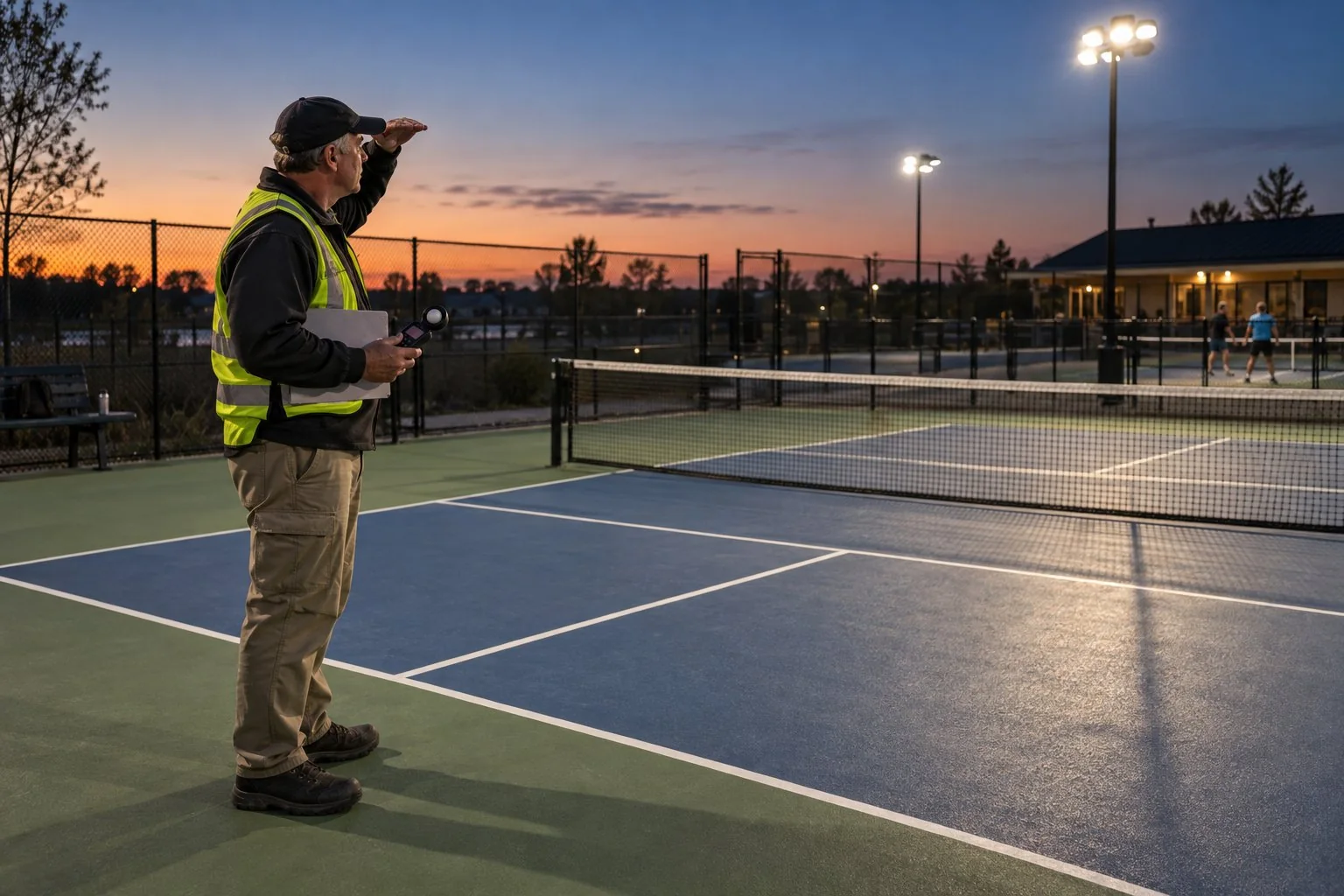
Pickleball court lighting should make the ball and court lines easy to read from both sides. Bright fixtures do not guarantee useful visibility: a low-angle lamp can put glare in a player’s eyes, while a dark band near the kitchen can hide a bounce. Inspect the court from player height before opening it for a session.
Where does glare become a problem?
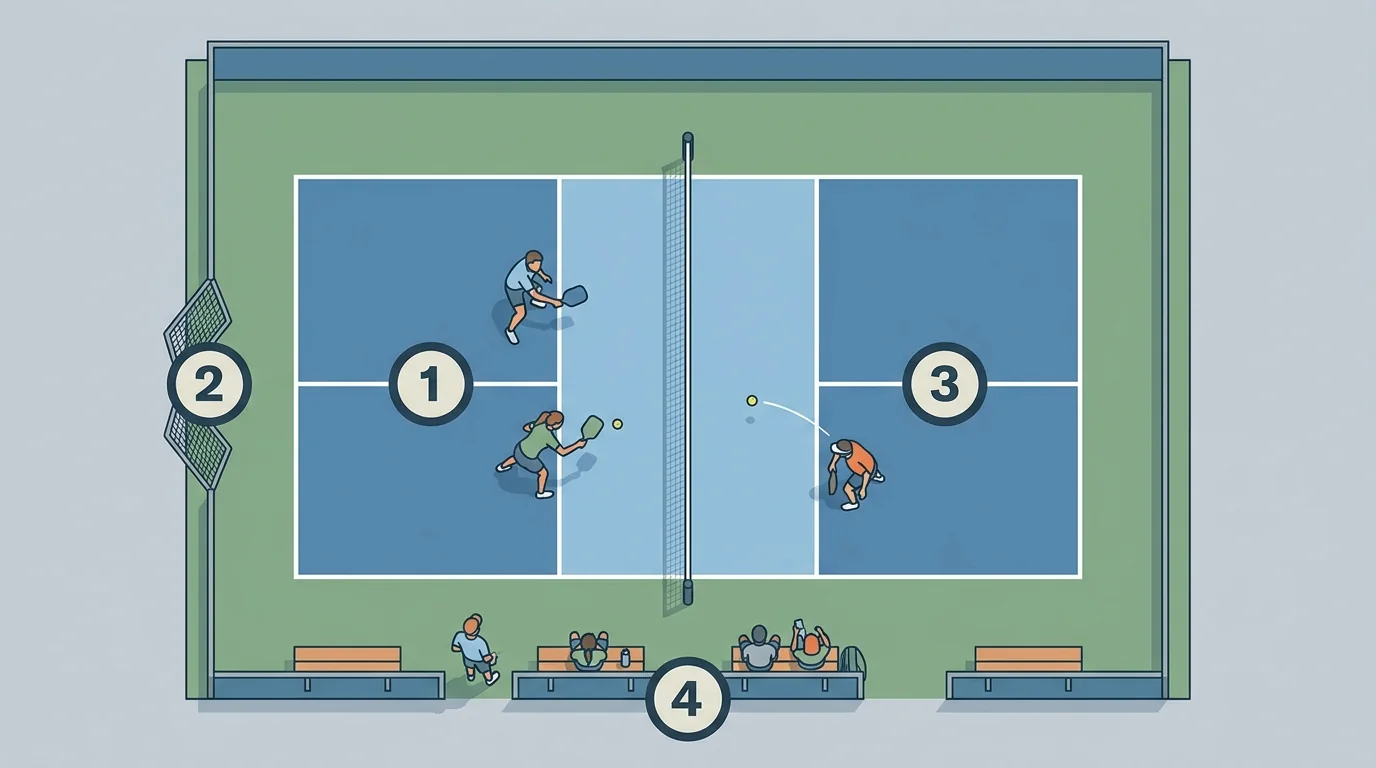
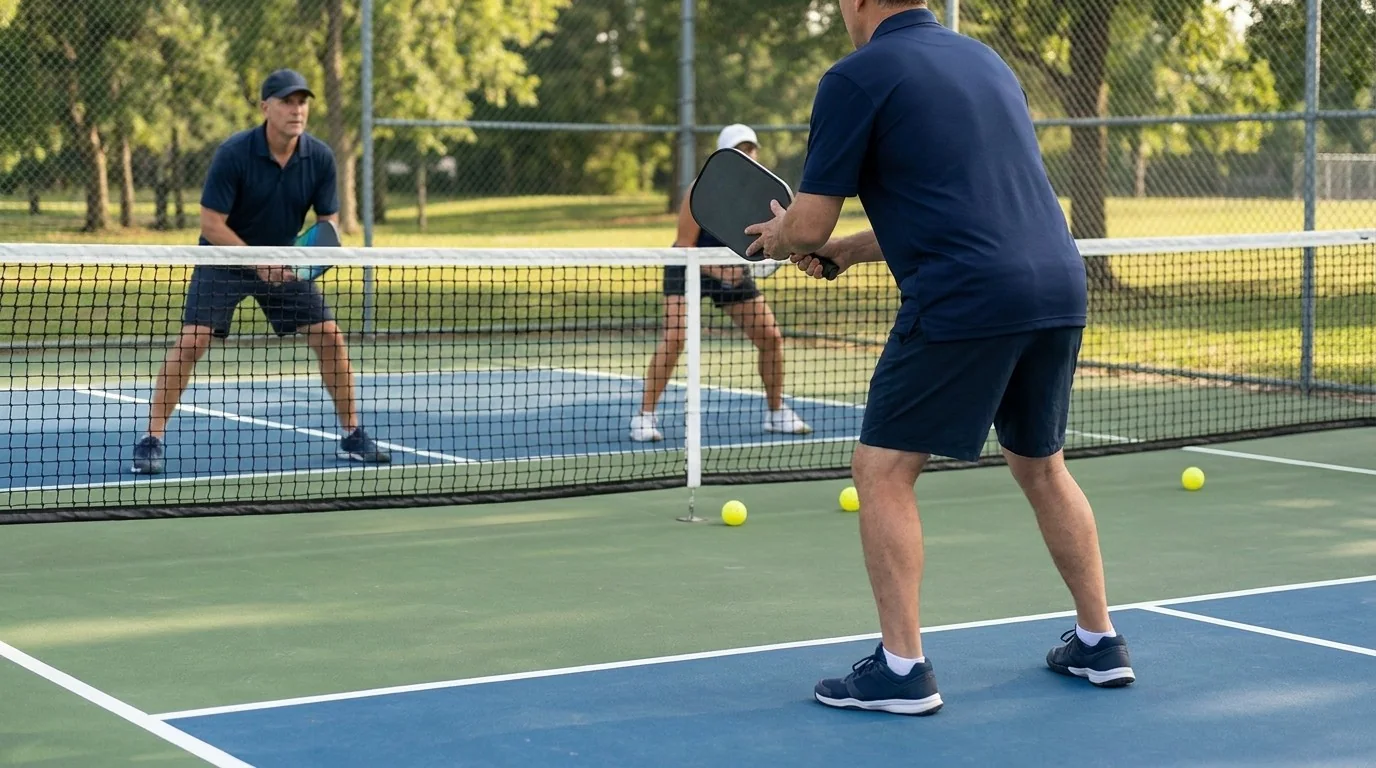
Walk from both baselines toward the non-volley zone and look toward each light source. Check the returner’s view first, because a serve or deep return may travel directly through a bright fixture. Then stand near the kitchen line and track a ball-sized object as it crosses the net. The same lamp can be comfortable from one side and distracting from the other.
Inspect the court at the time it will normally be used. A light that seems acceptable at full daylight may create a sharp contrast at dusk. Record whether glare comes from the fixture, a nearby window, wet coating, or a pale wall. Finding the source matters more than simply adding brightness.
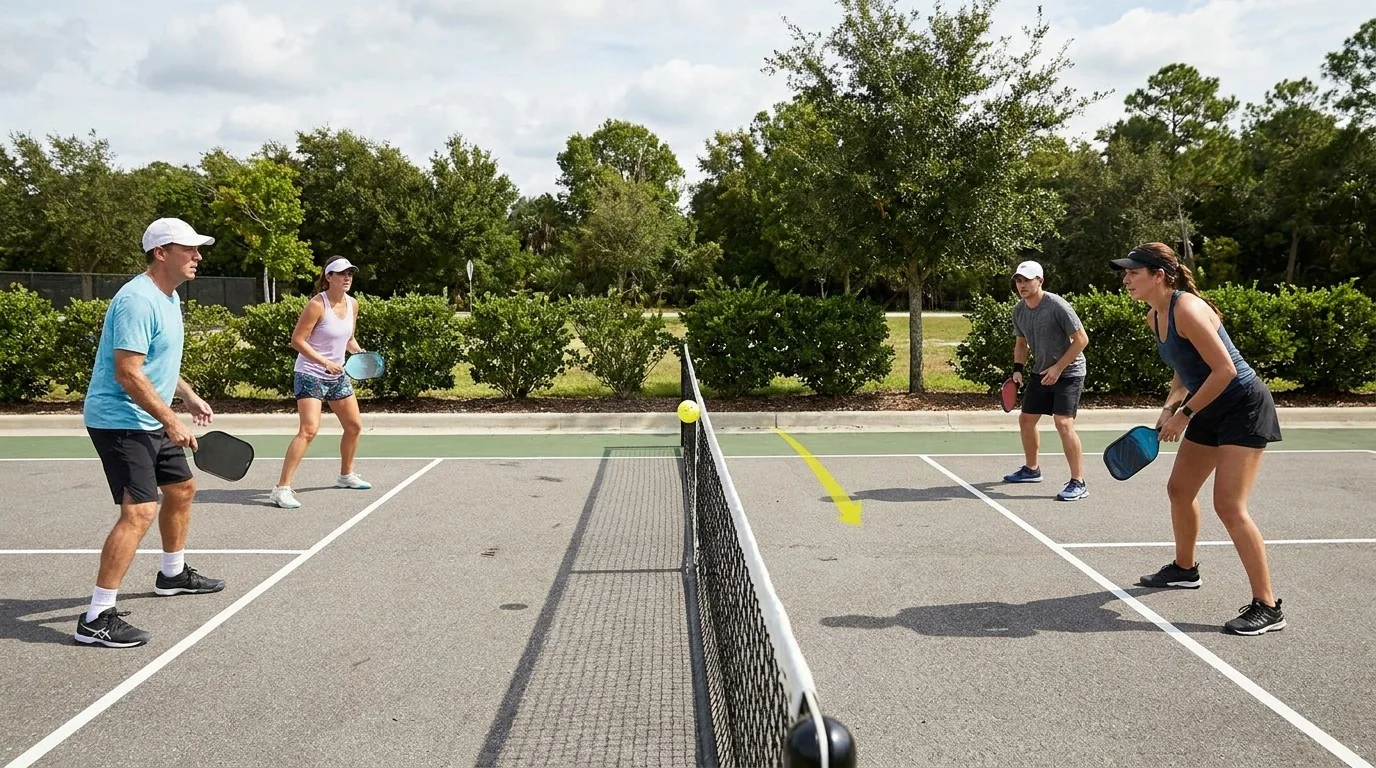
For a concrete example, ask a partner to toss or hit 10 slow balls through the usual return path. If you lose sight of the ball twice from the same position, mark that viewing zone and repeat after adjusting the fixture shield or angle. The result is a site observation, not a universal lighting standard.
How can shadows affect the kitchen?
Look for a continuous dark strip across the non-volley zone, the service boxes, and the net area. Shadows can hide the ball immediately after its bounce, especially when the surface and ball have similar contrast. Check both forehand and backhand positions, since a player’s body can also cast a moving shadow into the contact area.
Do not judge only from the centre of the court. A player moving laterally may pass from bright light into shadow during one exchange. Ask the tester to take two slow steps each way while following the ball. If the visual change is abrupt, the fixture arrangement or surrounding surface may need adjustment.
What should a safe inspection include?
Clean lenses and replace damaged covers before changing the layout. Loose fixtures, exposed wiring, or water near electrical equipment require qualified maintenance rather than player testing. Keep any temporary marker outside the playing area and remove it before play begins.
Check glare with different ball colours used by the facility. A white ball may disappear against a bright background, while a yellow ball can blend into a warm light. Record the date, weather, court number, time, and viewing direction so a later inspection can compare the same conditions.
How should a facility respond?
Close the affected court when players cannot track the ball through a routine exchange. If only one side has a problem, mark the court unavailable rather than assuming players will adapt. Temporary changes should be tested during slow practice first, with a second person watching for shadows and trip hazards.
Adjust one variable at a time. For example, shield a fixture, test 10 balls from the baseline, and then compare the same 10-ball sequence from the kitchen line. If visibility improves in one place but worsens in another, the change needs refinement. Avoid promising that brighter lamps alone will solve glare.
A short pre-play checklist
Confirm that both baselines and both kitchen lines are visible. Track several balls through the serve, bounce, and return path. Ask whether any light forces players to look away. Check the fence, wet surface, and nearby windows for secondary reflections. Finally, write down the result and reopen the court only when players can move and stop without losing the ball.
Repère complémentaire
Pour comparer cette situation à une autre consigne de jeu, consultez aussi Pickleball Paddle Edge Guard: When Damage Matters. Gardez cependant le contexte de ce guide: une règle de service, un contrôle de matériel et une décision d’arbitrage ne se vérifient pas de la même façon.