Pickleball Paddle Edge Guard: When Damage Matters
Pickleball Paddle Edge Guard: When Damage Matters
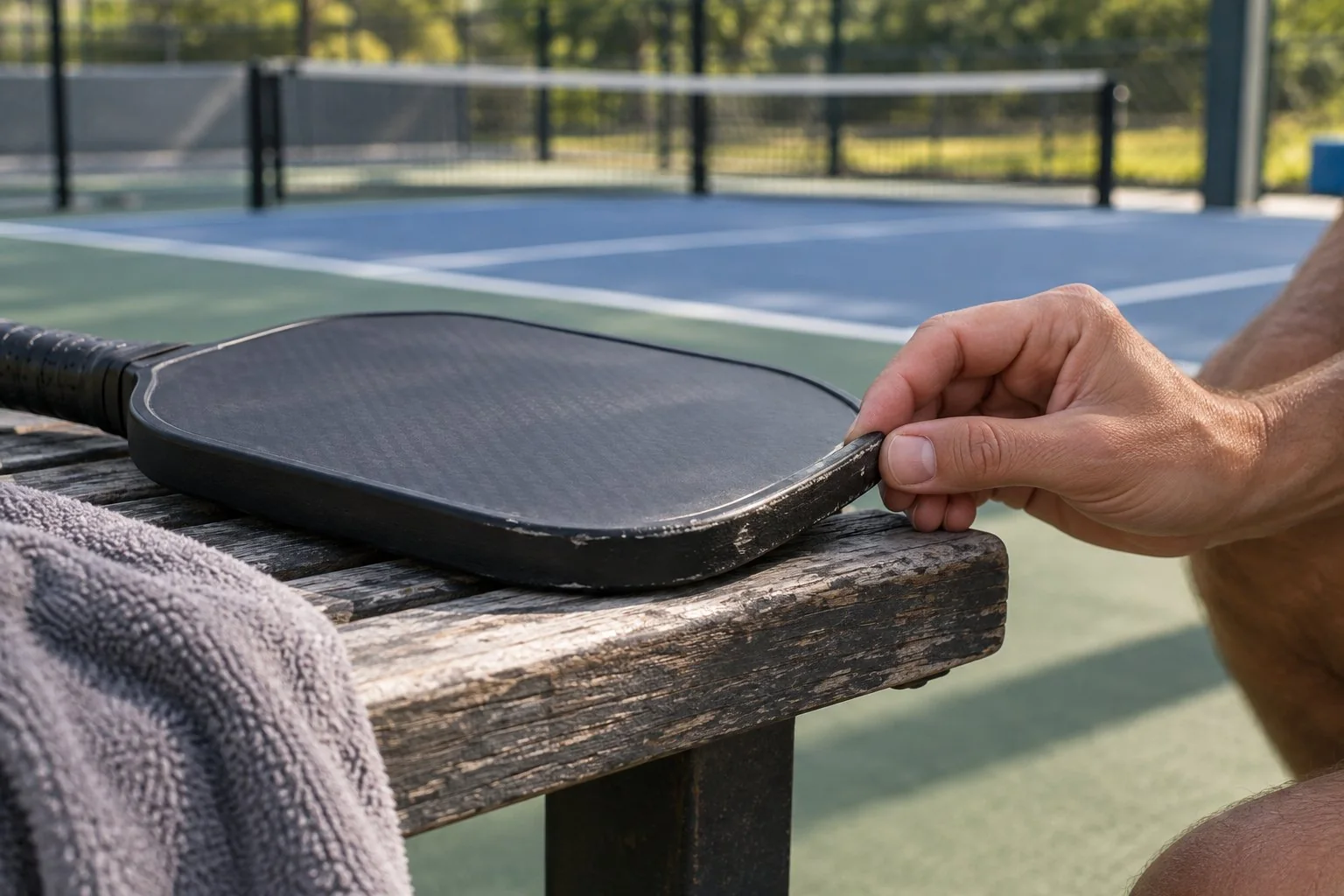
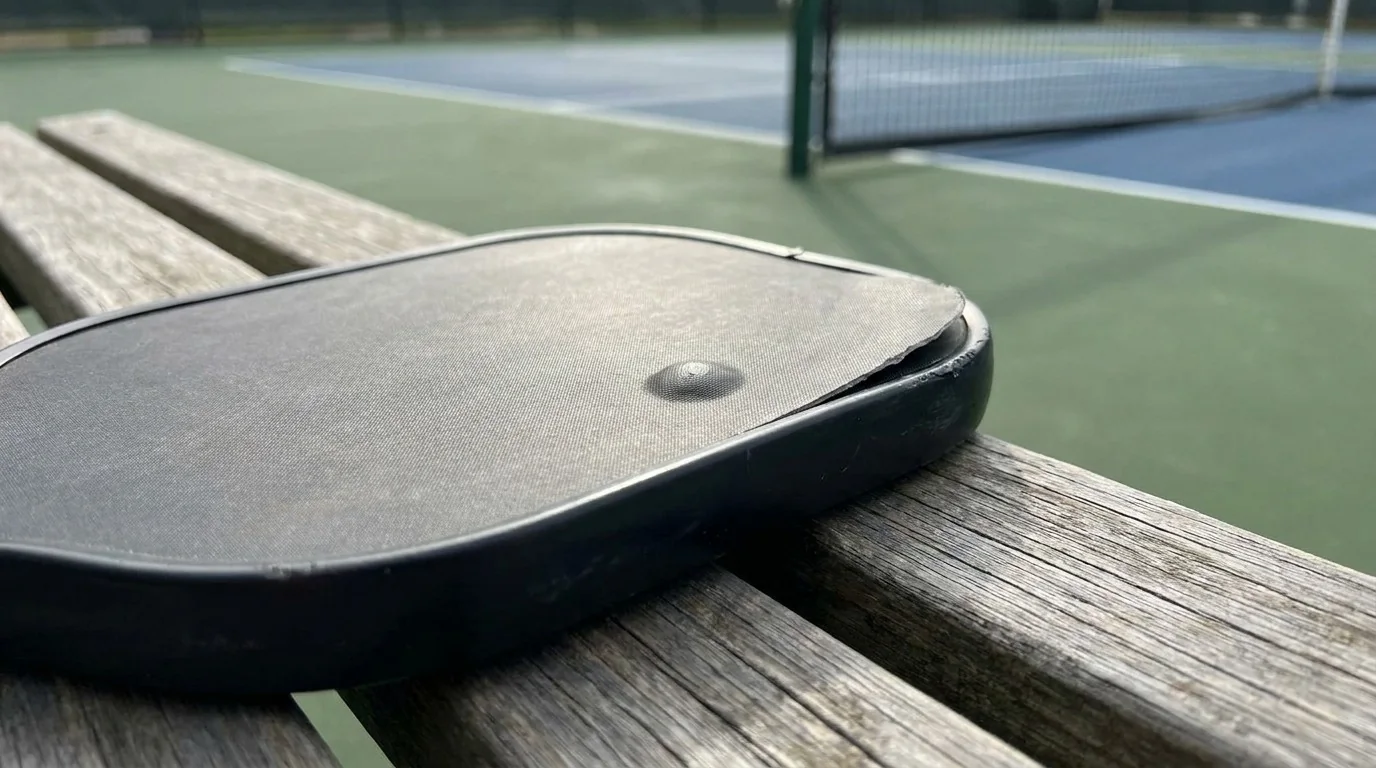
A pickleball paddle edge guard takes routine abuse when players scoop balls, set a paddle on the ground, or pack it beside hard objects. A shallow scuff is usually a maintenance note, not an emergency. A loose strip, sharp edge, or crack that reaches the face deserves a closer inspection before the next session.
What causes edge-guard wear?
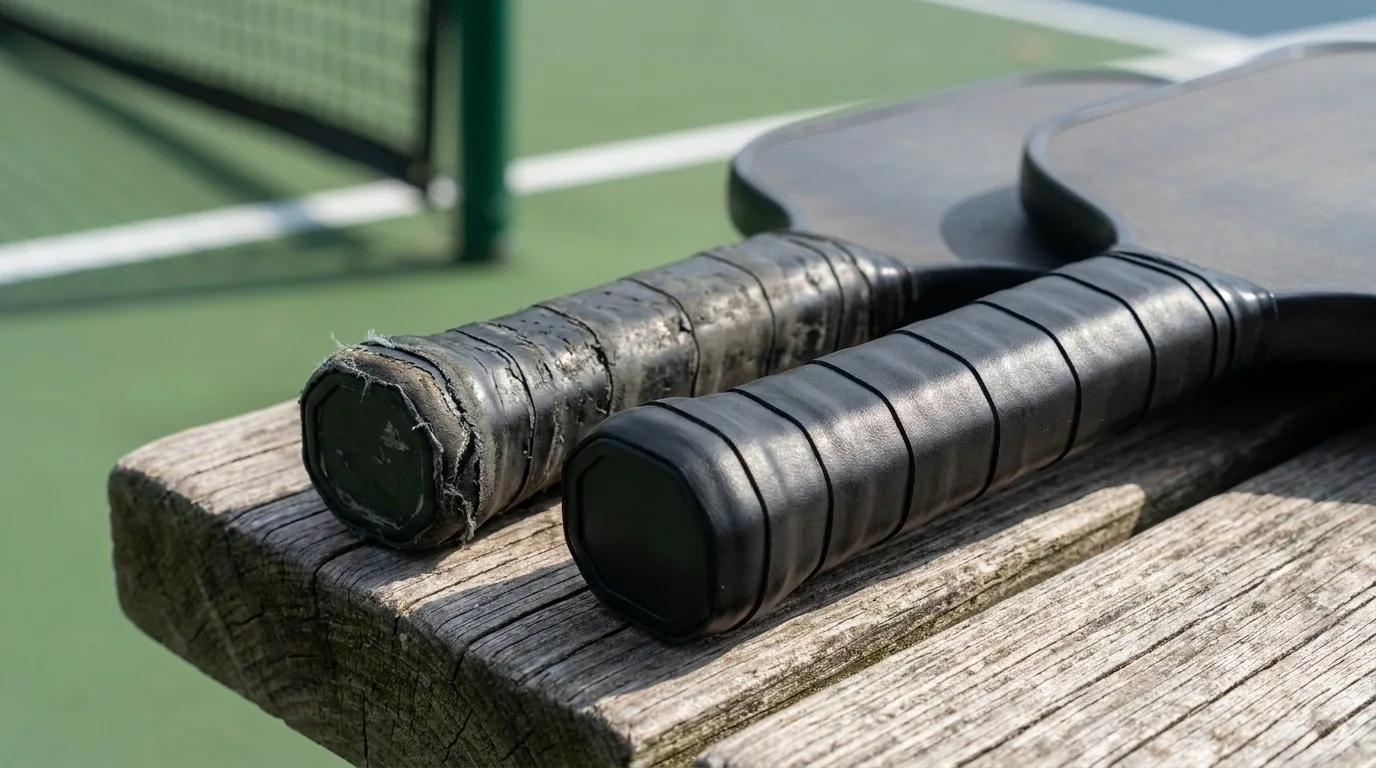
The most common cause is dragging the paddle head across concrete while collecting a ball. Door frames, metal bottle caps, and crowded gear bags create similar impacts. Repeated small knocks can separate the guard from the face even when no single collision seems serious.
Inspect the entire perimeter rather than staring at the biggest mark. Look for lifting sections, cuts, sharp corners, gaps, and a crack that travels inward. For example, a 2-centimeter surface scratch confined to the guard is different from a split that continues onto the paddle face; the second condition may affect structural integrity and should not be hidden with tape.
How to reduce damage during play
Use your free hand or a ball tube to collect balls whenever possible. If you use the paddle, keep the face nearly parallel to the surface and lift gently instead of scraping the edge along the court. On a low defensive ball, lower your body and present the face first so the frame does not strike the ground before the ball.
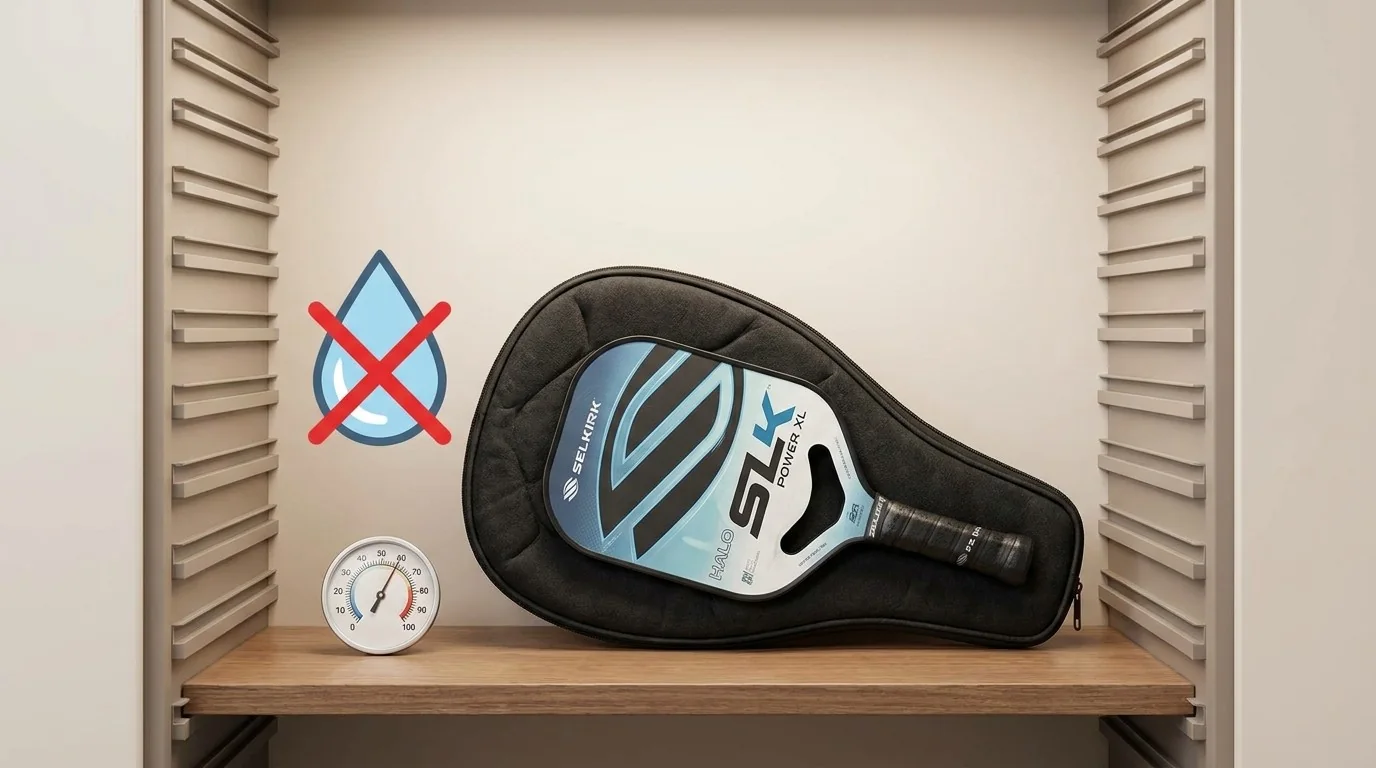
Give the paddle its own sleeve or compartment. Keep keys, tools, and metal bottles away from the head, and close the zipper before moving the bag. A sleeve prevents incidental contact; it cannot repair a cracked guard.
When should you stop playing?
A cosmetic mark that feels smooth and remains stable can be monitored. Stop and inspect more closely when the guard can catch a ball, snag your hand, or move under light finger pressure. Photograph the damage before applying adhesive if the paddle may still be covered by a warranty.
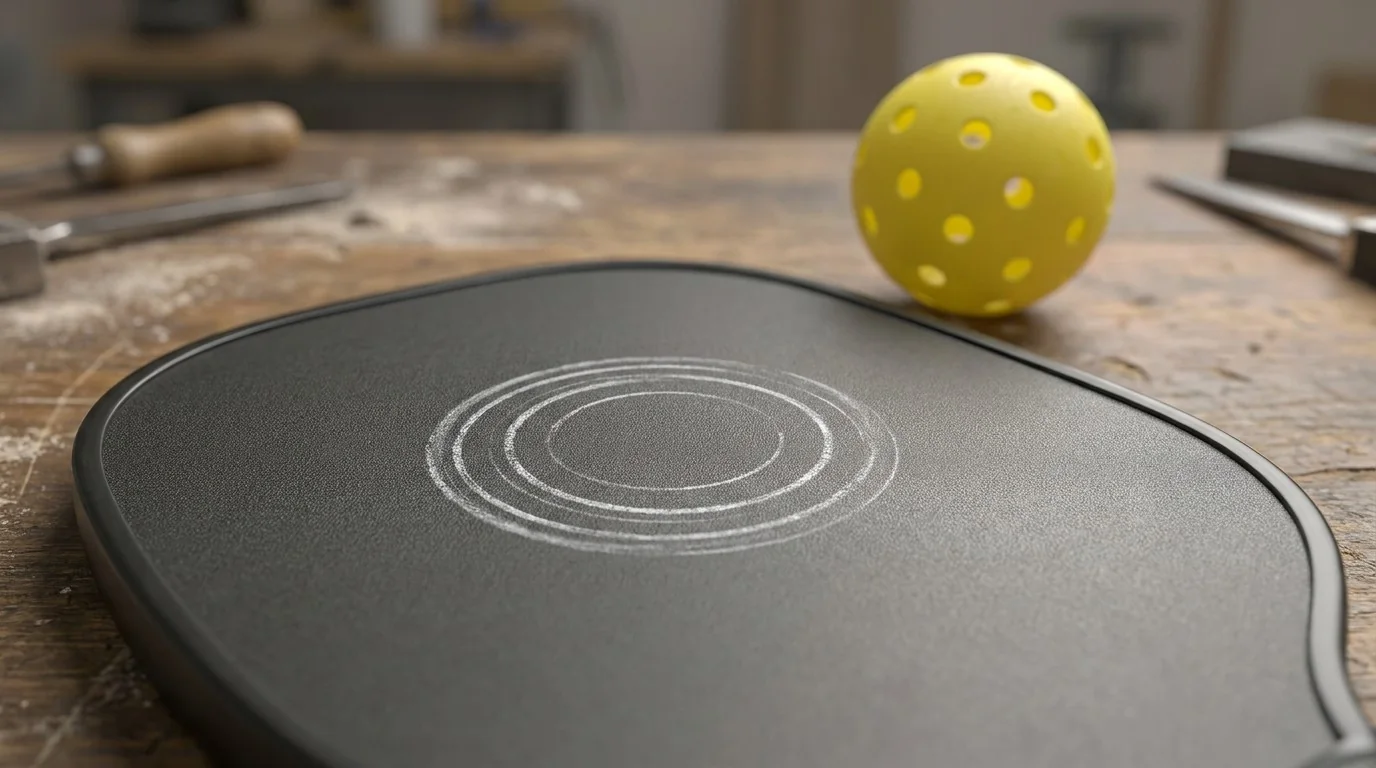
Avoid strong glue as a first response to a deep crack. It can spread onto the face and complicate a warranty assessment. You can also compare the sound of light taps across the surface; a newly hollow or different sound is a reason to document the area, not proof by itself that the edge guard caused the problem.
A one-minute post-play check
- Wipe grit away with a soft, dry cloth.
- Run a finger near the guard without pressing loose pieces.
- Check the face around every impact mark.
- Store the paddle away from hard accessories.
- Photograph cracks before attempting a repair.
Small habits protect the edge better than emergency fixes. Collect balls without scraping, pack the paddle separately, and treat any spreading crack as an equipment problem rather than a cosmetic detail.
A practical way to review
Test one change at a time during a normal session. Write down what you saw, what felt stable, and what became harder under pressure. This simple record keeps equipment checks, rule decisions, and technique adjustments separate, so a single unusual rally does not lead to an unnecessary conclusion. Review the note after the session and repeat the same test before changing another variable.
Further reading: How to Start a Beginner Pickleball Clinic at a Community Court.