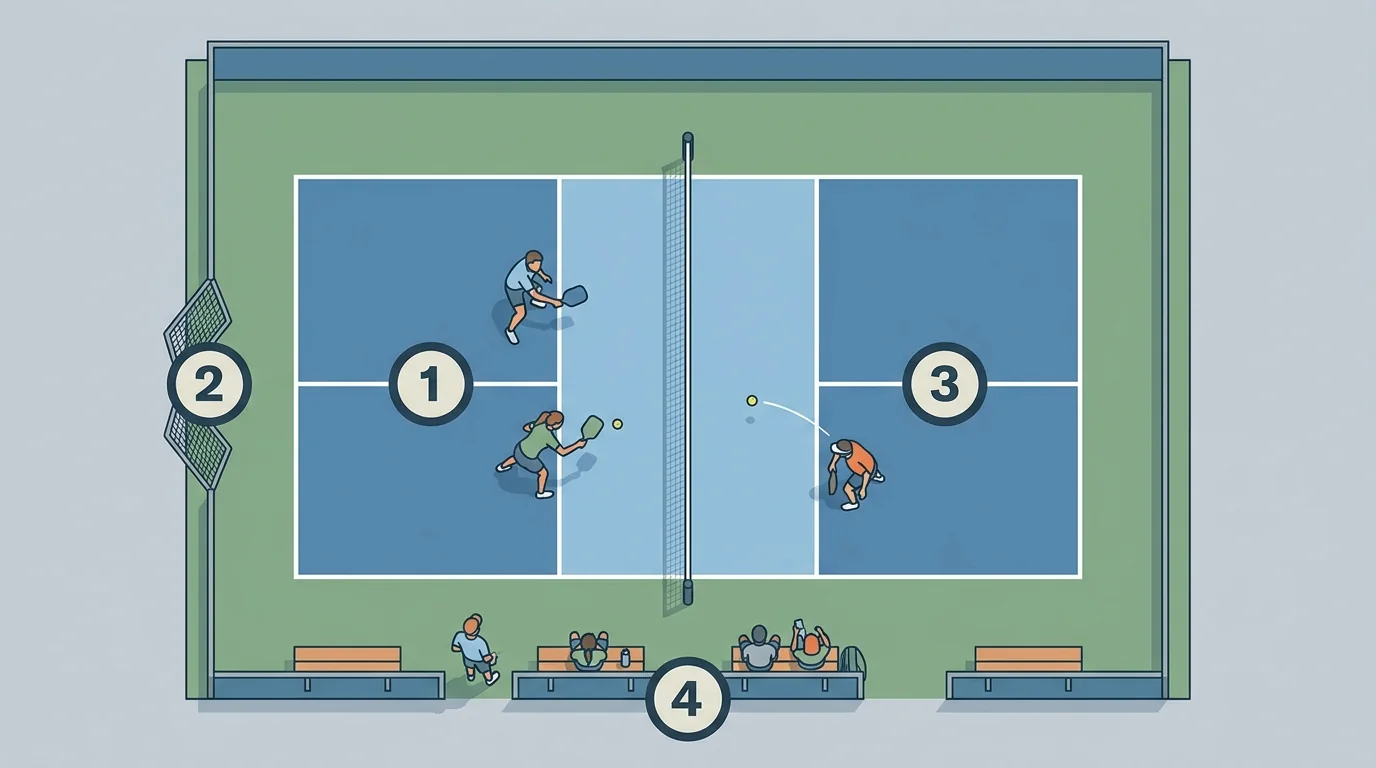
Pickleball Court Queue Zones: Keep Waiting Players Out of Play
A practical facility guide for keeping pickleball circulation routes clear, gates usable, waiting areas separate, and temporary hazards visible.
A pickleball facility needs more than correctly painted lines. Players also need a predictable way to enter, leave, watch, collect balls, and move between courts without stepping into an active swing. A clearly defined waiting area and circulation route keeps those movements visible and reduces avoidable surprises during play.
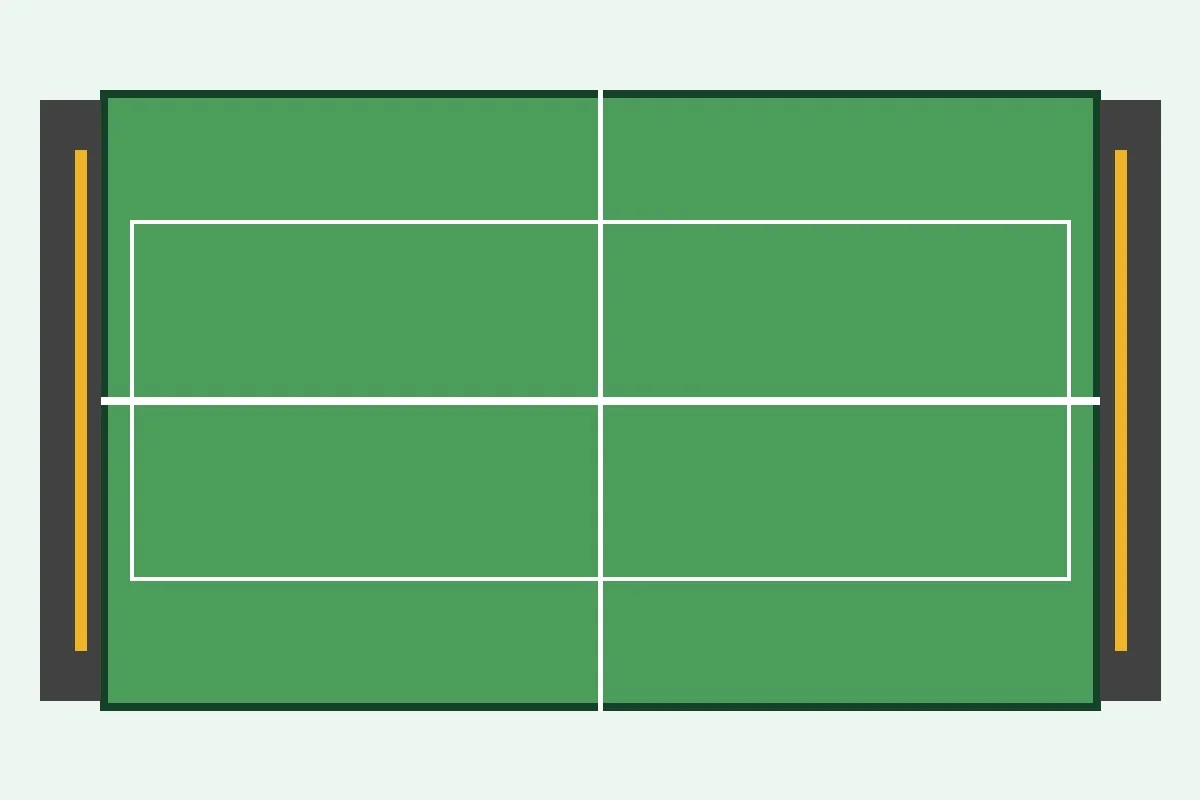
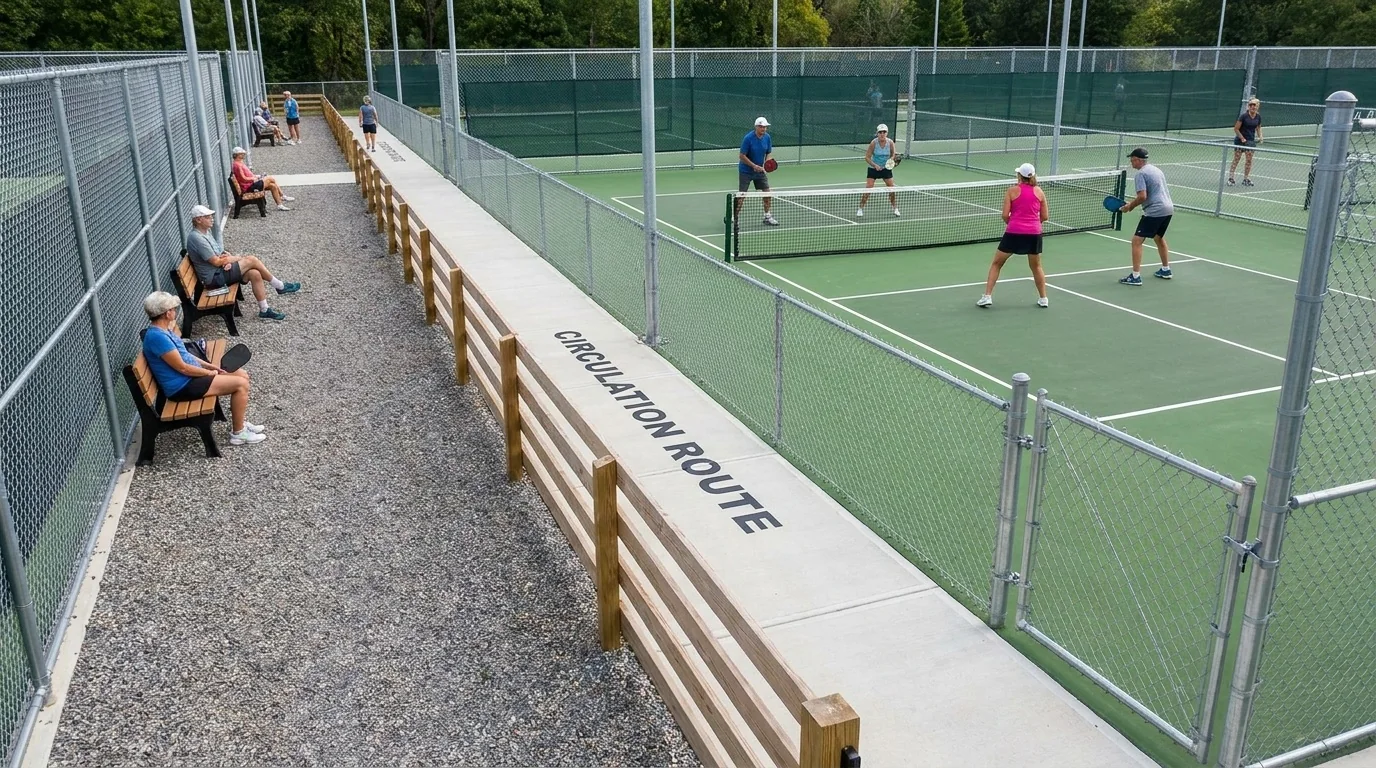
Mark the route people actually use
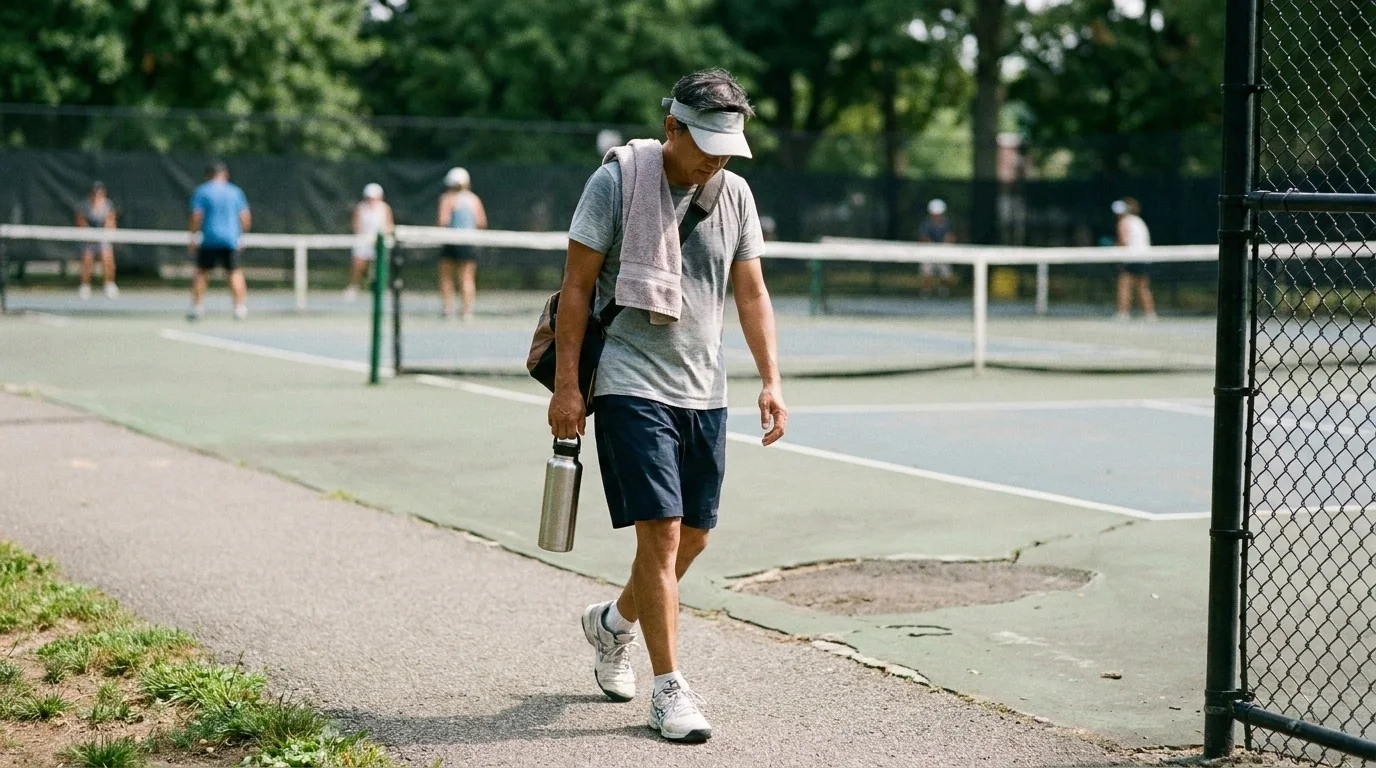
Walk the facility as a first-time visitor would. Locate the gate, benches, water station, ball storage, restroom path, and nearest exit. Connect those points with a route that does not cross an active court or force someone behind a player preparing to swing. A simple boundary helps everyone see where bags, chairs, and spare paddles belong.
Leave enough room for ordinary two-way traffic. The route should still be recognizable when several groups arrive. A visible walkway gives people a place to look before opening a gate or entering a shared lane, instead of asking them to guess.
Keep gates and sightlines clear
Open each gate fully. It should not strike a bench, equipment cart, or waiting player, and its swing area should stay free of loose balls, buckets, and bags. Make the latch easy to find and leave the landing area unobstructed.
A path can look open while a post, sign, planter, or temporary barrier blocks the view. Players leaving one court should be able to see approaching balls and active swings before entering the shared lane. Check the route from normal standing height, not only from a drawing or site plan.
Give waiting players a defined place
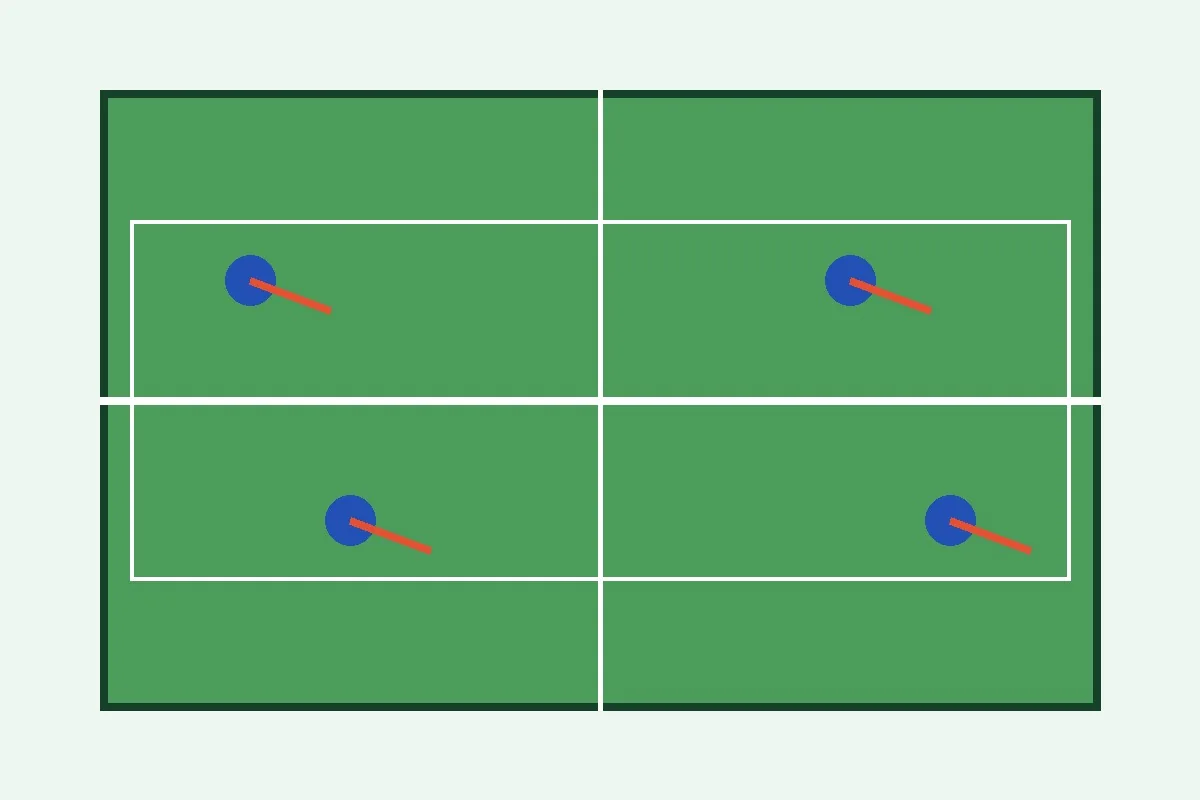
Waiting players should not spill into the walking route. Arrange benches so feet do not extend into the lane, and keep bags and drinks beneath or beside the seating area. Do not leave them by a fence opening or behind a server.
When several courts share a corridor, identify a simple queue or rotation point. A short reminder such as “behind the baseline” or “use the side path” is clearer than leaving people to infer the safe location. Hosts should correct the layout before congestion becomes routine.
Check surfaces and temporary hazards
Before play, inspect for raised edges, wet patches, loose mats, cracked pavement, exposed fasteners, and objects that have moved into the route. Repeat the check after wind, rain, or maintenance. A cone or warning sign should mark a temporary problem without creating another obstruction.
Keep lighting and contrast adequate around gates and transitions. If a route cannot be made safe immediately, close or redirect it clearly and tell players which alternate path to use. Do not wait for someone to discover the hazard by tripping over it.
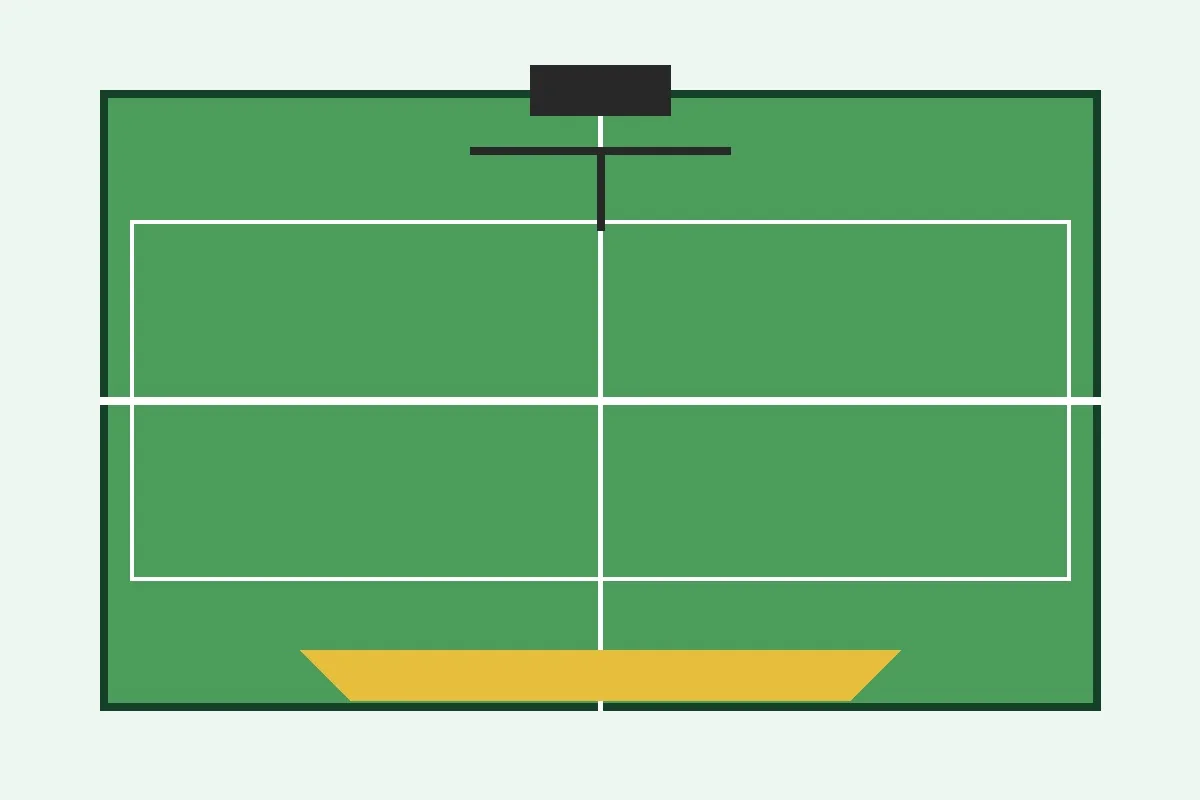
Use a short host routine
At opening, walk every shared route, open each gate, and return stray equipment to storage. During play, check after each rotation that chairs have not shifted, balls are not collecting in the corridor, and waiting groups remain outside active swing areas. At closing, record recurring pinch points so the layout can be improved instead of repeatedly patched.
The aim is not to make the facility restrictive. It is to make movement unsurprising. If an obstruction appears, pause play briefly, move the object, announce the change, and confirm that the entry and exit are visible again. That small intervention protects active players and people passing through the facility.