Pickleball Court Restrooms: A Practical Facility Access Checklist
A practical checklist for restroom routes, access, supplies, cleaning, and event operations at shared pickleball facilities.
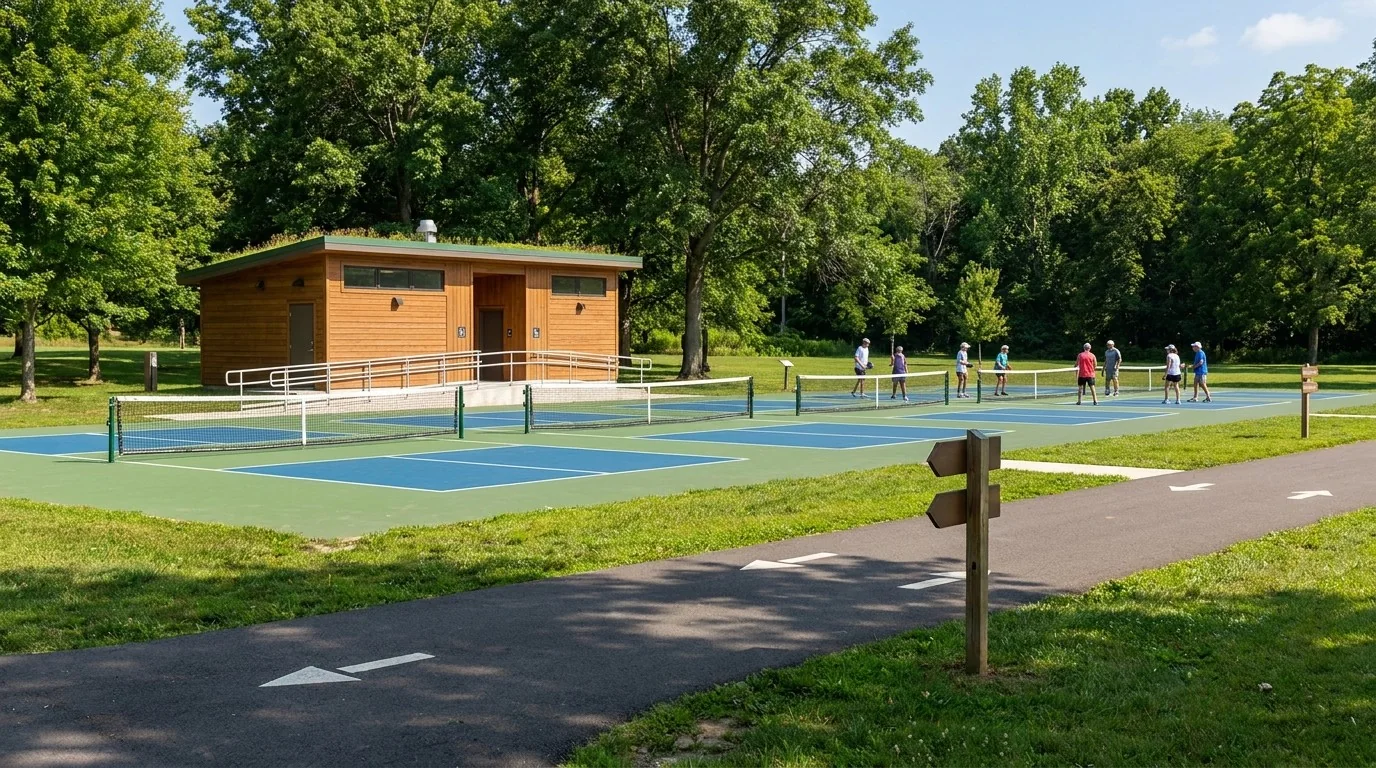
A pickleball facility is easier to share when players can reach a clean, usable restroom without crossing an active court or searching for the entrance. The route matters during long sessions, tournaments, family play, and any visit where someone needs a dependable break. Use the checklist below to make restroom access part of the facility plan.
Map a route that does not cross play
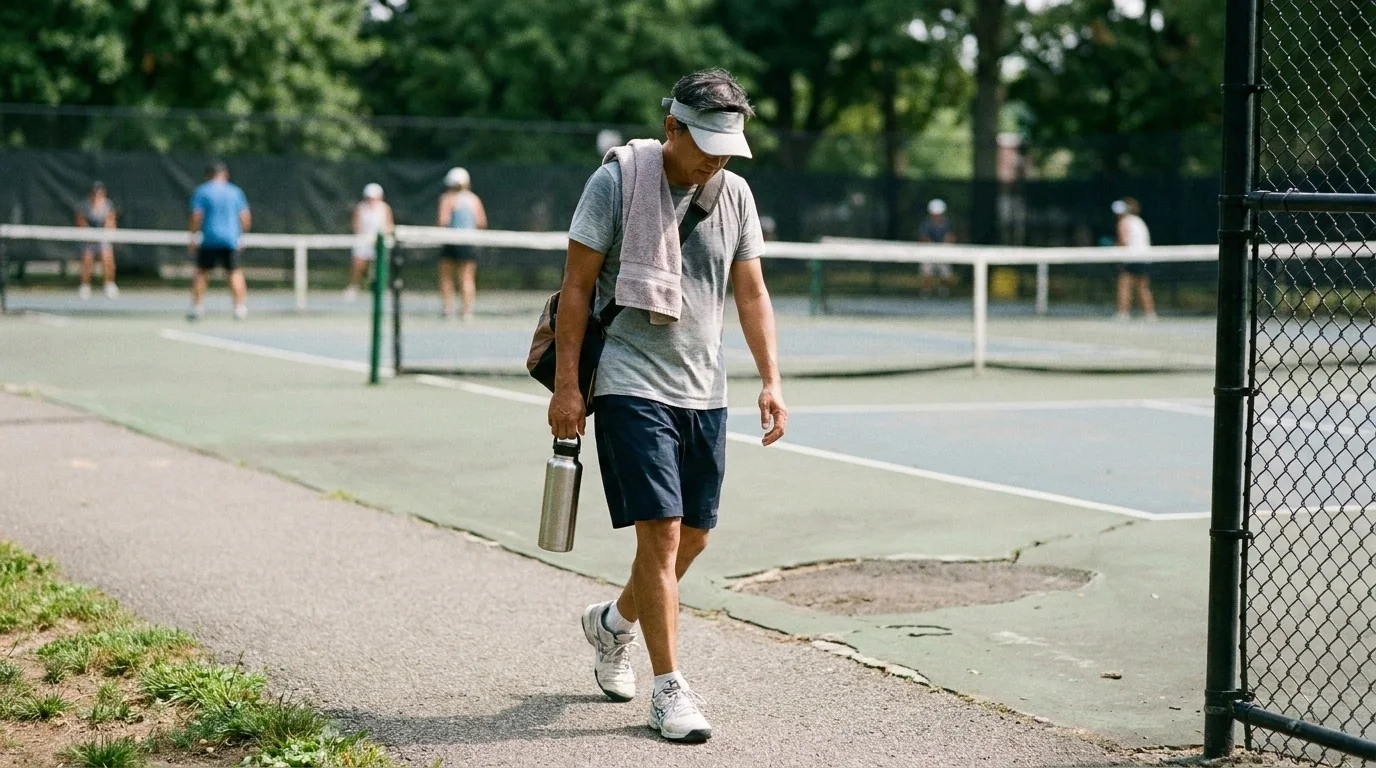
Place the restroom so players can reach it from the entrance and waiting area without walking through a playing court. The path should be easy to see, stable in normal weather, and wide enough for people to pass without brushing against equipment or players waiting to rotate. Walk it during the busiest period, not only when the facility is empty.
Use simple, consistent signs at each decision point. Keep carts, ball baskets, spare nets, and event tables out of the approach. If a tournament or maintenance work changes the route, mark a temporary alternative before play begins.
Check access while the courts are busy
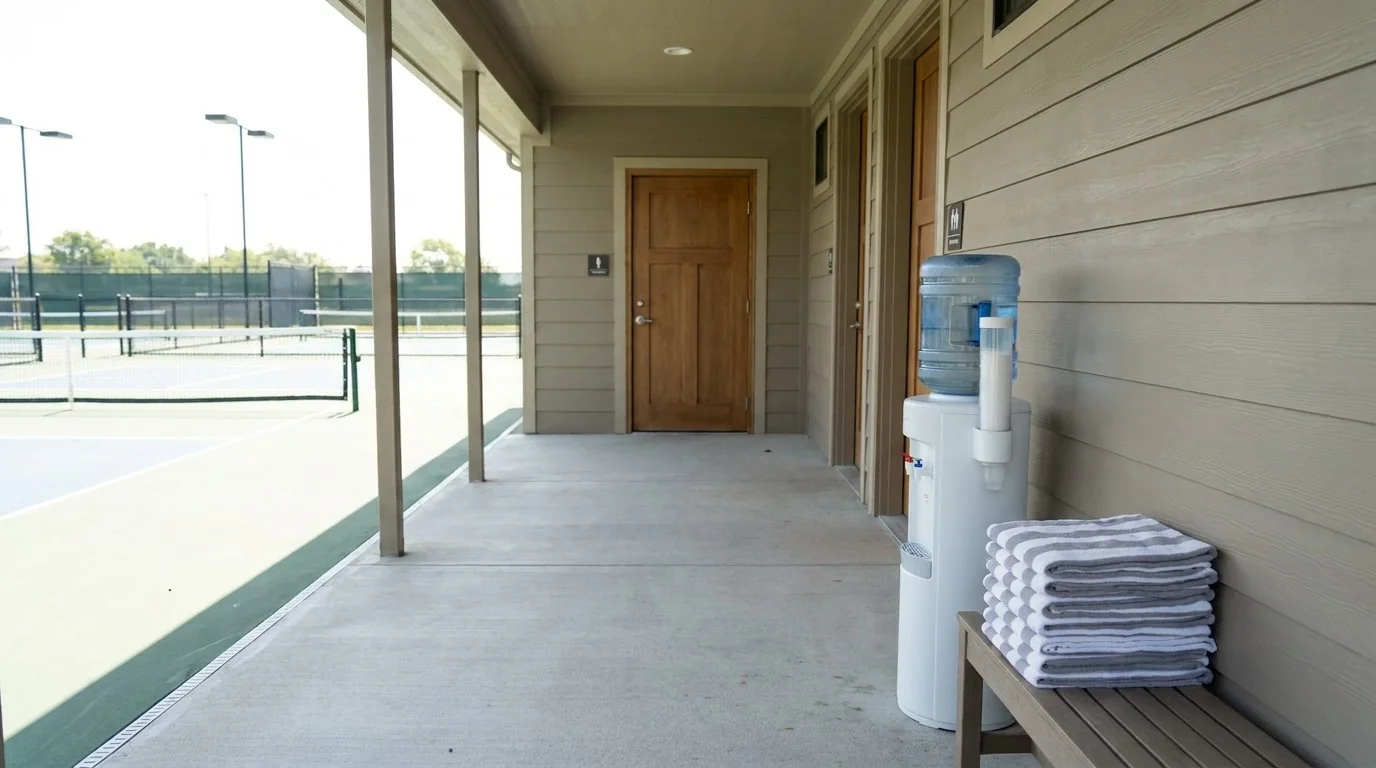
Before a session, test the door, threshold, lighting, and turning space. The entrance should open fully, be easy to identify, and not swing into a narrow path. Keep the approach separate from balls being retrieved and from players waiting for rotation. Follow applicable accessibility requirements and local building codes, and invite people with different mobility needs to test the complete route.
Stock the room for the whole session
Before opening, check toilet paper, soap, hand-drying supplies, waste containers, and spill cleanup. Refill before a tournament instead of waiting for a report. Store cleaning products and maintenance tools away from public use, and assign a person to make a mid-session check.
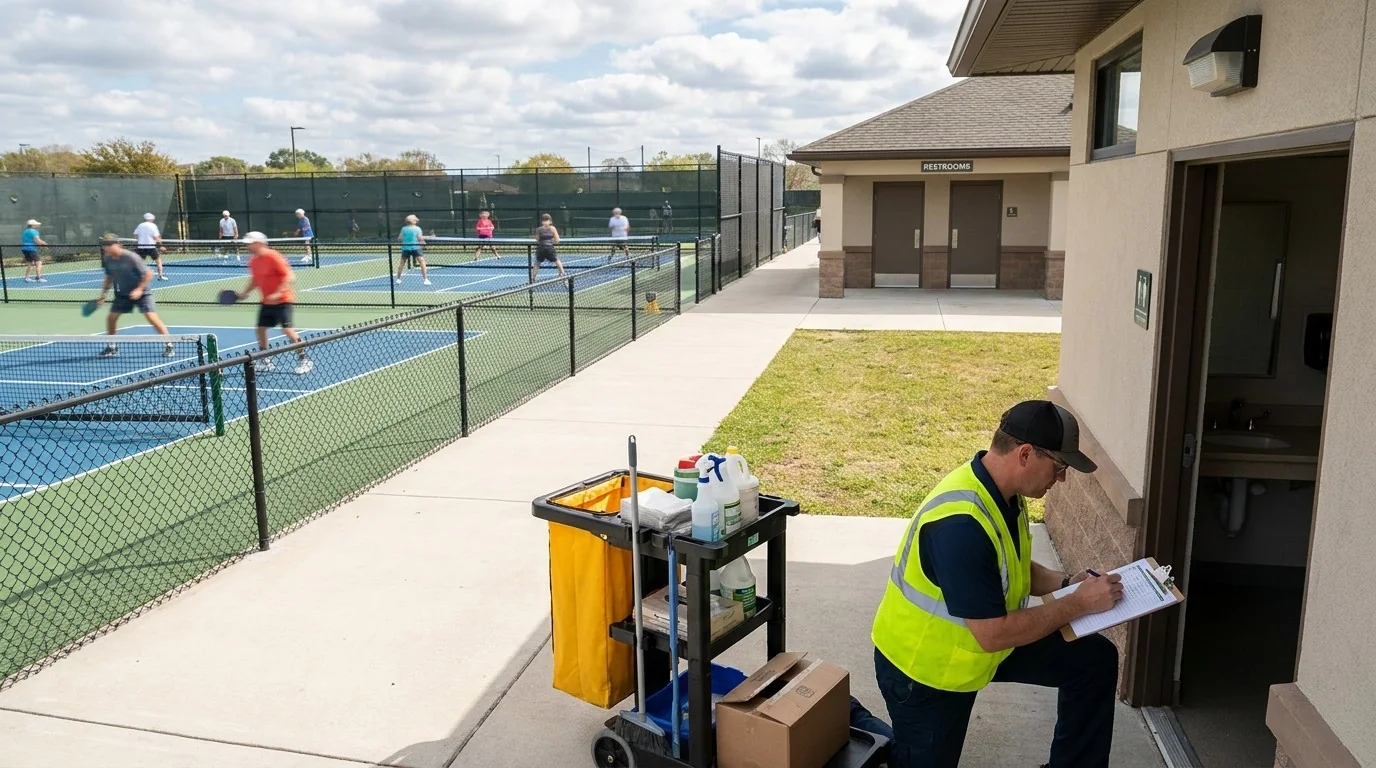
An inspection card can cover the basics: entrance clear, lock working, water running, soap available, drying supplies available, floor dry, waste container below capacity, and no sharp or unstable fixture. Record the time and the person who completed the check.
Include restrooms in event operations
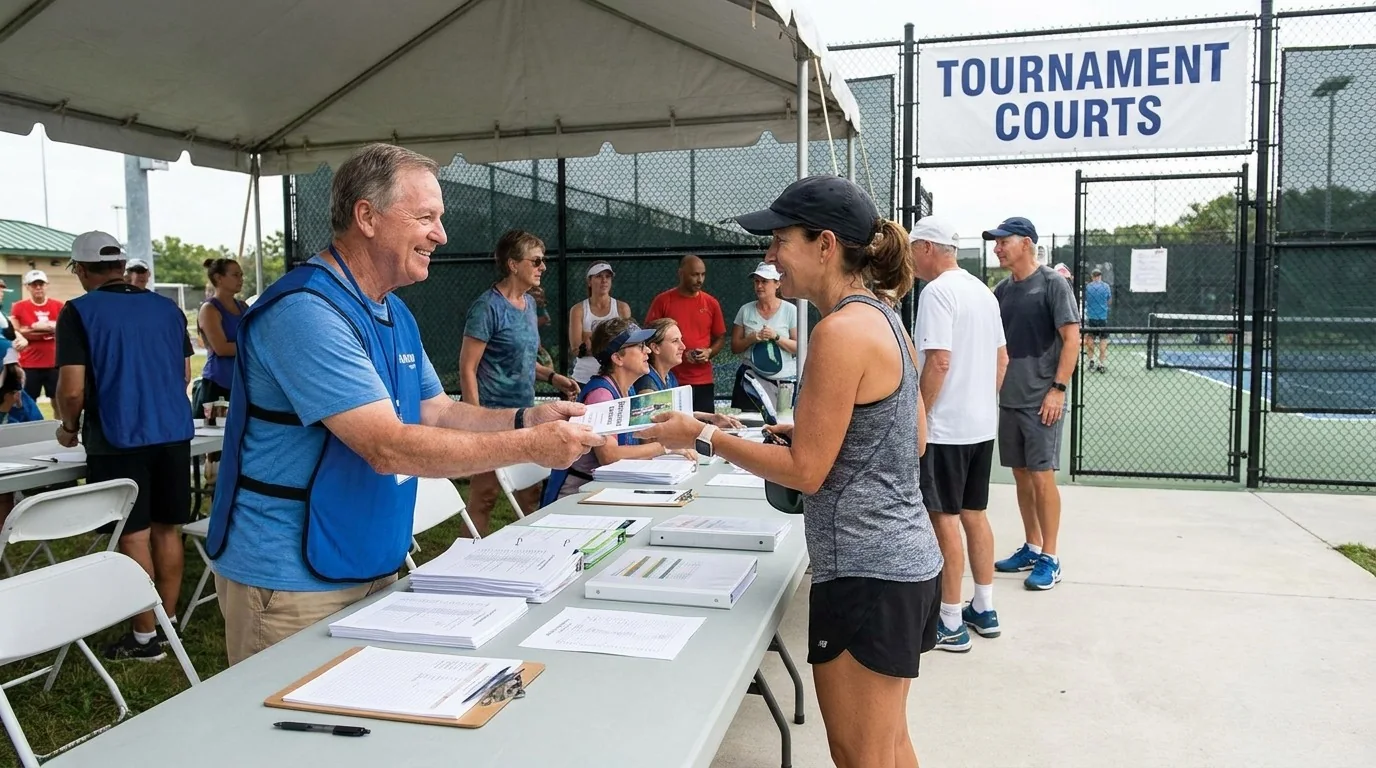
For organised play, put restroom directions in the welcome briefing and venue information. Tournament operators should confirm access, supplies, cleaning responsibility, and a backup plan before players arrive. Restrooms belong in the venue plan alongside check-in and other player services.
During play, give one host or facility contact responsibility for reports. Close or redirect a route only after clearly communicating the alternative. Never send players across an active court to reach a temporary restroom. After a busy session, check the route, entrance, fixtures, supplies, and floor again.
Opening checklist
- Walk from arrival to the restroom and back without crossing an active court.
- Confirm the entrance is visible, unobstructed, and usable.
- Check soap, paper, drying supplies, water, lighting, and waste capacity.
- Remove carts, tables, baskets, and loose balls from the route.
- Tell players where the restroom is and how to report a problem.
- Record repairs or cleaning needs before the next booking.
Reliable restroom access comes down to a visible route, a usable entrance, stocked supplies, clear responsibility, and checks timed to real community play. When those pieces are in place, players can focus on the court and more people can use the facility comfortably.