Pickleball Court Water Stations: A Practical Plan for Shared Play
Plan a clean, accessible pickleball court water station that supports hydration without blocking circulation or creating maintenance hazards.
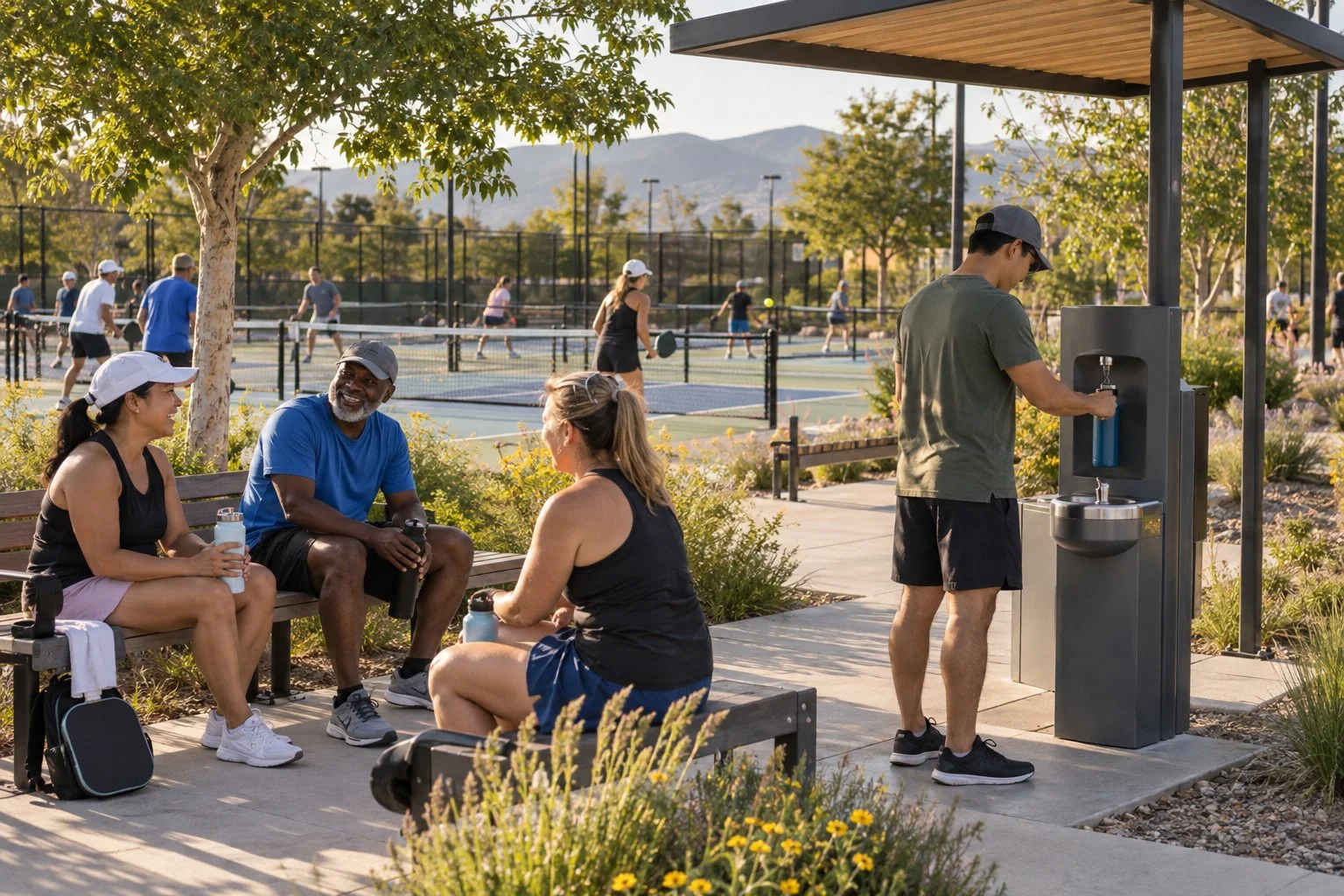
A water station can turn a shared pickleball site into a more comfortable place to play, but only if it is planned as part of the court environment. A tap or fountain placed beside a gate may create a queue, wet the playing route, or encourage bottles and bags to collect where people need to walk. The practical aim is to make hydration easy without adding a trip hazard, blocking access, or creating a maintenance problem.
Put hydration close, but not in the traffic lane
Watch a busy session before choosing the location. Players move between parking, gates, benches, restrooms, and courts, while ball retrieval can send people across the same space. Place the station near the main route, but outside the playing envelope and away from a gate swing. Waiting users should not have to stand behind a baseline, squeeze along a fence, or cross an active court to fill a bottle.
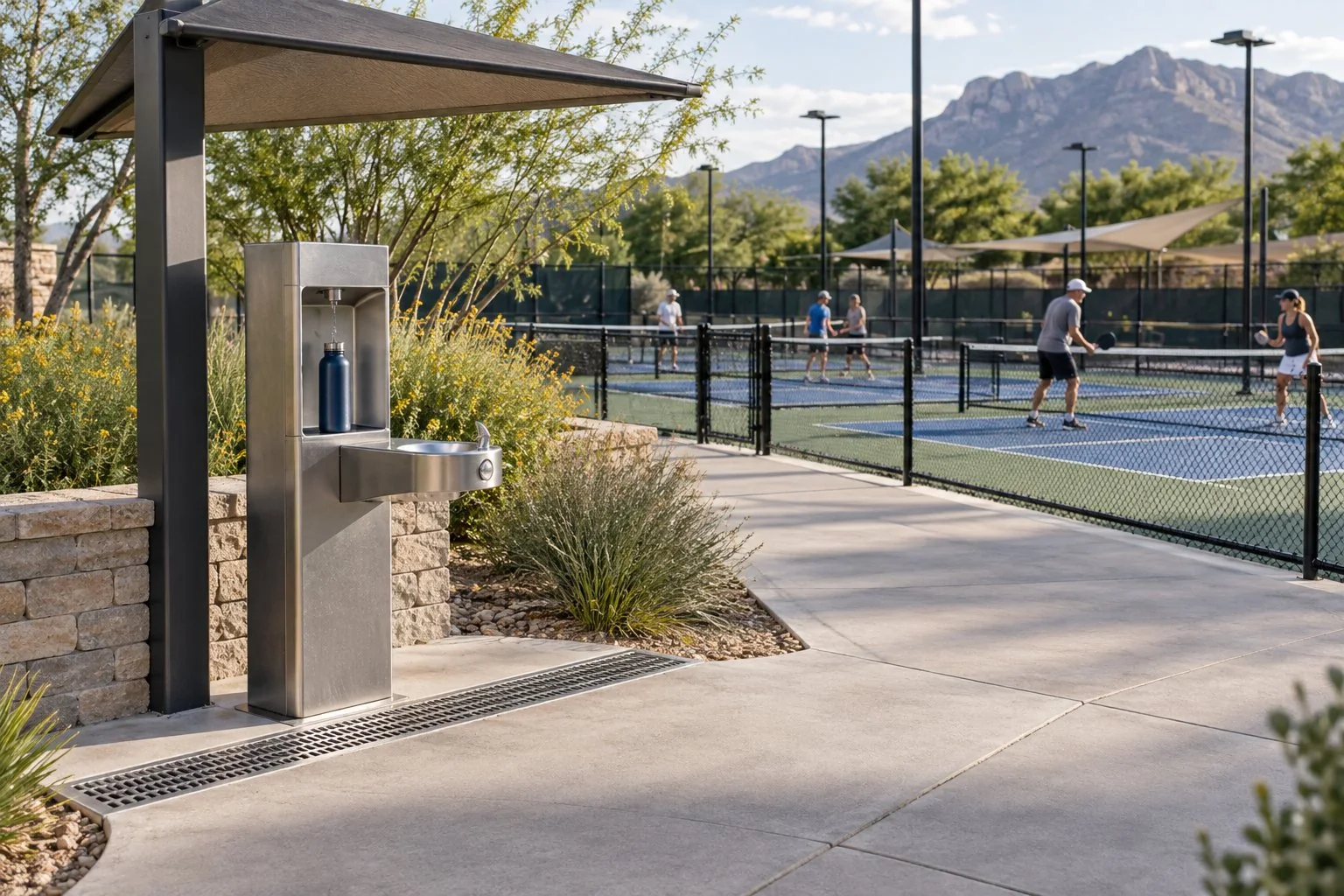
Keep a clear approach for people carrying a paddle bag, pushing a cart, or using a mobility aid. The ground should be firm, stable, and slip-resistant, with enough room for someone to turn without blocking the path. Shade is useful in hot weather, yet the canopy must not reduce visibility, interfere with lighting, or create a low obstacle. A simple roof or nearby tree can help when it does not shed debris onto the drinking point.
Control water, drainage, and hygiene
A station needs a way to handle splashes and overflow. Direct water toward an appropriate drain or planted area without allowing a puddle to form on the walkway. Check the surface after use and after rain; a constantly damp patch can become slippery, attract dirt, and damage nearby paving. Keep hoses out of circulation routes and secure any temporary connection so it cannot become a loose loop.
Choose fixtures that are easy to clean and simple for different users to operate. Bottle fillers, drinking fountains, and taps each have different maintenance needs. Protect the outlet from contact with dirty containers, provide a nearby place for a bottle to rest, and avoid surfaces with deep joints that hold grime. If disposable cups are provided, use a covered bin and empty it before it overflows.
Make the station work during open play
A water point becomes crowded when several courts finish at once. Orient the user side toward an open area, not toward a narrow fence corridor. Leave space for a short queue and keep bags off the ground. A small reminder to refill quickly during busy rotations can help, but the message should support hospitality rather than police players.
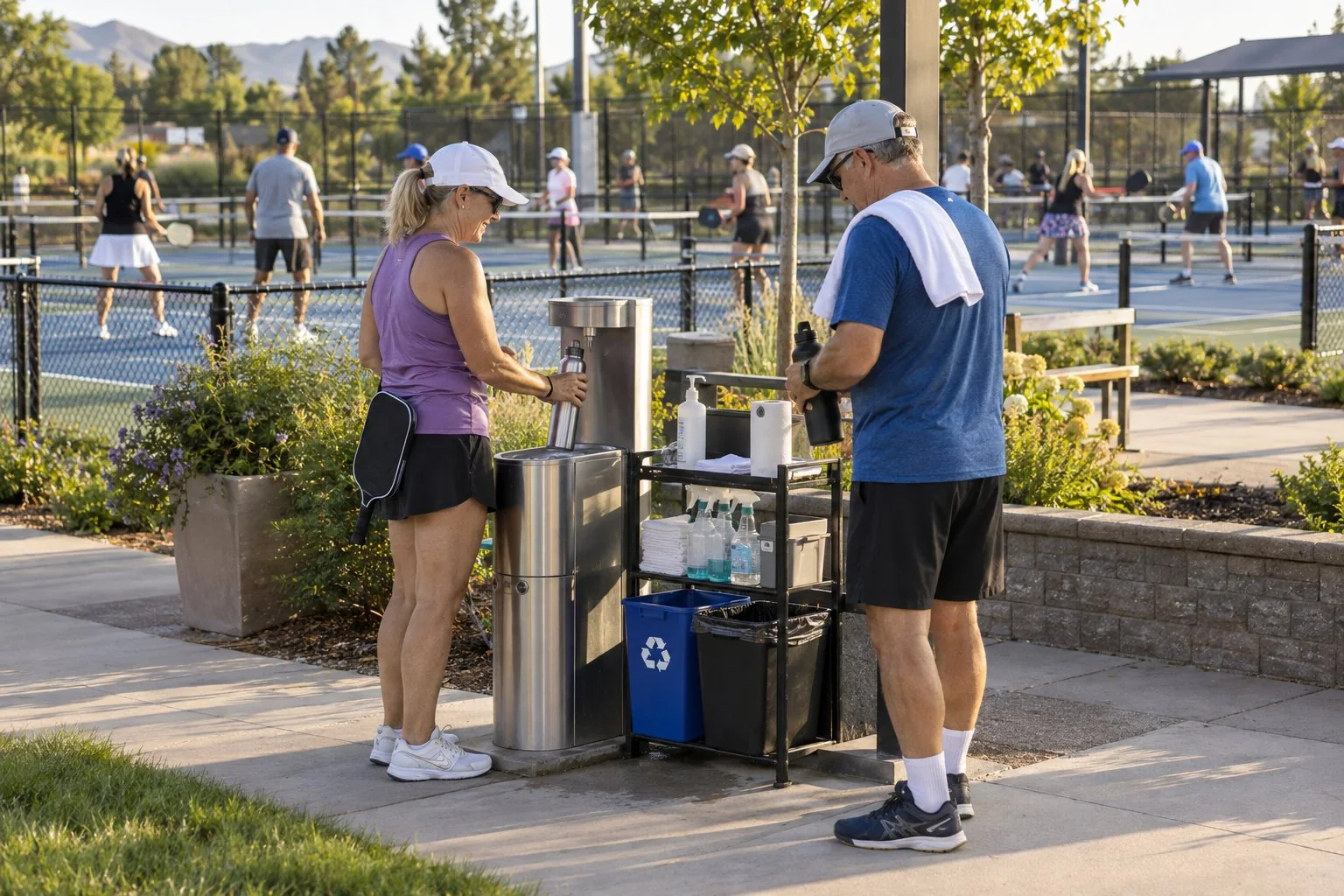
Assign responsibility for checking the station. A staff member or volunteer can inspect the tap, drain, paving, shade, bin, and surrounding litter at the start of the day. After storms, look for sediment, standing water, damaged fittings, and branches. If the surface becomes unsafe or the water supply is uncertain, close the point clearly and direct players to another source rather than leaving people to guess.
A good water station is quiet infrastructure: easy to find, comfortable to use, and rarely in the way. Observe real movement, preserve access, manage drainage, clean the contact surfaces, and review the arrangement as court use grows. Those checks support longer sessions and make a community facility more welcoming without complicating play.