Pickleball Crosscourt Dink: Build Margin and Move the Opponent
Use the pickleball crosscourt dink to create margin, move the opponent, recover with balance, and practice safer decisions at the kitchen line.
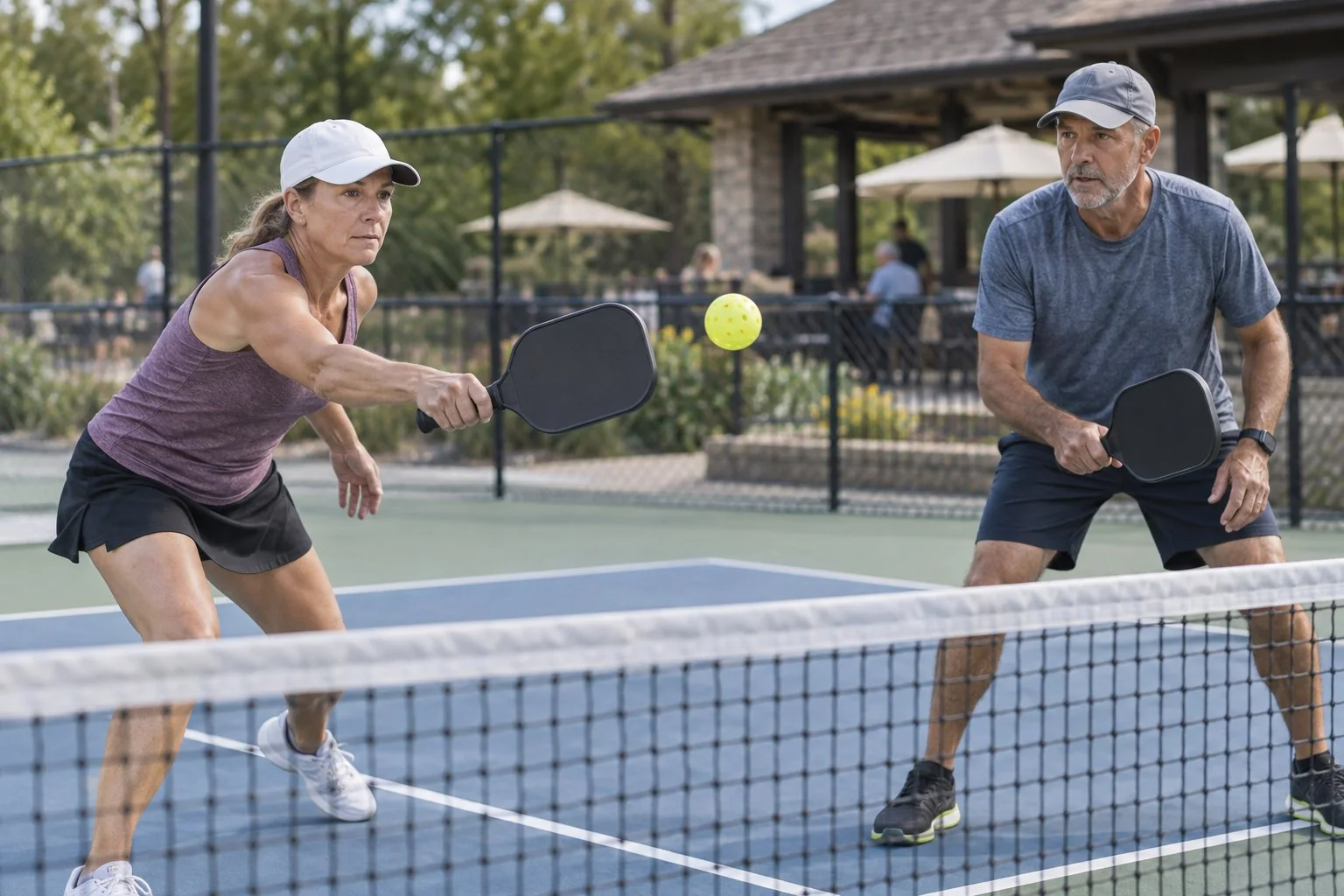
A crosscourt dink is more than a soft shot hit to the other side. It is a way to give the ball room over the net, make the opponent move, and buy time to recover. The shot works best when you treat placement and balance as one skill rather than chasing a perfect angle.
Why the diagonal is useful
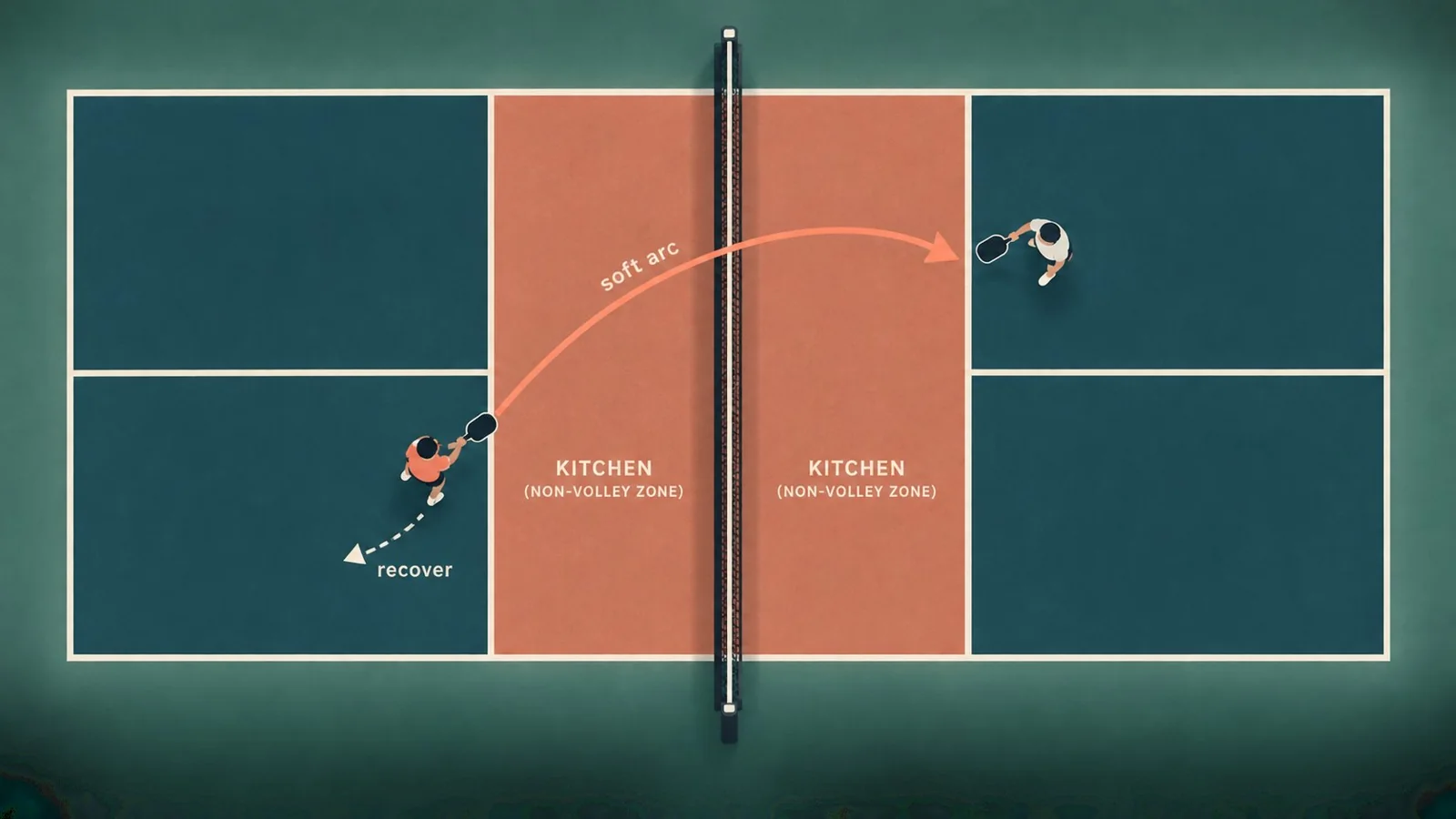
A diagonal path travels farther than a straight path. That extra distance gives the ball a wider window to clear the net while still dropping into the opponent’s kitchen. It also asks the defender to cover sideways ground, which can open space for the next ball. The benefit is margin, not magic: a crosscourt dink still needs a controlled height and a safe landing target.
Start with a target several inches inside the kitchen rather than aiming at the sideline. A ball that lands safely in front of the opponent is more valuable than one that clips the line and gives away the rally. Keep your eyes on the ball through contact, and finish with the paddle face quiet instead of adding a dramatic wrist roll.
Build the shot in three parts
First, arrive balanced. Use small adjustment steps so your weight is not falling backward or drifting across your partner’s space. Set the paddle in front of your body and let the ball come to a comfortable contact point. If you reach from a stretched position, choose height and safety before angle.
Second, make a compact lift. A soft dink is not a dead push; the paddle travels smoothly from low to slightly higher while the face stays stable. Send the ball on a gentle arc toward the opposite kitchen. Your swing should finish under control, ready for the opponent’s reply.
Third, recover immediately. After contact, return to a stable kitchen-line position and reconnect with your partner. Do not watch the ball and remain frozen. The crosscourt direction may pull you toward the sideline, so take a small recovery step before preparing for the next shot.
Know when to keep it crosscourt
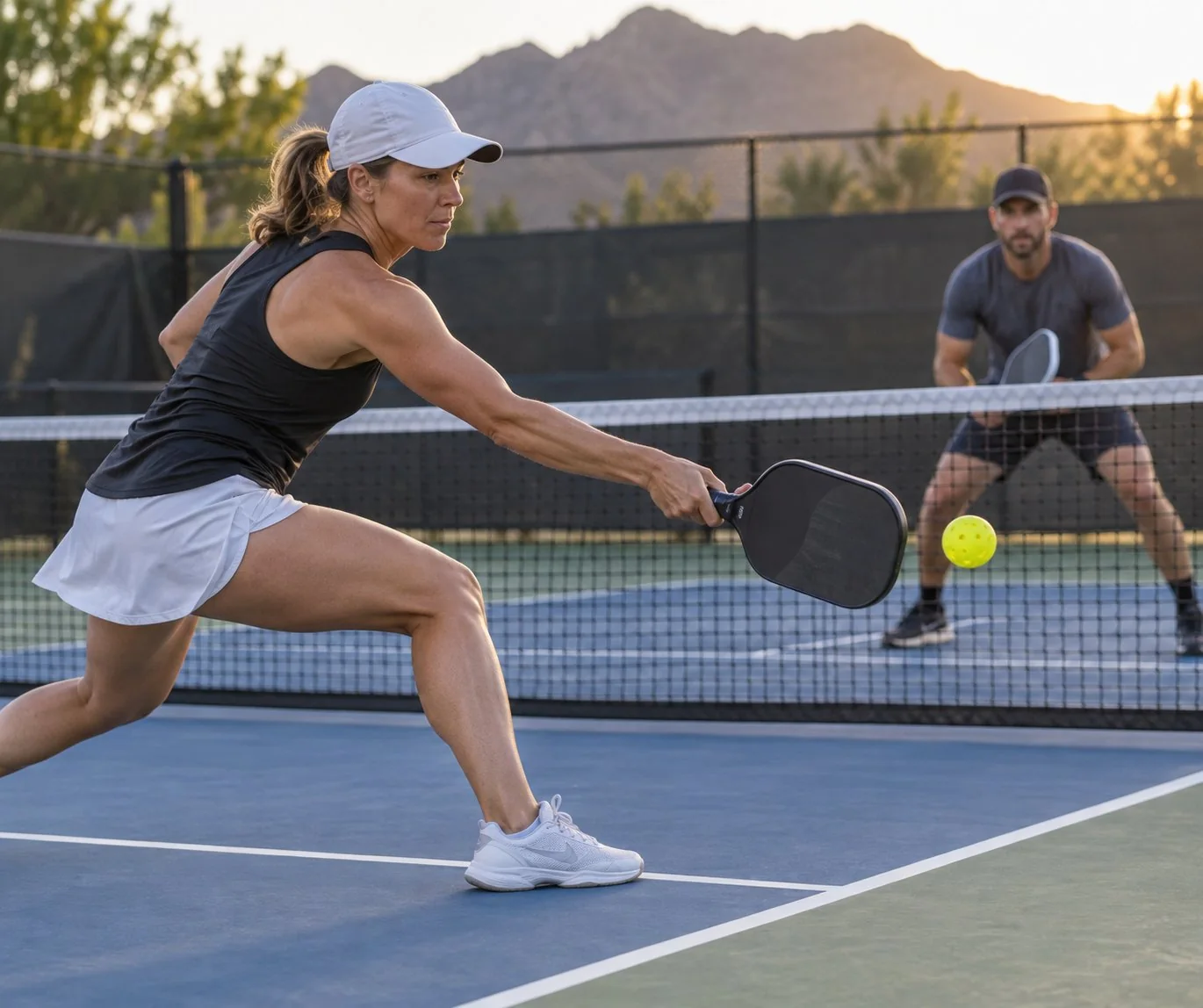
Use the diagonal when the ball is below attacking height, your feet are set, and the opponent’s position leaves a sensible landing area. If the opponent is already waiting comfortably in the corner, send the next dink to a different safe window rather than repeating the same ball automatically. Variation should come from what you see, not from a pre-set sequence.
Be cautious about changing direction from a low ball near the sideline. A rushed line change has less net clearance and can float high or land out. When contact is uncomfortable, reset crosscourt with a higher margin, then rebuild your position. The safest choice often keeps the rally neutral.
A simple practice progression
Begin cooperatively from opposite kitchen lines. Hit ten crosscourt dinks from the forehand side, then ten from the backhand side. Count balls that land in a clear target zone, not winners. Repeat from the other end so you learn how the same stroke feels in both directions.
Next, add movement: feed one ball slightly wide, recover with small steps, and play the next dink crosscourt. Finish each repetition in a balanced ready stance. Finally, let the partner vary depth and height. Your job is to choose a safe arc when the ball is low and recognize when a higher ball should be treated differently.
A useful session note is simple: target side, number of safe landings, and the mistake you saw most often. If the ball floats, reduce the lift or contact earlier. If it clips the net, add a little height without swinging harder. If you lose balance, shorten the swing and move your feet before contact.