Pickleball Deceleration Footwork: Brake, Set, and Recover
Pickleball deceleration footwork: a practical guide to braking, setting the feet, and recovering under control.
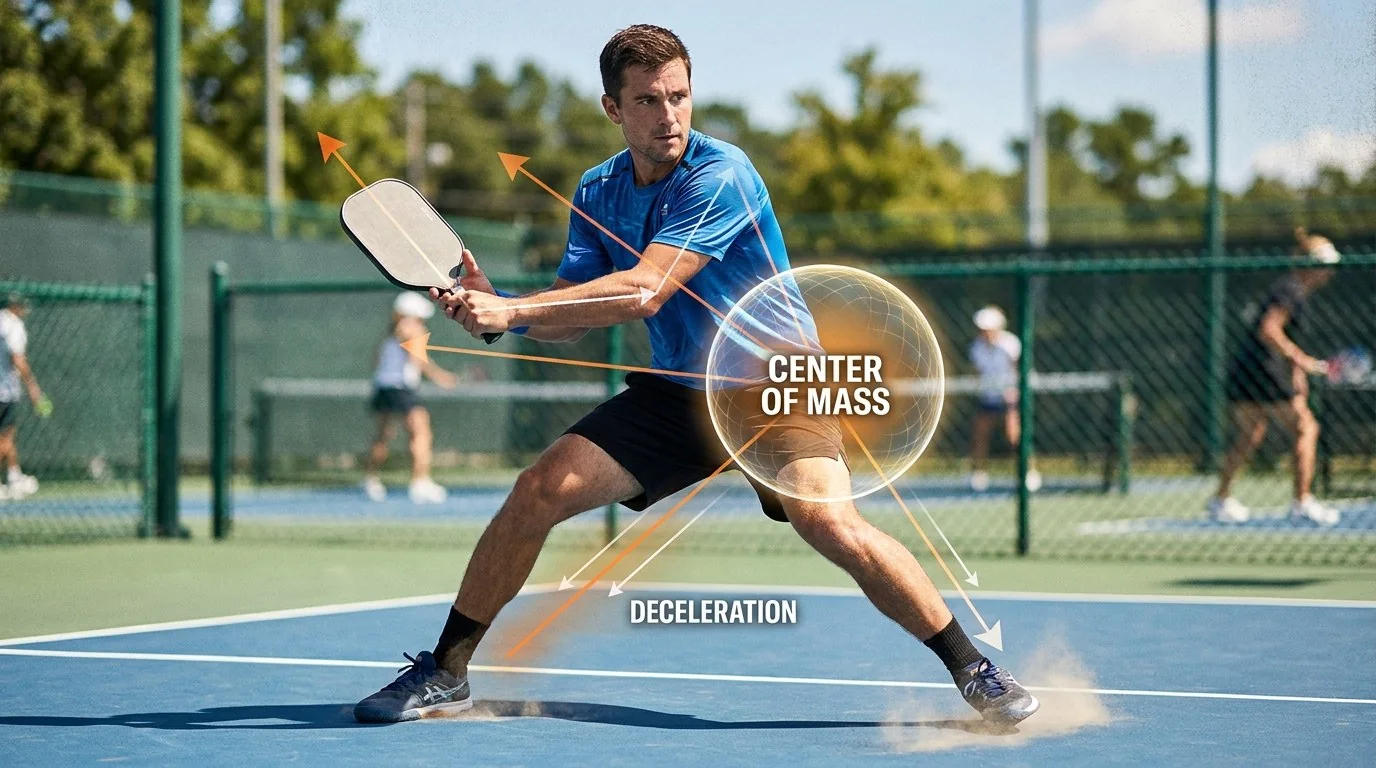
Good pickleball movement is not just about getting to the ball. It is also about arriving under control. Deceleration footwork turns a quick first step into a balanced contact and leaves you able to move again.
Why braking matters
If you arrive too fast and cannot slow down, your chest leans, your paddle reaches, and the useful contact window disappears. A controlled stop gives you time to organize your feet, keep the ball in front of you, and choose a safer target. You are not trying to freeze before every shot. You are managing momentum so the next movement stays available.
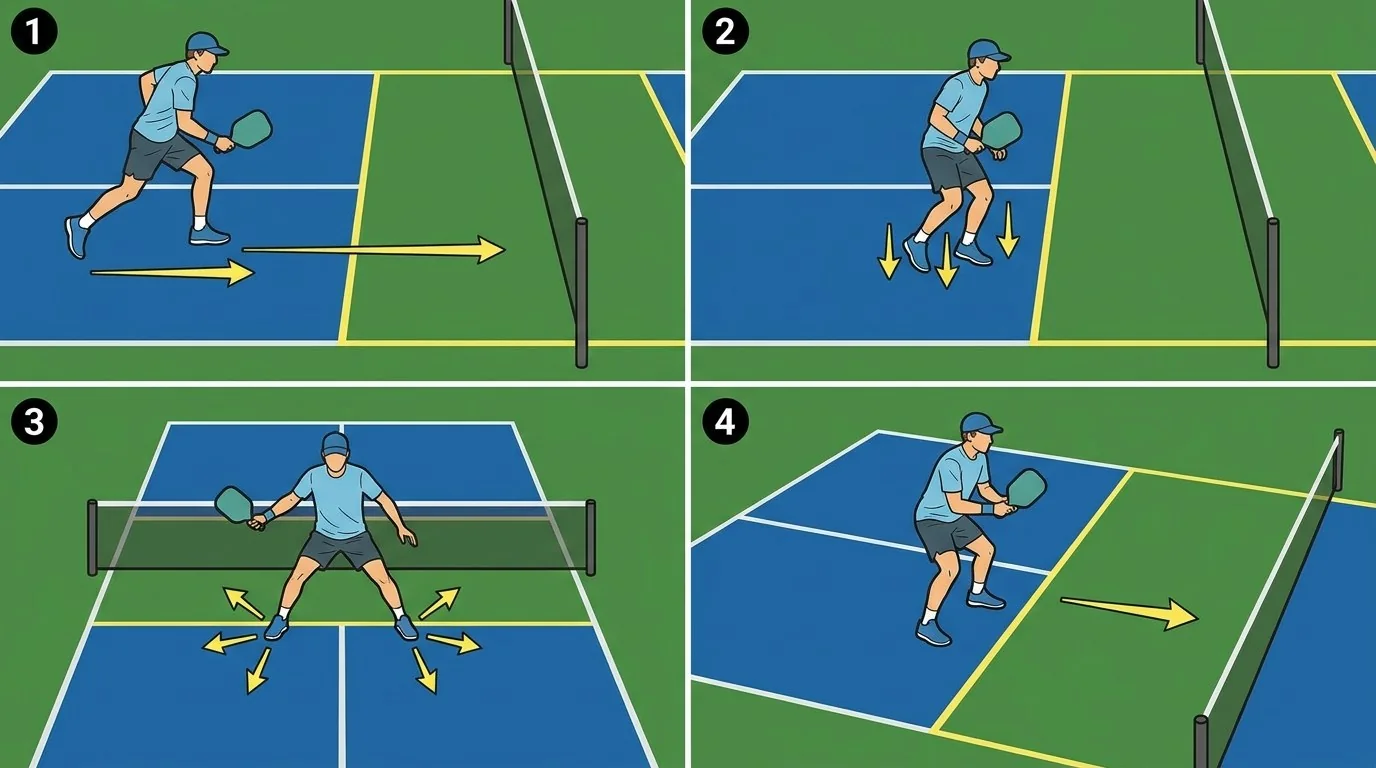
Begin from a ready position with soft knees and your weight centered over your feet. When the opponent makes contact, use a small split step. Push toward the ball, then shorten your steps as you enter the contact area. The last step should help you brake, not turn into a reach on a straight leg. Keep the chest quiet and let the hips help absorb the stop.
Use a three-part brake
First, lower your body slightly as you approach. Quietly lowering your center of mass makes the stop less abrupt and helps keep the paddle path stable. Second, use short adjustment steps. They let you correct your distance instead of committing to one long stride. Third, finish with a stable base: feet apart, paddle in front, and enough pressure in both legs to push again.
For an ordinary lateral ball, shuffle rather than crossing your feet. Push from the inside foot, let the outside foot travel, and close the distance without clicking your feet together. If the ball is farther away, a crossover can cover ground efficiently. When time allows, uncross before contact. A crossover is a distance tool, not an excuse to arrive tangled.
Brake in common situations
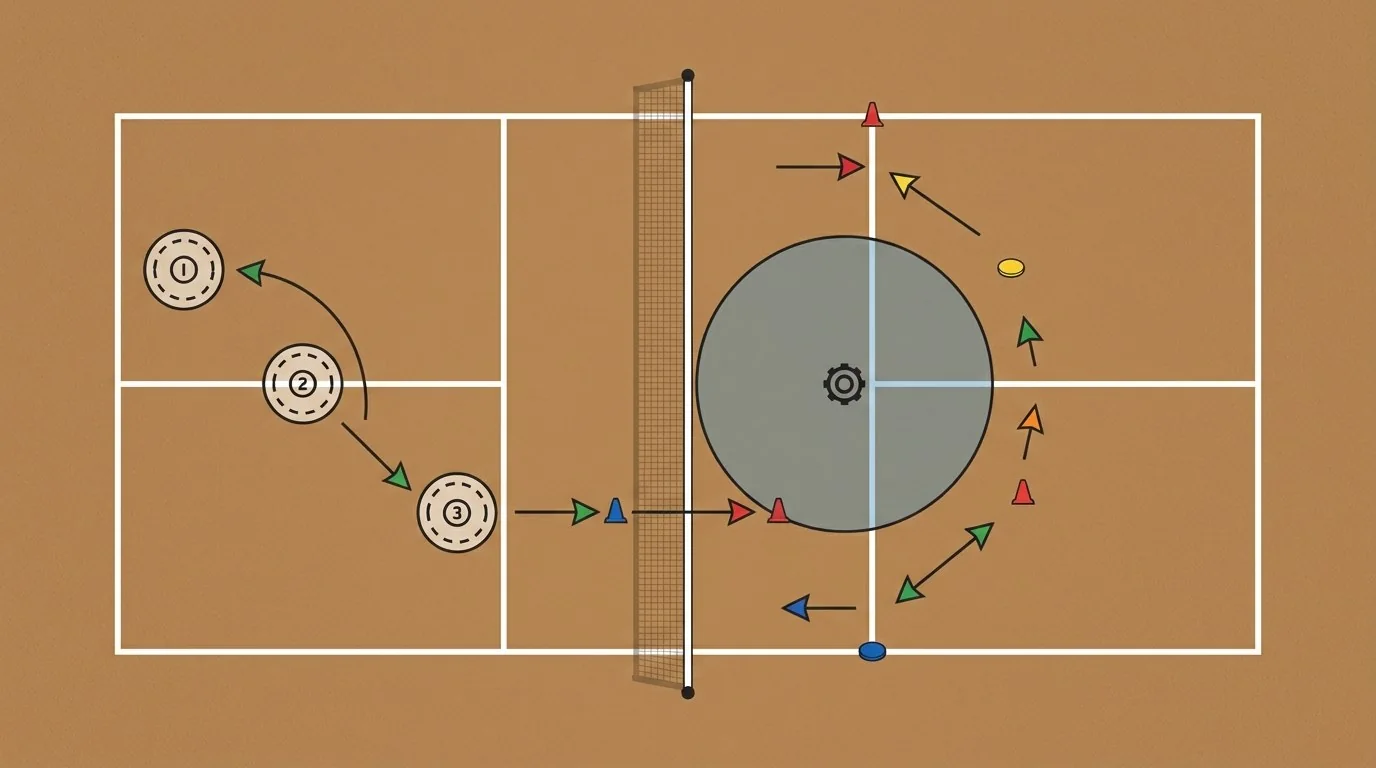
At the kitchen, keep the shuffle and adjustment steps compact. The line is close, so a dramatic lunge often creates more momentum than the shot requires. Move your base toward the ball, keep your head level, and brake before the paddle has to rescue the contact.
In the transition area, advance in measured bursts. If the opponent is about to hit, stop with a split step instead of continuing forward blindly. A balanced stop gives you a chance to reset. Running through the shot usually produces a pop-up or a weak ball.
On a wide defensive ball, let the outside leg absorb the lunge while your torso stays controlled. As soon as the ball leaves your paddle, push back toward your recovery position. Do not wait to watch the result. Recovery starts at contact.
Practise the stop
Place two markers two or three steps apart. Start in the middle, split step, move to one marker, and stop in a balanced base for two seconds. Return and repeat on the other side. Begin with a planned direction, then let a partner call the direction at random. Count only repetitions in which your feet stop under your body and the paddle stays ready.
Add the shot once the footwork is clean. Have a partner feed the ball wide, brake into a good spacing position, hit with control, and recover toward the middle or the lane protected by your shot. Record a few repetitions if possible. Look for a straight knee, a leaning chest, or feet that keep moving after contact. Slow the drill down until the pattern is clean, then build the pace gradually.
Quick checklist
- Split step as the opponent makes contact.
- Push early, then shorten the steps near the ball.
- Brake with the legs instead of reaching with the torso.
- Keep the ball in front of the knee and hip.
- Rebuild the base immediately after the shot.
Better deceleration can make the court feel larger because you waste fewer steps and arrive ready for the next decision. Practise the stop as deliberately as the first step. Speed becomes more useful when it ends in balance rather than turning into a frantic reach.