Pickleball Defensive Push: Soft Hands Under Pressure
Build a reliable pickleball reset shot for transition-zone pressure by absorbing pace, keeping the paddle quiet, landing low, and moving forward.
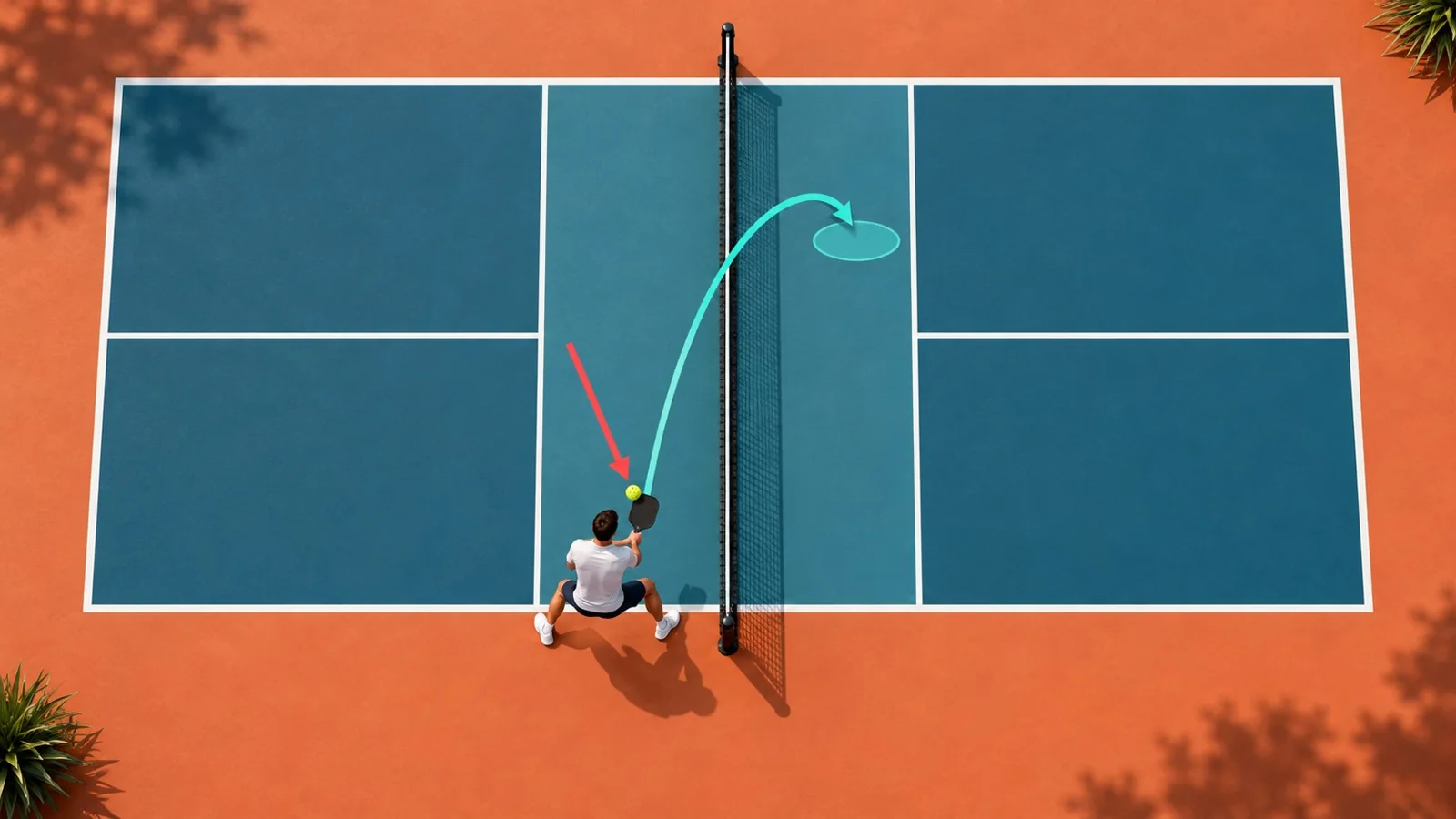
A pickleball defensive push is a defensive answer to pressure. Instead of matching a hard drive with another hard swing, you absorb enough pace to send a low, controlled ball into the opponent's kitchen. That small change can turn a scramble in the transition zone into a neutral exchange and give you time to move forward.
Recognize the reset moment
The reset is most useful when the incoming ball is low, fast, or aimed at your feet. It is also the right choice when you are caught between the baseline and the kitchen line and cannot strike from a stable, attacking position. A full counter from that posture often lifts the ball into an opponent's comfortable attack window.
Read the ball early and decide before it reaches your body. If it arrives above net height and you are balanced, a controlled attack may be available. If it is dropping below the net or you are still recovering, choose the reset. The goal is not to win the rally immediately; it is to make the next ball difficult to attack and earn a safer path toward the kitchen.
A reset differs from a dink because you are usually defending from farther back, and it differs from a third-shot drop because it is a reaction to pressure rather than a planned opening shot. The same principles of touch and height apply, but your first job is to regain balance.
Build the stroke with soft hands
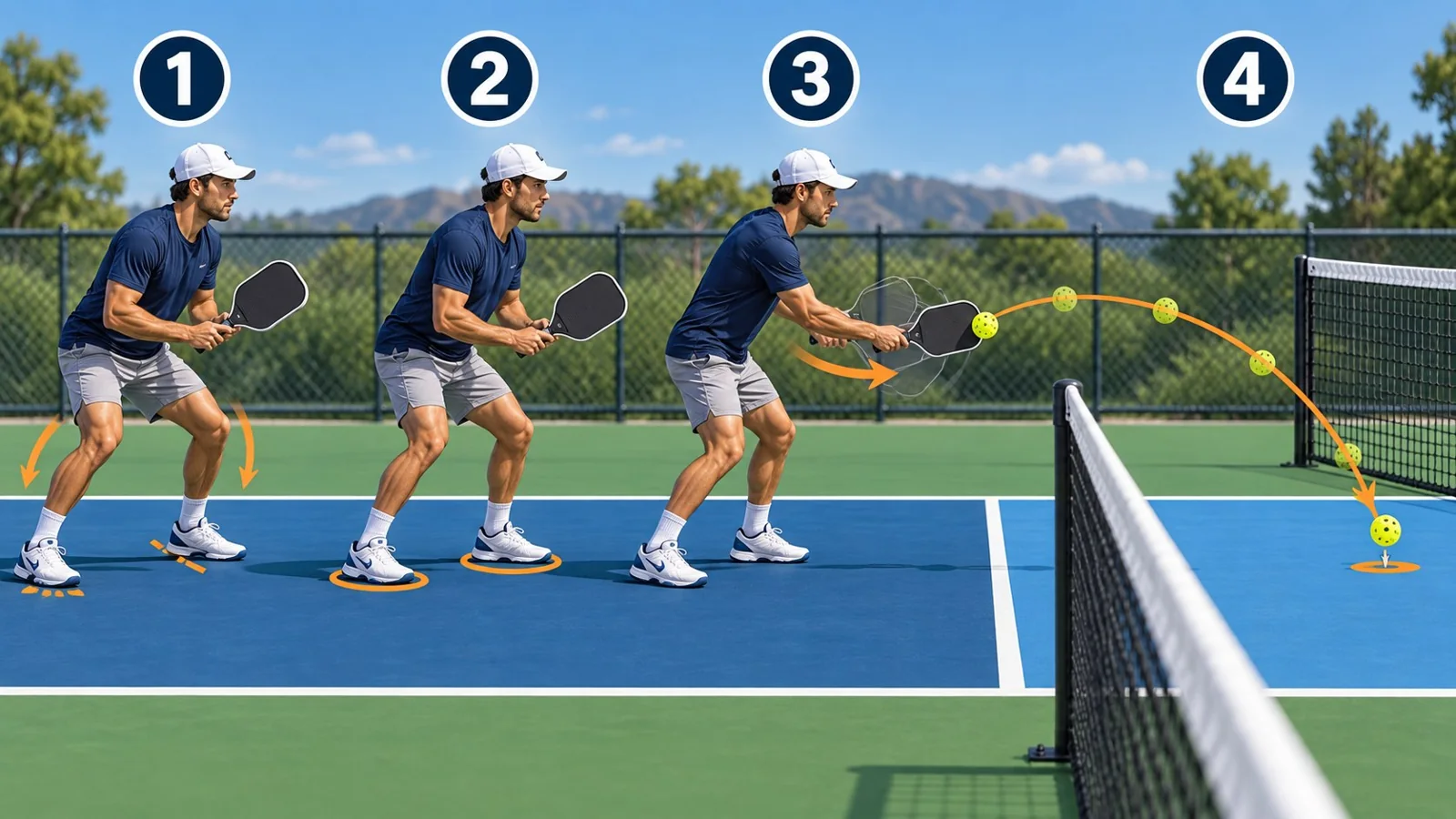
Start with the paddle in front of your body, knees bent, and feet slightly wider than your shoulders. As the opponent makes contact, use a compact split step so both feet land together. Stop your forward or lateral drift before you play the ball. Hitting while still moving often transfers unwanted energy into the shot.
Use a light grip and keep the wrist quiet. The paddle should act more like a shock absorber than a rigid wall. There is no large backswing: begin from the ready position and make a short, gentle push through contact. Let the open face provide the lift, rather than trying to scoop the ball with an active wrist.
Meet the ball in front of the body whenever possible. On the forehand side, create room with a small adjustment step instead of reaching. On the backhand side, give yourself space and keep the paddle face stable; a two-handed grip can make that stability easier for some players. The contact should feel quiet, with only enough forward intent to clear the net.
Shape the ball and move forward
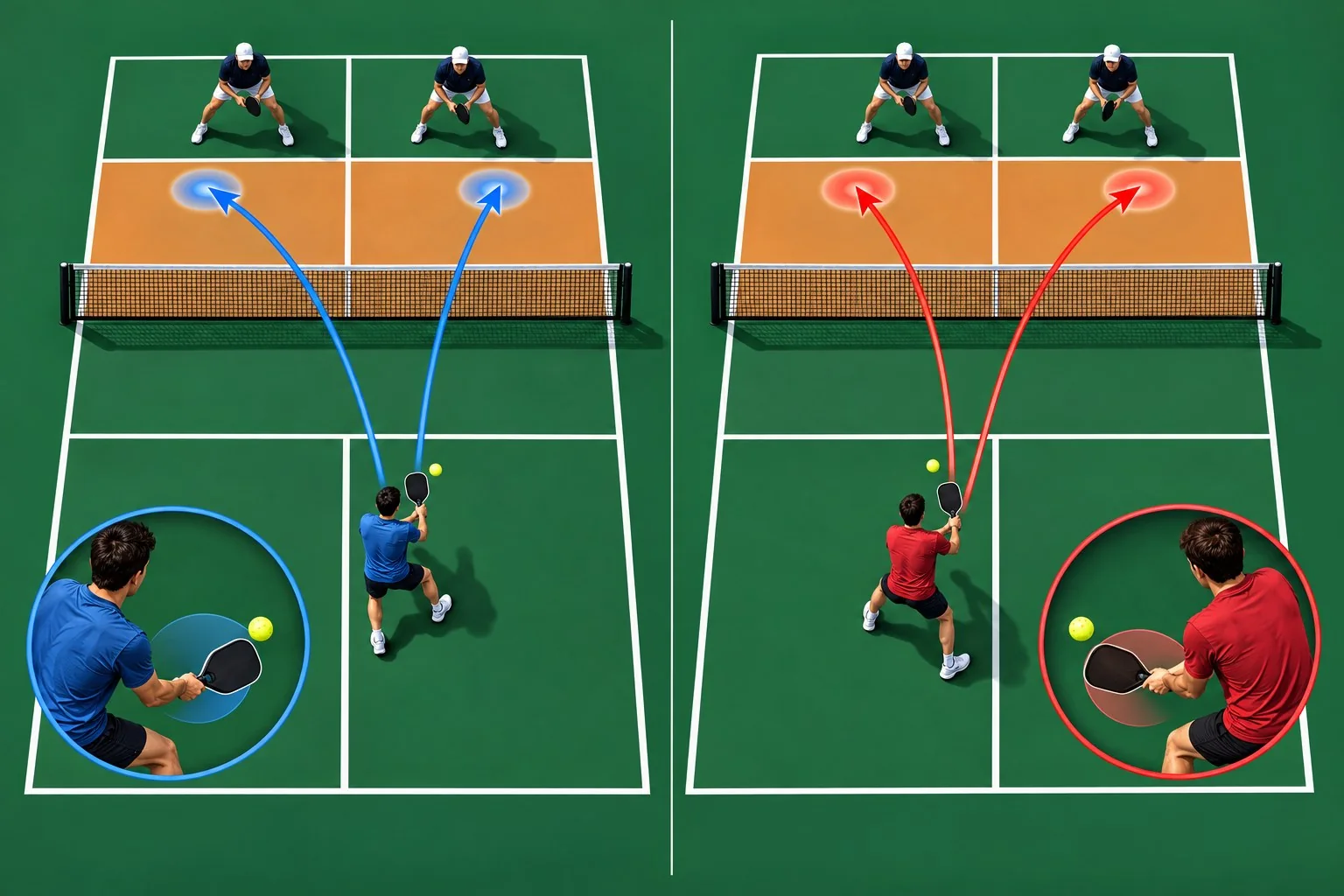
Aim for the opponent's kitchen, generally through the middle or toward a backhand side when that target is available. The ball needs enough height to clear the net, but a high floating arc gives the opponent time to attack. Think of a gentle rise followed by a quick descent. Your objective is a low bounce, not a deep defensive ball.
After contact, take the steps the reset has earned. Move forward under control rather than sprinting blindly. If the ball lands low, continue toward the kitchen and prepare for a soft exchange. If it is imperfect but still playable, reset again from the improved position. The shot and the recovery belong together.
Fix the errors that create pop-ups
A large backswing adds energy and usually sends the ball long or high. Keep the paddle in front and shorten the push. A tight grip has the same effect: the ball rebounds from a hard surface instead of losing pace. Relax before contact and practise the feeling with gentle feeds.
Another common mistake is hitting while reaching or drifting. Use the split step earlier, make a small adjustment, and stop before contact. If the ball pops up, check the face angle as well as the grip. Too closed can drive the ball into the net; too open can create a slow, attackable floater.
Finally, do not watch the reset instead of recovering. Make forward movement automatic after the stroke, even when the first attempt is not perfect.
Practise the reset under pressure
Begin with shadow repetitions: ready position, split step, quiet paddle, short push, and two recovery steps. Then work with a partner who feeds controlled drives toward your feet from the kitchen line. Reset into a marked kitchen target, freeze your finish, and check whether your base was stopped. Add pace only after the low trajectory is repeatable.
For a solo option, use a wall from a comfortable distance. Feed the ball firmly enough to return with pace, then absorb it with the compact reset motion. Alternate forehand and backhand sides, keeping the same low target in mind. In live practice, accept that two or three resets may be needed before you reach the kitchen. Consistent balance and a low landing matter more than a spectacular single ball.