Pickleball Defensive Reset Cues: Match Your Ready Position to the Ball
Learn to read opponent contact height, step back from attacks, absorb pace with balance, and reset low before recovering.
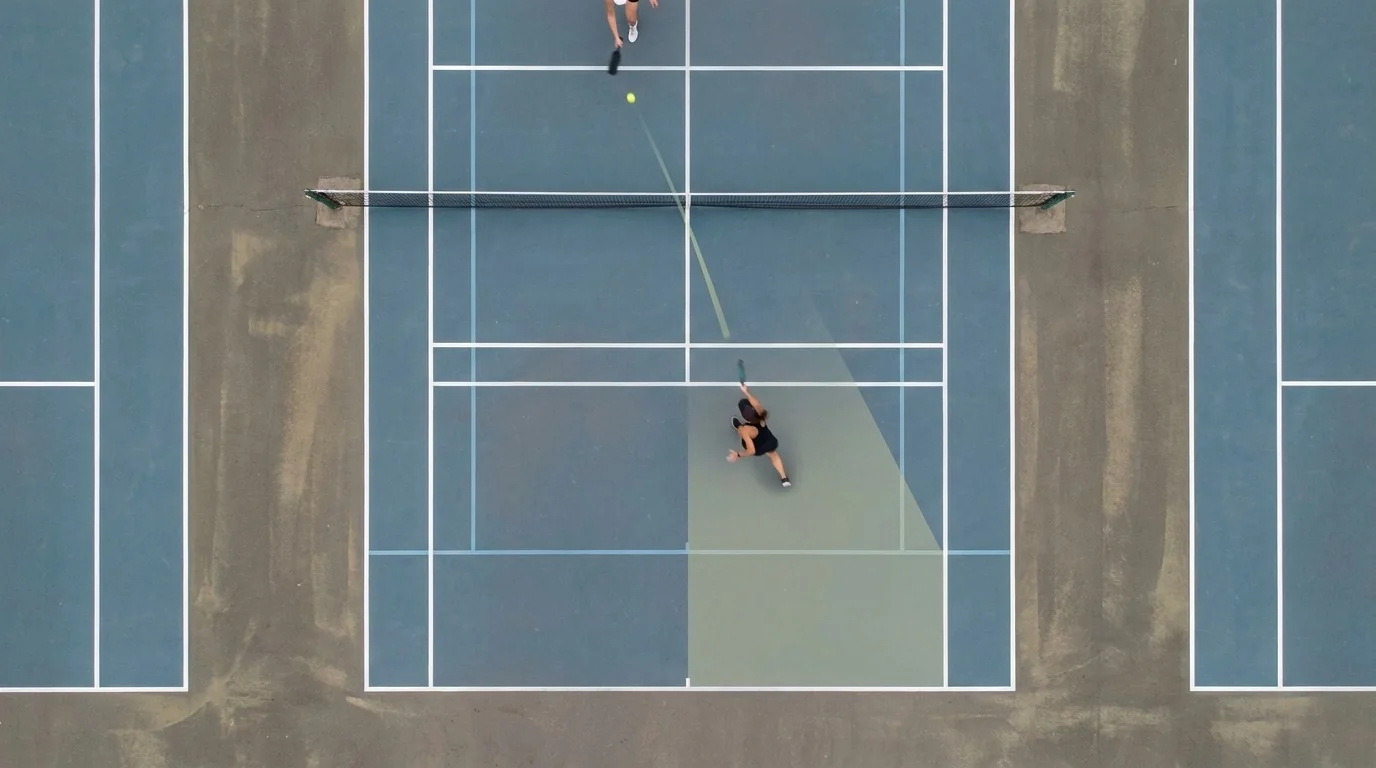
A defensive reset starts before the ball reaches your paddle. Read the opponent’s preparation, create enough space to defend, then absorb the pace without turning a difficult ball into an easy attack. The sequence is practical: read the contact, settle your base, soften the reply, and recover for the next exchange.
Step back when your ball sits up
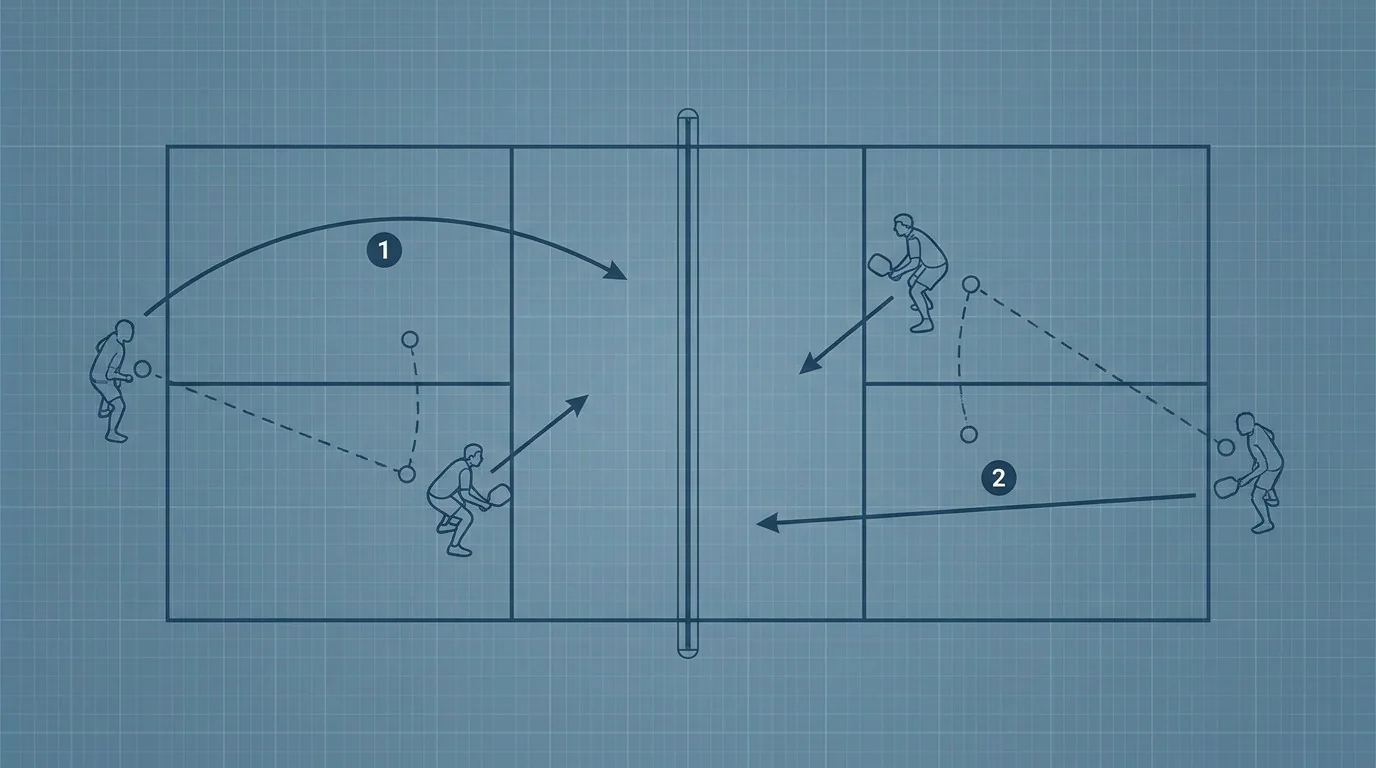
A ball that sits up gives the opponent a chance to attack. When you recognize it, take a quick step back to buy reaction time and make room for the defensive contact. Do not retreat without a purpose. Use the space to lower your center of gravity, get your weight behind the ball, and prepare a reset that drops toward the opponent’s kitchen.
That small retreat also changes the speed you have to handle. From a cramped position near the net, a hard ball can arrive before you organize your paddle. A little more distance gives the ball longer to travel and gives your hands a better chance to absorb it. Once the attack is neutralized, work forward again instead of staying stranded deep.
Read the opponent’s contact height
The opponent’s preparation is an early cue. If the paddle and contact are high enough to send the ball down, lower your ready position and prepare to block or reset. Protect the body first and keep the reply low; trying to win the exchange immediately is not the priority.
When contact is below net height, the opponent usually has to lift the ball to clear the net. That creates a different defensive picture. Raise your preparation enough to see the ball and be ready for a counter or controlled attack if the incoming shot gives you that option. Your ready position changes in the opposite direction of the opponent’s contact height.
Absorb pace instead of adding it
A reset needs a quiet response. Keep the preparation compact, hold your body steady enough to control contact, and let the incoming speed do less damage. A relaxed grip helps the paddle absorb pace. A rigid squeeze tends to send the ball too far or too high. The goal is not to stop the ball dead; guide it over the net so it descends into the kitchen.
Keep contact in front when you can, and do not reach while your feet are still moving. If the ball pulls you wide, use adjustment steps before contact. If that is not enough, accept a safer, higher defensive ball rather than forcing a low reset from an unstable position.
Stay balanced through the reset
Resets are easier when your feet are a little wider than your shoulders, your knees can bend, and your weight stays centered behind contact. Leaning or striking while drifting makes the ball pop up. Stop as much as the situation allows, make the soft contact, and rebuild your base immediately.
Practise the read-and-reset sequence
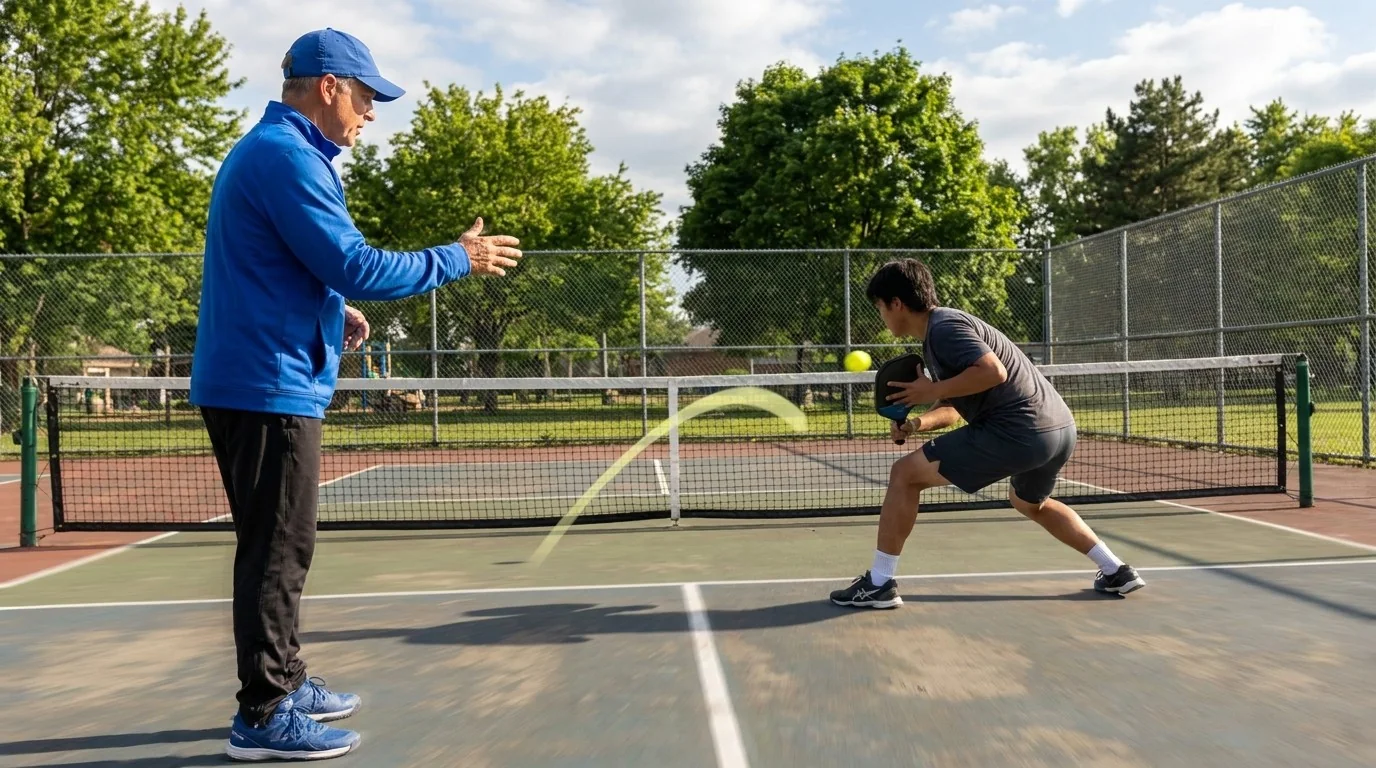
Start with a cooperative feeder. Alternate a neutral ball with a faster feed that requires a small retreat. Before responding, the defender calls the cue: “high contact” or “low contact.” Each repetition ends with a low ball and a recovery step. Add body targets only after the defender can stay balanced and keep the reset below an easy attack height.
Progress by changing the feed’s speed and location, not by asking for maximum pace from the beginning. Count balanced resets, useful recovery positions, and correct decisions. A repetition is not successful merely because the ball crosses the net. It should also improve the defender’s next position.
Use a compact defensive checklist
- Step back when a high ball is likely to be attacked.
- Lower your base for the opponent’s high contact.
- Raise your preparation when the opponent must lift from below the net.
- Keep the grip relaxed and the swing compact.
- Contact in front without leaning or reaching.
- Let the ball descend into the kitchen.
- Recover forward after the reset becomes safe.
Defend the situation you actually see. Read contact height early, create enough space, absorb pace with balance, and use the reset to return the rally to neutral.