Pickleball Dink Apex: Build a Low Arc That Lands Soft
Control the dink apex instead of chasing the tape: build a low arc, land softly, choose safer targets, and practise the complete sequence.
A reliable pickleball dink is not simply a ball that clears the net. Its arc should give you margin, descend before it reaches the opponent, and land softly enough to keep the return below attack height. The key is learning to control the apex—the highest point of the flight—rather than trying to skim the tape.
What the dink apex changes
A dink is a soft, controlled shot from near the kitchen line that lands in the opponent’s non-volley zone. Because the kitchen is seven feet deep and the middle of the net is lower than the posts, a diagonal dink usually gives you more distance and clearance than a straight one. That extra room is useful, but it does not remove the need for a disciplined arc.
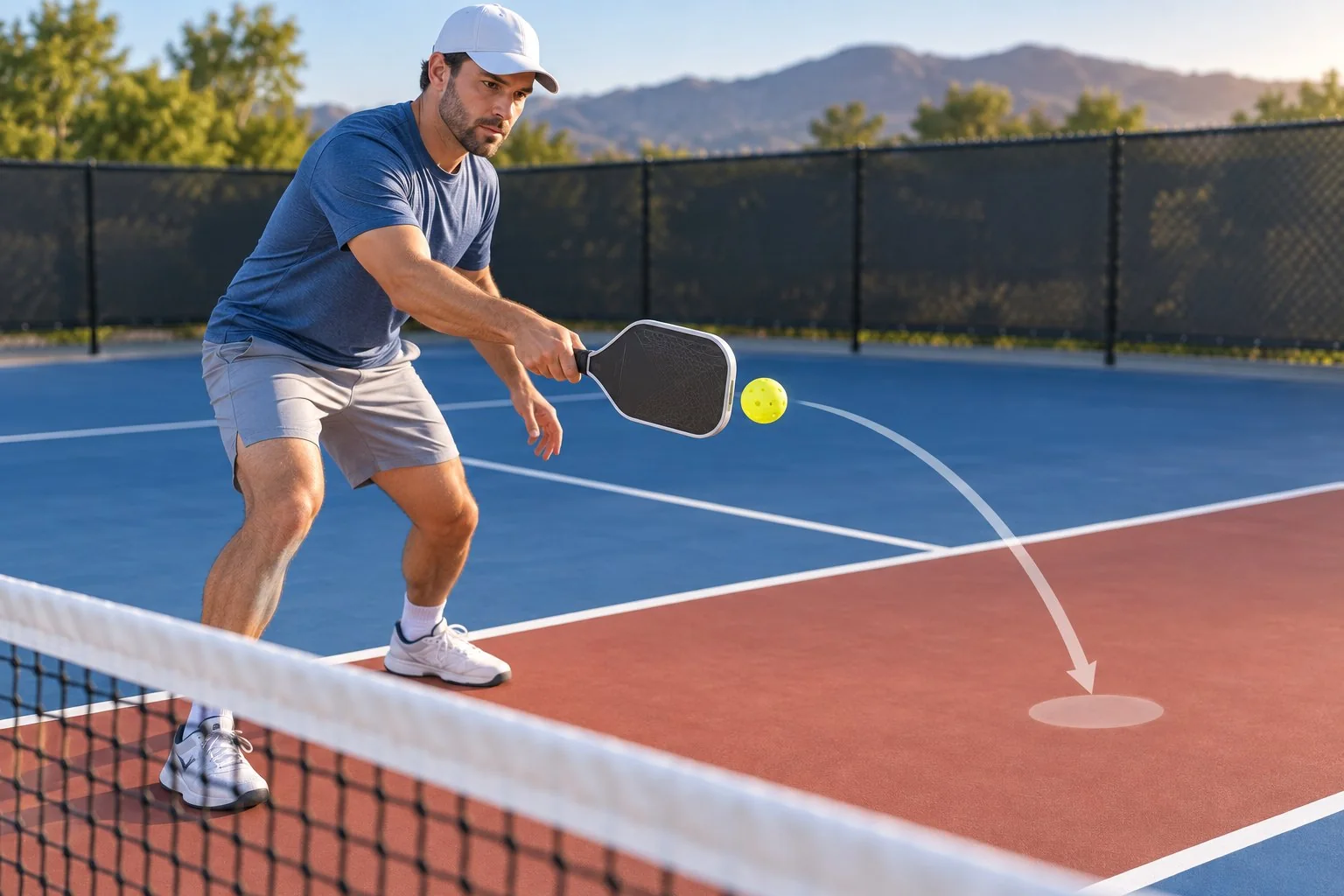
Picture a small rainbow whose peak is on your side of the net or just before the ball crosses it. The ball is already descending as it reaches the opponent. That shape helps it land short and low. If the apex is too late, the ball carries forward and may land deep or bounce higher; if it is too high, the opponent receives an easy attack. Do not chase a perfect measurement. Use the flight and bounce as feedback.
Build the low arc with your setup
Start one to two feet behind the kitchen line with feet about shoulder-width apart. Keep a slight knee bend, balance on the balls of your feet, and hold the paddle in front of your body. The continental grip is a useful starting point because it supports both forehand and backhand dinks without a hurried grip change.
Grip pressure should be light—roughly 2 or 3 on a scale of 10. A tight hand transfers too much pace and makes the ball spring off the face. A relaxed hand lets you absorb speed and guide the ball. Think of the paddle as a quiet platform, not a bat.
The stroke is a push and lift, not a backswing. Let the shoulder and elbow guide a compact motion. Meet the ball in front of your body with the face slightly open, then finish forward and a little upward toward the target. The face supplies the lift; the swing supplies only enough energy to clear the net. Keep the wrist quiet. Contact beside or behind the hip forces a rescue angle and often produces a pop-up.
Choose targets that preserve control
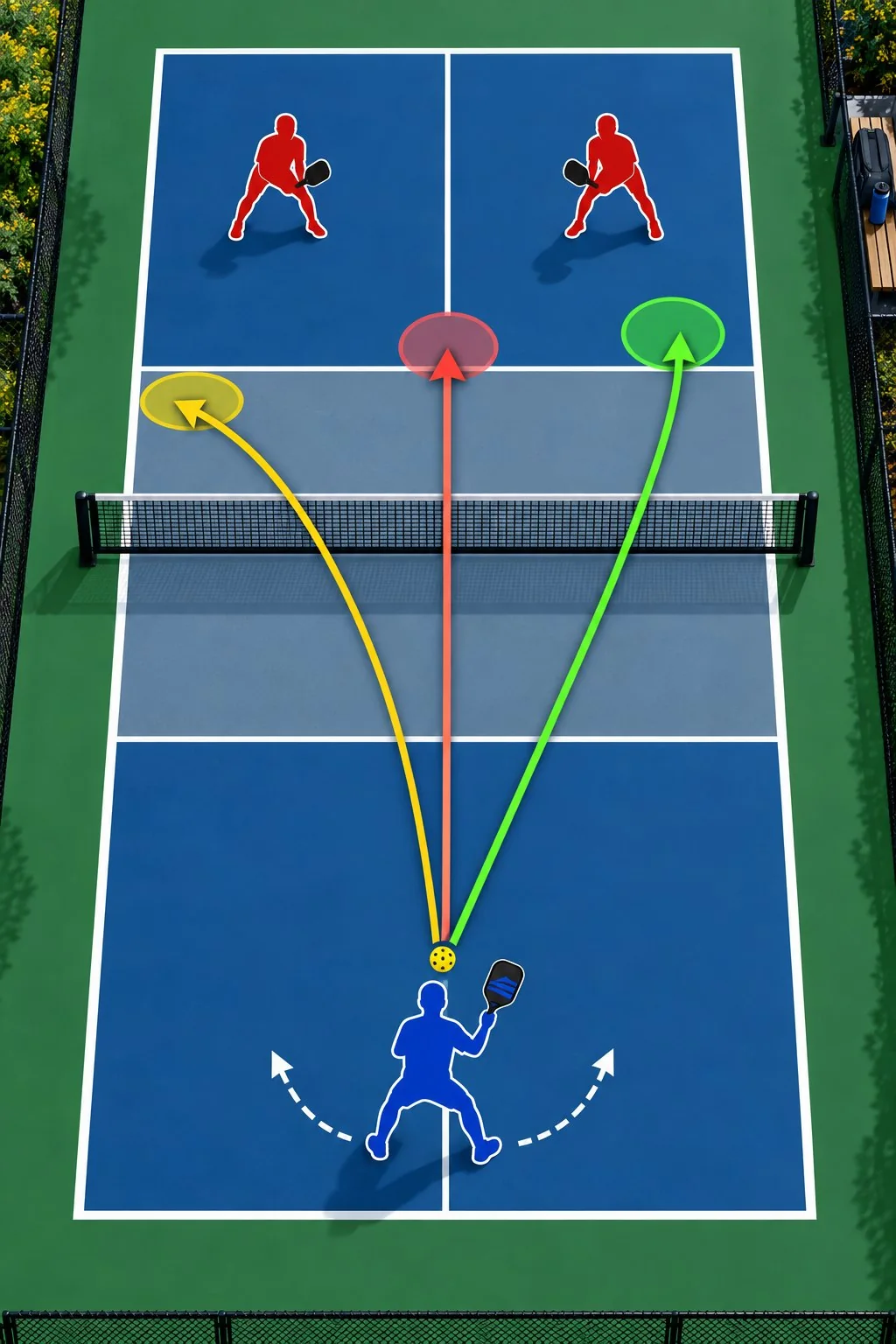
Crosscourt is a strong default because the diagonal route crosses the lower middle of the net and gives the ball more court to travel. Down-the-line dinks can change the pattern, but they pass over a higher part of the net and leave less room for error. Choose them when the opponent has leaned toward the middle or when changing direction will create a useful movement problem.
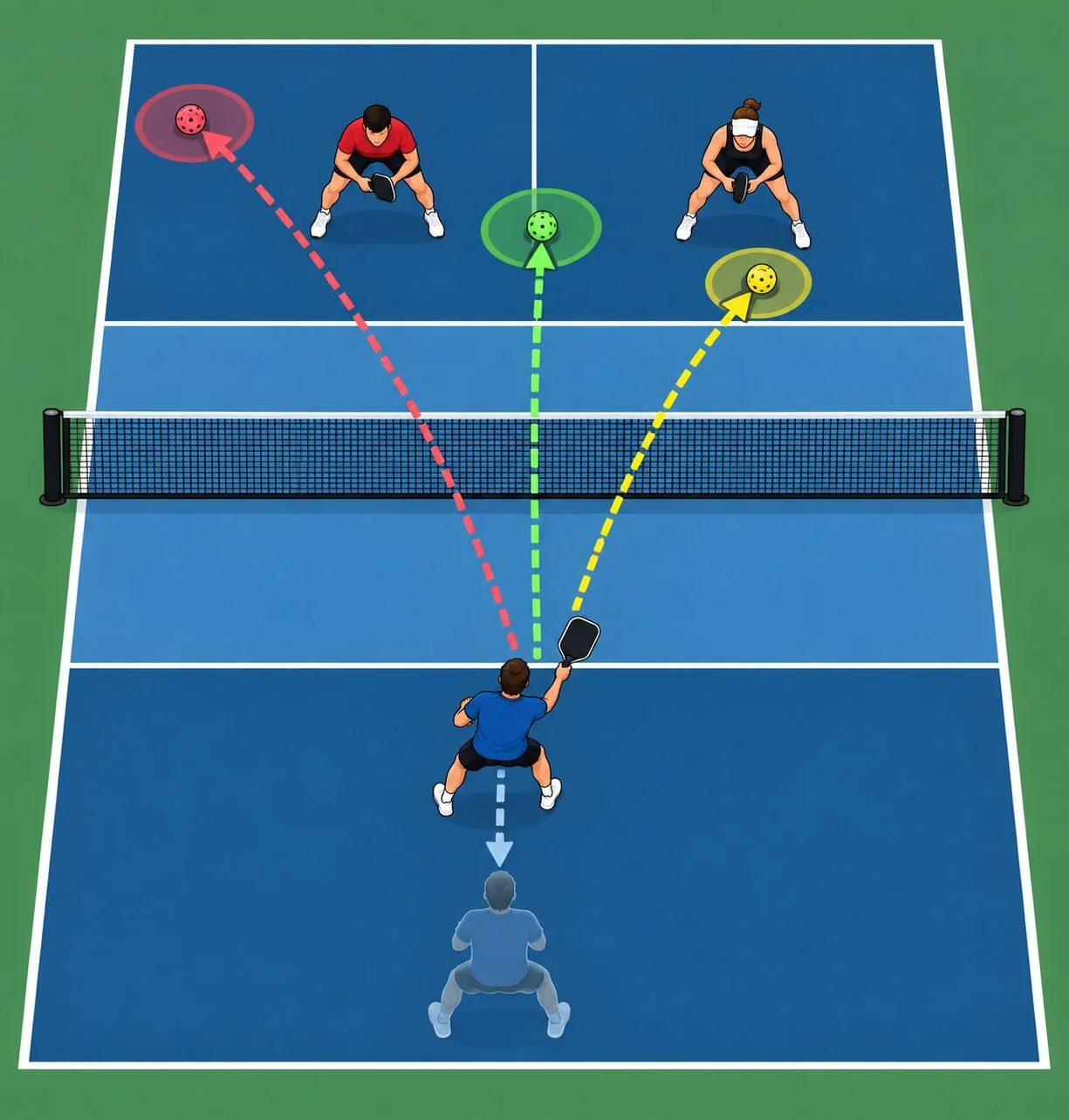
Target selection should follow the opponent’s position. A ball near the feet makes them lift from a low contact. The backhand can expose a weaker response, while the middle in doubles creates hesitation. Avoid repeating one target until the opponent settles into it; change the location after two or three comfortable exchanges while keeping the same compact mechanics.
Know when to stay soft
If the incoming ball is below net height, continue the soft exchange unless the opponent is badly out of position. Attacking a low ball usually requires an upward swing, which gives the other team a high, predictable ball to block or counter. When the ball arrives at or above net height, you can consider a controlled speed-up, but the decision still depends on balance and the opponent’s readiness.
A low ball near the shoelaces may be safer after a bounce than as a stretched volley. Do not sacrifice balance to take it early. Move your feet, keep the contact in front, and let the ball come into a manageable window.
Practice the arc, not just the stroke
With a partner, begin with a crosscourt kitchen rally. Keep the ball low and notice where the apex occurs. Then vary the landing zone: crosscourt, feet, backhand, and middle. The partner should judge the bounce and height, not merely whether the ball landed in.
For solo work, use a wall and a marked height target. Keep the motion small, the grip light, and the contact in front. If the rebound climbs above your intended line, check grip pressure, paddle-face angle, and contact timing before adding power. A simple progression is 20 comfortable forehand dinks, 20 backhands, then alternating placements while returning to a balanced ready position after every shot.
When a dink pops up, inspect the sequence in order: were you late, did you squeeze, did the wrist flick, or did you overreach? Fix the earliest breakdown. A controlled apex comes from the complete chain—ready feet, relaxed hand, forward contact, stable face, and a measured finish.