Pickleball Dink Consistency: Fix Contact, Posture, and Direction
Fix common pickleball dink errors with a stable base, forward contact, soft grip, reliable backhand mechanics, and purposeful practice.
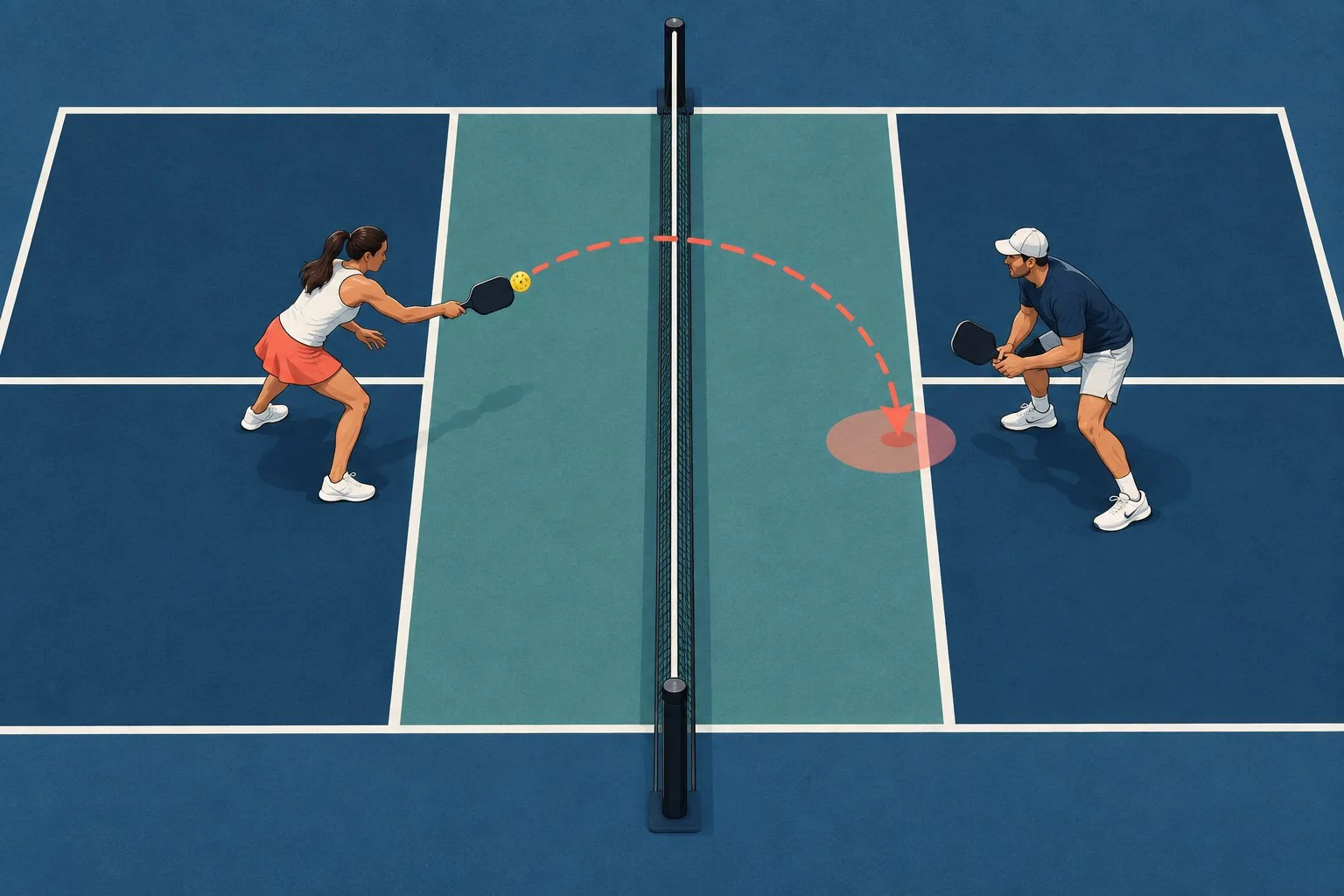
A consistent dink is a precision shot disguised as a soft one. The goal is a low ball that clears the net with room, lands in the opponent's kitchen, and arrives without giving away an easy attack. When dinks float, clip the net, or drift wide, the problem is usually a repeatable mechanical habit rather than bad luck.
Start with a stable kitchen base
The kitchen line is a small working area, so posture matters. Keep the knees bent, weight slightly forward, and paddle in front of the body. A tall stance forces the arm to reach down and makes the contact point unstable. Lower your center of gravity with the legs instead of folding at the waist.
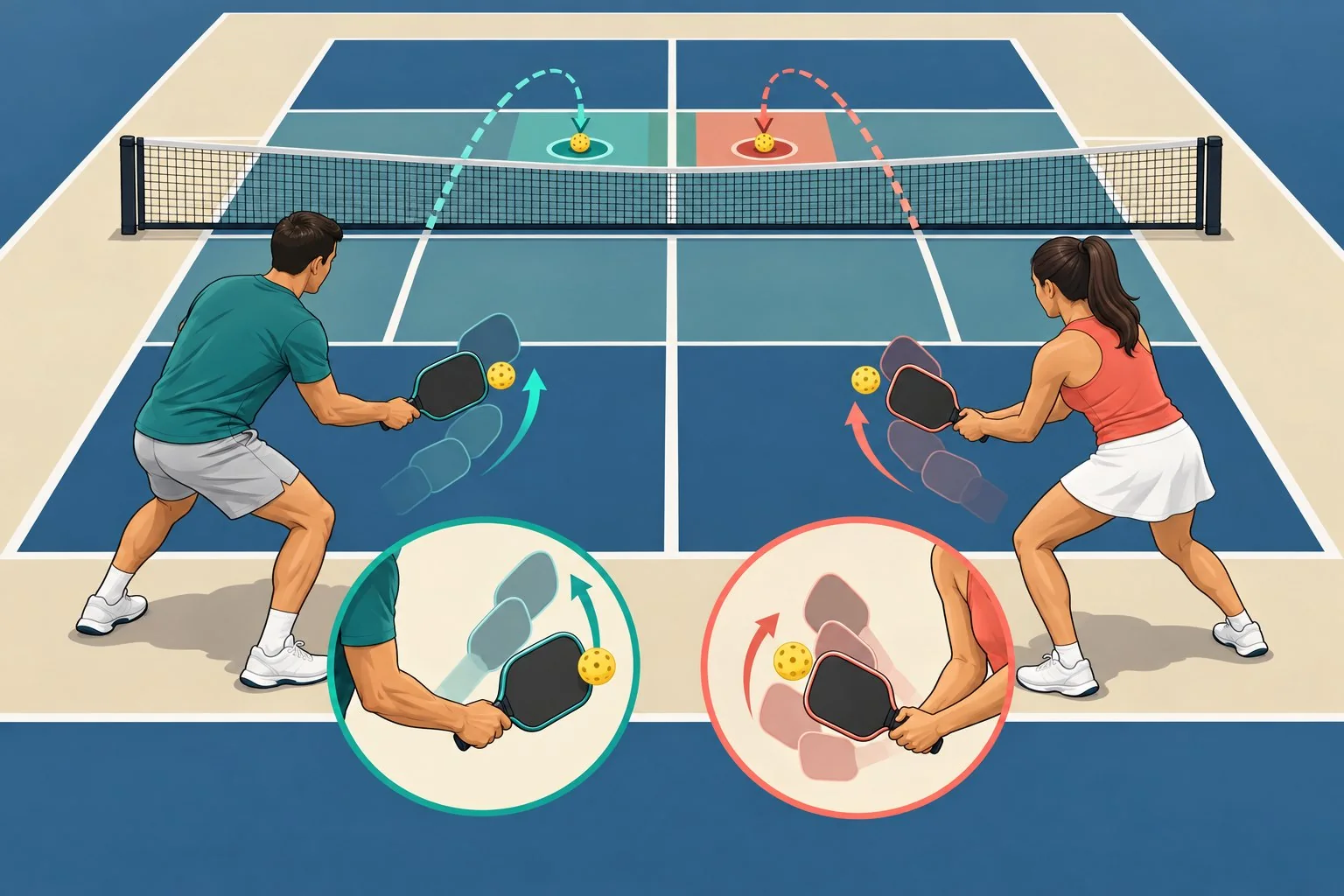
Avoid making the dink a wrist shot. A small shoulder rotation and a compact controlled push are easier to repeat than a flick from the elbow or wrist. Keep the wrist stable through contact and use only enough upward path to clear the net. A large follow-through adds pace and makes the ball easier to attack.
Grip pressure should be relaxed but secure. Imagine a gentle handshake rather than squeezing the handle. Soft hands help absorb the ball and give you better feel for the paddle face. If every dink shoots long, reduce tension before adding a new swing thought.
Fix the forehand contact point
On the forehand side, let the ball arrive in front of the lead foot instead of beside the hip. When contact drifts behind you, the wrist often flips to rescue the shot. That late correction changes the face angle and produces a floater, a wide miss, or a ball into the net.
Move the feet early enough to preserve space, then meet the ball in front. Keep the paddle face organized and brush slightly upward rather than lifting dramatically. The target is not maximum spin; it is a repeatable arc with enough net clearance and a controlled landing.
Build a reliable backhand dink
The backhand benefits from a neutral continental grip because it allows quick preparation without constantly changing the hand. Keep the elbow soft but avoid pulling the contact point into your torso. Extend comfortably in front of the hip and keep the paddle face nearly vertical at contact.
If the backhand goes into the net, check whether the ball has crowded your body or whether the face has closed. If it sails long, check for an overly open face or too much grip pressure. Correct the spacing and face before trying to swing harder.
Use direction and practice to reduce errors
Crosscourt dinks offer useful margin because they travel over the lower center of the net and have a longer diagonal landing path. Turn the hips toward the target instead of trying to redirect the ball with the arm alone. Down-the-line dinks can be valuable, but they demand more precise control and leave less room for error.
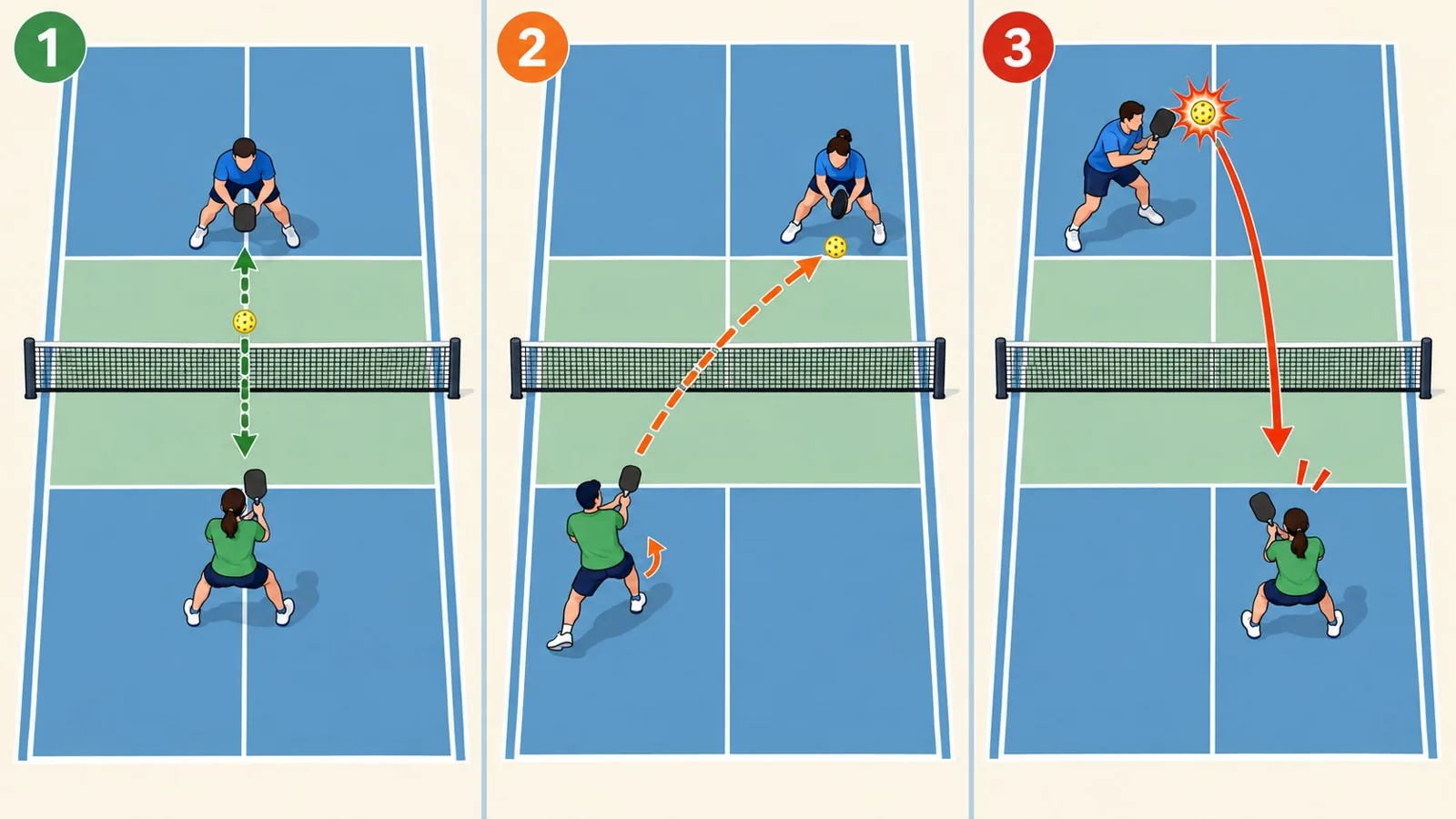
Begin with cooperative straight-ahead dinks. Focus on posture, forward contact, and a quiet face. Next, alternate forehand and backhand crosscourt targets. Add a pressure rule: when a ball rises above a comfortable attack height, the partner may speed it up. This teaches both players to keep the soft ball low rather than merely completing repetitions.
A final progression is to practise while moving. Start near the transition area, use a soft drop to approach, and continue the exchange once both players reach the kitchen. Keep the same compact mechanics while the feet are active. Quality repetitions with a clear target are more useful than a long rally with no feedback.
When a dink breaks down, diagnose in order: posture, contact location, grip pressure, paddle face, then direction. Lower the base, move the contact forward, relax the hand, and finish toward the target. Consistency comes from repeating that sequence until the soft game remains dependable under pressure.