Pickleball Dink Height Under Pressure: Build Margin First
A practical guide to pickleball dink height: build net clearance, control the arc, vary kitchen targets, and practise without giving away an easy attack.
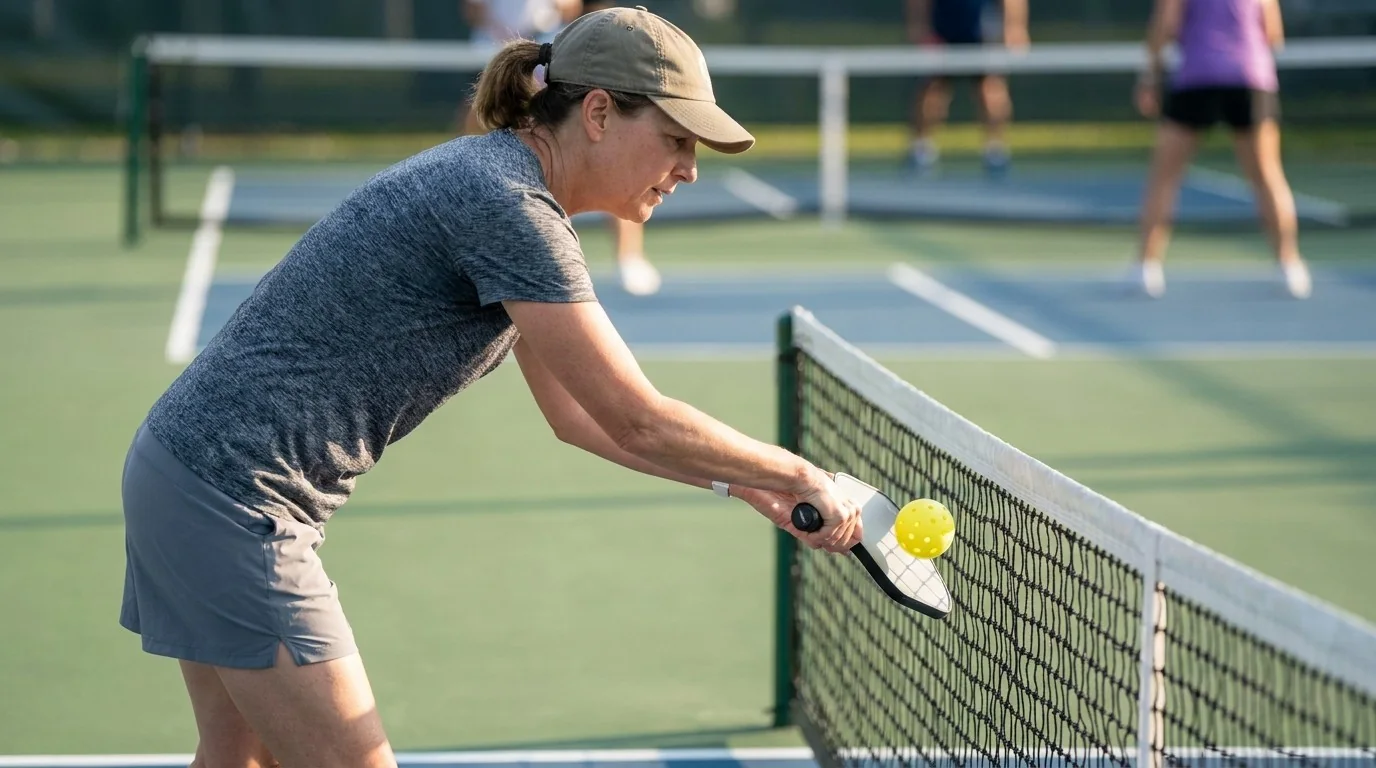
Pickleball dink height is mainly a margin decision. The ball needs enough arc to clear the net, then enough control to fall into the opponent’s kitchen. A low-looking ball is not automatically a better dink if a small contact error sends it into the net. Build a repeatable shape first, then make it lower or sharper only when your feet and recovery can support the change.
Start with room over the net
Begin with a comfortable target inside the opponent’s kitchen and an arc that gives the ball room to clear the net. When a ball sits up, the tempting response is often to flatten the swing. That removes useful margin and makes timing errors more costly. Once you can land the ball consistently, reduce excess height in small steps rather than chasing a perfect low trajectory from the start.
Keep the motion compact. Hold the paddle in front, avoid a large backswing, and let the paddle face provide the lift. A relaxed grip helps you absorb incoming pace instead of adding a push of your own. The goal is a soft contact that you can repeat while the rally is moving, not a dramatic wrist action.
Let your feet set the arc
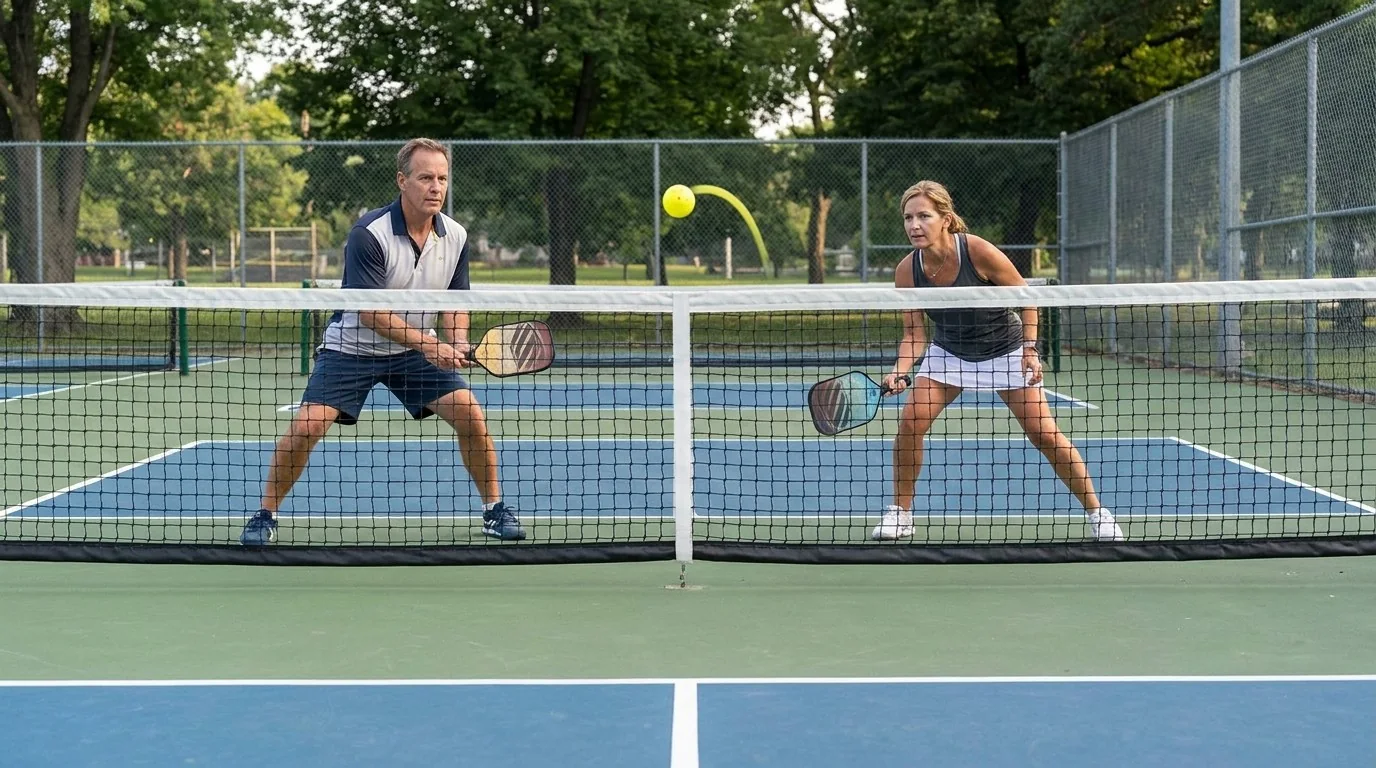
Move so the ball is in front of your body. Reaching from the side changes the paddle path and makes the face harder to control. A balanced stance gives the stroke a steadier platform, so the same preparation is more likely to produce the same trajectory.
Notice what your posture is doing. Leaning backward can send the ball too high. Reaching or stabbing down can close the face and catch the net. After contact, keep the paddle available and return to a ready position. Dinking is an exchange, so the next contact matters as much as the one you just made.
Change the target, not the basic shape
When the height is dependable, vary the landing area. Move between the opponent’s forehand, backhand, and the middle while keeping the swing compact. The ball can change direction without announcing the change through a larger motion.
The middle can create uncertainty when two opponents must decide who takes the ball. A wide dink is useful only when you have enough margin and can stay in position. If the angle pulls you away from the exchange, choose a larger central target and rebuild your balance. Placement is not an improvement when it costs the recovery needed for the next shot.
Test height with a clear target
Place cones or use visible court lines to mark a landing zone inside the kitchen. Hit ten crosscourt dinks and count the balls that clear the net, land in the zone, and leave you balanced. Repeat with a partner who changes the feed slightly. Keep the pace gentle until the arc and recovery remain steady, then add difficulty.
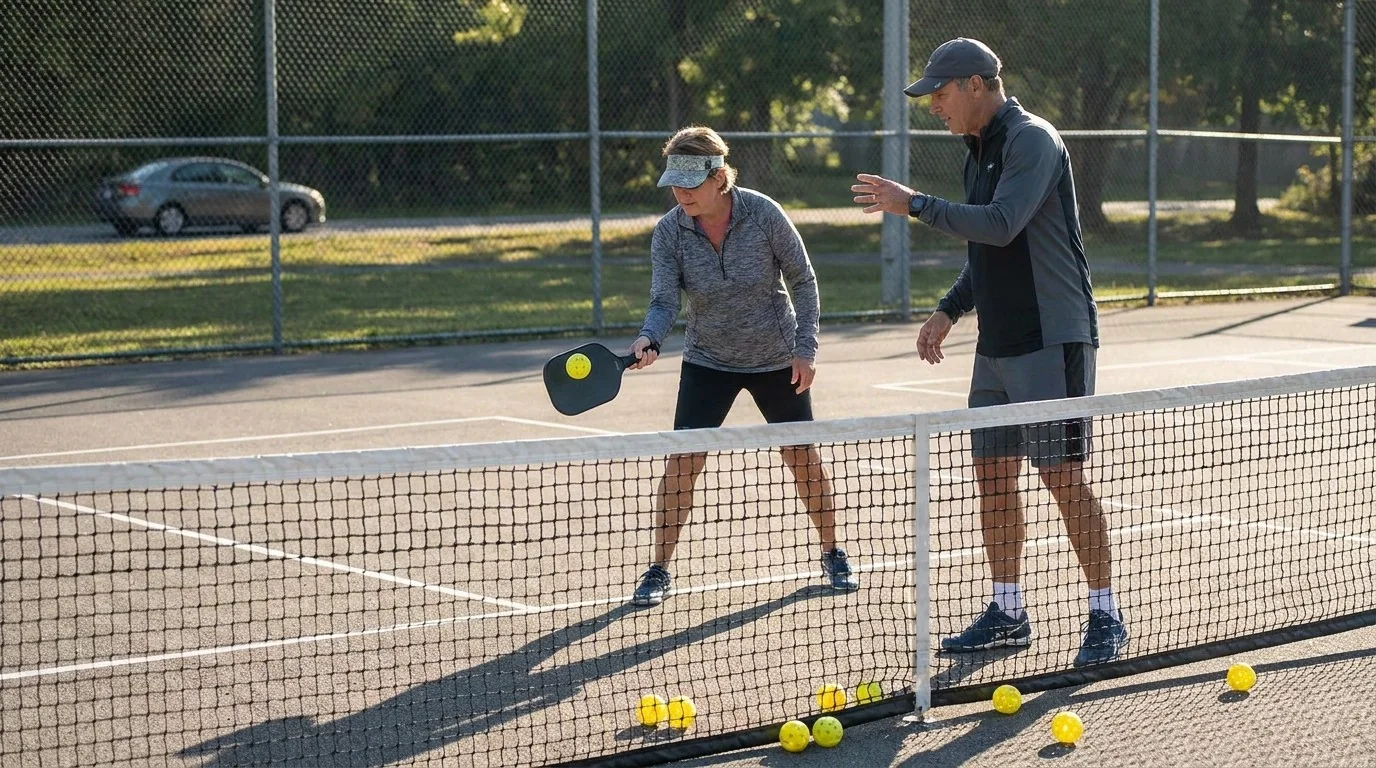
Use the miss to choose the adjustment. If the ball catches the net, check whether contact was behind you or the paddle face closed too early. If it floats, soften the grip, shorten the motion, and avoid lifting with a large arm swing. If it lands deep, reduce force before changing the target. One small change at a time makes the result easier to read.
Choose margin when the rally speeds up
Against a low ball, prefer the height that clears the net safely and still lands in the kitchen. Do not force a sharp angle simply because it is available. When the opponent gives you a ball above the net, decide whether an attack is justified; a higher contact is an opportunity, not an instruction to speed up every dink.
Reliable dink height combines net clearance, kitchen depth, balanced contact, and recovery. Build the arc, keep the swing quiet, and vary targets only after the ball is repeatable. That order gives you control without offering the opponent an easy attack.