Pickleball Dink Practice Alone: A Simple Wall and Target Routine
Build better pickleball dink control alone with a wall, a net-height reference, simple targets, and a 15-minute progression from forehand and backhand touch to movement.
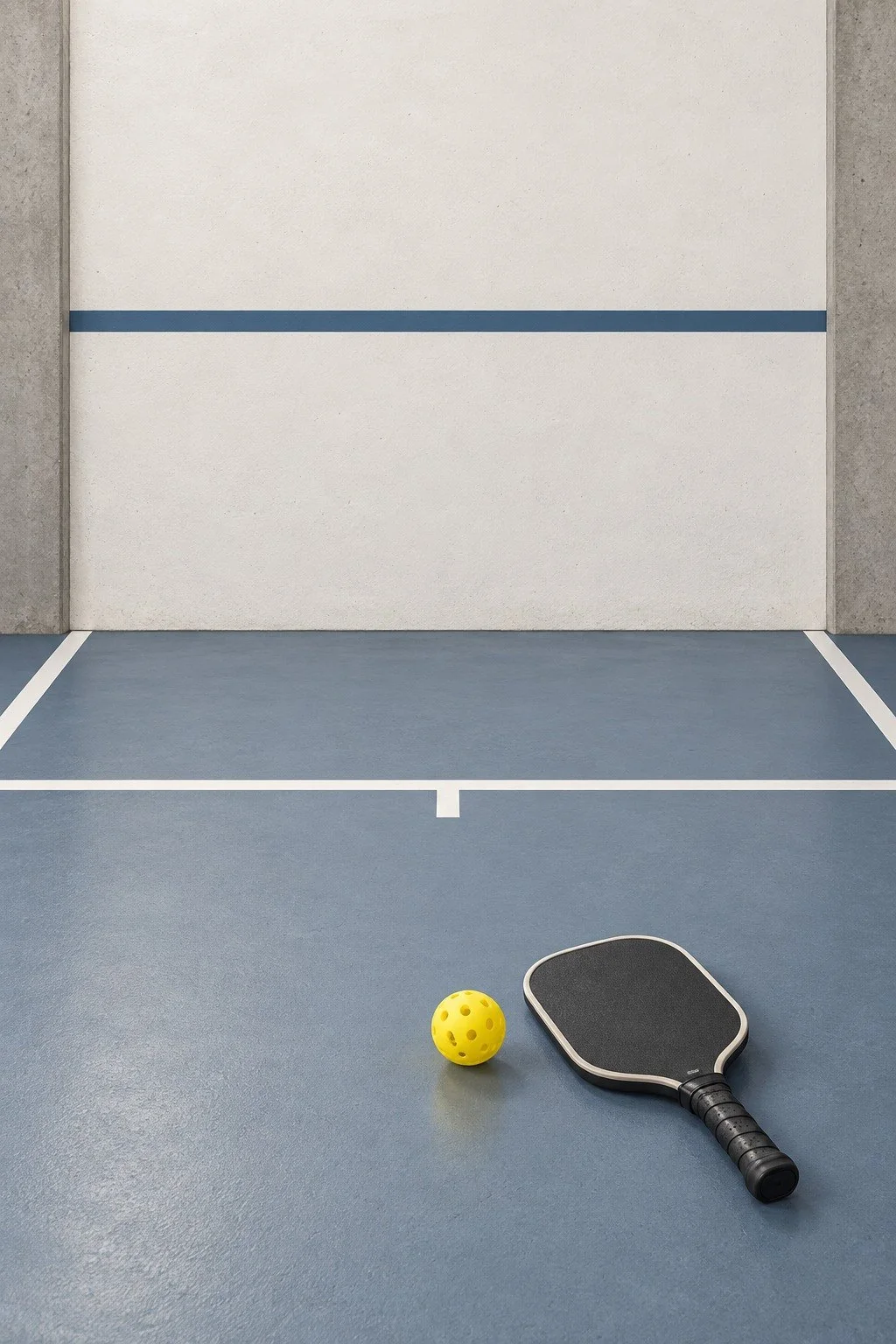
Practicing the pickleball dink practice alone can make your touch more dependable even when a partner or court is not available. A wall gives immediate feedback: a tight grip, late contact, or an overly open paddle face changes the rebound at once. The goal is not to hit hard. It is to repeat a low, balanced contact and send the ball toward a deliberate target.
Build a useful wall setup
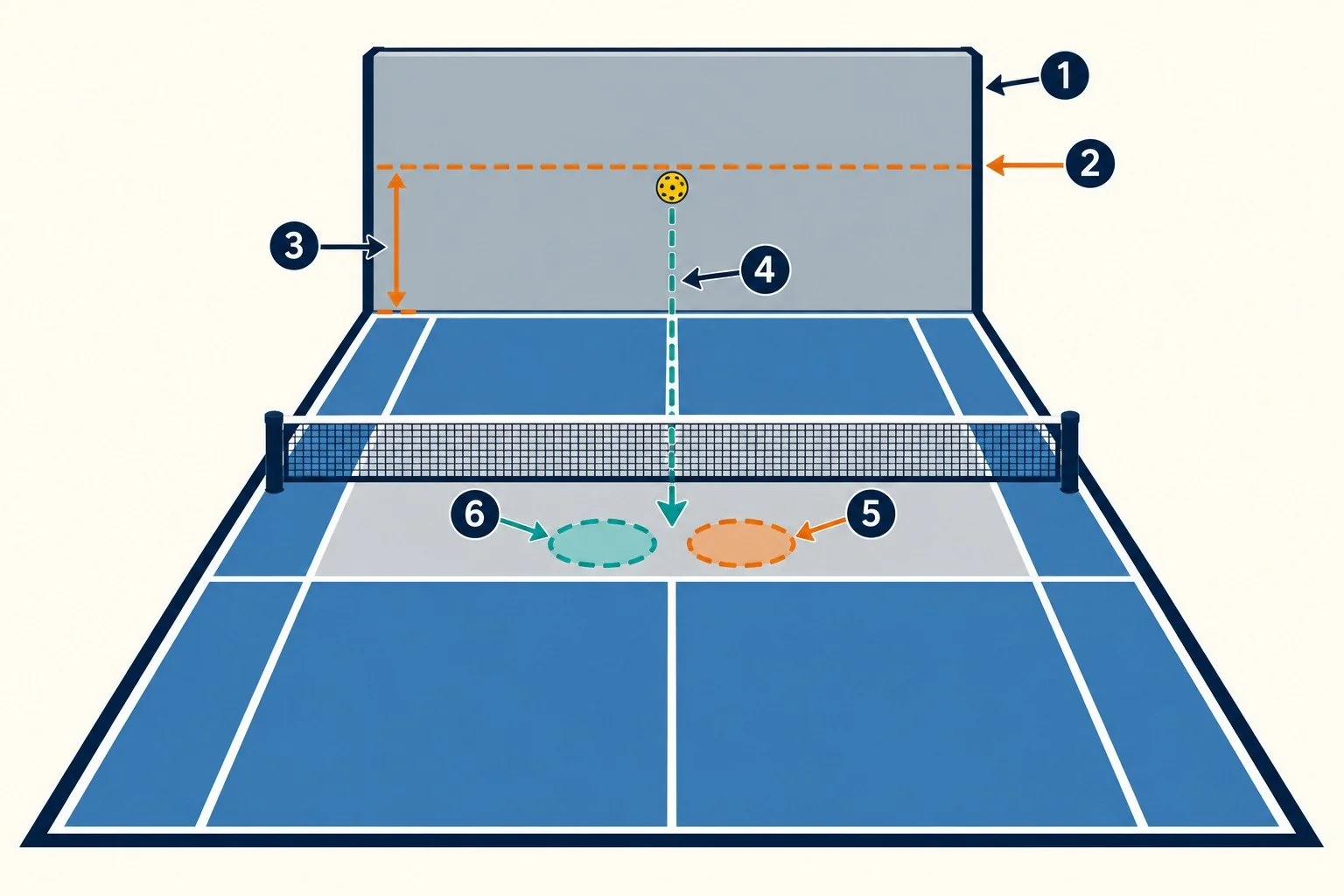
Choose a smooth wall with clear space around it. Mark a horizontal line roughly at net height so you have a visual reference for a realistic dink trajectory. Put a second mark on the floor about seven feet from the wall to represent the kitchen line. Add a narrow target band or a few small squares where you want the rebound to return. Keep the area free of fragile objects, and use a ball that will not damage the surface.
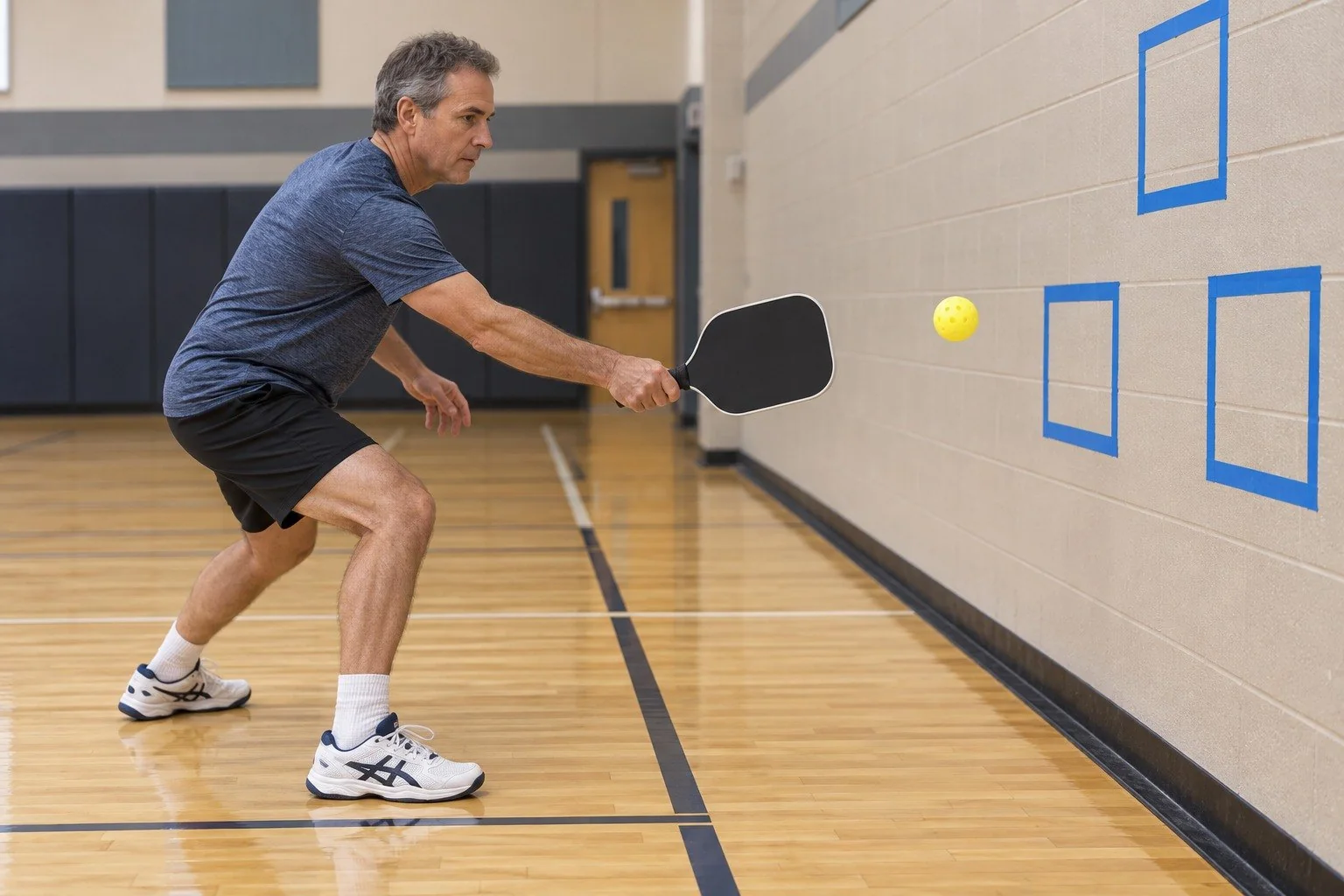
Stand in an athletic stance with your paddle in front, knees flexed, and shoulders relaxed. Start with a light grip. Drop the ball in front of your body, let it bounce once, and guide it toward the wall with a short motion. The contact should stay in front of your hip. Move your feet instead of leaning or reaching when the rebound drifts.
Start with control, then add movement
Begin with five minutes of forehand dinks. Keep the paddle face stable and slightly open enough to clear the line without sending the ball high. The stroke should feel like a quiet lift from the shoulder and forearm, not a wrist flick. Count clean contacts, but stop the count when the ball leaves your intended height band. That makes the number meaningful instead of rewarding wild recovery shots.
Switch to five minutes of backhand dinks. Keep the backswing compact and allow the non-dominant hand to help stabilize the paddle if that is part of your normal backhand. The wall returns the ball quickly, so prepare immediately after each contact. If the rebound is too fast, move farther away or use a softer feed rather than squeezing the grip.
Next, alternate forehand and backhand contacts. Add one small lateral shuffle between repetitions so your feet learn to solve the spacing problem. Try to return to a balanced base after every shot. A useful first benchmark is a calm sequence of 20 to 30 controlled contacts; increase the number only when the ball stays in the intended height and target area.
Add targets and a decision pattern
Place a towel, cone, or taped square on the floor or wall as a visual target. Aim for the middle of the opponent’s kitchen rather than the very front, where a short ball may sit up. Once you can repeat the basic dink, vary the target from middle to slightly wide while keeping the same compact preparation.
For a more game-like sequence, use two soft dinks, one controlled speed-up, and then a soft reset. The speed-up should be reserved for a ball that rises into a hittable window. If the simulated ball stays low, keep the dink going. This teaches shot selection instead of turning every rebound into an attack.
Finish with a short review. Note whether misses went into the net, floated high, or drifted wide. Net misses often point to a closed face or late contact; high balls may come from too much grip pressure or lifting with the wrist; wide balls often show that the follow-through is not finishing toward the target. Fix one variable at a time.
A simple 15-minute session works well: five minutes forehand, five minutes backhand, and five minutes alternating contacts with a target. Take a short break if your mechanics become rushed. Wall work cannot replace live rallies, where timing and decisions change, but it can give you a repeatable foundation. Bring that same quiet paddle preparation, soft grip, contact in front, and balanced recovery into partner practice.