Pickleball Dink Recovery: Reset Your Feet After Every Soft Shot
Build a reliable crosscourt dink with better margin, calmer contact, smarter angles, and drills that connect the shot to recovery.
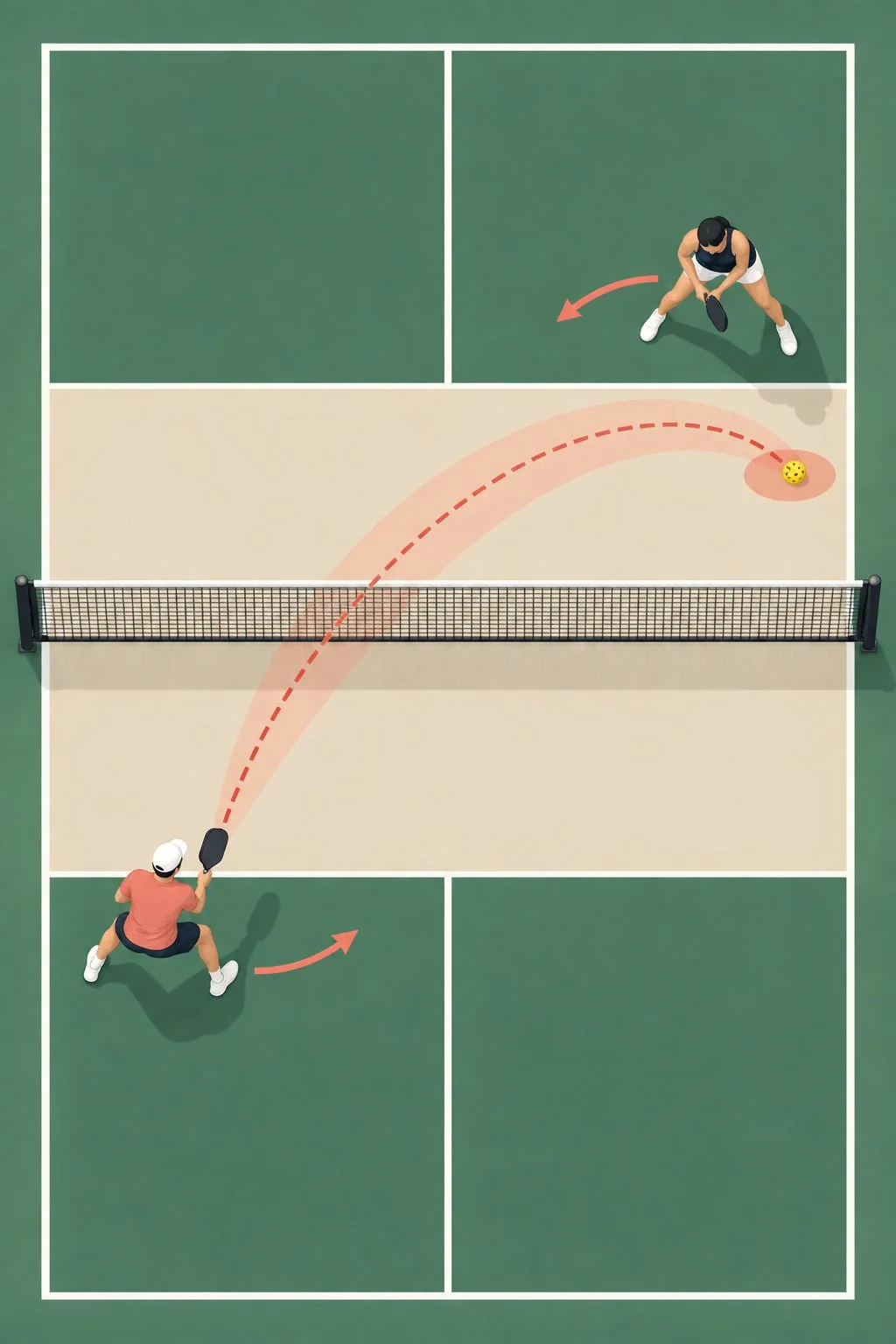
The crosscourt dink is valuable because it gives the ball more distance to travel over the net while moving your opponent away from the middle. That extra length creates room for a controlled arc, but it does not make every crosscourt soft shot safe. The real skill is matching the angle, height, contact point, and recovery so the ball stays difficult to attack without leaving your side exposed.
Build the shape before adding the angle
Start in a balanced kitchen-line stance with the paddle in front, knees relaxed, and your chest quiet. Read the incoming ball early. If it is low, do not reach across your body just to force a diagonal reply. Take a small adjustment step, let the ball rise into a manageable contact window, and keep the paddle face stable through the shot. The goal is a soft lift that clears the net and drops near the opponent’s kitchen line.
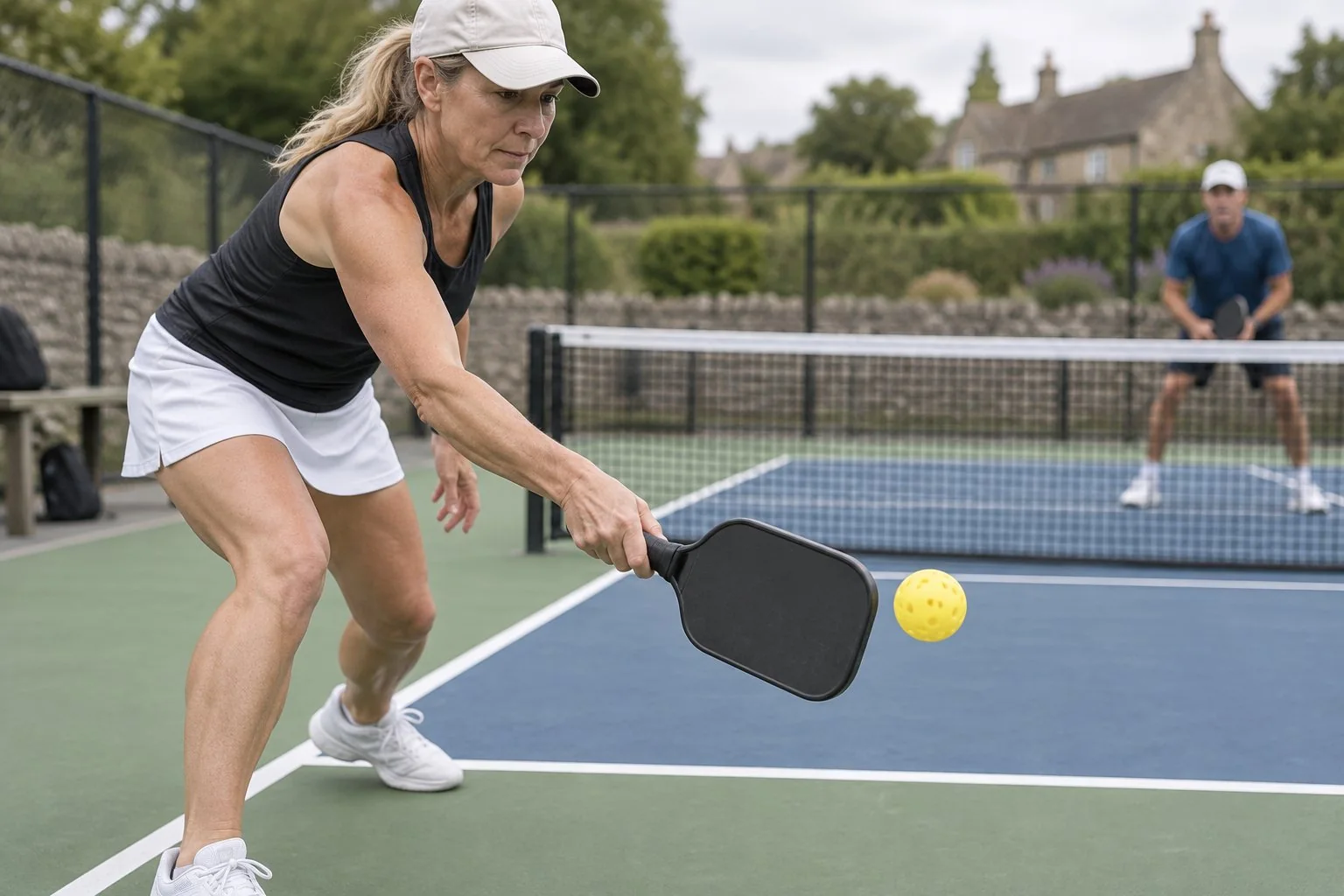
The diagonal target is not the sideline itself. Aim inside the opponent’s kitchen, leaving room for small errors in direction. A ball that lands a little short of the sideline can still pull the opponent wide; a ball aimed too close to the line turns a useful pattern into a low-margin gamble. Keep the ball low after the bounce, but give it enough height to clear the net comfortably. Trying to skim the tape usually creates more net errors than pressure.
Contact in front of the lead hip helps you control the paddle face. Use a short, smooth movement rather than a wristy scoop. The shoulder and forearm guide the path, while the hand stays quiet enough to avoid sudden acceleration. After the ball leaves, return the paddle to your ready position and recover your stance. A good angle is only useful if you are prepared for the next reply.
Choose the angle from the ball you receive
The best crosscourt dinks usually begin with a ball that gives you time and space. When the incoming ball is high enough, you can shape a gentle diagonal with a compact forward-and-upward motion. When it is below net height, prioritize clearance and depth over a sharp angle. If you are stretched wide or moving backward, play a safer dink toward a larger target rather than attempting a precise corner.
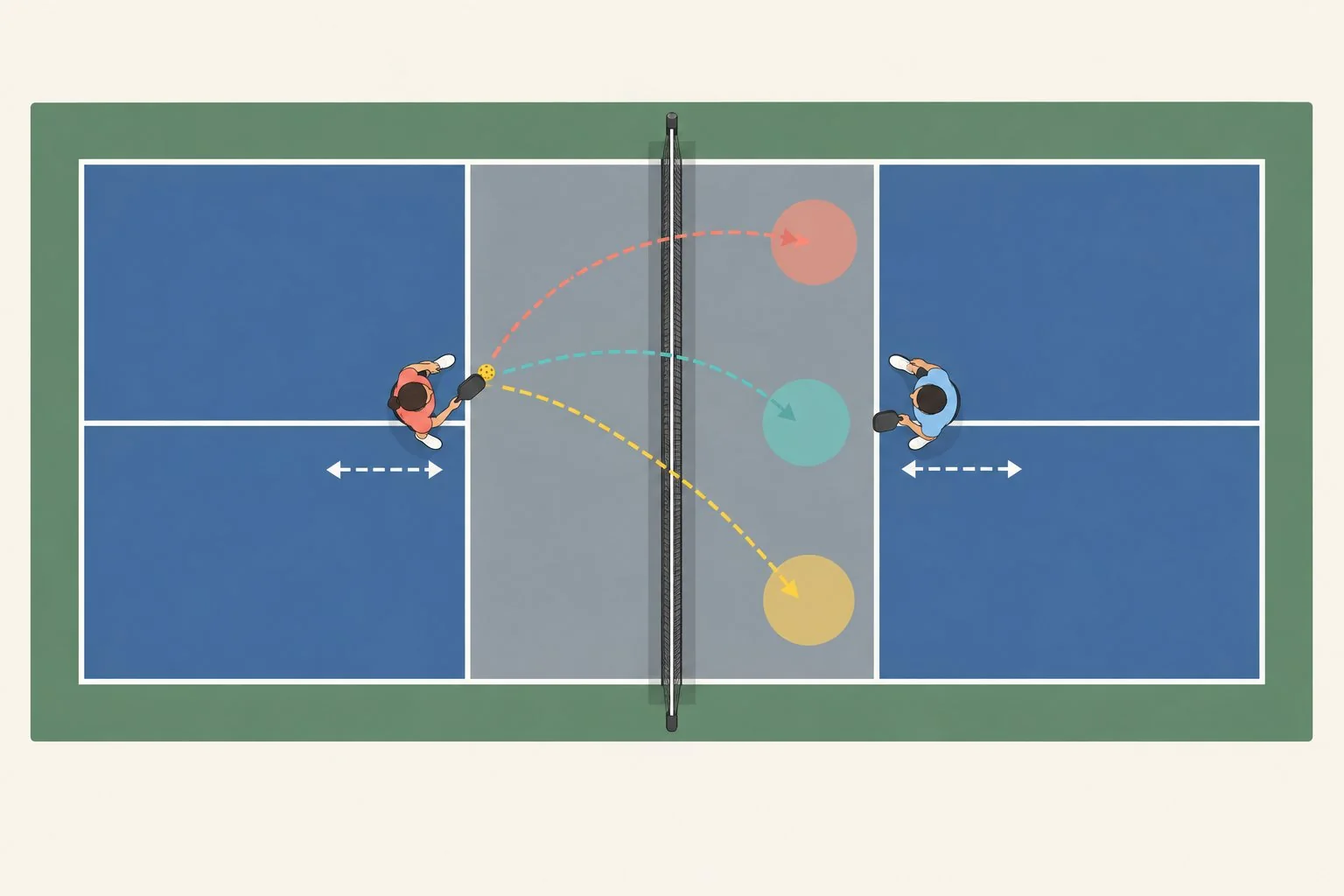
Watch the opponent’s paddle and feet after your shot. If the diagonal ball moves them outside the sideline, be ready for a reply that travels crosscourt again and opens your own middle. If they reach comfortably, your angle may have been too shallow or your ball too high. Do not judge the shot only by whether it landed in; judge whether it changed the opponent’s contact and preserved your recovery.
In doubles, communicate before the rally becomes stretched. The player who sends the crosscourt dink should recover toward a position that protects the middle without abandoning the angle. The partner should stay connected rather than drifting toward the opposite sideline. If the opponent speeds up from an uncomfortable position, a compact block is often safer than a dramatic counterattack.
Use a three-stage drill to make it repeatable
First, rehearse without a ball. From the kitchen line, turn slightly, set the paddle in front, trace a short diagonal path, and freeze in a balanced finish. Check that your head stays quiet and that the paddle does not finish behind your shoulder. Ten careful repetitions establish the shape without adding pressure.
Next, have a partner feed predictable balls to your forehand and backhand. Choose one landing zone inside the opposite kitchen and count only shots that clear the net with visible margin and land short. Do not increase pace until you can repeat the same height and recovery. Then add a decision: your partner feeds one ball you can reach comfortably and one that pulls you wide. Use the crosscourt dink on the first and choose a larger, safer target on the second.
Finish with points where you track three details: contact height, landing position, and whether you recovered before the next hit. If the ball repeatedly lands deep, soften the hand and shorten the swing. If it clips the net, raise the contact trajectory slightly. If you are late, start the preparation earlier instead of swinging harder. With those adjustments, the crosscourt dink becomes a patient way to create space, protect your balance, and keep the next exchange playable.