Pickleball Dink Reset: Absorb Pace and Land Soft
A practical guide to choosing pickleball dink height: clear the net safely, keep the ball low, build margin, and stay ready for the next shot.
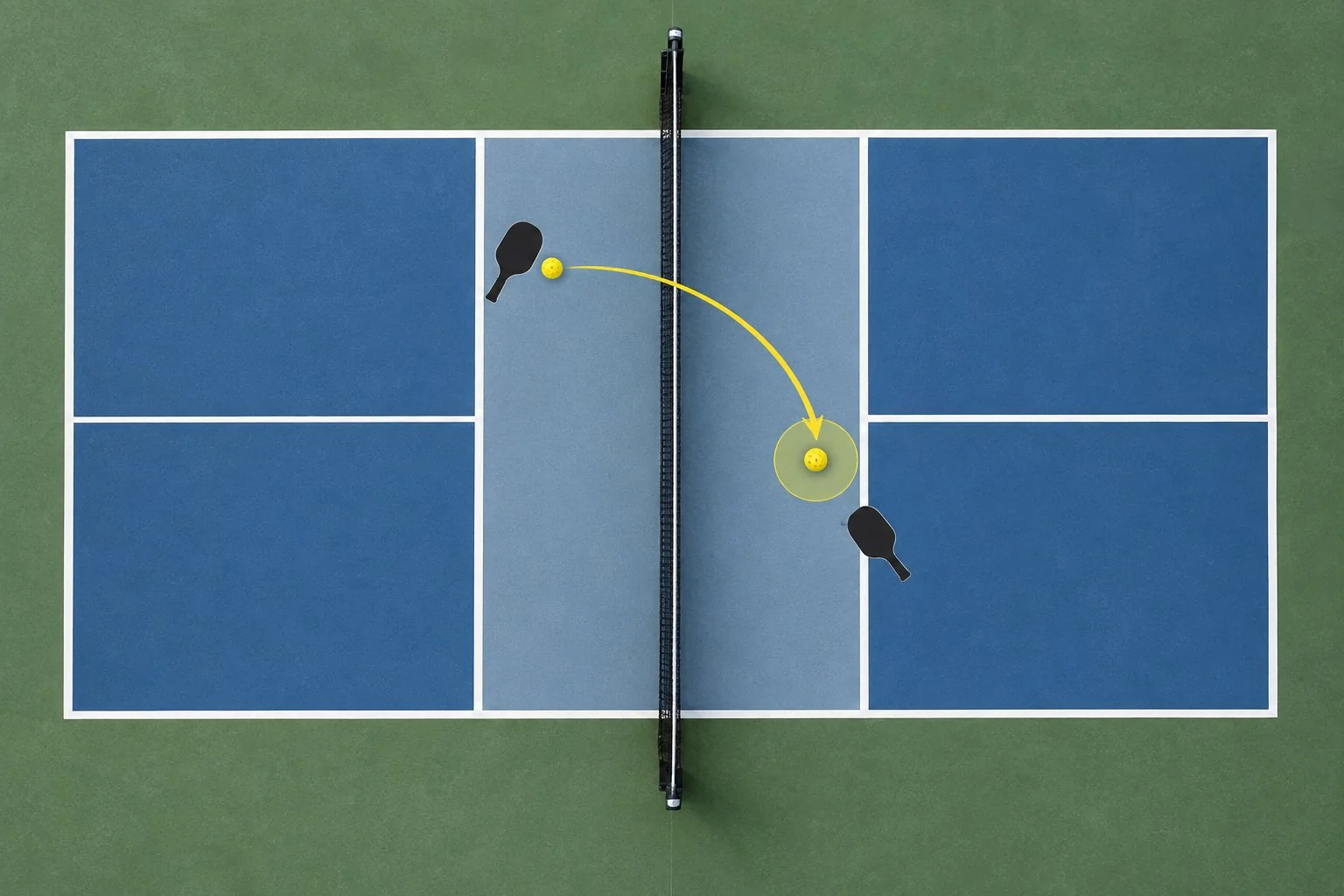
A dink reset is the calm answer to a fast ball that reaches your kitchen line. Instead of matching pace, you soften the contact and send the ball back with enough height to clear the net and enough control to land in the opponent’s non-volley zone. The goal is not a spectacular winner. It is to remove speed, buy time, and return to a balanced position before the next exchange.
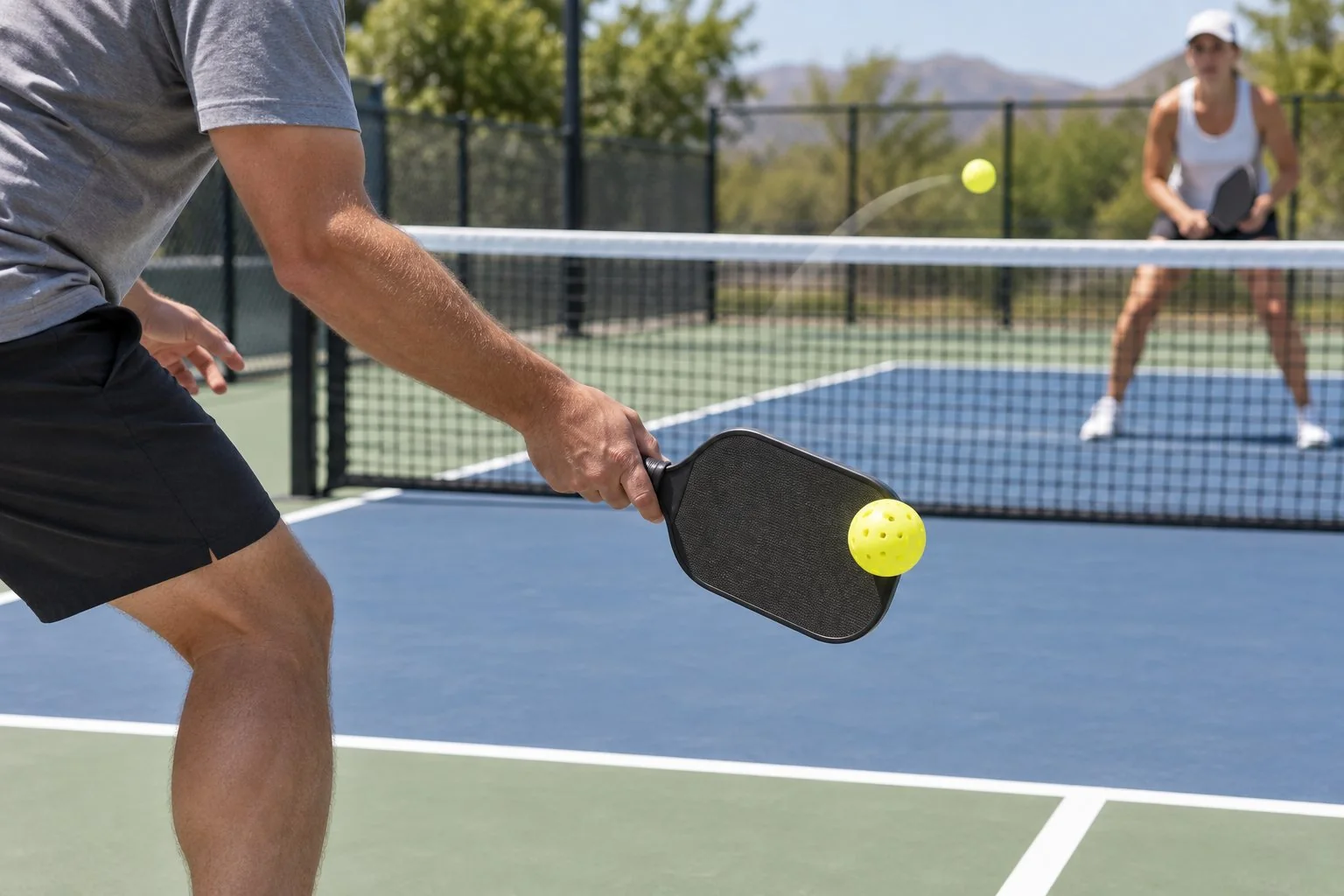
Absorb the incoming pace
Start in a stable ready position with the paddle in front and the hands quiet. Move your feet so the ball arrives in front of your body; reaching from the side makes the face harder to control. Use a short backswing and a relaxed grip. Let the incoming ball supply much of the energy, while your compact forward motion guides it over the net.
A reset is not a dead stop. Keep the face steady through contact and soften the hands just enough that the ball does not spring upward. If the ball is below net height, accept a higher arc rather than forcing a flat reply. If it arrives at a comfortable height, use less lift and send it toward a safe kitchen target.
Choose height, margin, and landing zone
The ball should clear the net with repeatable room, then descend into the opponent’s kitchen. A very low path has little tolerance for an imperfect bounce or face angle. An overly high reset gives the opponent time and may arrive at an attackable height. The best height is the one that clears safely while keeping the bounce low enough to discourage an aggressive reply.
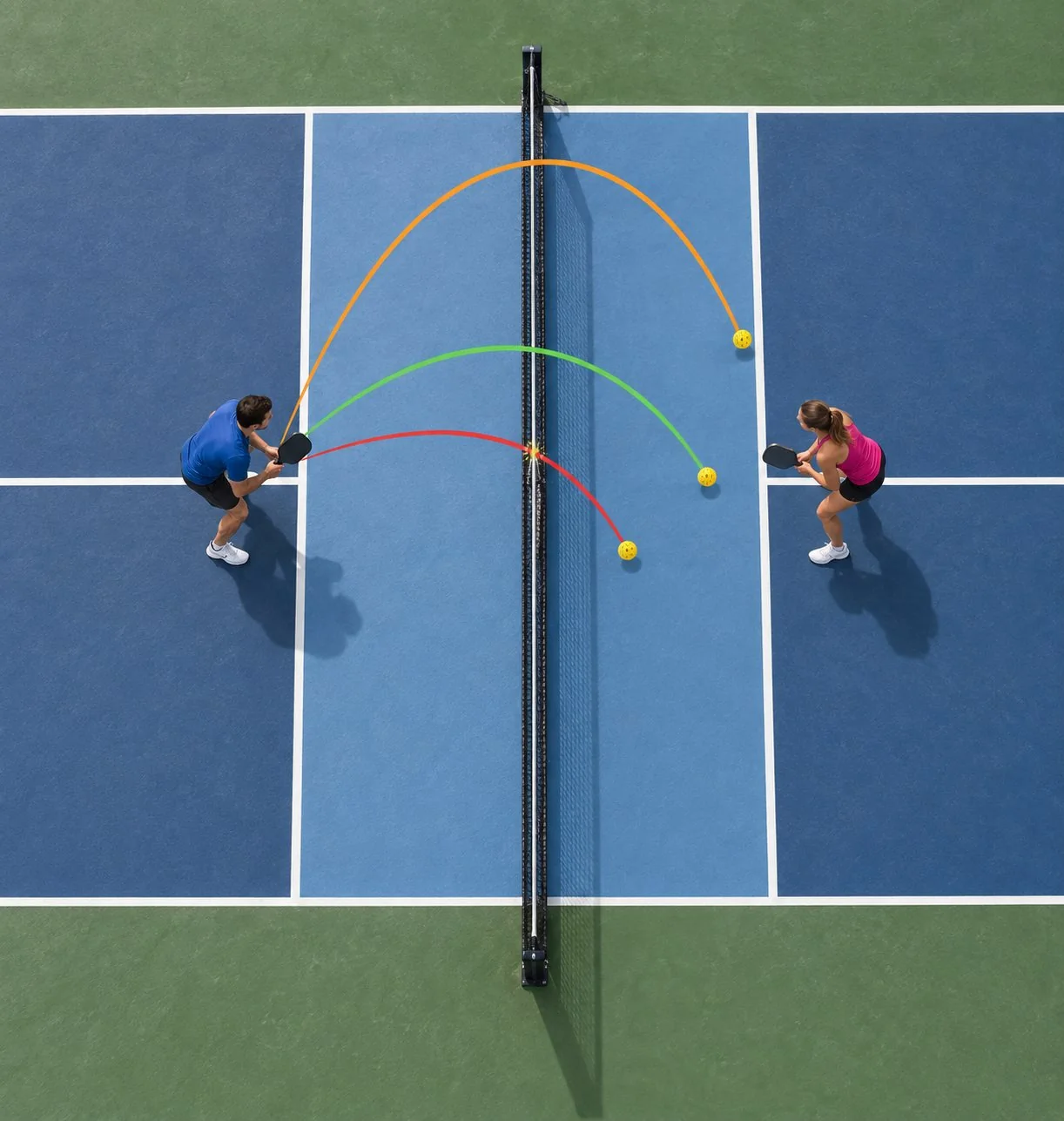
Crosscourt is often a forgiving first target because the diagonal gives the ball more distance. Aim toward the middle of the kitchen until your control improves, then use a wider target when the opponent is leaning or has left space. Do not chase the sideline while you are still learning to absorb pace.
Recover after the reset
The shot is only half the skill. After contact, make small adjustment steps and rebuild your ready position. Keep the paddle in front, watch the opponent’s contact, and prepare for a second reset if the ball remains low. Running forward with the paddle hanging down can undo the advantage you created.
If the incoming ball pulls you wide, prioritise height and court safety over a perfect landing spot. A controlled reset that gives you time to recover is more valuable than a low ball struck while falling away. Once balanced, you can close the remaining distance and join the kitchen exchange.
Correct common mistakes
When the reset flies long, check the swing first: a large backswing or active wrist usually adds too much pace. When it clips the net, move the contact farther in front and add a little clearance rather than swinging harder. When it pops up, soften the grip and reduce the upward lift while keeping the face stable.
Another common mistake is trying to reset every ball. A ball that is high and in front may deserve a controlled attack, while a ball that is low, wide, or behind you may require a defensive lift or a simple return to space. Read the height and your balance before choosing the shot.
A progressive reset drill
Begin with a partner feeding medium-paced balls to your kitchen line. Reset ten balls crosscourt into a generous target. Count only the replies that clear the net, land in the kitchen, and leave you ready for the next ball. Repeat from slightly different contact heights, then ask the feeder to vary direction.
Finish with a decision drill: the feeder mixes a low ball, a high ball, and a ball wide to either side. Use a reset when the ball is difficult and in front, choose a controlled attack when it is safely high, and prioritise recovery when stretched. This turns a stroke into a practical game decision.
A reliable dink reset feels quiet rather than forced. Absorb the pace, give the ball enough net clearance, choose a realistic landing zone, and recover immediately. With those habits, fast kitchen exchanges become manageable without trying to win every contact.