Pickleball Doubles Positioning After a Wide Ball: Recover Without Leaving the Middle
A wide-ball recovery system for doubles players: read the stretch, shade the middle, choose a safe reply, and reconnect before the next exchange.
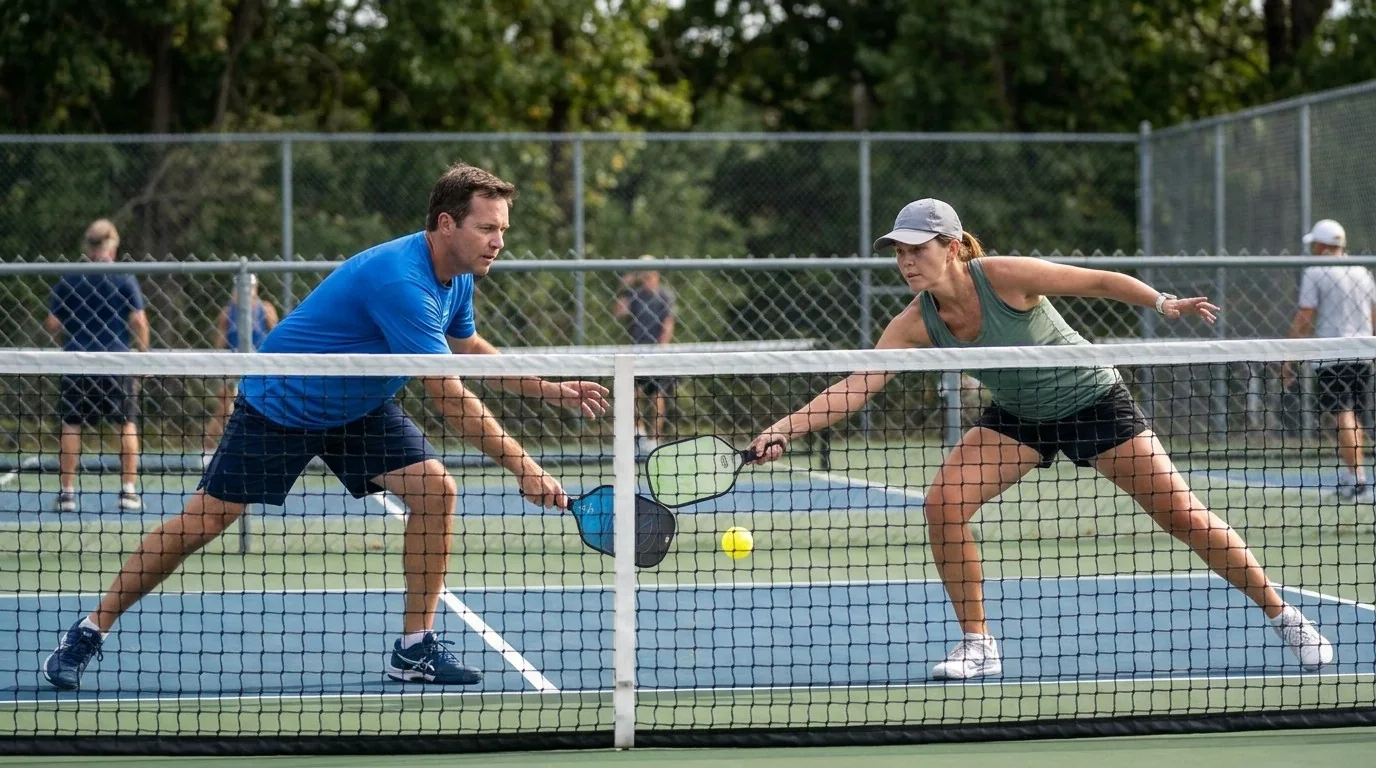
After a wide ball pulls one doubles player toward the sideline, the safest recovery is not to abandon the middle. Move far enough to handle the ball, then recover along a path that protects the center and keeps the partnership connected. The exact route depends on the ball’s height, pace, and whether your partner can cover behind you.
Read the wide ball before you move
Watch the ball and your partner at the same time. A low, fast ball may require a block or a controlled reply before you can recover. A higher ball gives you more time to move back toward your useful doubles position. Do not sprint to a fixed spot without checking what the opponent can do next.
The first movement should create room for contact. Use adjustment steps rather than crossing your feet while the ball is arriving. Keep the paddle ready and contact the ball in front when possible. Your recovery decision starts with whether the ball is neutral, attackable, or forcing.
Recover without opening the middle
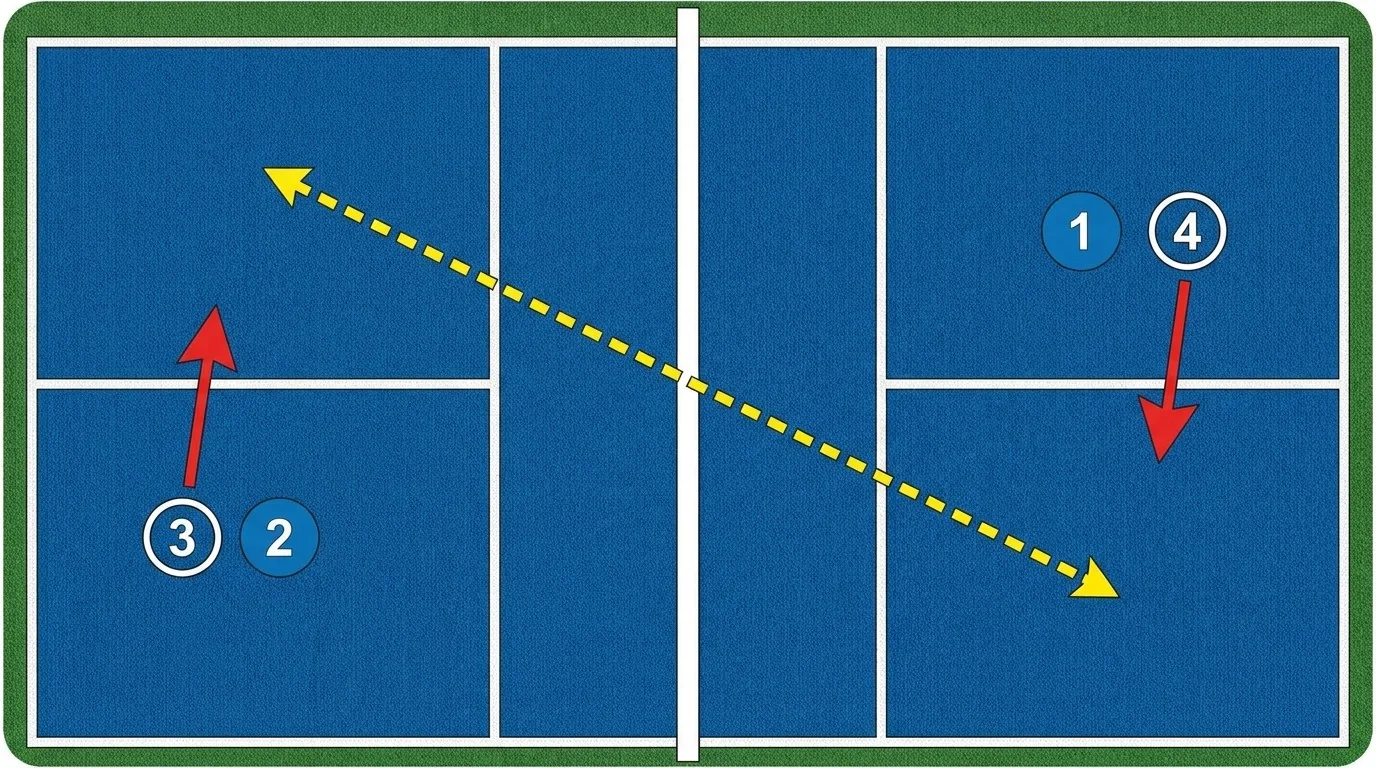
After contact, recover diagonally toward the middle, but do not run past the ball or your partner’s coverage. The middle is a shared responsibility, so communicate when the wide ball has pulled you out of position. A short call can prevent both players from chasing the same lane or leaving the center open.
If your reply is weak or high, recover with more caution. The opponents may attack the open space or drive behind you. If your ball is low and controlled, you may be able to reclaim position sooner. The goal is not perfect symmetry; it is a practical shape that covers the most dangerous next ball.
Match the recovery to your partner
Your partner’s position changes the route. If your partner has shifted toward the middle to protect the seam, you can recover to your side without racing across. If your partner is late or pulled wide, take responsibility for more of the center until the pair can reset.
Talk before the point when possible. Agree on who takes a ball in the middle and what “switch” means if a wide ball forces a rotation. During the rally, use short, clear calls rather than a long explanation while the ball is moving.
Train the recovery path
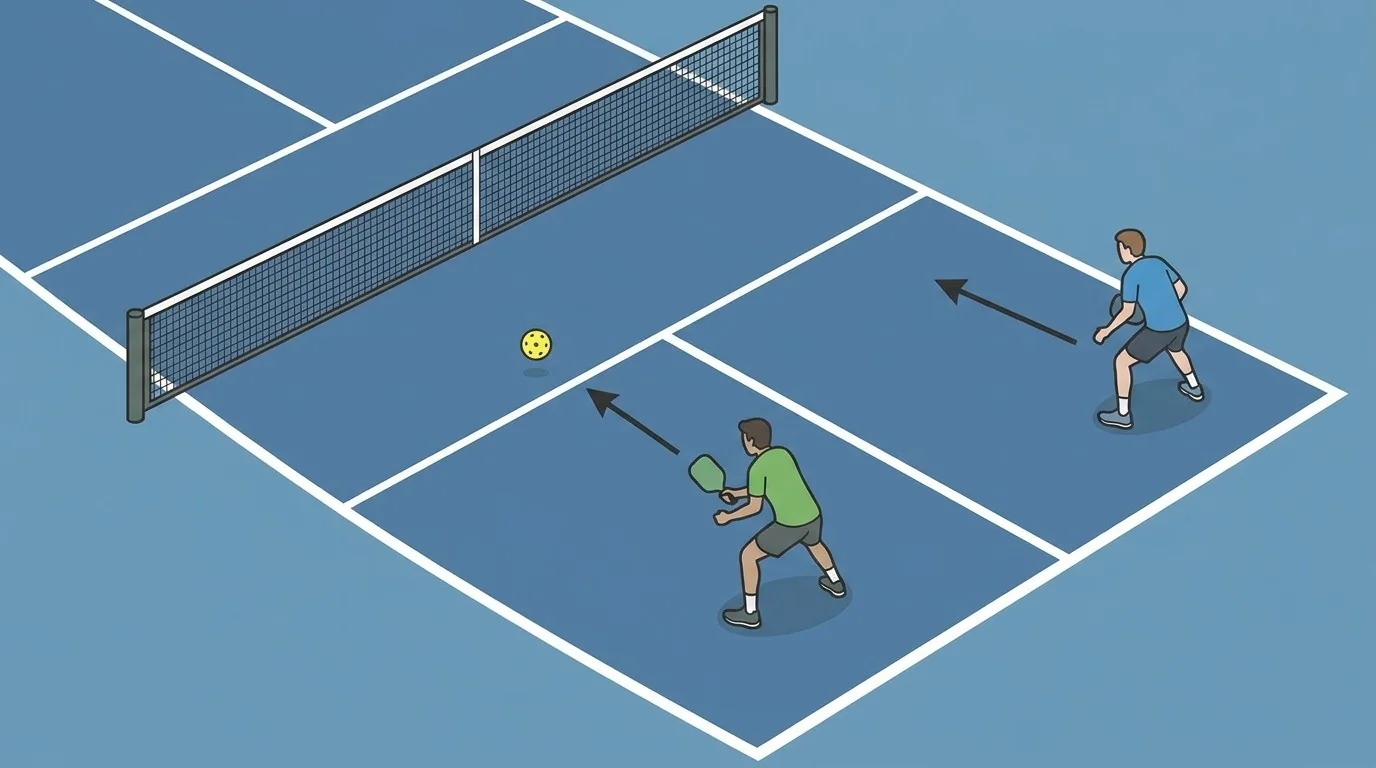
Start with a cooperative feed to the outside player. Feed a wide ball, have that player move, make a controlled return, and recover toward the middle. The partner should hold a useful position rather than following every step. Reset after each feed and check whether the middle stayed covered.
Next, vary the ball’s height and depth. Add a rule that the outside player must call the recovery decision before moving: block and recover, reset and recover, or attack and hold. Keep the feed cooperative enough to observe footwork and spacing rather than turning the drill into a speed contest.
Finish with live points that begin from a wide position. Score the rally normally, but also note whether the pair covered the middle after the first wide contact. A good recovery is visible in the next exchange: both players are balanced, connected, and ready for the opponent’s reply.
The useful habit is simple: handle the wide ball, read the next threat, and recover toward the middle without outrunning your coverage.