Pickleball Drive Defense at the Kitchen: Cushion Pace and Reset Low
Use a compact pickleball block volley to absorb hard drives, keep the ball low, and regain control at the kitchen line.
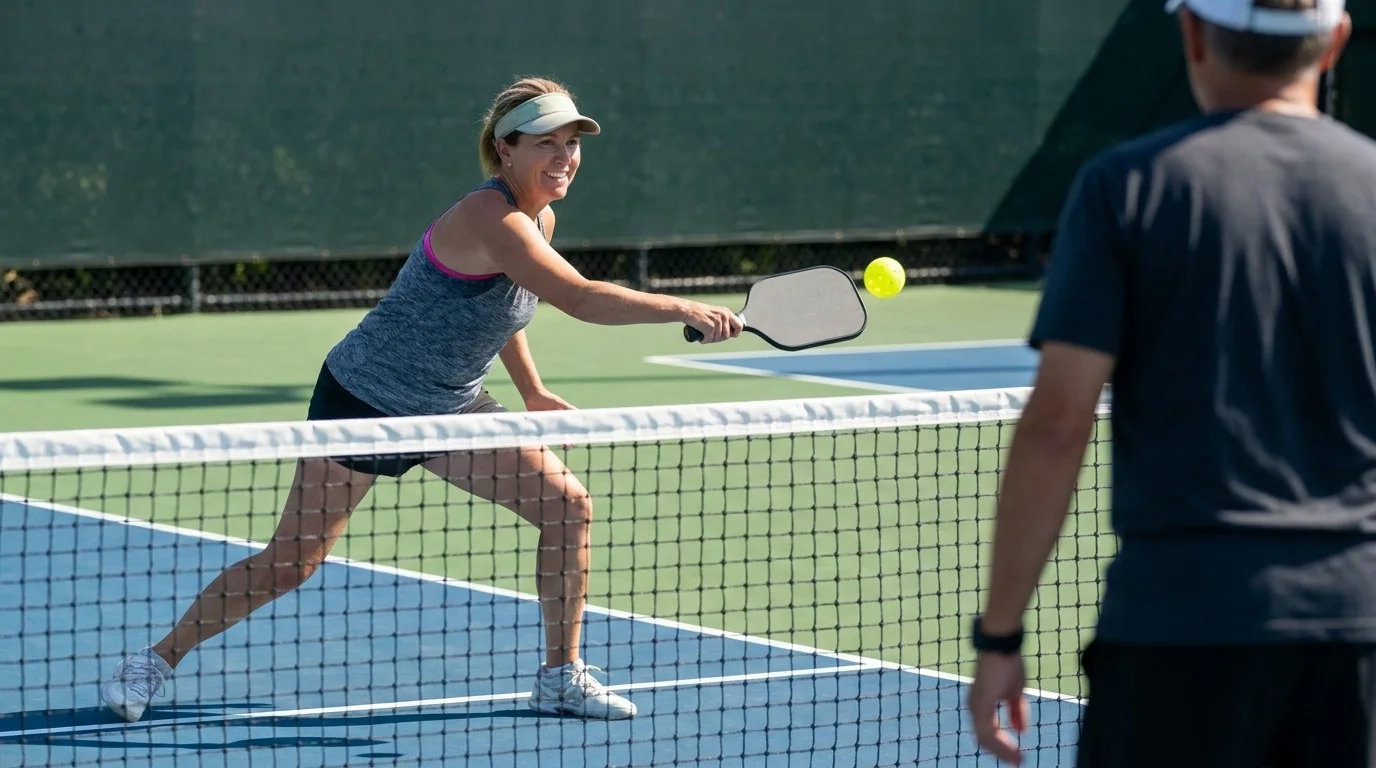
A pickleball block volley is a compact way to defend against a drive. You present a steady paddle, take some of the ball’s pace away, and send it back to a low, manageable target. At the kitchen line, where preparation time is short, that simple response can keep the rally under control.
What makes a block volley different?
A block volley is neither a punch volley nor a full swing. The incoming drive already provides most of the energy. Your task is to keep that energy from sending the ball high or long. Use a small, quiet motion. A slight change in paddle angle usually changes the ball’s path more predictably than a large backswing.
Recognition comes first. Watch the opponent make contact, split into a balanced ready position, and bring the paddle in front of your body. When the drive reaches you, meet it in front when you can. Let the paddle absorb the pace instead of trying to hit through the ball.
Set the paddle and body for control
Use a relaxed grip. Too much tension makes the paddle face hard to control and can send the ball away quickly. Too little tension may let the paddle twist. Keep the paddle head up, your elbows comfortably bent, and both hands available when a backhand block gives you a more stable barrier.
Keep your shoulders generally square to the net. Do not reach with a straight arm while leaning. If the ball moves wide, take a short step or shuffle before you block so that contact comes from a balanced base. Your body supports the paddle; it does not need to create a dramatic swing.
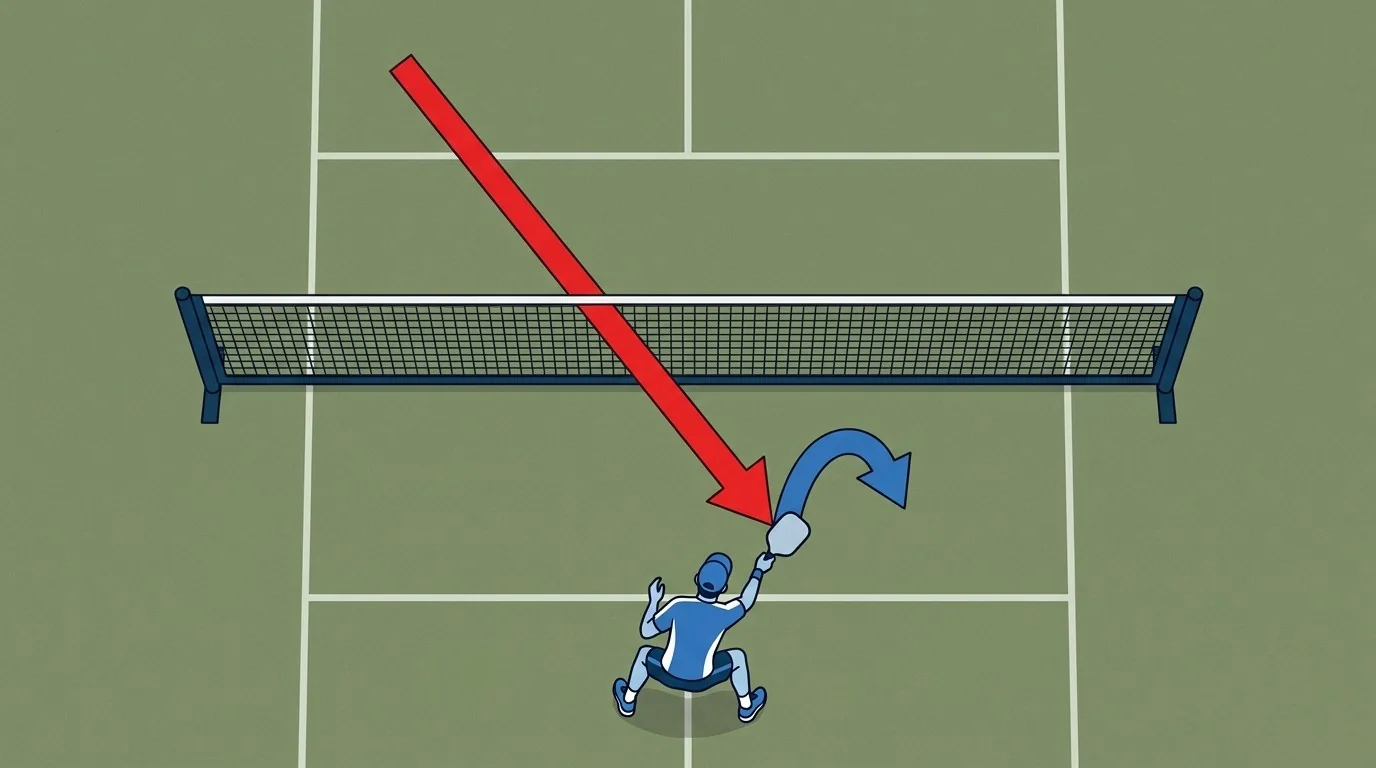
Absorb pace without popping the ball up
A high block often comes from an open paddle face, a rigid arm, or contact that is too far behind the body. Keep the face close to neutral and allow a small amount of give in the wrist and elbow. Think of receiving the ball on the paddle and guiding it forward, not stabbing at it.
The usual target is low over the net and deep enough to make the opponent hit up. You do not need to find a tiny corner. The middle or the opponent’s feet may be better choices because they limit the angles available for the next attack. When the drive is very fast, an in-bounds ball is more useful than a perfect placement that you cannot control.
Choose the target from the situation
When the opponent is balanced and close to the kitchen, a block toward the middle can create uncertainty and reduce the angle of attack. If one opponent is moving, the open court may be the better target. When the drive arrives at your feet, absorb it first and accept a shorter reset rather than forcing depth with a big swing.
The block volley also helps during the transition forward. If you are still moving, stop with a small split step before contact. A rushed block while your weight continues toward the net often produces a high ball. Brake, stabilize, and let the paddle do less.
Common block-volley mistakes
- Swinging at the drive: A large backswing adds speed when the priority is control.
- Opening the paddle face: The ball climbs and becomes an easy attack.
- Contacting behind the hip: Your body cannot organize a stable block from there.
- Standing tall: Straight legs slow lateral reactions and make balance harder.
- Aiming for the line every time: A low-percentage target is not necessary for a successful defensive exchange.
- Watching the result: Return to ready position immediately and read the next ball.
The first block may only buy time. After contact, put the paddle back in front and prepare for the next ball. That ball might call for a controlled dink, another block, or a counter if the opponent’s contact rises.
How to practise the block volley
Start with a cooperative feed from the kitchen line. The feeder sends medium-paced balls to the forehand and backhand while the defender uses only a short blocking motion. Track three things separately: balanced contact, a ball that clears the net, and a low landing. This keeps the exercise about control and decisions rather than raw speed.
Increase the pace gradually. The feeder can change direction without trying to hit winners. The defender says “ready,” splits as the feeder contacts the ball, and resets the paddle after every block. Add one middle target, then alternate between the middle and the opponent’s feet.
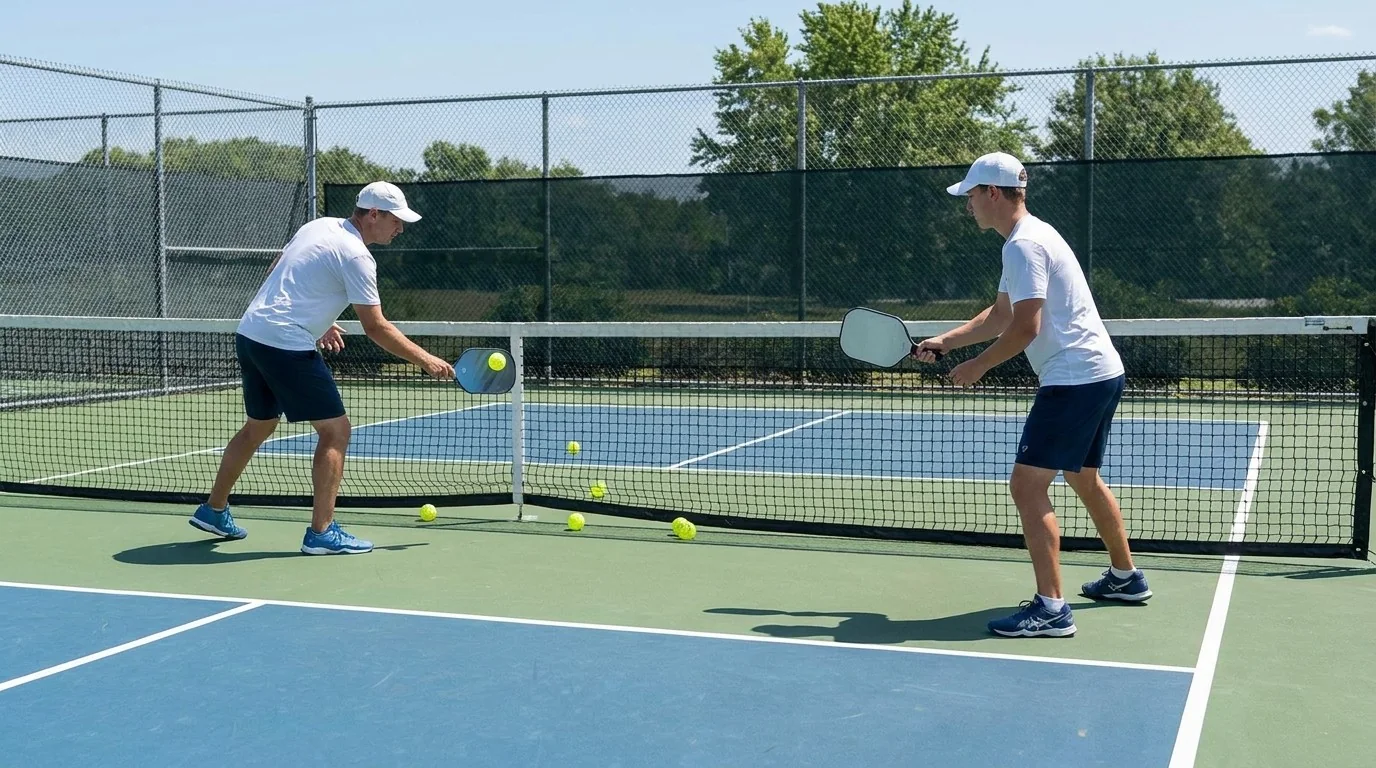
Finish with a constrained game. The defender must block the first drive and may attack only after the ball rises. This builds patience and helps separate a ball to absorb from a ball to counter. If the ball keeps popping up, check the paddle face and grip before trying to add effort.
A dependable block volley stays quiet under pressure: balanced feet, paddle in front, relaxed contact, and a low target. Practise those pieces in that order, and the shot becomes a practical way to turn an opponent’s pace into time for your team.