Pickleball Drop-Step Defense: Turn Safely Under a Lob
A practical pickleball lob-defense guide to the drop step, sideways tracking, overhead setup, partner communication, recovery, and progressive drills.
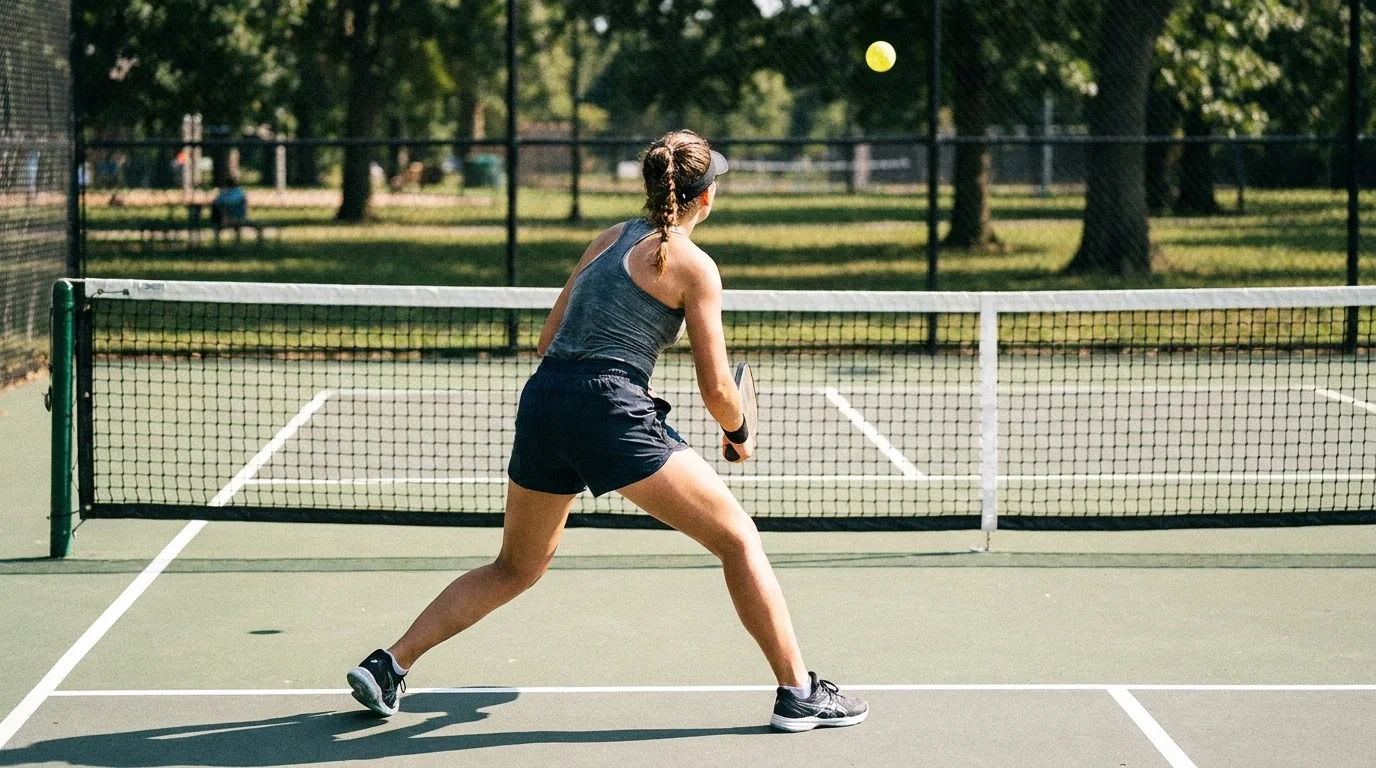
A lob can turn a comfortable kitchen position into a hurried chase. The safest response is not to backpedal and hope to stay upright. Use a drop step to open your hips, move sideways while tracking the ball, and set up for an overhead only after you have a balanced position. That sequence protects your footing and gives you a better chance of keeping the rally alive.
Recognize the lob and turn first
When the ball rises over your head, start with the foot on the side of the ball. Drop that foot back at roughly a diagonal angle and open your hips toward the ball’s flight. You are turning from a position facing the net to a side-on position. That early turn is the difference between a controlled chase and a dangerous backward shuffle.
Do not wait for the lob to reach its highest point before turning. An early shoulder turn gives you more time to judge whether the ball will land in bounds, whether your partner can take it, and whether an overhead is realistic. Keep the paddle available as you move instead of letting it trail behind your body.
Move sideways while tracking the ball
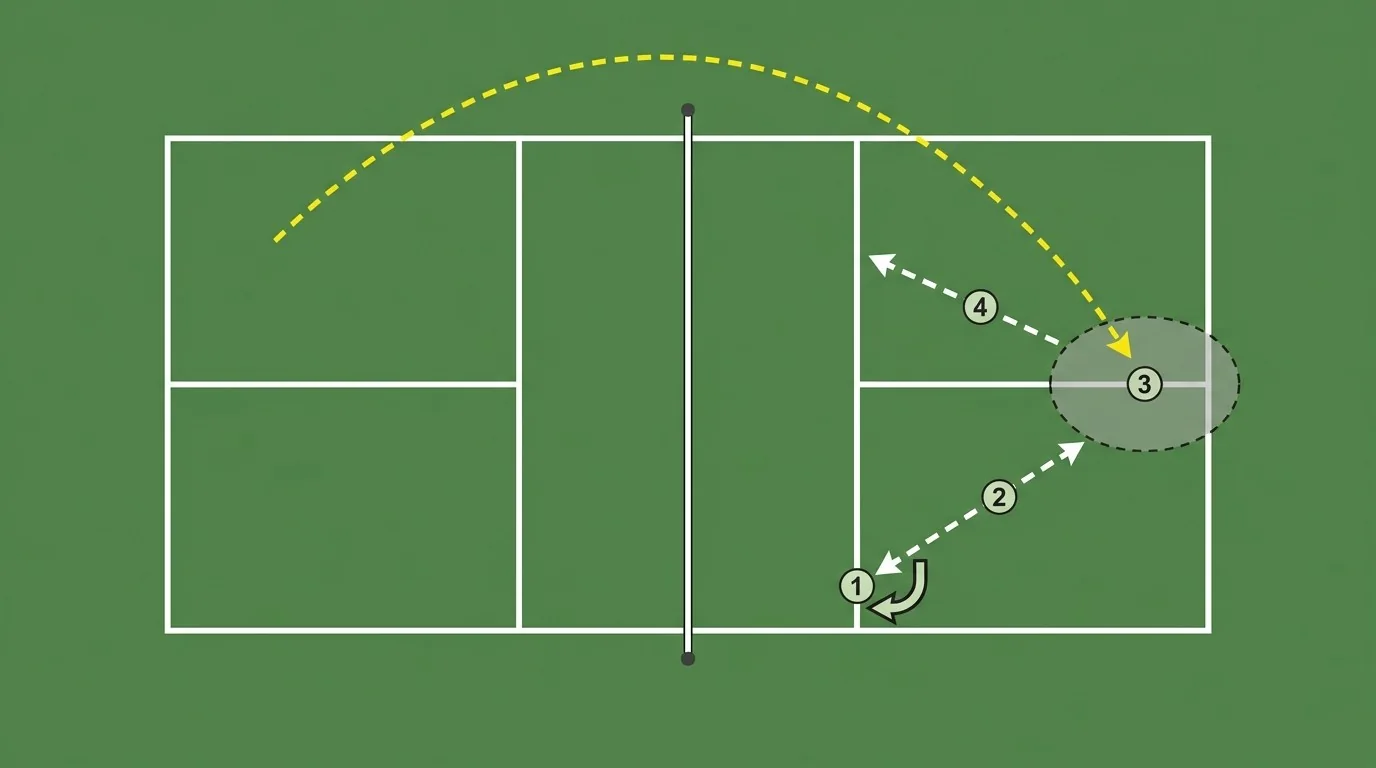
After the drop step, shuffle or run sideways with your hips open to the ball. Keep your eyes on its flight and use peripheral vision to sense the court. When the ball is close enough for short movement, avoid crossing your feet. Use a crossover only when you need to cover more ground quickly.
Backpedaling is a poor default because it makes balance and spacing harder to control. If the lob is deep, keep moving until you can get underneath it. If it is short, slow down and prepare to move forward after the bounce or overhead. The goal is not to sprint automatically; it is to arrive with enough time to choose.
Set up the overhead without rushing
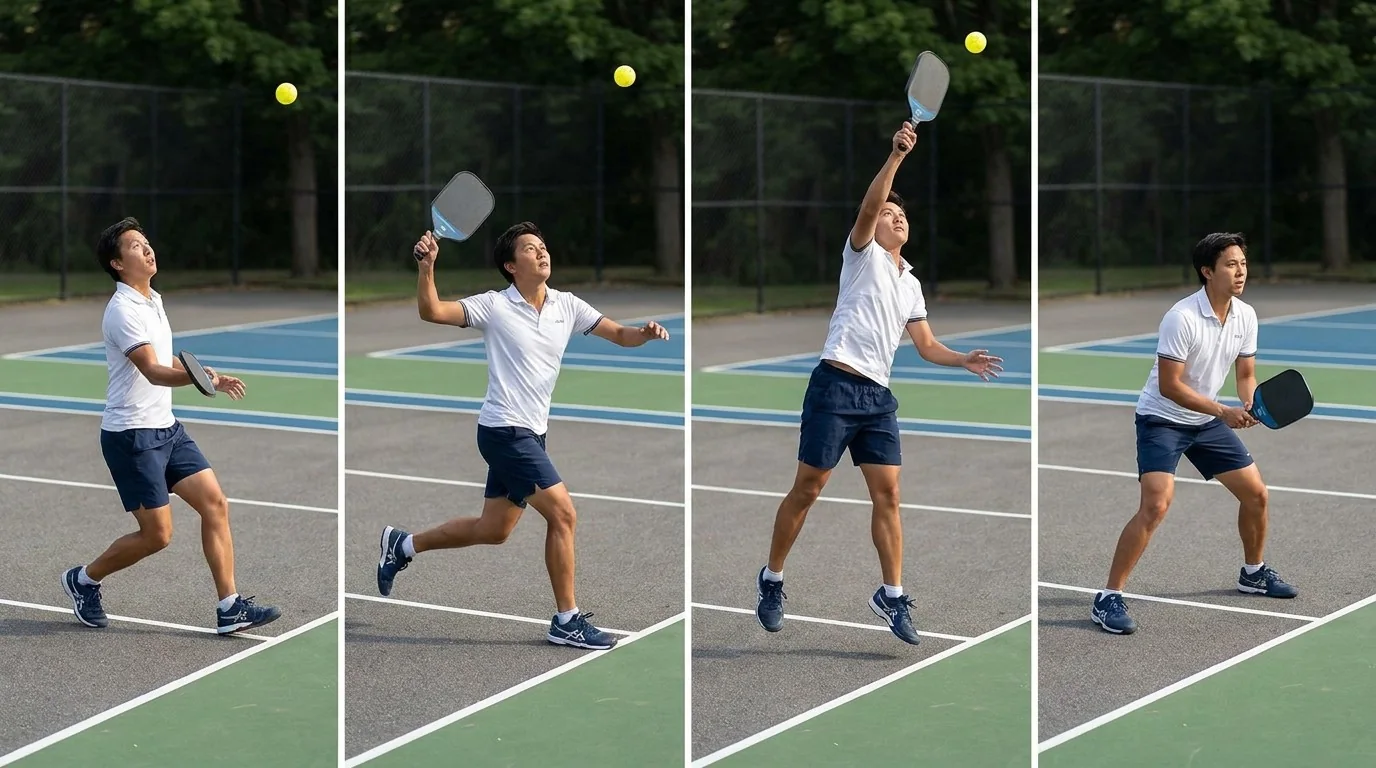
Once you reach the ball, set your feet before swinging whenever the height and time allow. Turn your shoulders, use your non-dominant hand to help track the ball, and contact it in front rather than behind your head. If the ball is falling behind you or your base is unstable, a safer bounce or defensive return may be wiser than a forced winner.
Choose the target with recovery in mind. In doubles, a deep middle ball can reduce angles, while a controlled crosscourt reply may give you more room when you are wide. The right target depends on the opponents’ and your partner’s positions. Do not admire the overhead. Prepare for the next ball as soon as it leaves your paddle.
Recover after the lob is handled
After an overhead, return toward a useful court position instead of staying in the corner. In doubles, communicate whether you are taking the ball so your partner knows whether to hold or cover. If the ball bounces and you send back a defensive shot, use the next contact to rebuild balance and move toward the kitchen when the situation permits.
Split step as the opponents make contact. This timing keeps both feet available for the reply and prevents a common mistake: recovering too early, then getting caught moving when the ball is struck.
Practise the turn in stages
Start without a ball. Stand near the kitchen line, have a partner point or call a direction, and rehearse the drop step, hip turn, sideways movement, and stop. Keep the feet quiet and your eyes oriented toward the imagined lob.
Next, add gentle tossed lobs. First catch the ball after moving underneath it. Then shadow an overhead without hitting. Finally, hit controlled overheads to a broad target. Add deeper and wider feeds only when the turn remains balanced. Count a repetition as successful when you turn early, avoid backpedaling, track the ball, and recover, not merely when the ball lands in.
Reliable lob defense is a movement sequence: turn, track, set, choose, and recover. Practise those decisions together so a high ball does not force a rushed reaction.