Pickleball Eye Protection: Choose Coverage Before You Play
A practical guide to pickleball eye protection: understand side coverage, fit sports eyewear, and build safer court habits.
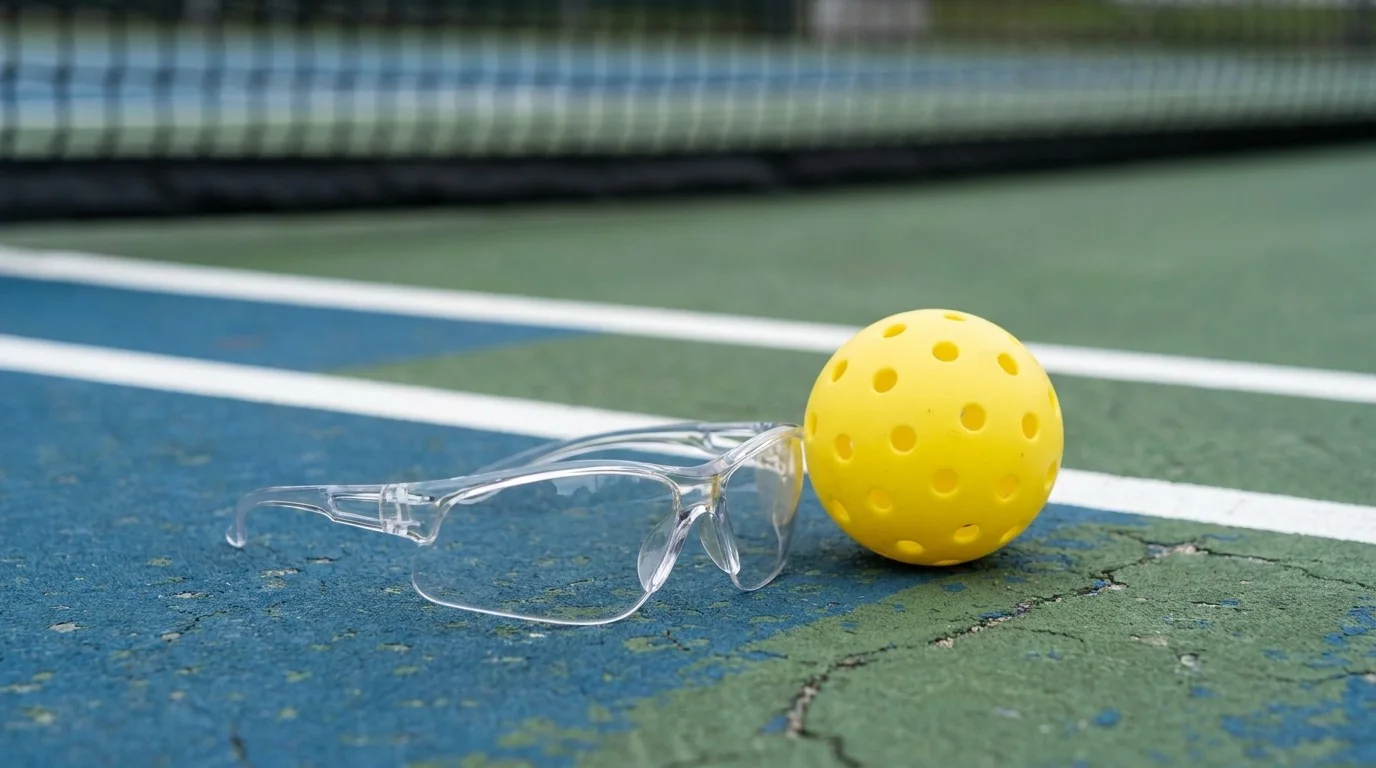
Pickleball eye protection is a practical precaution in a sport with a hard plastic ball, paddles, and short reaction distances. A ball may come from an opponent, deflect off a paddle, or cross the court from a partner. Protective eyewear cannot remove every risk, but it can put a barrier between a moving object and your eye.
Why coverage matters on court
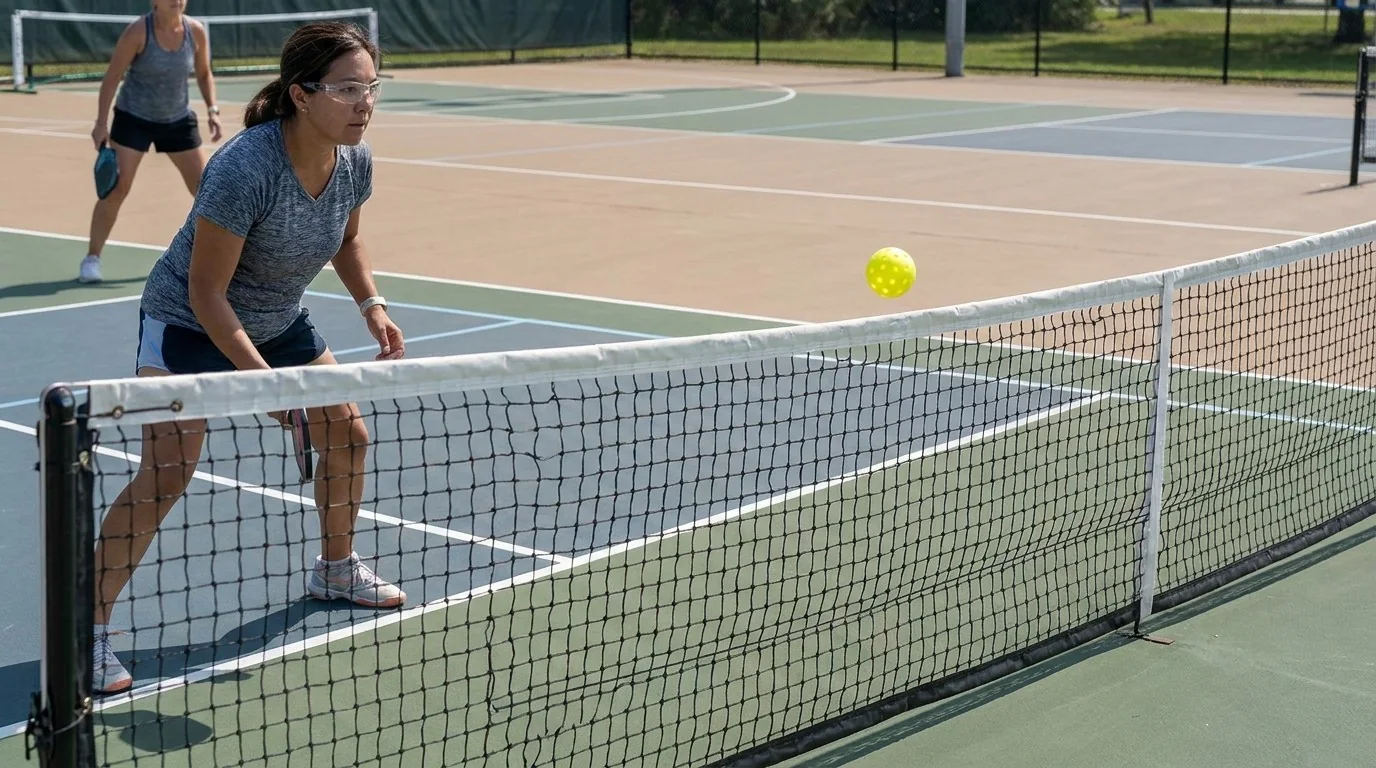
Pickleball is not a contact sport, but close spacing creates surprising angles. At the kitchen line, a ball can reach you before you have time to turn away. In doubles, a partner's paddle or a deflection can send the ball from the side. This is not only a tournament concern: casual rallies and practice feeds can change direction quickly.
The American Academy of Ophthalmology advises players to consider sports-designed protective eyewear. If you have an eye disease, previous eye surgery, high myopia, or another personal risk factor, ask an eye-care professional about sports protection instead of relying on general gear advice.
Choose coverage over ordinary glasses
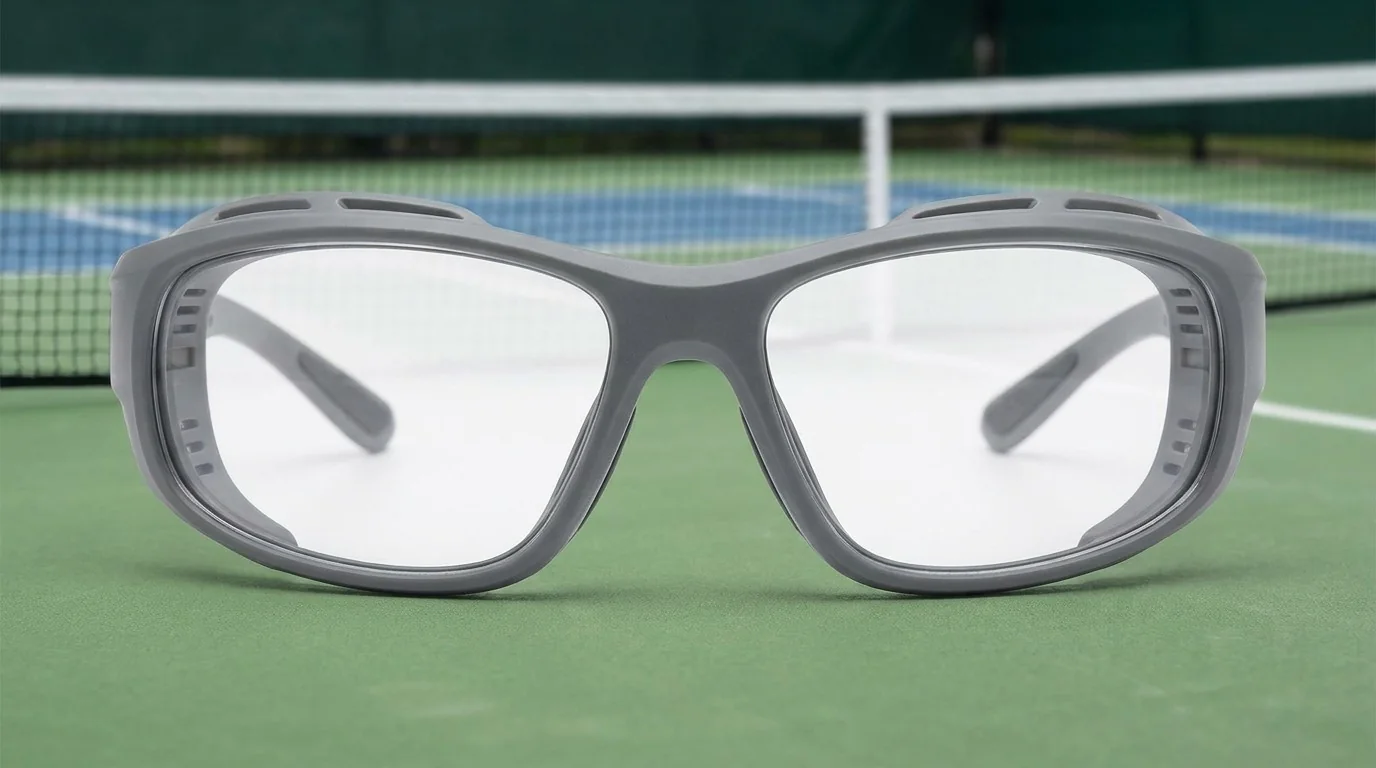
Prescription glasses and sunglasses are not automatically suitable for ball sports. Look for eyewear that stays put during quick movement and covers the front and sides of the eyes. A wraparound frame or broad side coverage reduces exposed angles, which matters especially in doubles.
Impact-resistant lenses are preferable to glass. Ventilation and anti-fog treatment can help you keep a clear view, but comfort and coverage come first. The right pair is one you can wear consistently without slipping, painful pressure, or visual distortion.
Test the fit before a full session
Put the eyewear on and move as you would on court. Shuffle sideways, bend into a ready position, and turn your head as if tracking a ball. The frame should stay stable without pressing painfully on your nose or temples. Make sure the lens does not block peripheral vision or create distracting reflections.
Prescription wearers can consider prescription sports eyewear, an insert, or an over-glasses design. Ask an optometrist or qualified eyewear provider which option preserves clear vision and impact protection.
Make protection part of court habits
Eyewear works best with ordinary court awareness. Call balls clearly, leave space for your partner, avoid swinging when another player is too close, and look before entering an adjacent court. In warm-ups, begin with controlled feeds so players can establish distance and communication before adding pace.
A friendly game still needs caution. A stray ball can take an unpredictable path even when nobody is hitting hard. If the eyewear is cracked, badly scratched, or has taken a significant impact, replace it or have it assessed instead of assuming it is still reliable.
A practical pre-play checklist
- Coverage: Does the frame protect the front and side angles around the eyes?
- Stability: Does it stay in place during shuffles, turns, and a ready stance?
- Lens: Is it made for impact protection and clear enough for the court lighting?
- Fit: Can you wear it without pressure points, fogging, or distracting distortion?
- Condition: Are the lens and frame free of cracks, chips, and serious scratches?
- Vision needs: If you use prescription lenses or have an eye condition, have you received suitable professional advice?
Protective eyewear is a personal safety choice, not a guarantee against injury. Pair suitable coverage with communication, spacing, and attention to the ball so prevention becomes part of the way you play.