Pickleball Forehand Flick: A Compact Attack at the Kitchen
A practical guide to the pickleball forehand flick: read the ball, set your feet, accelerate compactly, choose a safe target, and recover for the counter.
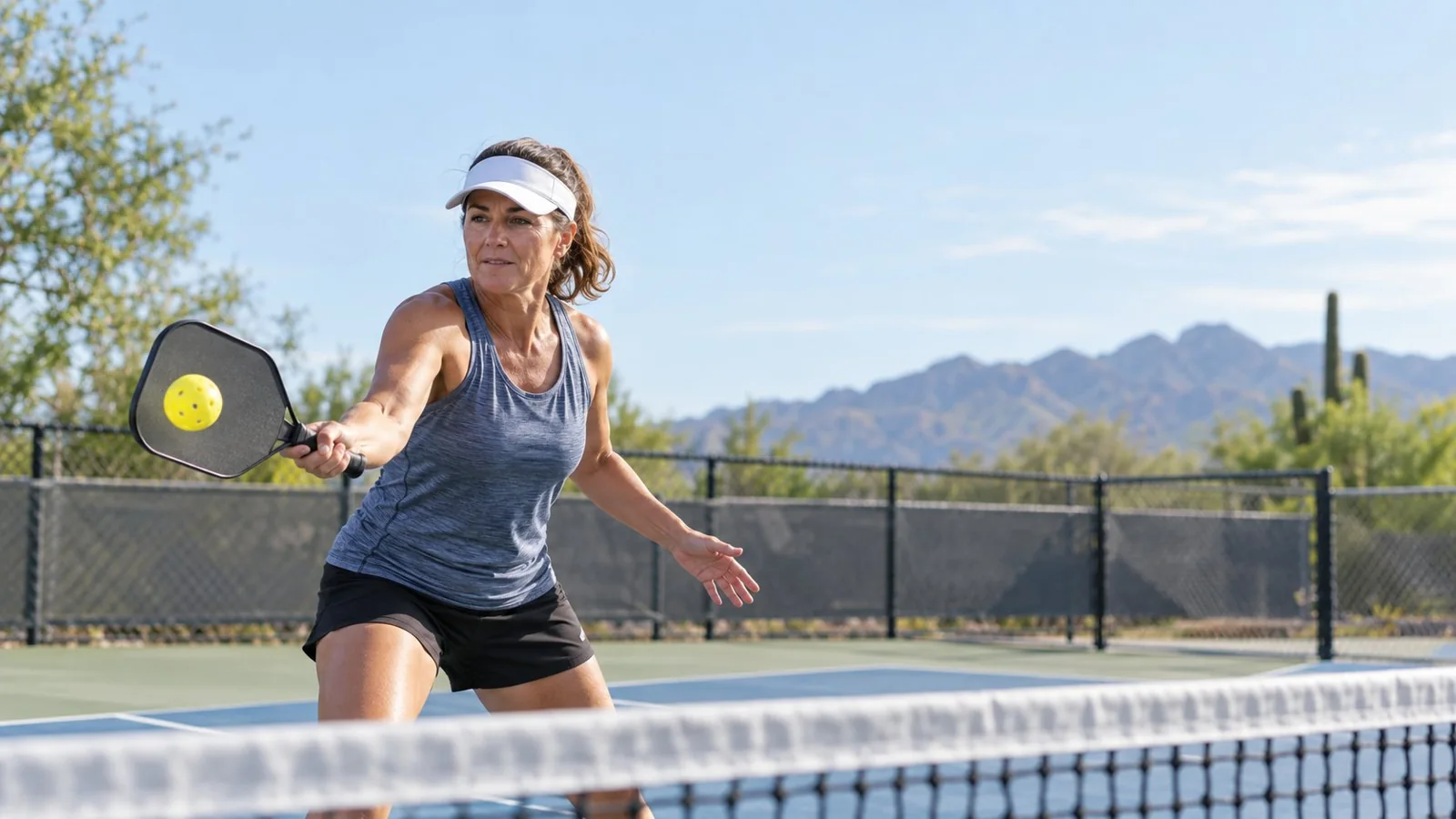
The forehand flick is a useful kitchen-line attack, but it is not a magic answer to every dink. It works best when the ball rises into a comfortable contact window, arrives in front of you, and gives you enough time to set your feet. The goal is a short acceleration that adds pressure while leaving your paddle ready for the next exchange—not a full forehand swing that pulls you out of position.
Read the ball before you flick
Start with the opponent’s contact and the ball’s height. A ball that sits above the net tape, or a dink that arrives with a little extra lift, may be attackable. A low ball below net height is usually a reset or controlled dink, especially when it is moving away from your hitting shoulder. If you have to reach, lean hard, or swing from behind your body, the opportunity is probably gone.
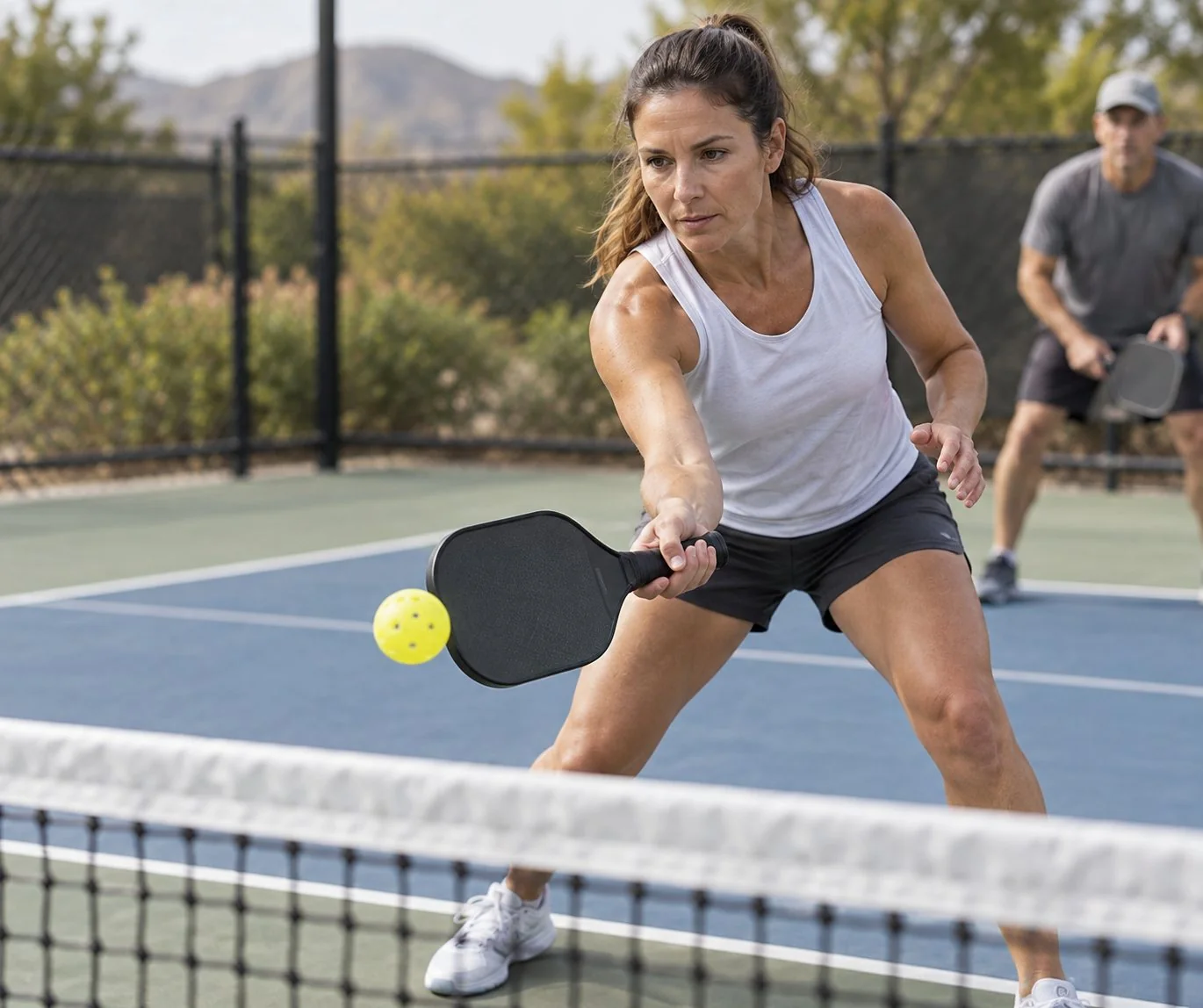
Get your outside foot close enough to the ball that your chest can stay balanced. Use a relaxed grip and keep the paddle in front of you. The paddle tip can begin slightly low, which gives the motion a direct path instead of forcing a loop. Your stance should let you recover toward the kitchen line immediately after contact.
Build the compact motion
Let the forearm and a small amount of shoulder rotation create the acceleration. Move forward and slightly upward through the contact zone, then let the paddle finish in front of your body. Think “close and cover” rather than sweeping across the ball. Excessive wrist manipulation or a large backswing makes timing harder and advertises the shot early.
Meet the ball in front of the hip-to-net area, with the face only as open as the trajectory requires. Brushing toward the upper portion of the ball can help it dip, but the reliable sequence is more important than trying to manufacture extreme spin. Keep your head quiet, avoid jumping into the shot, and recover the paddle immediately after the finish.
Your first target is a useful one, not a spectacular one. Aim at the opponent’s backhand hip, outside shoulder, or a space that makes the next ball uncomfortable. Leave margin from the sideline. A flick that lands safely and forces a defensive reply is more valuable than a corner attempt that misses by an inch.
Decide between attack, punch, and reset
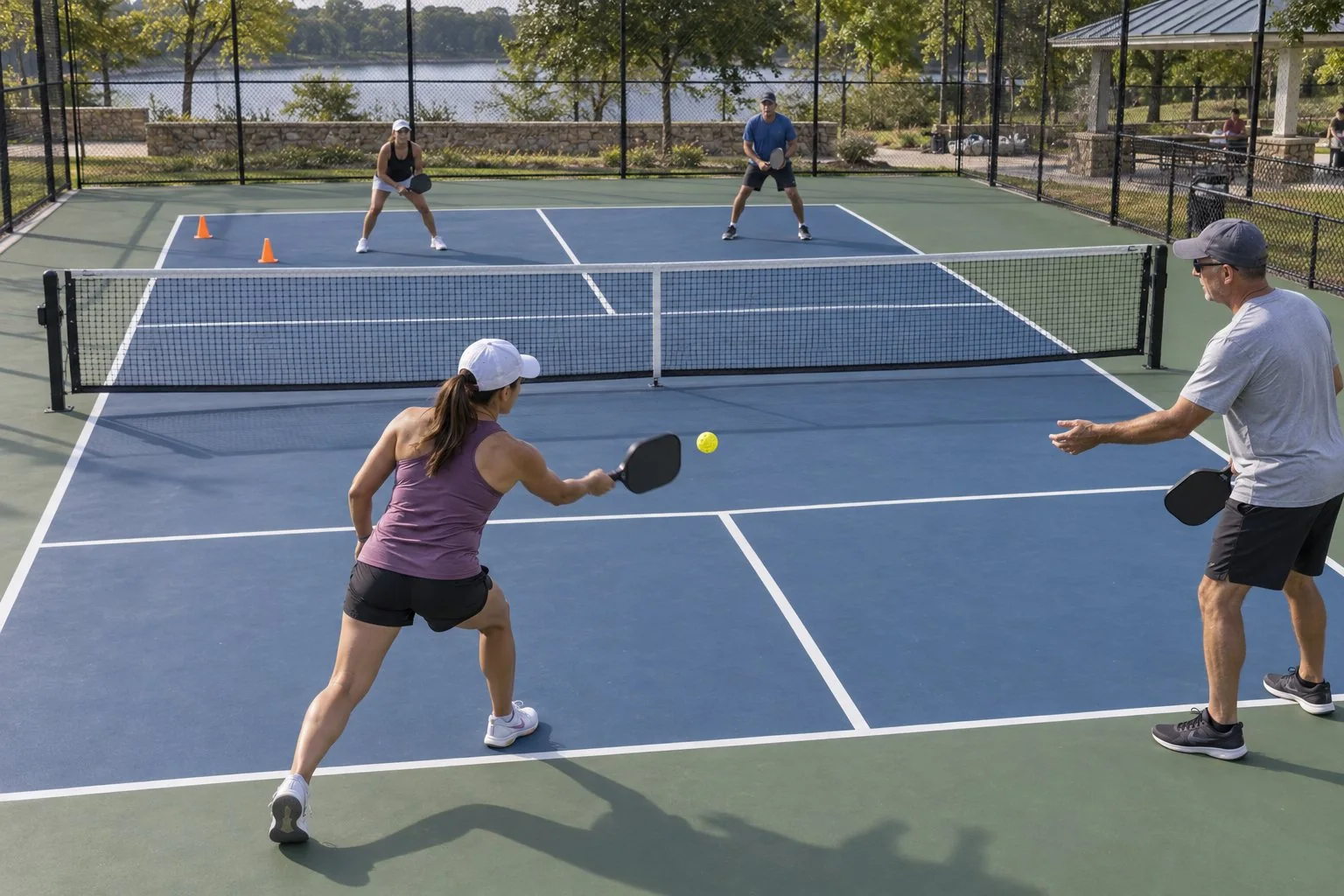
Use the flick when the ball is high enough and your balance is set. Use a punch volley when the ball is faster and you need a simpler forward response. Use a reset when the ball is low, wide, or arriving too close to your feet. The decision should happen before the swing; changing from a flick to a reset halfway through often leaves the face open and the ball floating.
In doubles, do not chase an attack that exposes the middle. If your partner is moving or you are pulled outside the sideline, choose the shot that lets both players recover. After the flick, expect a counter. Keep the paddle up, return to a neutral kitchen position, and be ready for a ball directed at your feet.
A practical progression
Begin with ten shadow repetitions: set the feet, lower the paddle tip, accelerate forward and slightly upward, then freeze with the paddle in front. Next, ask a partner to feed comfortable balls just above net height. Alternate five forehand flicks with five controlled resets so you practise the decision, not only the swing.
For the next round, place a wide target in the opponent’s backhand area and count safe landings. Start from both sides of the kitchen and change the feed height. Finish with live dinking in which you may attack only a ball that clearly rises. This rule keeps the drill honest and teaches patience.
Common faults are easy to spot: a long backswing usually means the paddle was not ready; balls into the net often come from contacting late or trying to hit down; misses wide can come from opening the shoulders too soon. Return to the compact motion, make the target larger, and rebuild speed only after the ball is landing consistently.
The best forehand flick is not the hardest one. It is the one chosen at the right height, hit from balance, sent with margin, and followed by a ready position. Train the read and the recovery alongside the mechanics, and the shot becomes a practical way to turn a loose kitchen ball into pressure without gambling the rally.