Pickleball Forehand or Backhand: Choose the Cleaner Contact
A practical guide to choosing the cleaner pickleball forehand or backhand contact through early reading, footwork, compact preparation, and smart recovery.
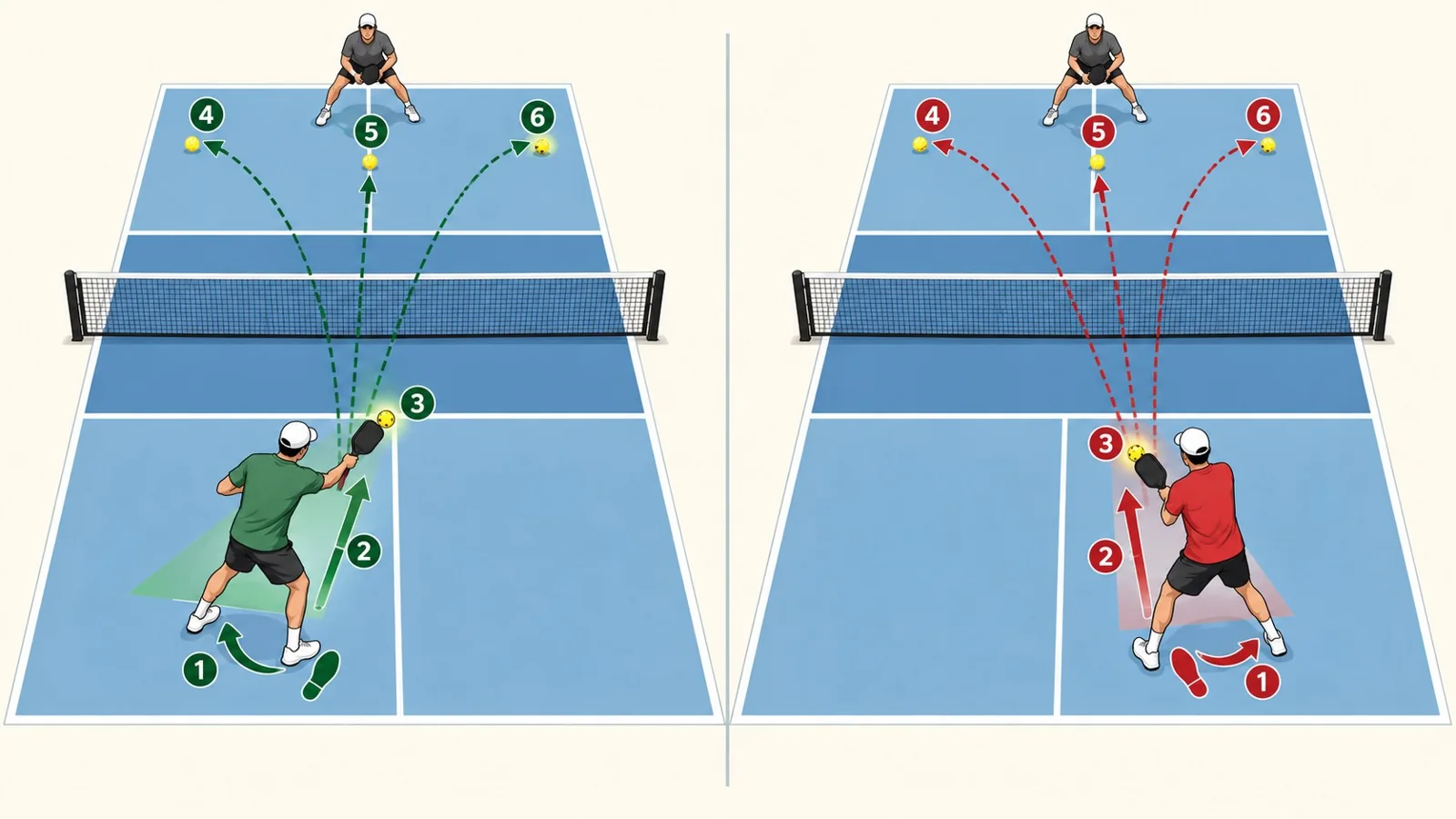
Choosing a forehand or backhand in pickleball is not a contest between a “strong” side and a “weak” side. The better choice is the contact that lets you arrive balanced, keep the paddle in front, and send the ball to a useful target. Good players make that decision early, then move their feet so the stroke stays compact.
Read the incoming ball before choosing a side
Start from a balanced ready position with the paddle in front of the body. As the ball travels toward you, judge its height, speed, width, and depth. A ball arriving comfortably on your dominant side often invites a forehand, while a ball moving into your non-dominant side may be simpler with a backhand. That is only a starting point: position and time matter more than habit.
If the ball is close to the middle, decide early rather than making a late reach. In doubles, communicate when both players could take the same ball. The player who can contact the ball in front with the better balance should usually claim it. Avoid forcing a forehand by running around the backhand if that movement leaves the middle open or makes you late.
Move the feet and prepare the paddle early
Turn the shoulders as soon as the direction is clear. Keep the preparation short and let the feet create space from the ball. Small adjustment steps help you stay underneath the contact, while a controlled lateral shuffle preserves balance near the kitchen line. Reaching with the arm is a common sign that the decision came too late.
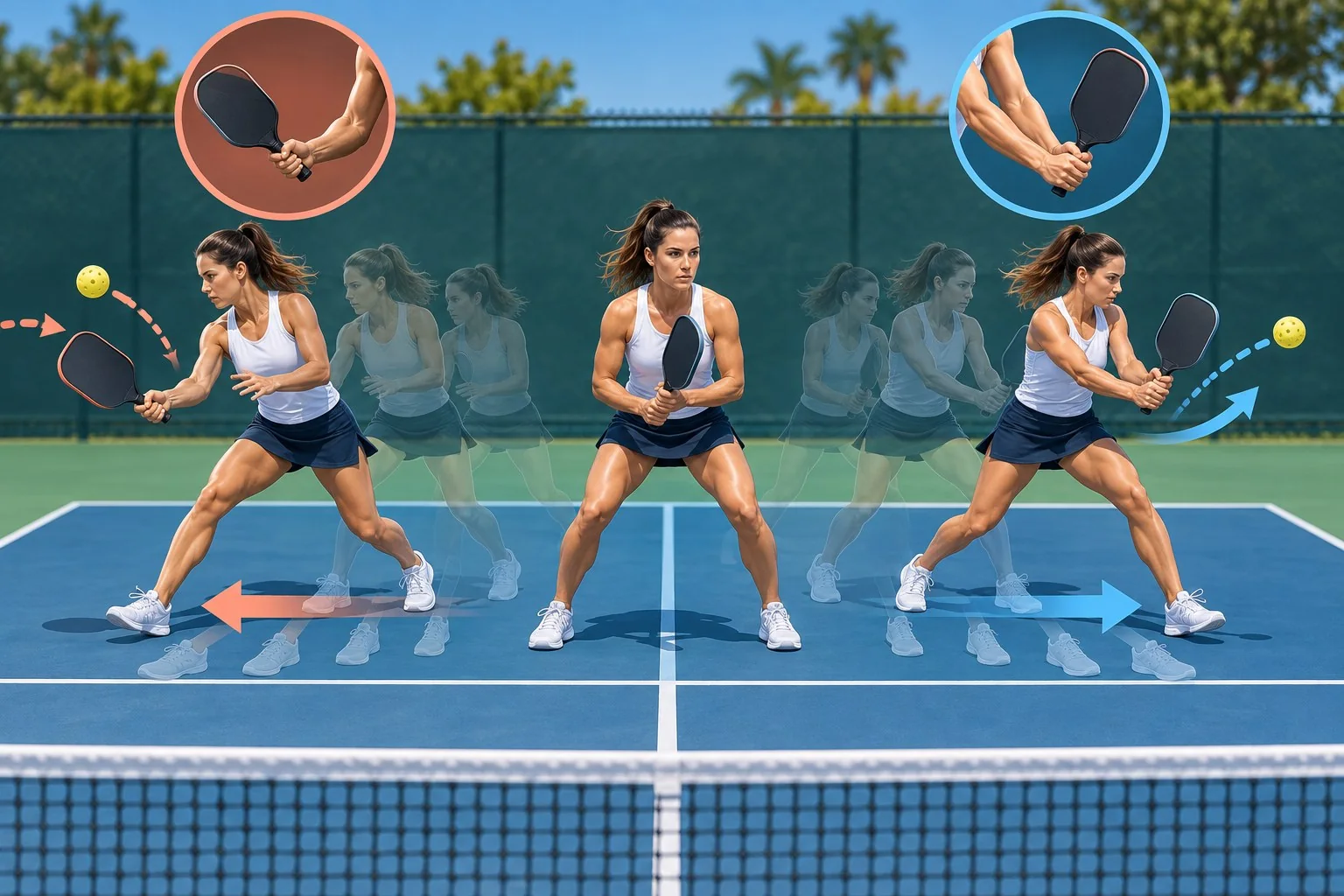
For either stroke, keep the paddle face organized and the contact in front of the body. A compact backhand can be especially useful when the ball arrives quickly or when there is not enough room to run around it. On the forehand side, resist the urge to over-rotate or take a large backswing. The small court rewards preparation and timing more than a dramatic swing.
Match the stroke to the rally situation
Use the forehand when it gives you a stable contact and a clear target, not simply because it can produce more pace. A controlled forehand drive may pressure a high ball, while a softer forehand can reset a difficult exchange. The backhand can keep the paddle in front during fast kitchen-line exchanges and may provide a safer compact block when the ball is arriving at the body.
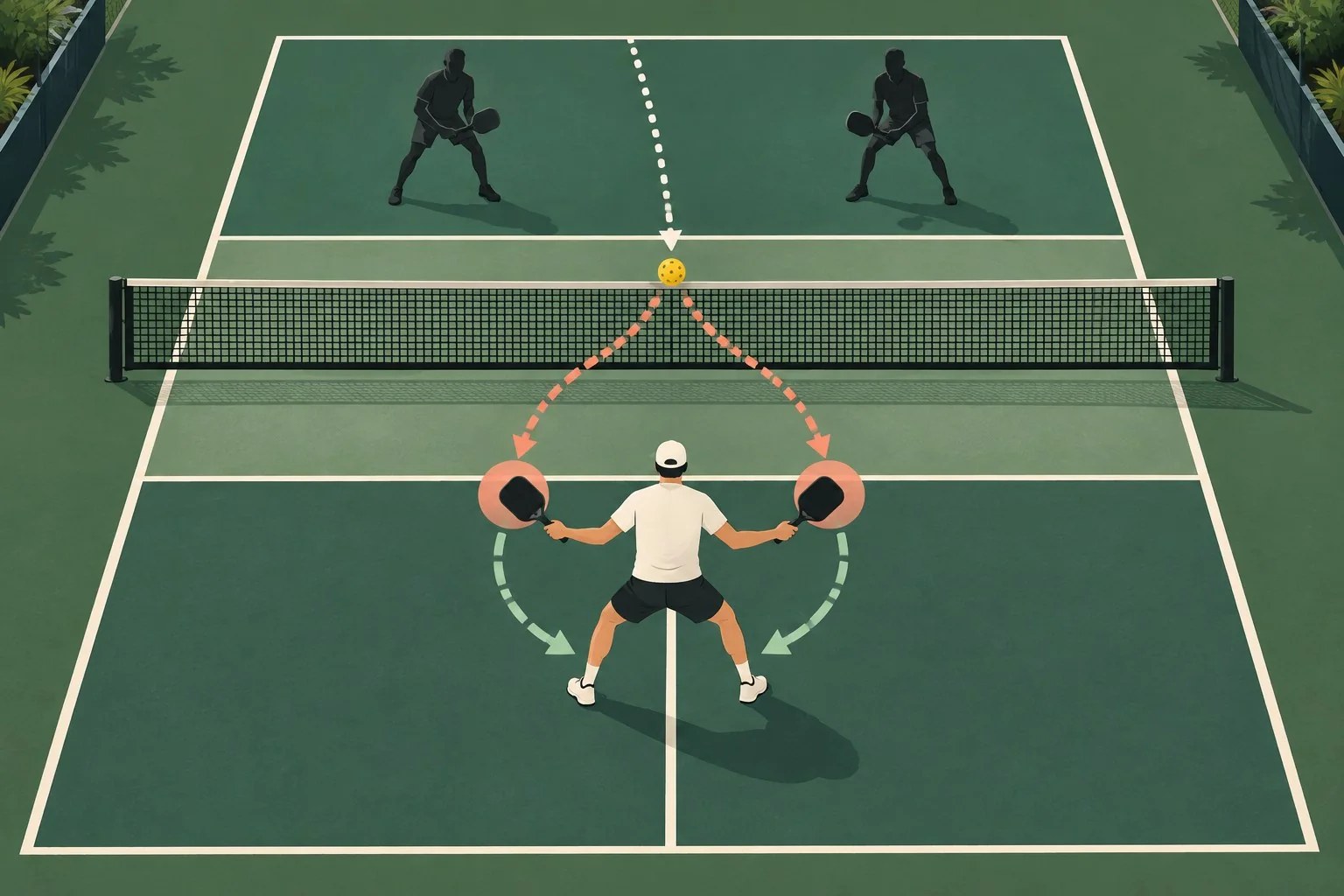
After contact, recover to a ready position and watch the opponent’s paddle. Do not admire a clean shot or remain leaning toward the side you just covered. In doubles, return attention to the middle and communicate about the next ball. Your choice was successful only if it leaves you prepared for the reply.
Practise the decision, not just the swing
Have a partner feed balls randomly to both sides and call “forehand” or “backhand” before contact. Begin with gentle feeds so you can focus on early recognition, shoulder turn, adjustment steps, and balanced contact. Then add wider feeds that test whether you move instead of reaching. Finish with a cooperative rally in which the goal is to choose the cleaner contact and recover every time.
Review three questions after each round: Did the feet create space? Was the paddle ready before the ball arrived? Did the contact leave you balanced for the next shot? If the answer is no, slow the feed and reduce the swing. Reliable pickleball forehand or backhand decisions come from seeing the ball early, moving efficiently, and choosing control before power.