Pickleball Forehand Roll: Add Topspin Without Overhitting
Build a reliable forehand roll with compact preparation, controlled topspin, smarter targets, and footwork that keeps you ready for the next ball.
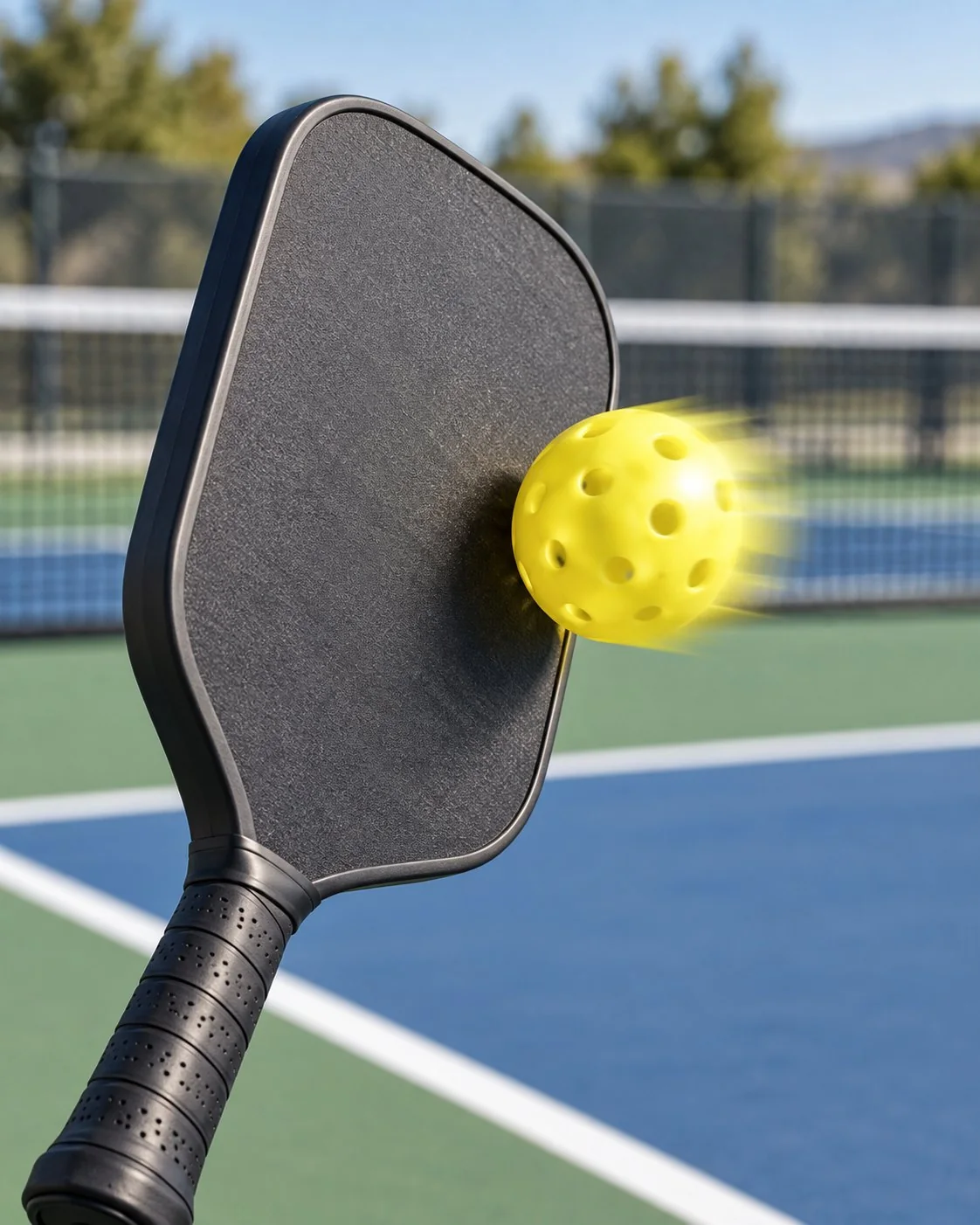
A forehand roll is one of the most useful ways to add controlled topspin to a pickleball. Instead of swinging flat and hoping the ball stays inside the lines, you brush up and forward so the ball clears the net, dips into the court, and reaches a target with useful pace. The shot can be played from the baseline, transition area, or kitchen when the ball is high enough to attack. It is not a maximum-power drive: the goal is a repeatable ball that gives you time to recover.
Set up the forehand roll before the bounce
Start with a comfortable athletic stance: knees soft, chest quiet, and paddle in front of your body. As the incoming ball travels, turn your shoulders and hips early rather than pulling the paddle far behind you. A compact preparation leaves more time to read the bounce and adjust your feet. Keep your hitting hand relaxed enough to feel the ball, but firm enough that the paddle face does not wobble through contact.
Create space from the ball with small adjustment steps. If you are crowded, the swing becomes wristy and the face often opens. If you are reaching, the roll loses its forward direction. Aim to contact in front of the lead hip, with the ball between your body and the intended target. A neutral or continental-style grip can work for many players, although the best choice is the one that lets you change from defense to offense without a late grip change.
Brush up without lifting the ball away
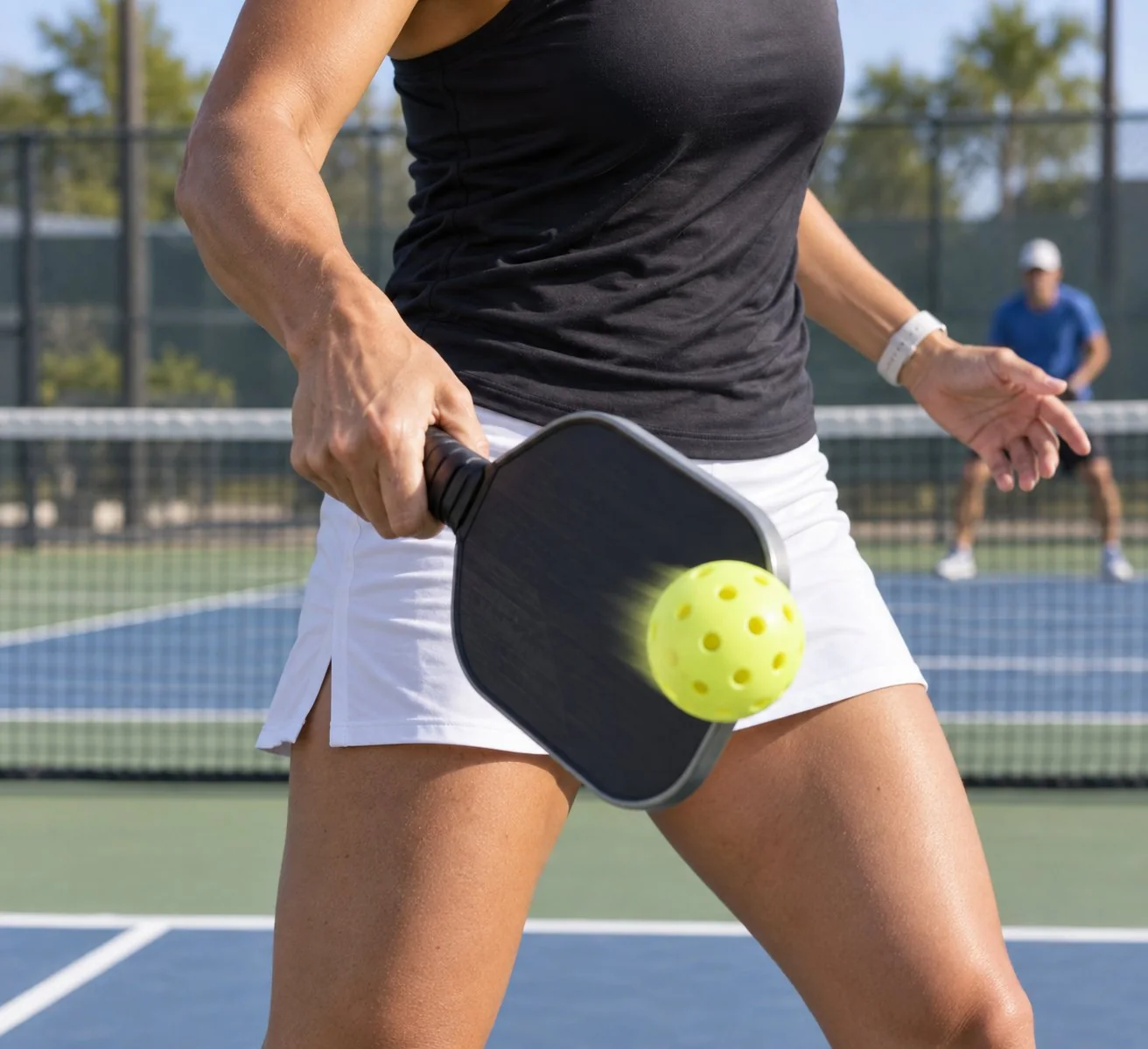
The forehand roll combines a forward swing with a modest low-to-high brushing motion. Begin with the paddle below, or just behind, the height of the ball and move through it toward the target. The face should be slightly closed or neutral rather than dramatically open. A large upward cut sends the ball high; a flat push may produce little dip and can run long.
Think of the ball leaving on a calm arc, then dropping as it travels. You do not need to manufacture spin with an isolated wrist snap. Let the legs, torso, and forearm share the work. Finish comfortably across the body or toward the target, then return the paddle to a ready position. If the ball is low, accept a higher arc and more margin. If it sits above your comfortable contact, you can use a firmer roll, but keep the swing compact until you know the ball will dip.
Choose a target that protects the next shot
Target selection is part of the technique. From deep court, a crosscourt roll offers more distance and a larger window over the net. A roll through the opponent’s backhand side can be useful when that side is open, but do not chase the sideline when a safer inside target will do. From the transition area, look for the opponent’s feet or a space between players. A ball that lands low and forces a defensive contact is often more valuable than one that travels fastest.
Read the opponent before accelerating. If they are balanced and waiting at the kitchen, a hard roll may come back quickly. If they are moving, jammed, or contacting below the net, the same shot can be more effective. When the ball is below your knees or behind your body, reset or lift rather than forcing an ambitious roll. Good topspin cannot rescue poor spacing every time.
Recover behind the roll
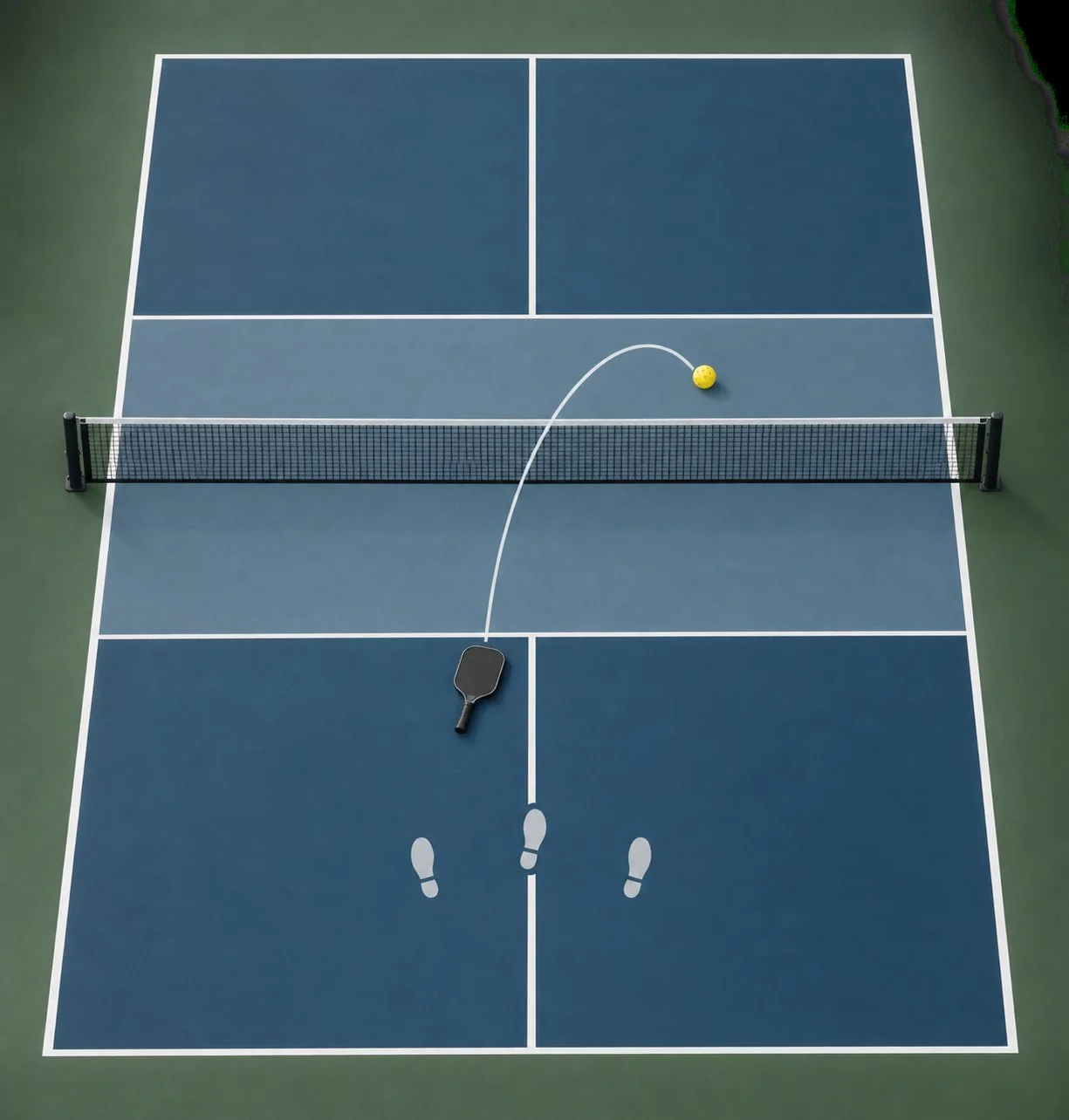
Your movement after contact determines whether the shot helped. Take controlled steps toward your next position while watching the opponent’s paddle. If the roll lands deep and low, continue forward with purpose. If it floats, rises, or lands short, pause in the transition area and prepare to block or reset. Finish with a split step as the opponent makes contact instead of running through the next ball.
In doubles, tell your partner when you are advancing and keep the gap between you sensible. A forehand roll should not pull both players toward the same sideline. If the ball goes crosscourt, protect the middle according to your team’s normal coverage and be ready for a counterattack.
Practise control before speed
Begin with shadow swings: turn, set the paddle below the ball, brush up and forward, finish, and recover. Then have a partner feed comfortable balls from the baseline. Choose one large target and count only shots that clear the net, land inside, and leave you balanced. Gradually vary the bounce height and location. Add movement only after the contact feels repeatable.
For a decision drill, alternate high, comfortable feeds with low or wide feeds. Roll the first when the ball is attackable; reset or play a higher defensive ball on the second. Track whether the miss was long, into the net, or caused by late feet. Shortening the backswing, softening the hand, or adding net clearance is usually more useful than simply swinging harder. With that discipline, the pickleball forehand roll becomes a controlled transition tool rather than a risky power shot.