Pickleball Forehand Roll Dink Footwork: Create Space Before Topspin
Build a controlled pickleball forehand roll by moving around the ball, brushing up with a quiet wrist, choosing the right landing zone, and recovering for the next exchange.
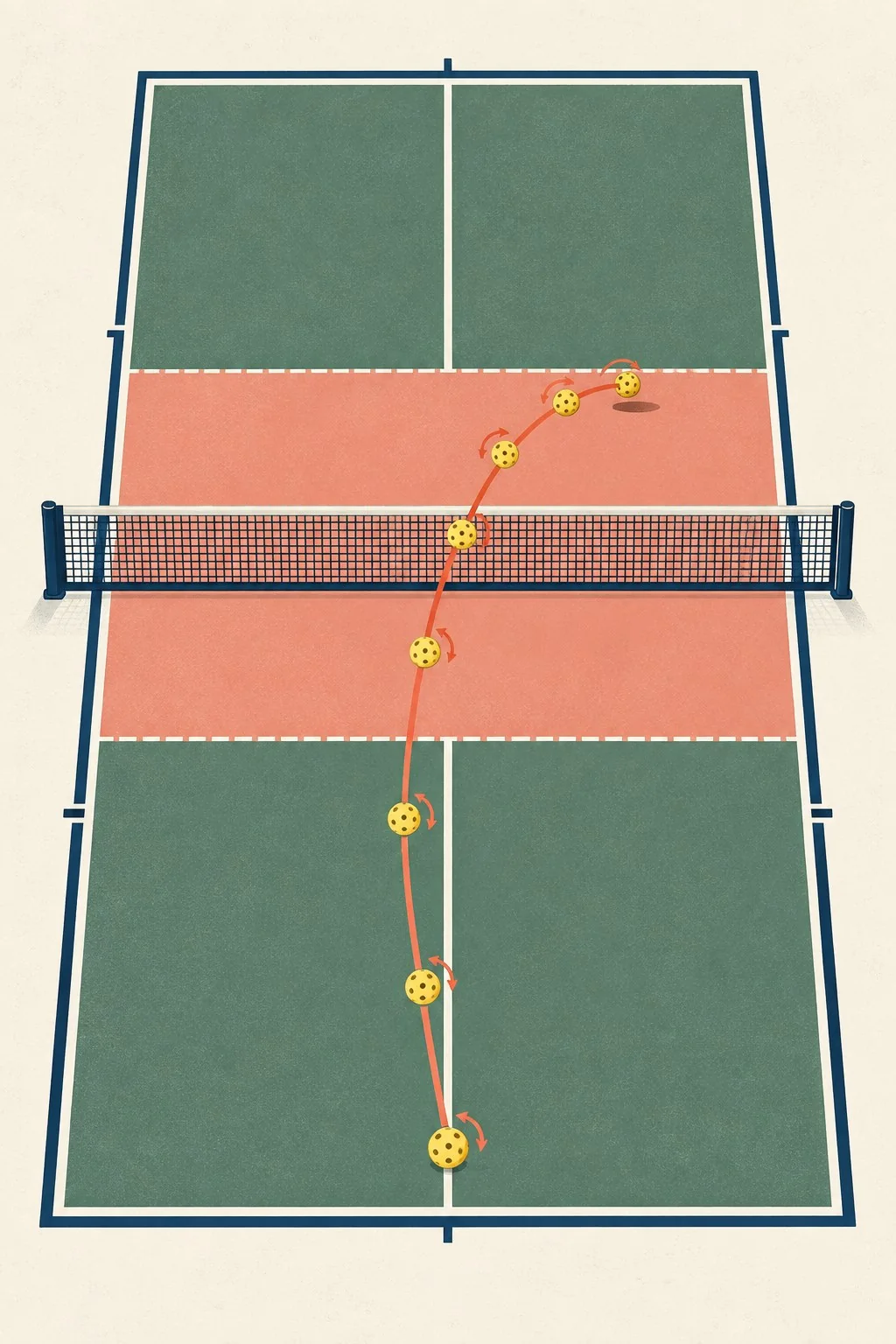
A forehand roll dink is a way to add pressure without turning every kitchen exchange into a full swing. The goal is a controlled topspin ball that dips into the opponent’s kitchen, makes the reply uncomfortable, and leaves you ready for the next exchange. The shot works best when the feet create space and the arm stays compact.
Build the shape with your feet first
Begin from a balanced kitchen-line stance with the paddle ready in front of the torso. When the ball moves to your forehand side, do not stay planted and reach across your body. Use small adjustment steps to get around the ball so the contact point is in front of you. A slight turn of the body helps you send the ball along the intended line instead of pulling it across your body at the last moment.
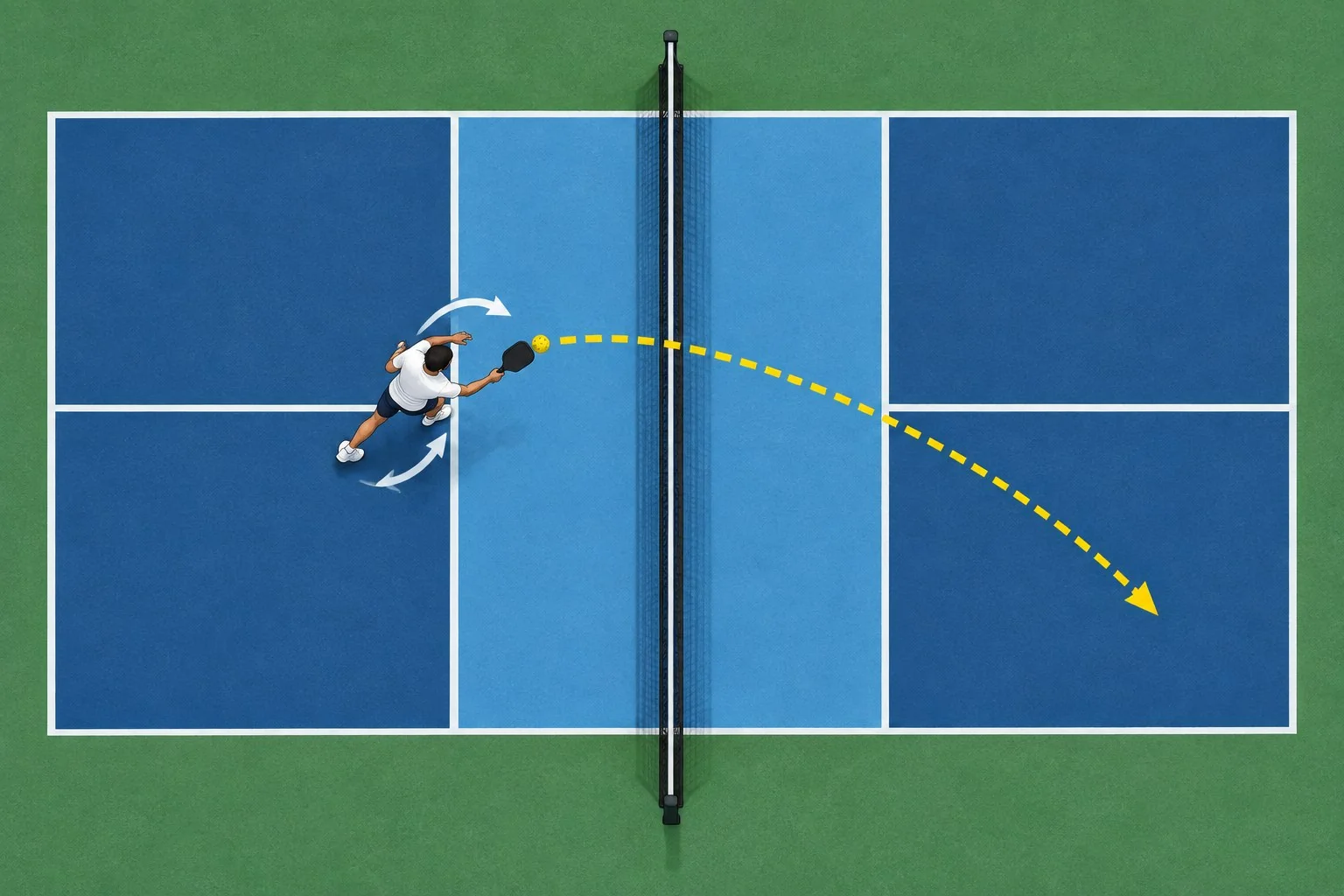
The ball should feel comfortably in front rather than beside the hip. Keep the wrist softly locked and let the forearm and shoulder guide the motion. Topspin comes from brushing up the back of the ball with a compact path; it does not require a dramatic wrist snap. If the hand becomes too active, the face can change suddenly, producing a pop-up that invites an attack.
Use only the amount of lift and speed the incoming ball requires. Against a slower dink, a little more acceleration can create pressure. Against a faster ball, absorb some of its pace and keep the roll shorter. The stroke should finish in front of the body, followed immediately by a return to the ready position.
Choose between the hard roll and soft roll
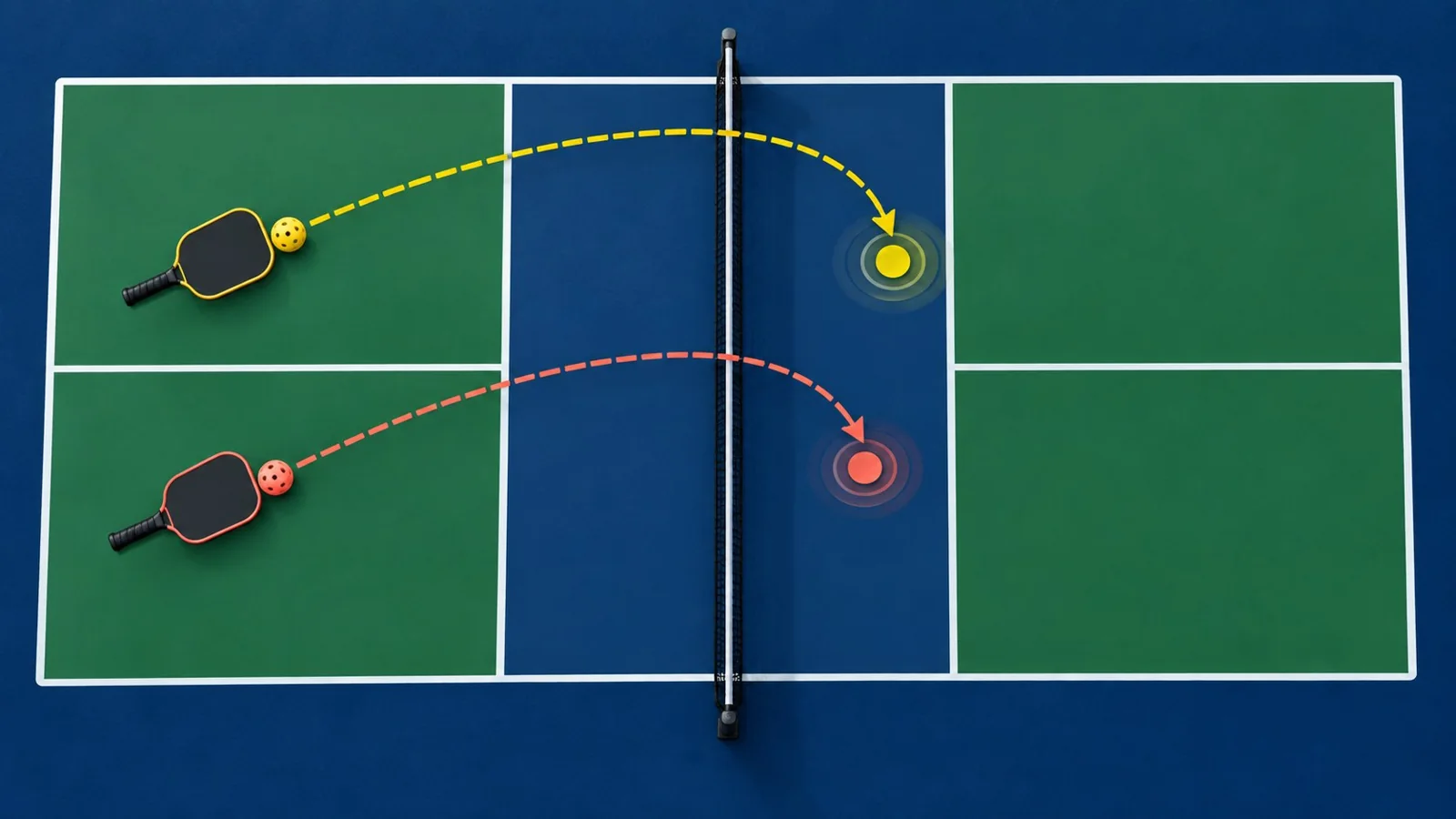
Target selection gives the roll its tactical purpose. A hard roll can bounce close to the kitchen line or just behind it. It is useful when the opponent is retreating or choosing to let the ball bounce instead of taking it out of the air. The firmer trajectory asks them to handle a dipping ball while moving.
A soft roll lands shallower in the kitchen. It can be effective when an opponent is reaching forward, because the ball drops short and makes them take a step before they can answer. Other practical targets include the space between the opponents’ feet, the hard middle, or the outside shoulder of a player who is slow to close the angle. Choose the target you can reach while remaining balanced; a precise roll to a predictable area is more valuable than a forced corner.
Keep the opponent’s paddle position in view. If the ball is high enough to attack, a roll can create a dipping trajectory. If the ball is low and you are reaching, use a softer reset-like response instead of forcing topspin. The roll is a pressure tool, not a compulsory answer to every forehand dink.
Practise control before pace
Start with crosscourt feeds from the kitchen line. Have a partner send comfortable forehand dinks while you move around the ball, contact in front, and roll to a visible landing zone. Alternate ten softer rolls with ten firmer rolls, then discuss whether the ball landed short or near the kitchen line. Keep the wrist quiet and reset the paddle after every repetition.
Next, add decision practice. The partner varies the height and depth of the feed. Roll only when you can get your feet into position and see a manageable contact. If the ball is low, wide, or late, choose a controlled dink and recover instead. This keeps the drill connected to real rallies rather than rewarding a mechanically impressive but low-percentage swing.
A useful checklist is: move around the ball, contact in front, brush up with a compact arm path, keep the wrist softly locked, select a hard or soft target, and recover immediately. When those pieces stay together, the forehand roll becomes a repeatable way to create pressure while protecting your position at the kitchen.