Pickleball Fundamentals for Beginners: Grip, Ready Position, and Compact Swings
A practical beginner guide to the continental grip, balanced ready position, compact backswing, and basic rules that support consistent pickleball play.
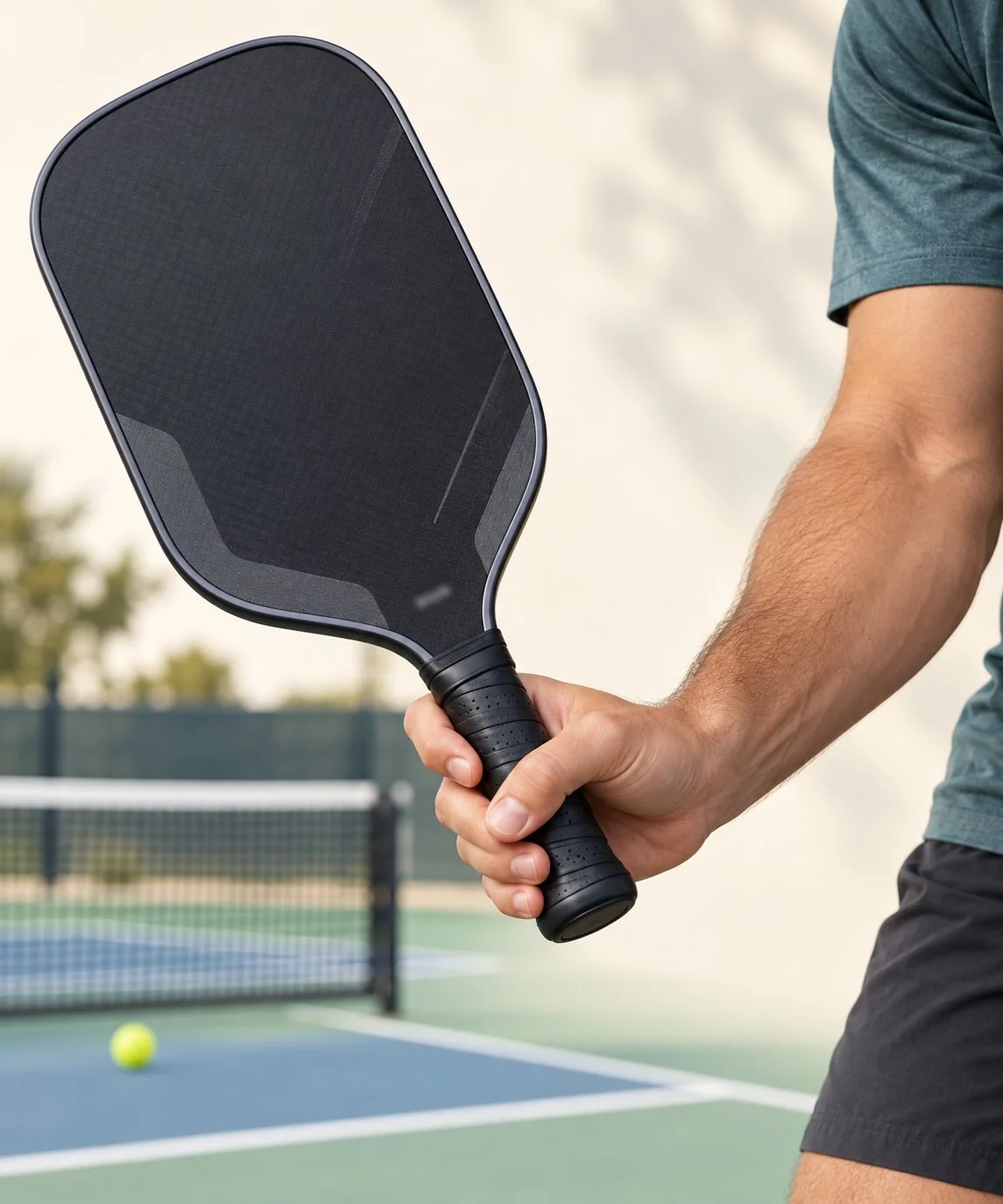
Learning the pickleball fundamentals for beginners gives a new player a reliable foundation for confident rallies. The most useful early habits are simple: hold the paddle in a versatile grip, stay ready before the opponent contacts the ball, and keep the backswing compact. These choices improve control and make it easier to react without rushing.
Why the fundamentals matter
Good fundamentals build consistency before advanced tactics enter the game. A sound grip helps the paddle face stay predictable. A balanced ready position shortens the time needed to respond to forehands and backhands. A small swing reduces unnecessary errors and makes it easier to manage the pace of a fast exchange.
Hold the paddle with a continental grip
For most beginners, the continental grip is a versatile starting point. Form a V or checkmark with the dominant hand and place that shape along the edge of the paddle handle so the frame sits naturally in the hand. Then slide the hand down onto the handle without squeezing tightly.
Keep the index finger slightly higher than the thumb. That small relationship gives the hand room to adjust and supports better range of motion. A common mistake is placing the thumb higher than the index finger, which can restrict movement and make the paddle feel less stable during basic shots.
The goal is a repeatable grip, not maximum pressure. Hold firmly enough to control the face, then keep the hand relaxed enough to move between shots. Practise forming the grip before each feed until it becomes automatic.
Build a balanced ready position
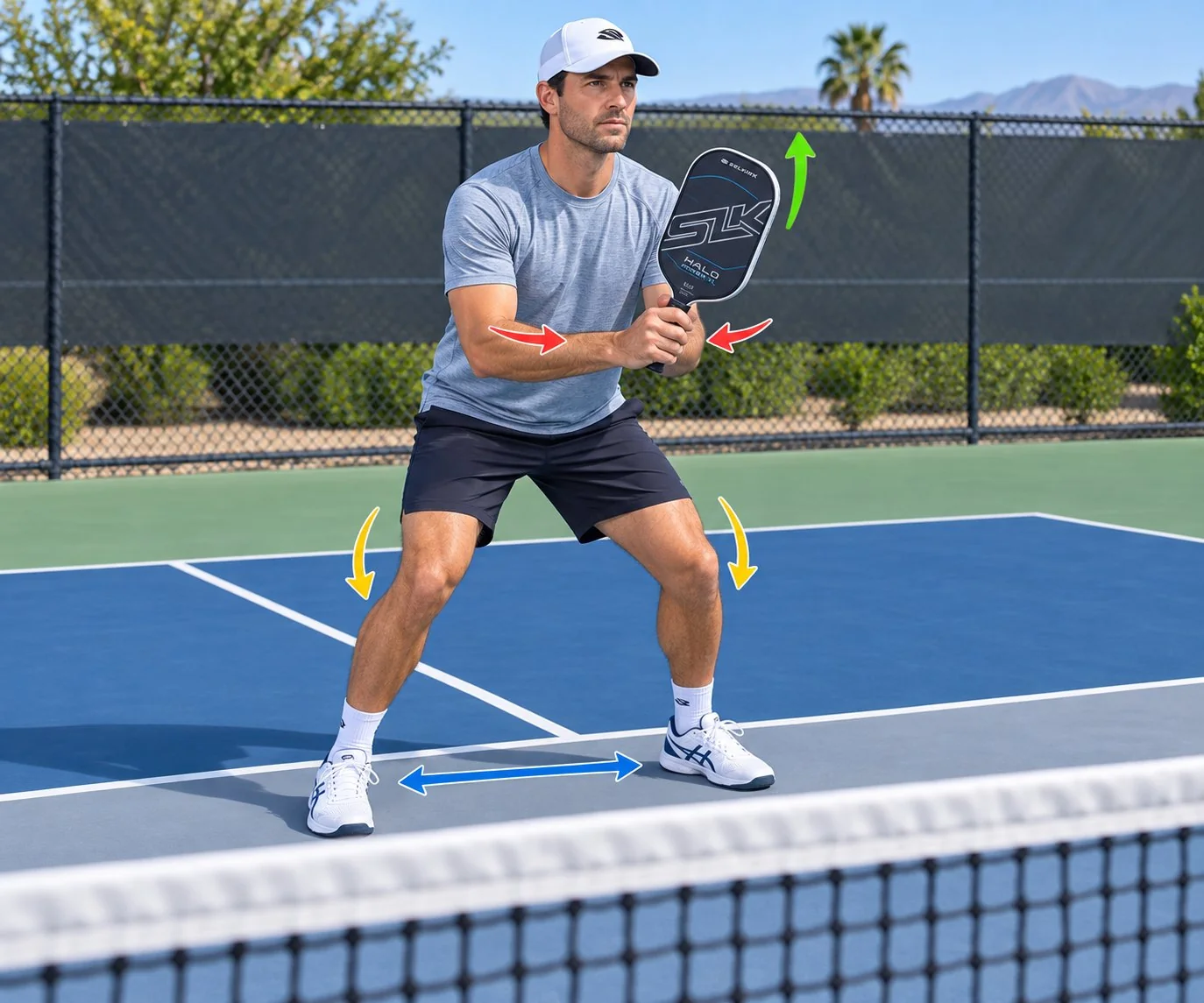
When the opponent is preparing to hit, place the paddle in front of the chest with the elbows slightly forward and the tip pointing upward. Keep the feet comfortably apart, knees relaxed, and weight balanced over the balls of the feet. This position leaves both forehand and backhand responses available.
Avoid standing tall with the paddle hanging by the thigh. That position requires an extra lift before the next shot and slows the first reaction. Keep the head up, watch the opponent’s contact, and make small adjustment steps rather than reaching from a fixed stance.
Keep the backswing short and compact
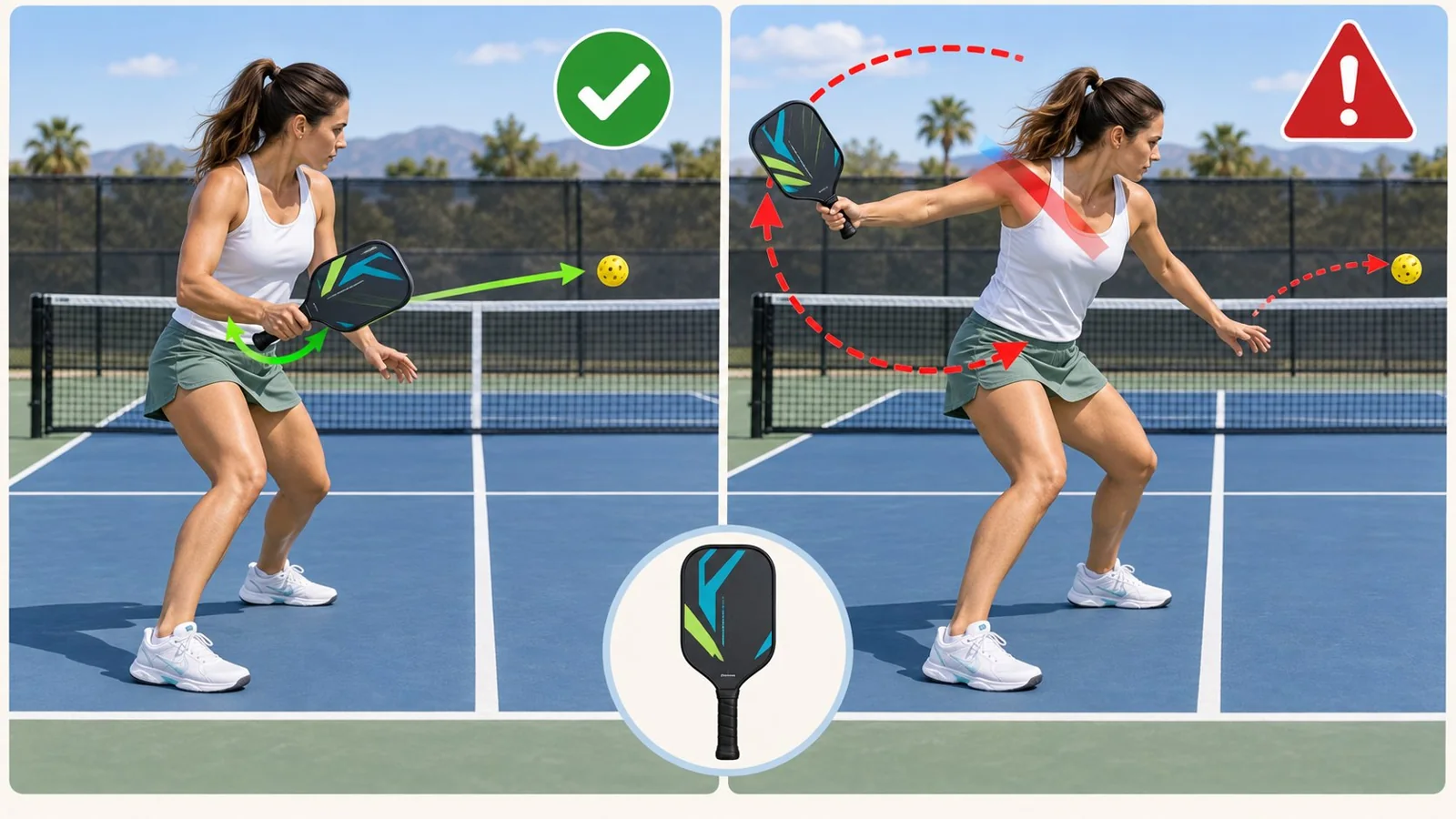
Pickleball’s compact court means there is rarely time for a large backswing. Take the paddle back only as far as needed to prepare the contact, then move forward with control. A long loop can make the contact late, send the ball too hard, and leave the player out of position for the next shot.
Practise the motion without a ball first: ready position, small preparation, contact in front, and a controlled finish. Then use gentle feeds and focus on clean contact rather than power. The compact swing should help you stay balanced while reacting efficiently in a rally.
Connect technique with the basic rules
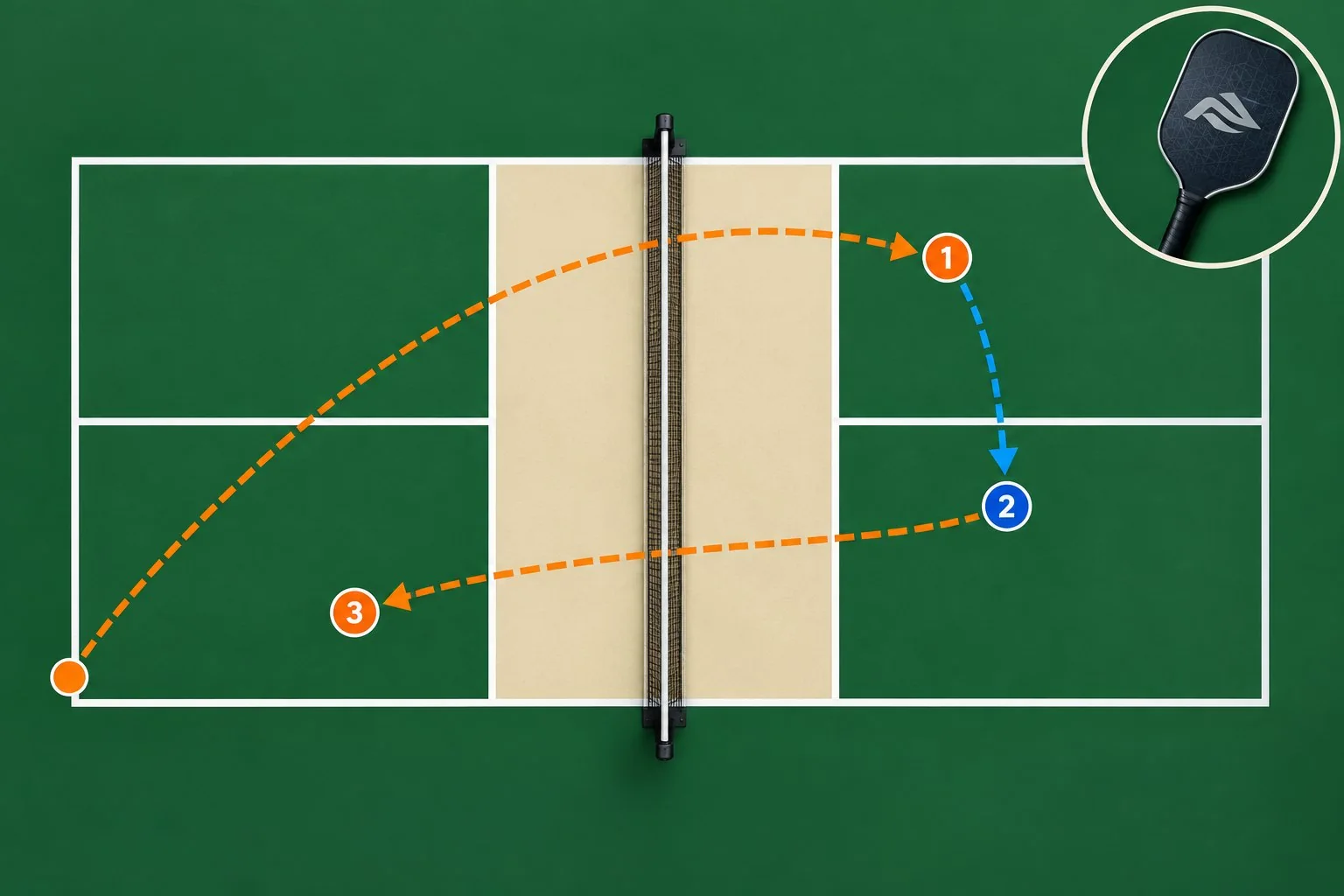
Fundamentals work best when paired with court awareness. The double-bounce rule requires the serve and return to bounce before either team can volley. The kitchen, or non-volley zone, also affects where and how you move before contacting the ball. Learn these rules alongside grip, ready position, and swing mechanics so your technique supports legal positioning.
A simple practice sequence is enough for a first session. Spend a few minutes forming the continental grip, then rehearse the ready position while a partner points to forehand and backhand sides. Finish with compact shadow swings and easy feeds. Track controlled contacts and repeatable balance, not just how hard the ball travels.
Strong pickleball fundamentals for beginners lead to longer rallies, fewer unforced errors, and better court awareness. Build these habits patiently, and later skills will have a stable base.