Pickleball Half-Volley Reset: Buy Time in the Transition Zone
Use the pickleball half-volley reset to handle low balls at your feet, buy time in transition, and reach the kitchen with better balance.
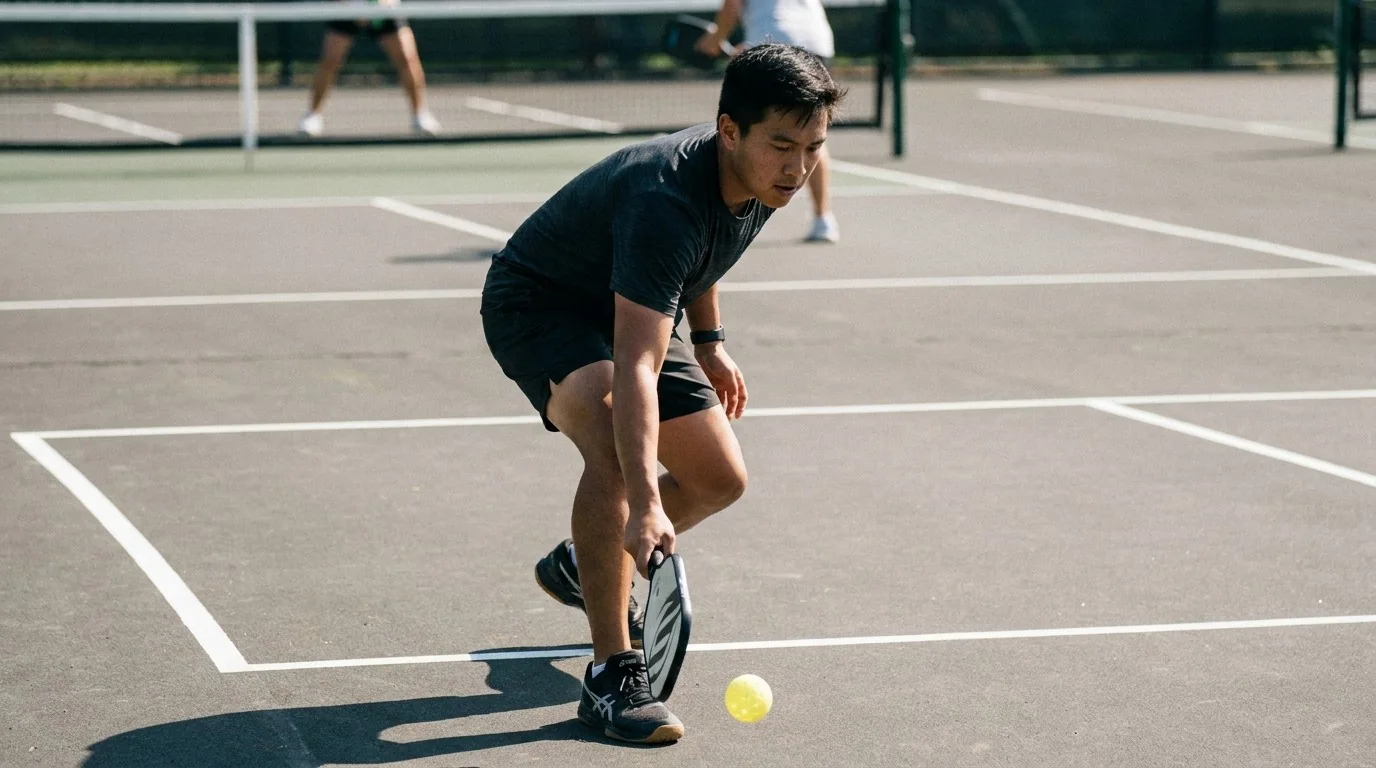
A half-volley reset is the transition-zone shot you use when the ball is about to land at your feet and you cannot comfortably wait for it to rise. You take the ball just after the bounce with a quiet paddle, lift it softly into the opponent’s kitchen, and buy enough time to recover your feet. It is not a highlight shot. It is a practical way to survive a bad position and keep moving toward the kitchen line.
When the half-volley reset is the right choice
The transition zone is the strip between the baseline and the non-volley zone line. After your third shot, you may be moving through it when the opponent sends the ball back low. If you keep running, you arrive at the ball with no base. If you stop too late, the bounce reaches your feet and your swing becomes a rescue.
Use the half-volley when the ball will bounce close in front of you and stepping back would not create enough room. The goal is not to attack. A low ball forces an upward path, so a hard swing can float high and give the kitchen team an easy attack. Your target is a soft landing in the opponent’s kitchen that makes their next ball less dangerous.
If you have time to move back and let the ball rise, do that instead. A retreat reset is often more stable than reaching for a half-volley. The choice is simple: take the ball early when your feet cannot get out of trouble, or create space and reset after the bounce has come up.
Build the contact before the bounce
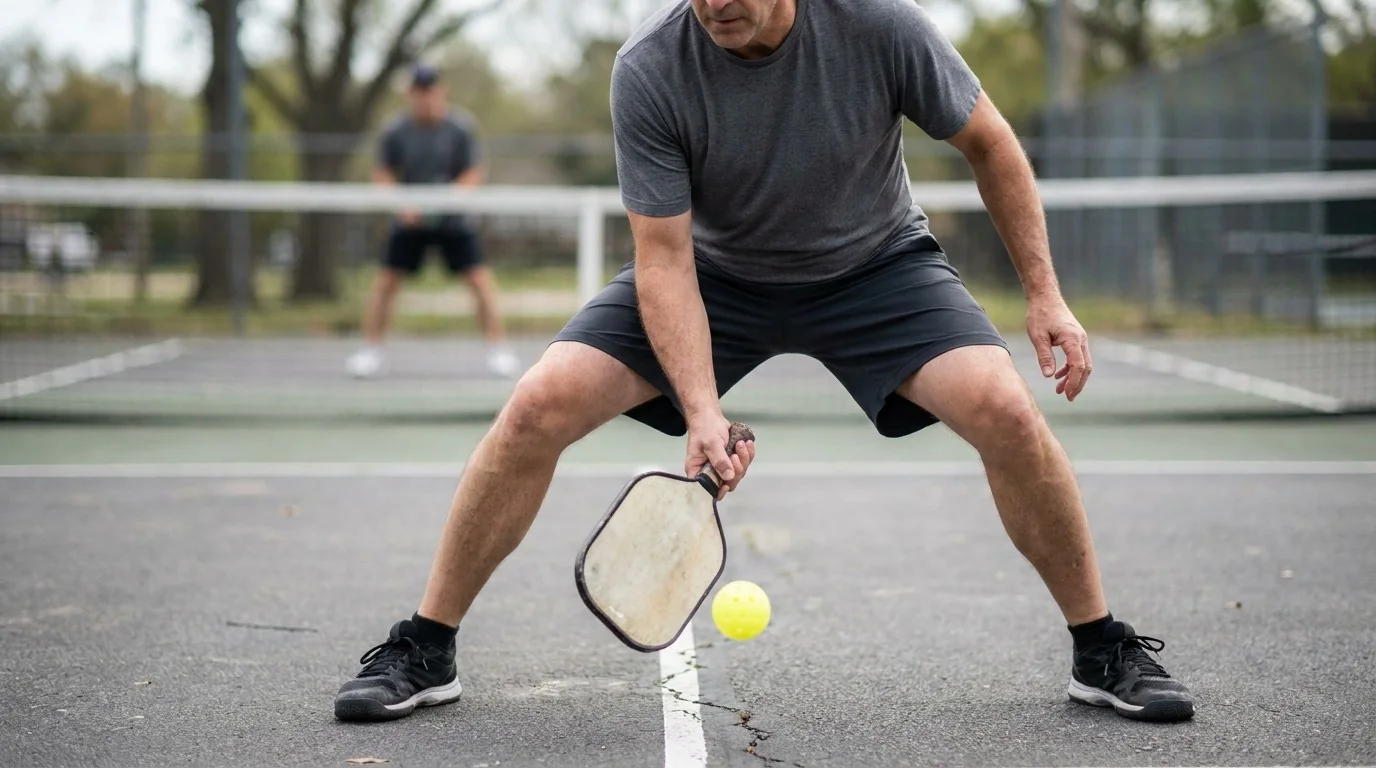
Move while the ball is travelling, then shorten your steps as it approaches. Widen your base, bend your knees, and keep your chest balanced over your feet. Your paddle should already be in front of your body. Do not begin with a backswing; there is not enough time, and extra motion adds the pace you are trying to remove.
Use a relaxed grip and let the paddle receive the ball. The swing is small and slightly upward, just enough to clear the net and send the ball downward into the kitchen. Keep the contact in front of your body. If the ball reaches your hip or passes behind you, the reset will usually pop up.
The exact contact height changes with the bounce, but the decision does not: stay low, make room with your feet, and keep the paddle quiet. You are buying time, not trying to make the ball impressive.
Half-volley sequence: stop, soften, advance
The movement has three parts:
- Stop your momentum. As the opponent prepares to hit, use a small split step or settle into a wide base. Do not swing while your feet are still carrying you forward.
- Soften the ball. Meet the ball just after the bounce with a loose grip, no backswing, and a compact upward path. Send it with enough height to clear the net, but keep the landing in the kitchen.
- Advance after contact. Recover the paddle in front, take the next controlled step, and prepare to split step again before the opponent’s next contact.
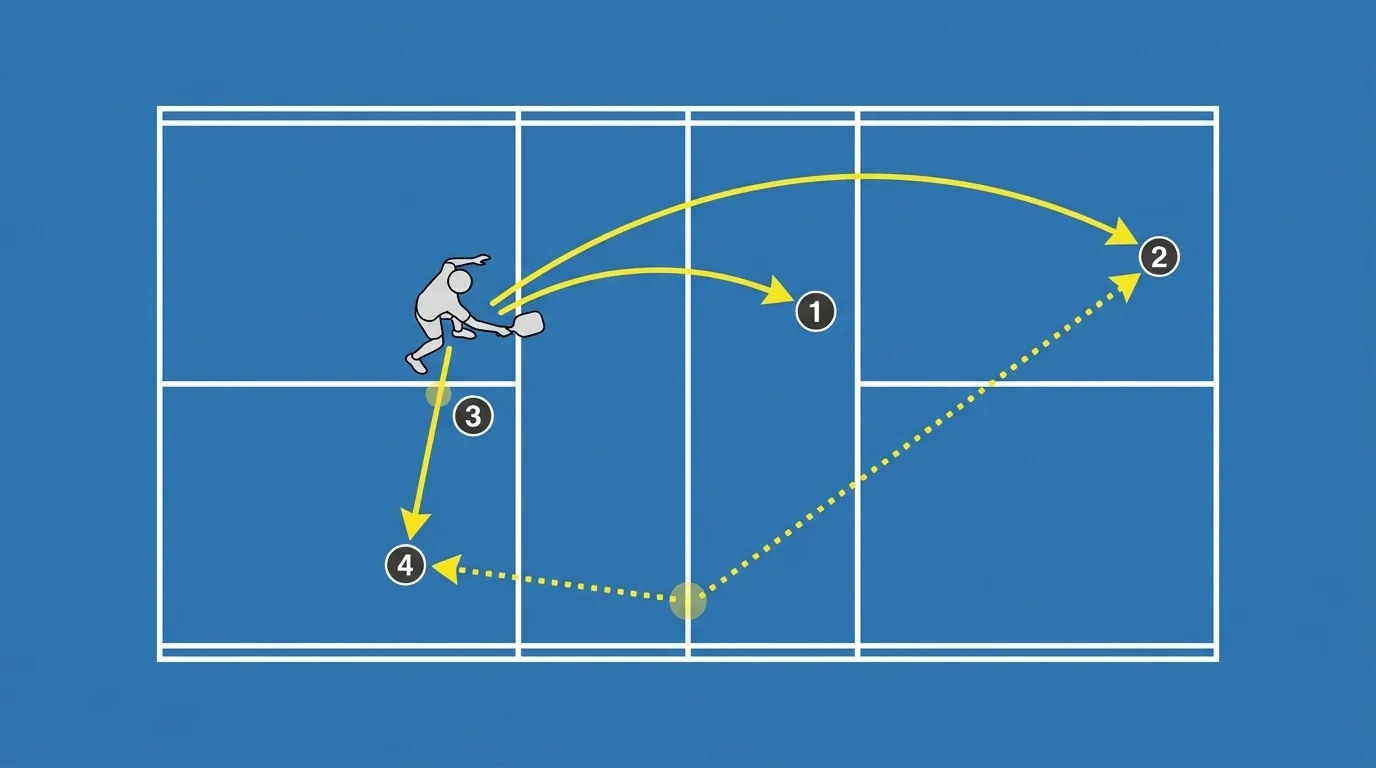
A good reset does not give permission to sprint. Read the opponent’s reply first. If the ball stays low, reset again. If the ball gives you a balanced, higher contact, you may choose a controlled counter. Your position improves one safe ball at a time.
What to do when the ball is already at your feet
If you are too late for a clean half-volley, do not force a drive. Take one small step back if possible, let the ball rise, and reset from a more comfortable height. Backing up half a step is recovery, not failure. It gives your paddle a clearer path and keeps you from leaning over the ball.
If the ball is beside you, use adjustment steps before reaching. A reach may keep the rally alive, but it often leaves your partner exposed and your next movement late. When you must stretch, prioritize a high-enough reset and recover back toward a neutral position rather than chasing the kitchen immediately.
Common mistakes include gripping tightly, standing tall, adding a backswing, and stopping after the reset. Each one makes the ball harder to control or wastes the position the reset created.
Practice the reset under movement
Have a partner stand at the opposite kitchen line while you begin near your baseline. Move forward as the partner feeds a low ball into the transition zone. Set your feet, take the ball just after the bounce, and reset softly into the kitchen. After contact, take two controlled steps forward and prepare for the next feed.
Repeat the pattern with a second feed. On one ball, make the half-volley. On another, take a small step back and reset after the bounce. The purpose is to recognise the time available rather than forcing one technique every time.
Finish with feeds to both sides. Keep the paddle in front, use a quiet grip, and count balanced recoveries rather than powerful shots. The useful finish is simple: the ball lands safely, your feet are organised, and you are ready for the next contact.