Pickleball in the Wind: Adjust Your Shots Without Losing Control
A practical wind guide for pickleball players: read the breeze, adjust shot height and margin, and keep your recovery position stable.
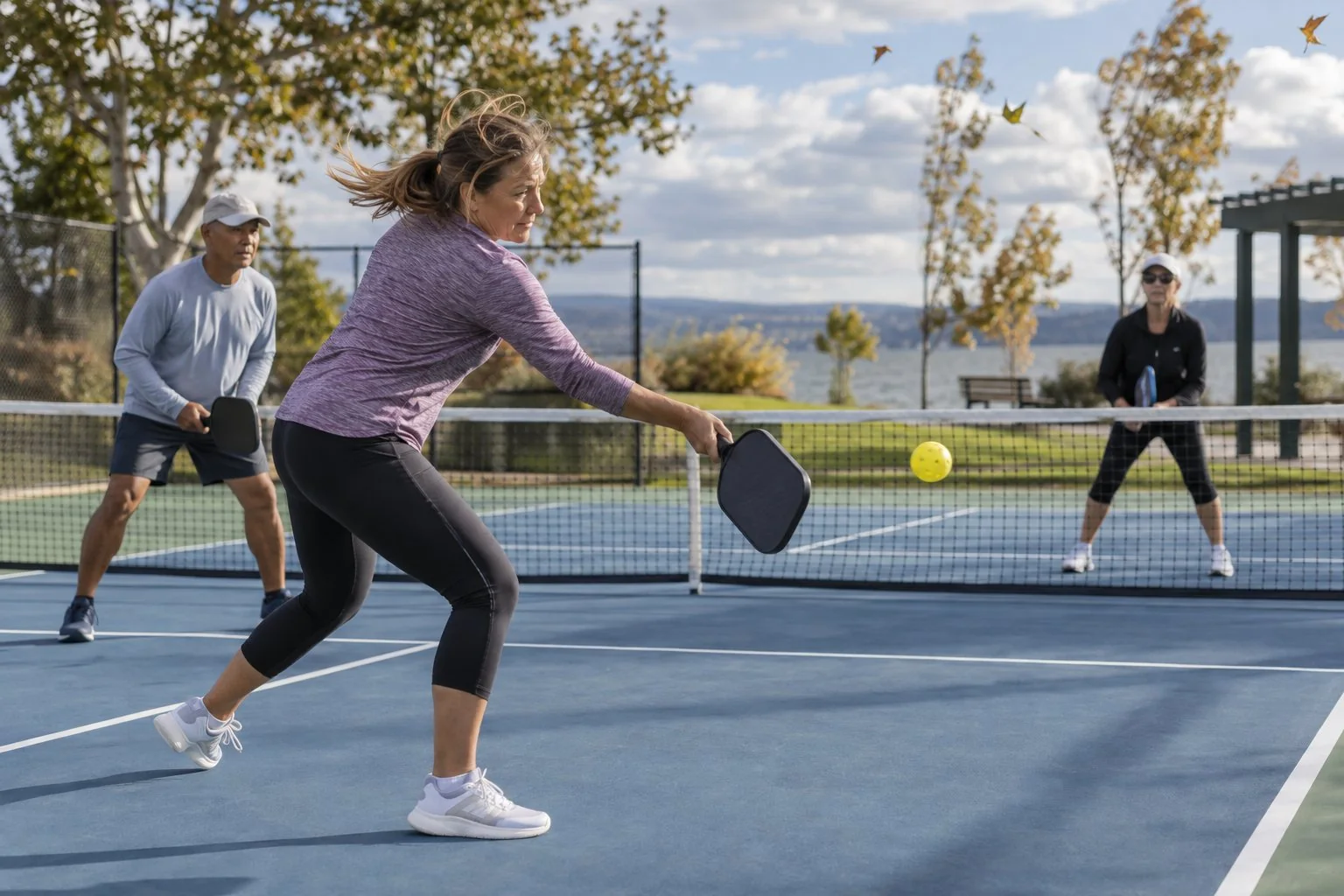
Wind changes a pickleball’s flight before it changes your technique. A familiar target can suddenly carry long, drop short, or drift sideways. The reliable response is not to swing harder every time. Read the breeze, adjust height and margin, then recover as if the next ball still matters.
Read the conditions before changing your swing
Start with a few easy balls from both ends of the court. Toss or hit them gently and watch whether the wind is steady, crosscourt, or shifting. Notice how much the ball moves after it clears the net. A steady breeze lets you make a repeatable adjustment; a gust calls for a larger target and a simpler shot.
Use the same warm-up target in both directions. If your usual deep ball lands safely one way but drifts toward the baseline in the other, the court is giving you useful information. Do not treat one rally as a permanent rule. Wind, ball condition, and surrounding buildings can all change the flight.
Adjust height, depth, and margin
With a helping wind, reduce unnecessary height and leave more room before the baseline. A high ball may keep traveling after it looks on line. Choose a larger landing zone rather than aiming for the corner, and finish your swing under control so you are ready for the next shot.
Against the wind, a controlled higher trajectory can buy clearance and depth. That does not mean adding maximum power. Extra force can make contact late, send the ball into the net, or leave you out of position. Think of height as a tool for creating time, not as permission to abandon balance.
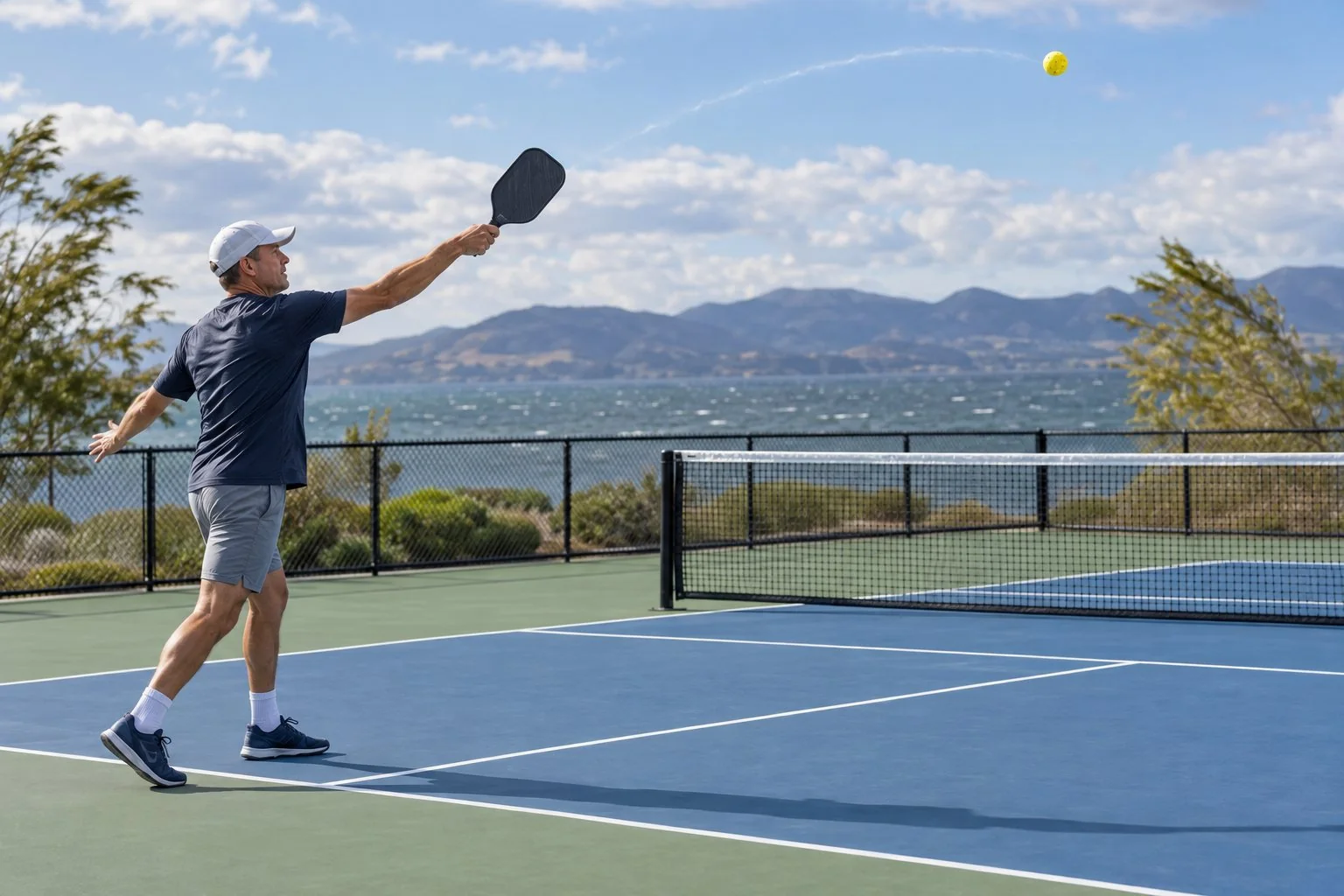
For a crosswind, aim with a wider side margin and expect the ball to move after contact. A crosscourt shot may need a slightly different starting line than it does on a calm day. Keep the target conservative until you have seen two or three balls travel the same way.
Keep your feet and recovery plan stable
Wind often tempts players to lean, reach, or rush. Set your feet before contact when possible, keep the paddle in front, and use a compact finish when the ball is moving unpredictably. After the shot, recover to a position that covers the most likely reply instead of admiring a ball that may still curve.
At the kitchen line, the same principle applies to dinks and volleys. Use enough net clearance to avoid clipping the tape, but do not float every ball high into a gust. If a reset becomes difficult, choose a wider, safer target and accept that building the rally may take an extra shot.
A simple wind practice routine
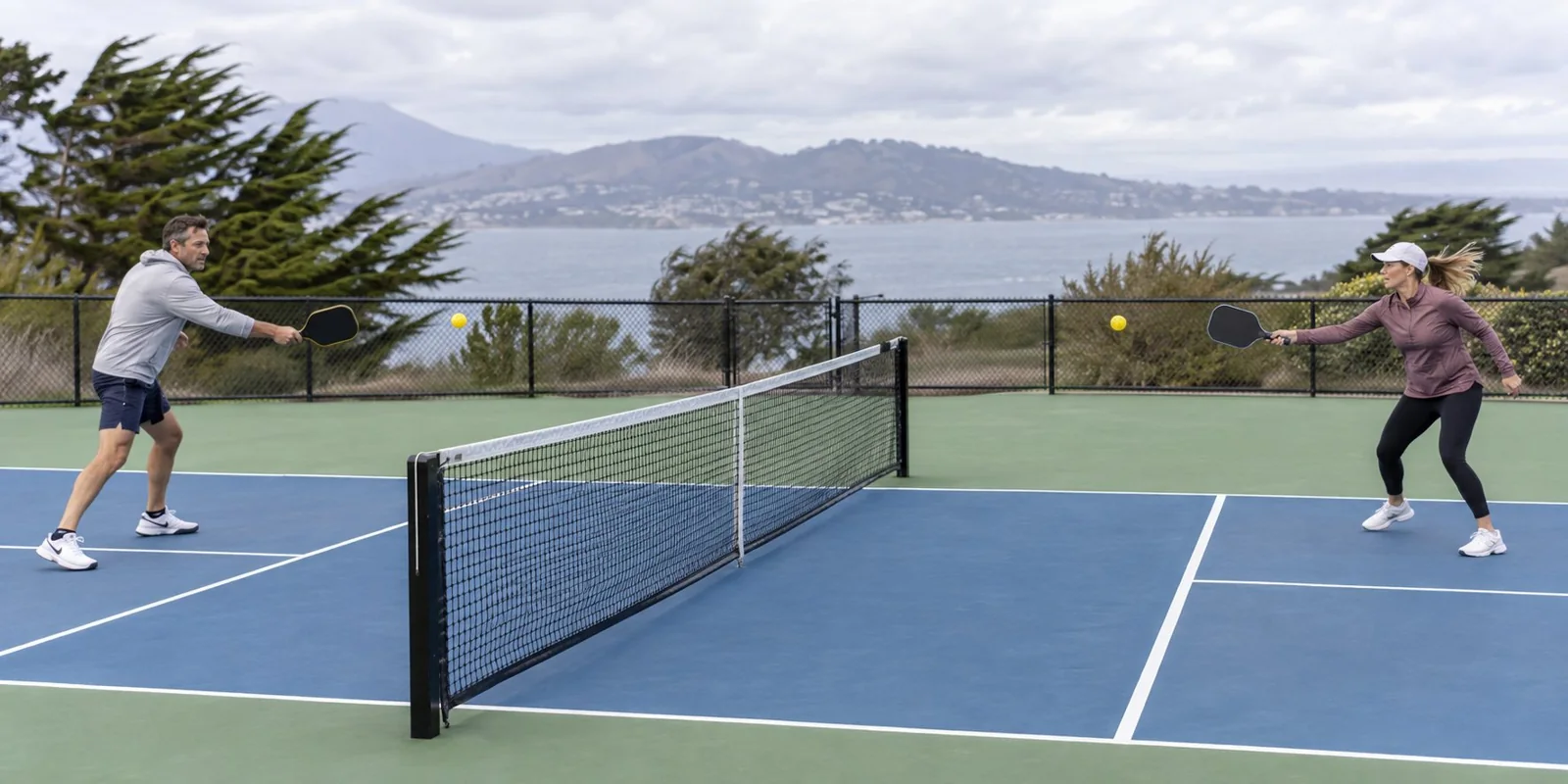
Mark or imagine a generous target zone. Hit 10 controlled balls in one direction, then 10 in the other, using the same swing intention. Record how many land in the zone and what miss appears most often: long, short, wide, or into the net. Use that observation for the next round rather than chasing a perfect-looking shot.
Finish with a few game-like points. Before each serve, return, drive, or reset, name the condition in one word: helping, against, or crosswind. Pick the safer height and margin, then move immediately. The goal is not to defeat the wind with force; it is to make a small, repeatable adjustment while staying ready for the next ball.