Pickleball Kitchen Communication: Call the Middle Ball Clearly
Use reliable footwork to reach a wide dink, keep the ball safe, protect the middle, and recover along the kitchen line.
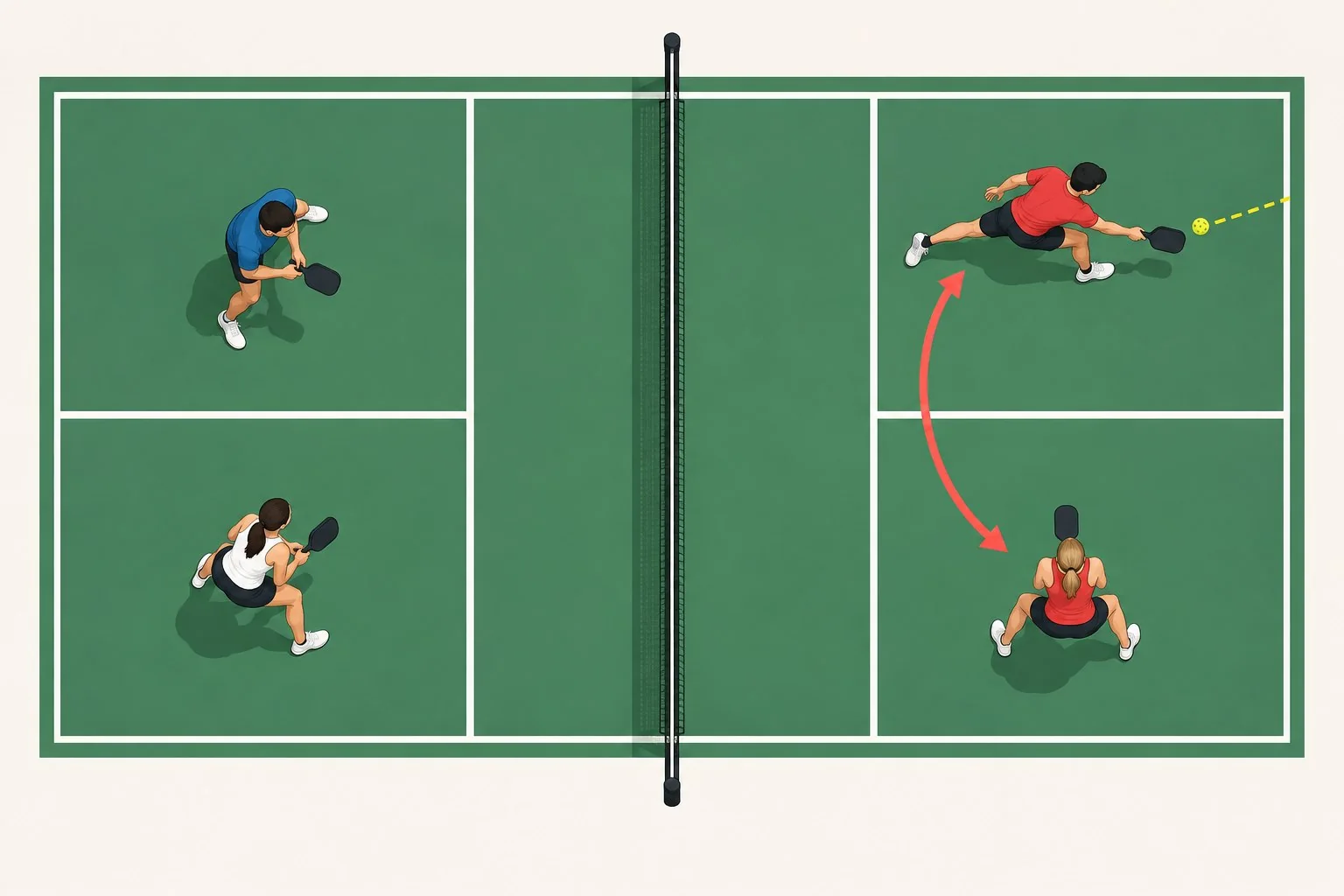
pickleball kitchen communication is a skill as much as a volume setting. In doubles, the middle ball belongs to the pair, not automatically to the player on one side. A short, early call lets both partners commit, protect the gap, and recover together instead of creating two paddles or no paddle at all.
Agree on the language before the rally
Use one-word calls that both partners understand. “Mine” means you are taking the ball. “Yours” means your partner should take it. “Switch” is reserved for a clear change after a ball pulls one player out of position. Avoid vague shouts that arrive after contact; the useful call comes early enough for the other player to stop covering the same space.
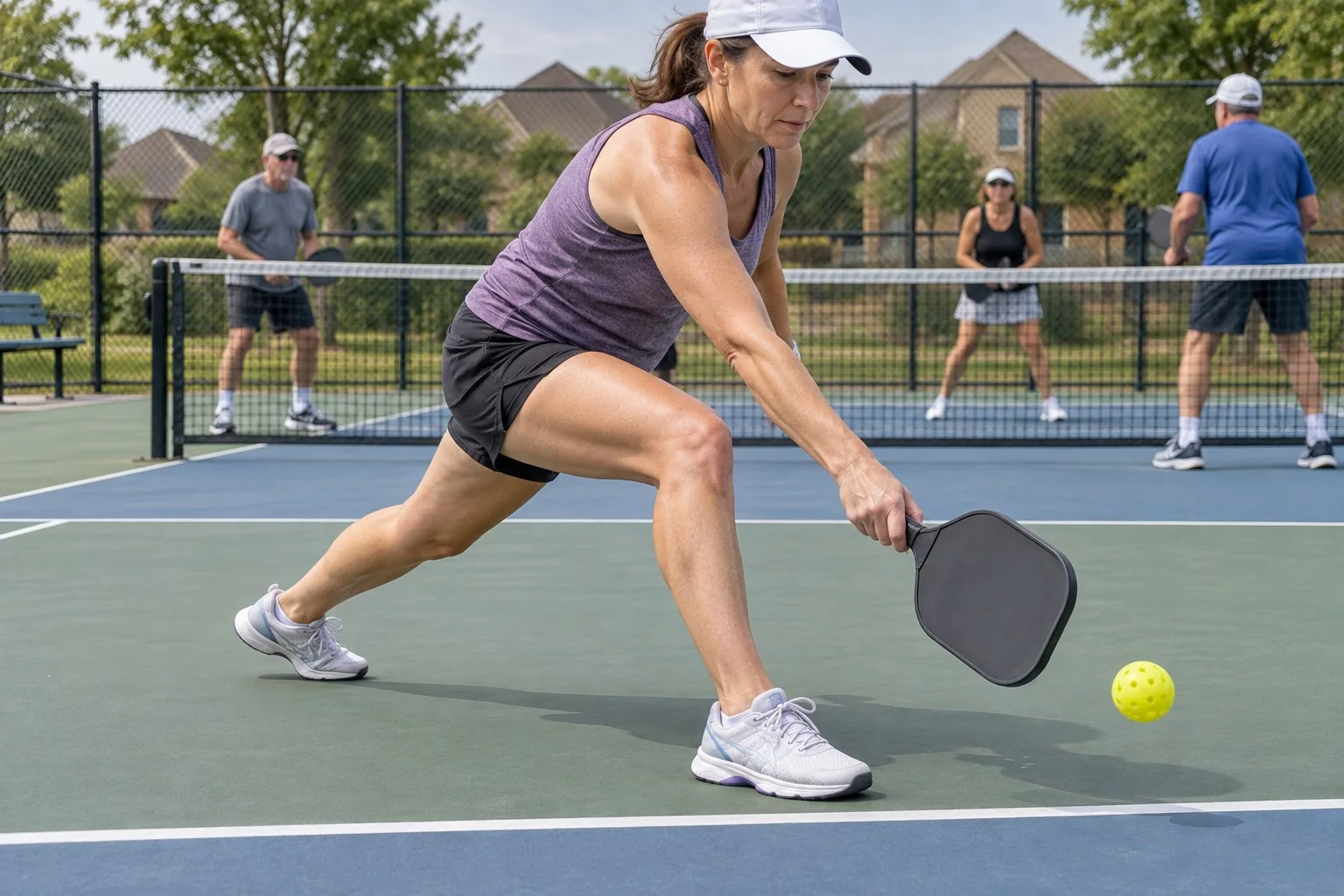
Before play, decide who normally takes a ball between the forehands and backhands. This is only a starting assignment. The player with the stronger forehand, better angle, or earlier contact may claim the ball, while the partner shades behind the decision. A rule that cannot adapt to reach and balance will create more confusion than clarity.
Call early, then move as a pair
Watch the opponent's paddle and call as soon as the ball's path is clear. The partner who is not taking the ball should slide a step toward the middle without crossing the hitter. That movement closes the open lane and makes the next ball easier to cover. Once the hitter sends the ball, both players recover to a balanced kitchen-line shape rather than admiring the shot.
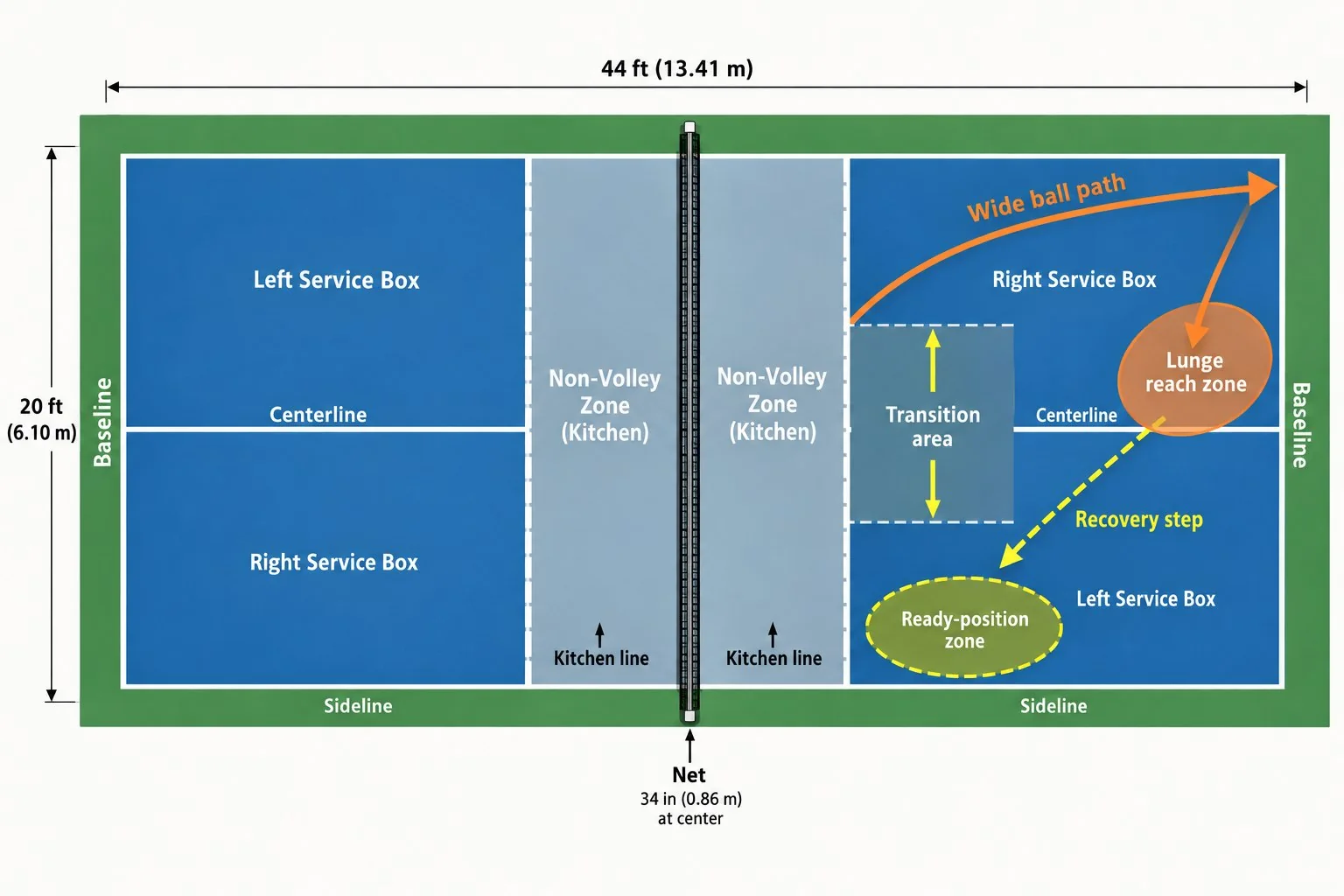
If neither player can clearly claim the ball, use a calm emergency call and choose the safer contact. A late collision is worse than a defensive dink. Keep the paddle in front, bend the knees, and let the player with the earlier and more stable contact take responsibility. After the ball is struck, reset the conversation for the next exchange; do not argue during the rally.
Train middle balls and recovery together
Start with cooperative dinks aimed at the space between partners. The feeder changes the width and height while the pair calls before every contact. The non-hitter slides with the ball and returns to cover the middle. Pause after each repetition to check three details: was the call early, did only one paddle commit, and did both players finish balanced?
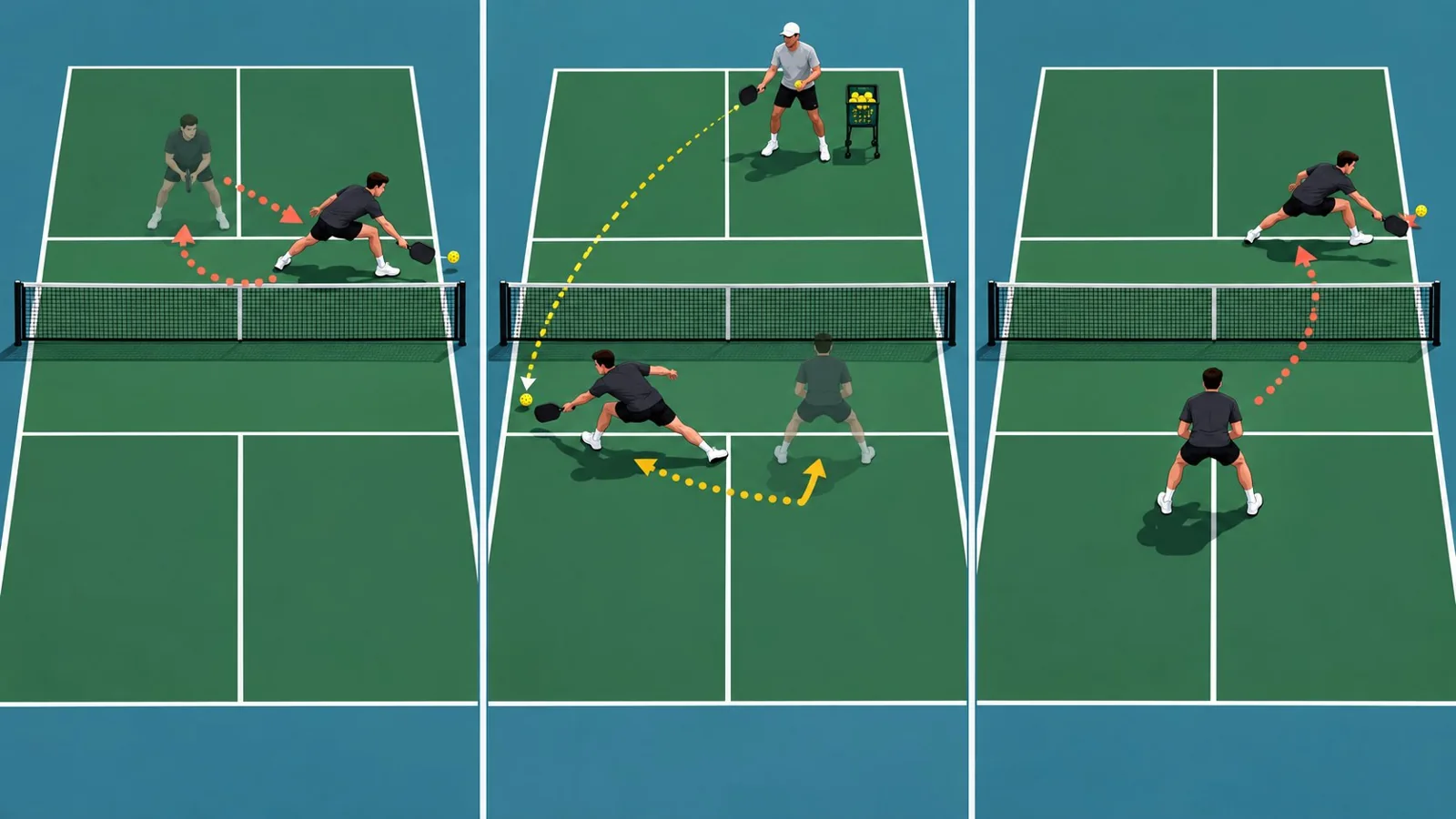
Next, add speed-ups and body balls. The call must become shorter as the ball travels faster, but the principle stays the same: identify responsibility, protect the open court, and recover together. Finish with live points in which the pair earns a quality repetition only when the call, contact, and partner movement all work.
Common errors include calling after the bounce, using a player's name instead of a responsibility call, backing away from the middle, and letting both partners chase the same ball. Keep the vocabulary small, practise from realistic positions, and review one decision at a time. With repetition, pickleball kitchen communication turns a crowded middle into a shared system that gives both players clearer next steps.