Pickleball Kitchen Feed Drill: Catch, Dink, and Recover
A practical pickleball footwork drill that progresses from catches to dinks and live feeds, teaching you to move behind the ball before contact.
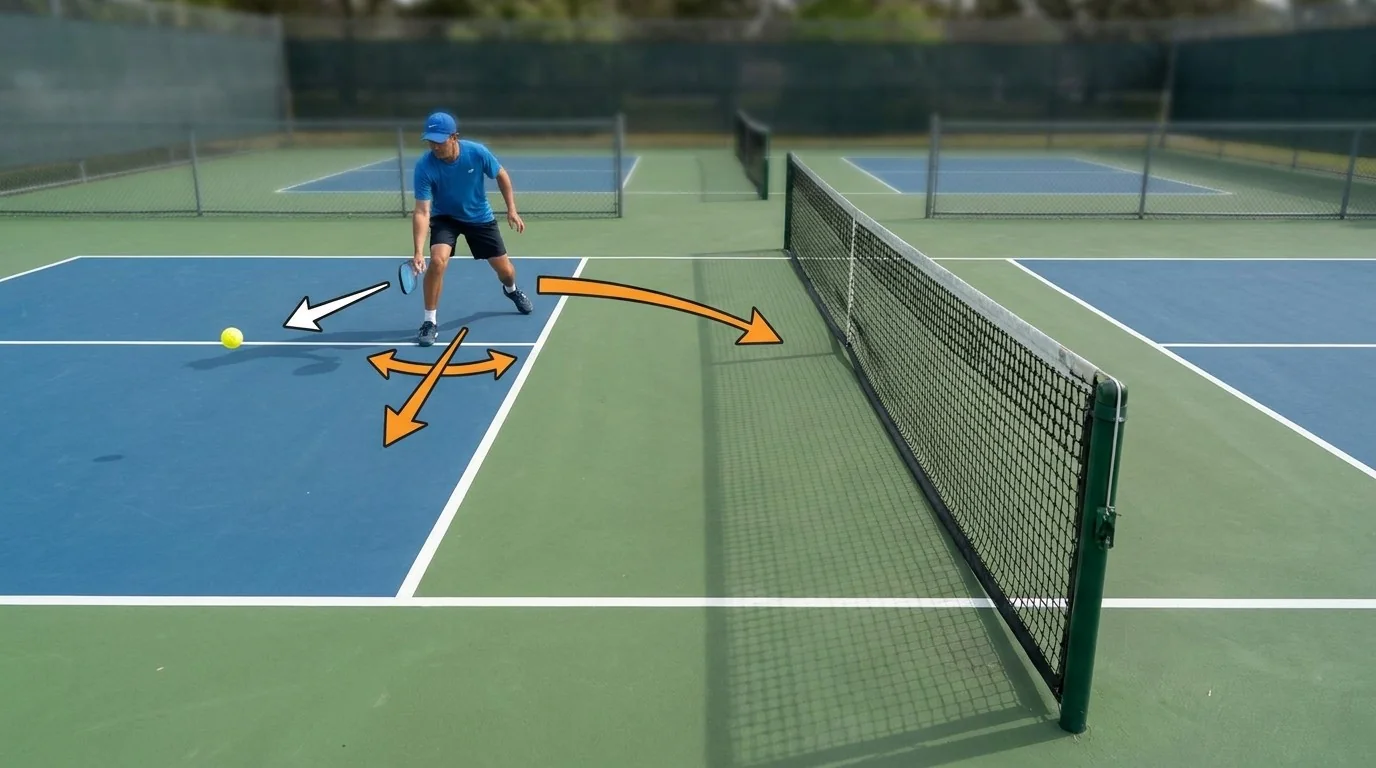
A kitchen-line dink starts with your feet. This drill teaches you to move behind balls sent to either side, arrive with balance, and contact the ball in front of your body. Begin at a slow pace so the movement becomes repeatable before you add speed.
Build the movement pattern
Stand at the kitchen line directly across from a partner. Use a comfortable athletic stance and keep the paddle ready in front of you. Do not lunge for the feed. Move your feet so the ball comes in front of your left or right knee while your base stays stable.
When the feed goes left, take short adjustment steps, get your body behind the ball, and catch it in front of your left knee. Return to a balanced ready position. Repeat on the right, moving behind the ball before catching it in front of your right knee. Keep each catch quiet and controlled. At this stage, you are practicing position, not speed.
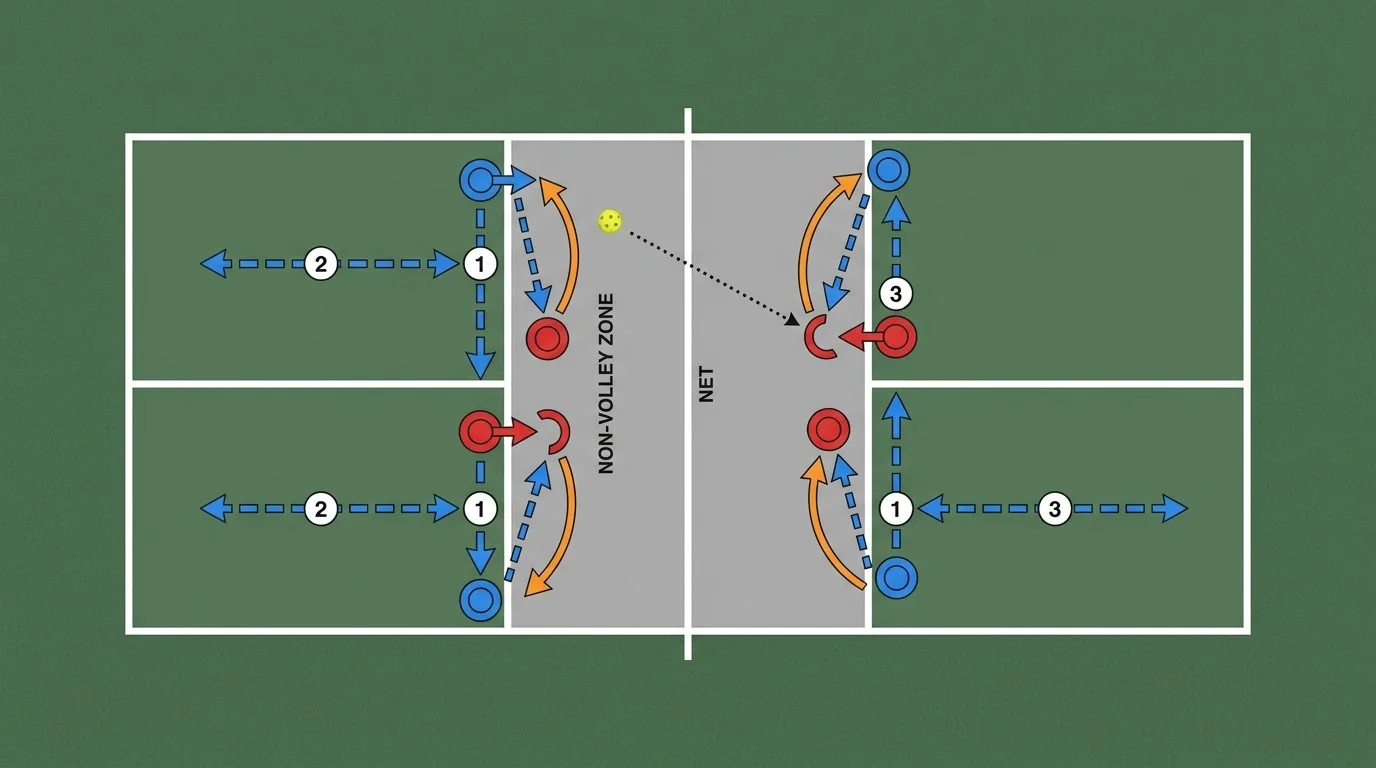
Progress through three stages
1. Catch and reset
Have your partner toss the ball several feet to one side, then to the other. Move behind each toss, catch it in front of your body, and return to your starting stance. Pause briefly after every catch. Check that your feet are balanced and your shoulders have not fallen away from the ball.
2. Replace the catch with a dink
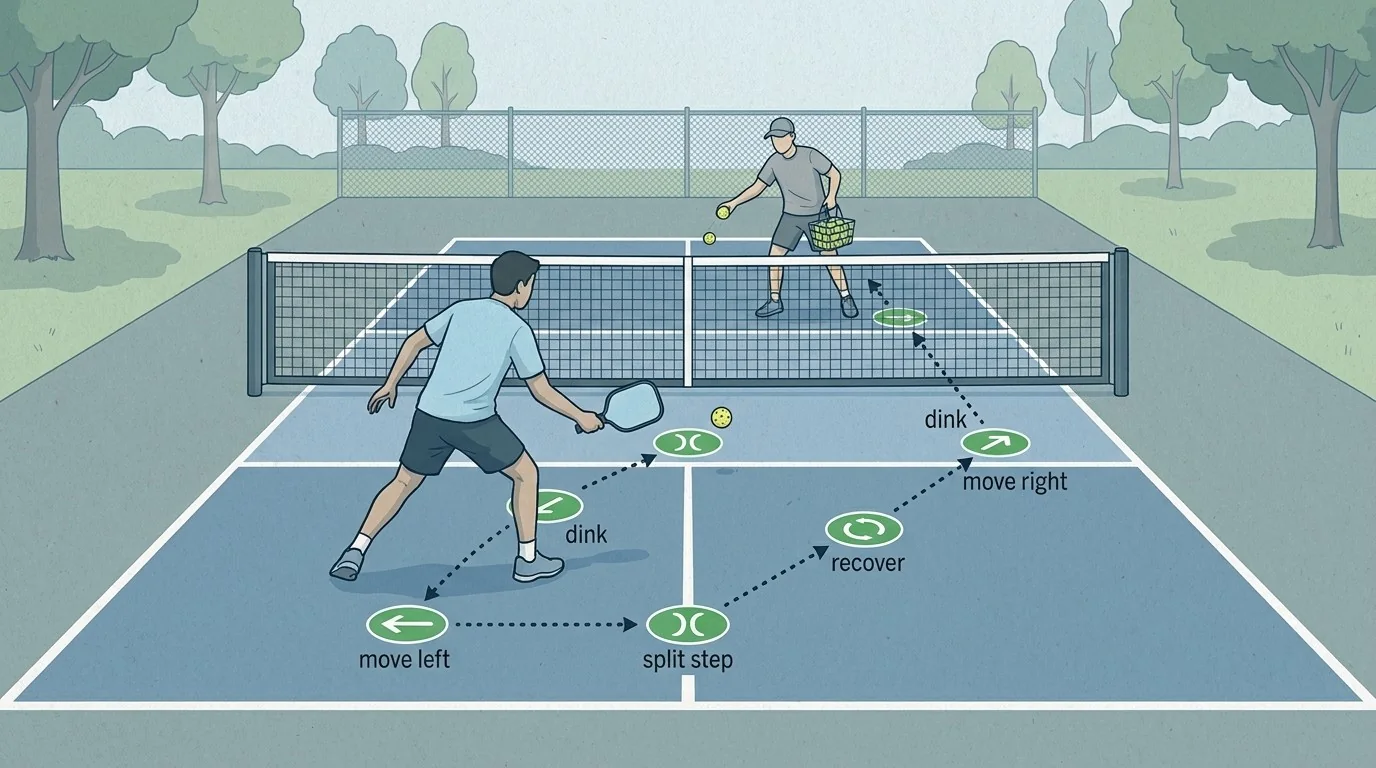
Keep alternating the feed, but send the ball back with a dink instead of catching it. Move first, then use a compact paddle motion. Aim straight back to your partner so the drill remains about footwork and contact, not aggressive placement. The partner can catch your return and feed the opposite side.
3. React to live dinks
When the pattern feels comfortable, have the partner hit gentle dinks left and right rather than tosses. Continue moving behind the ball before contact. Keep your feet active, maintain a low base, and recover to the ready position after every shot. Increase the pace only as long as the movement stays controlled.
Watch for these mistakes
Do not reach with your upper body while your feet stay still. That often leaves the contact point beside or behind you, making balance and direction harder to control. On ordinary side-to-side movements, avoid crossing your feet. Also, do not let a wide feed pull you so far that you lose your kitchen-line position.
Use short steps and keep the paddle ready as you move. Your final step should help you settle behind the ball, not carry you past it. After contact, recover at once so the next feed does not find you leaning toward the previous side.
A simple practice plan
Start with ten left-and-right catches. If your base remains balanced, complete ten alternating dinks. Rest briefly, then do two rounds of live feeds at an easy pace. In the last round, ask the feeder to vary the width slightly while keeping the ball comfortable enough for good movement.
Progress is not measured by how far you can stretch. It is measured by how often you arrive behind the ball, contact it in front of you, and recover ready for the next exchange. Consistent footwork gives the dink a steadier foundation and makes quick kitchen exchanges easier to handle.