Pickleball Kitchen Footwork: A Three-Stage Catch-and-Move Progression
Build better kitchen movement with a three-stage pickleball footwork progression: catch the ball, add controlled dinks, and finish with live side-to-side feeds.
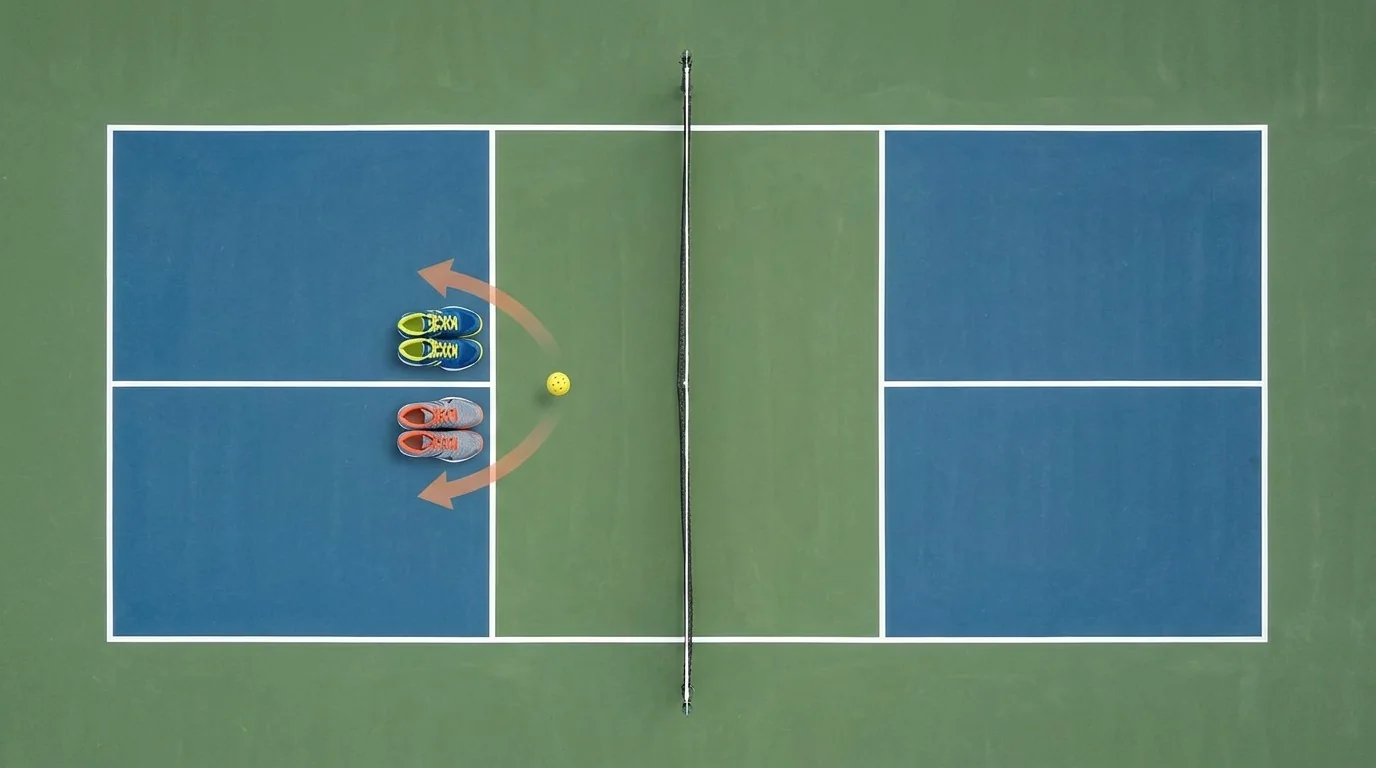
Kitchen-line footwork is easier to learn when the drill asks your feet to solve one problem at a time. Start by catching the ball while you move behind it. Add the paddle only after the position feels familiar, then use the same movement in a cooperative dink exchange. That order keeps balance and spacing ahead of reach and hand speed.
The goal is not to cover the most ground. It is to arrive behind the ball with enough control to contact it in front of the appropriate knee, then recover for the next feed. Short steps, a comfortable knee bend, and a stable base make that repeatable.
Why footwork matters at the kitchen line
A ball only a few feet away can still produce a poor dink if your feet stop too soon. Reaching from a fixed stance often leaves the ball beside the body, where controlling height and direction becomes harder. Moving behind the ball gives you room to meet it in front and keeps your next movement available.
Use small lateral steps rather than one oversized lunge. Keep your knees comfortably bent and avoid leaning so far that the contact itself becomes a recovery problem. Good movement ends with balance, not with a desperate stretch.
Progression 1: Catch and move
Stand at the kitchen line opposite a partner. Have the partner toss the ball several feet to your left. Move your feet until your body is behind the toss, then catch it in front of your left knee. Toss it back and return to a ready position.
Repeat on the right, moving behind the ball before catching it in front of your right knee. Do not lunge and snatch at the feed. If the catch is not comfortable in front, shorten the toss or take one more adjustment step. This stage teaches the position without asking paddle control to compete for your attention.
Progression 2: Add the paddle
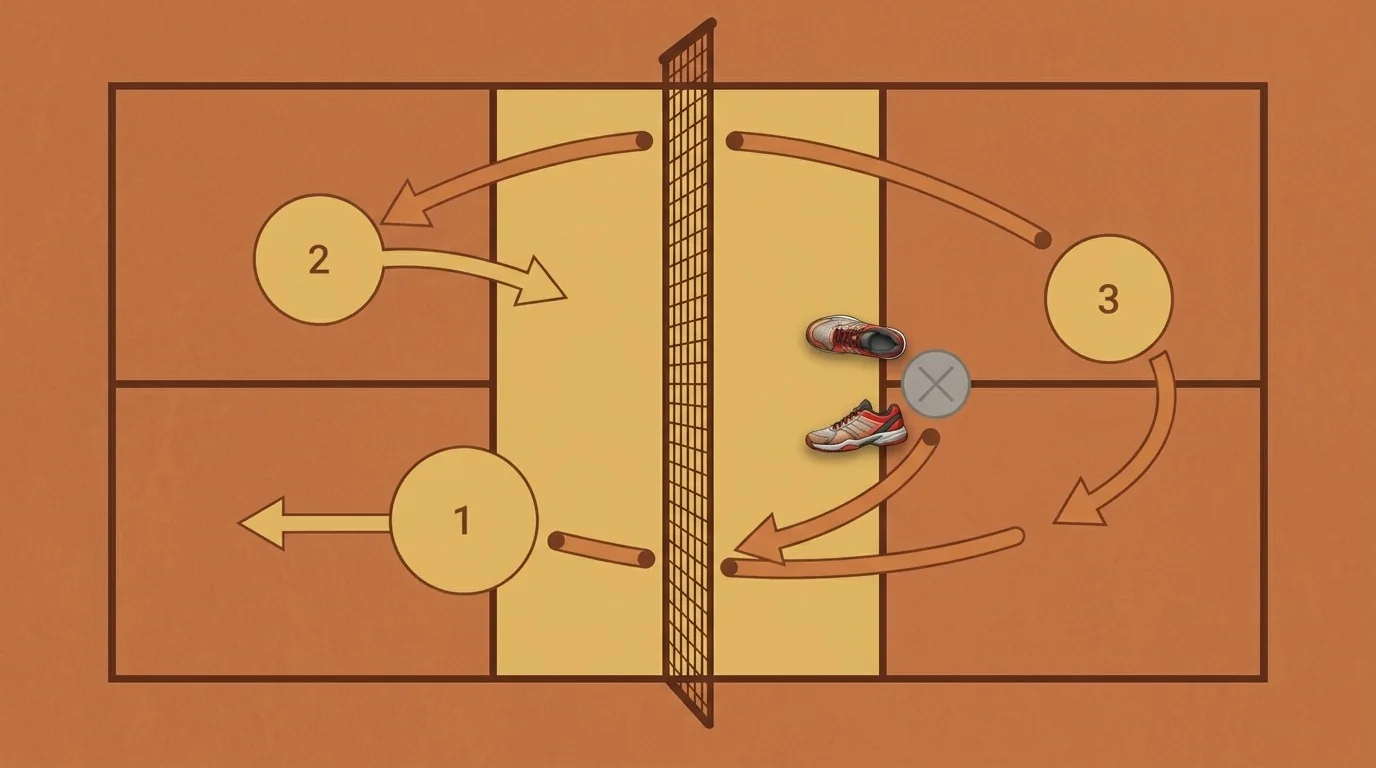
Repeat the same left and right movement, but replace the catch with a controlled dink back to your partner. The partner should continue tossing the ball rather than hitting a difficult feed. Move first, get behind the ball, and make a compact contact in front of your body.
After the dink, return to a neutral stance before the next toss. Keep the swing small and let your feet create the spacing. If contact becomes late or your balance breaks, go back to the catch-and-move version for a few repetitions. The reset is part of the drill, not a sign that you have failed.
Progression 3: Live dinking
Now let your partner use the paddle to send cooperative dinks alternately to your left and right. Read the ball, move behind it, and send the dink directly back so the exchange can continue. The feed should challenge your movement without becoming a test of how far you can stretch.
Begin slowly enough to keep the pattern intact. Increase the pace only when you can move, make contact, and recover without reaching. A clean sequence on both sides is more useful than a fast rally that hides rushed feet.
Correct the common errors
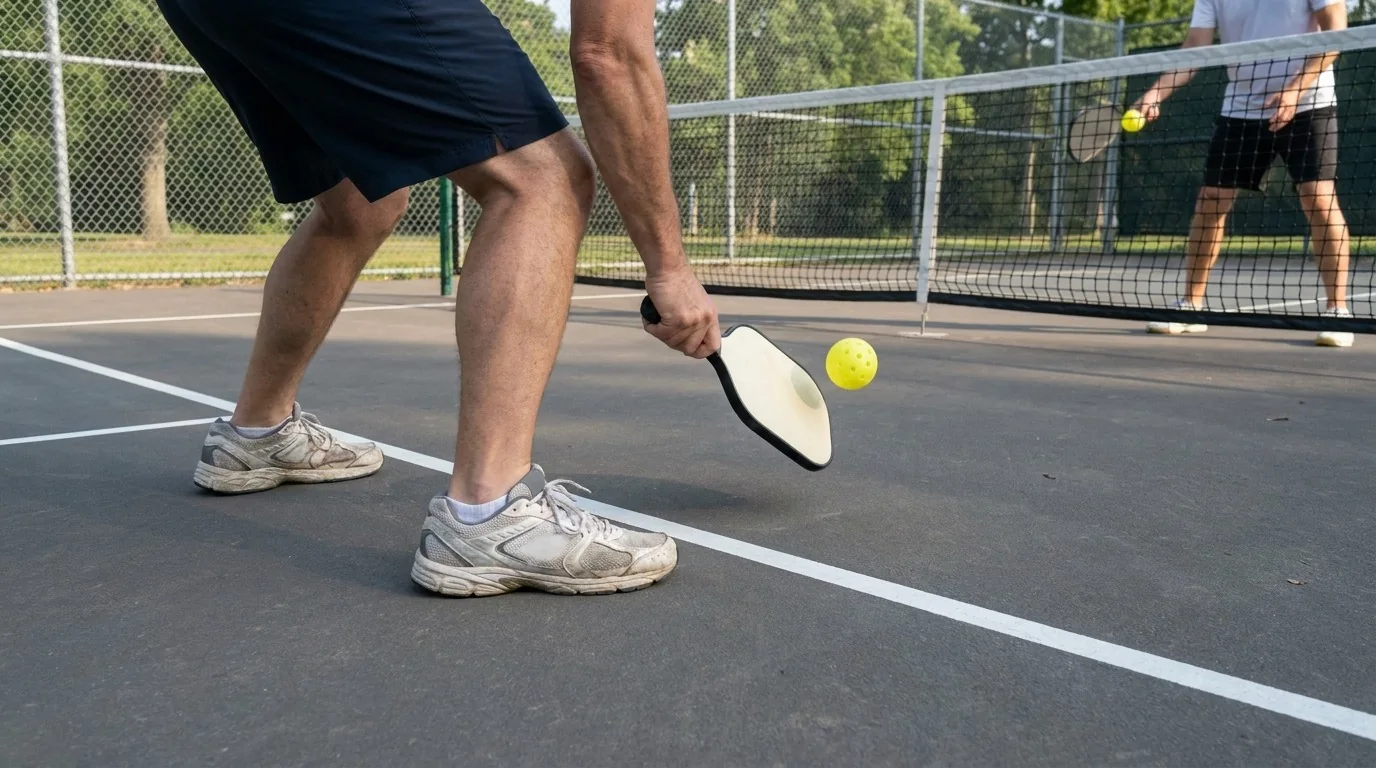
- Reaching instead of moving: take an adjustment step and get your body behind the ball.
- Crossing the feet too early: use short lateral steps until the distance calls for a larger move.
- Stopping after contact: recover to a ready stance before the next feed arrives.
- Making the drill too fast: slow the toss or dink until balance and contact are repeatable.
- Watching only the ball: keep enough awareness of your partner and court position to anticipate the next feed.
Organize a short practice
Begin with catch-and-move repetitions on both sides. When that position feels comfortable, add the paddle for controlled dinks. Finish with live cooperative feeds, and change sides regularly so one direction does not become the only familiar pattern.
Keep the session brief and deliberate. Each stage adds one demand while preserving the movement lesson from the stage before it. If the feet move first, the contact becomes easier to repeat and the kitchen exchange becomes easier to manage. Before increasing speed, check three things: did you arrive behind the ball, did you contact it in front, and did you recover ready for the next feed?