Pickleball Kitchen Footwork: Stay Balanced Through the Dink Exchange
A practical guide to pickleball kitchen footwork: split-step timing, small shuffles, balance before contact, partner spacing, recovery, and drills.
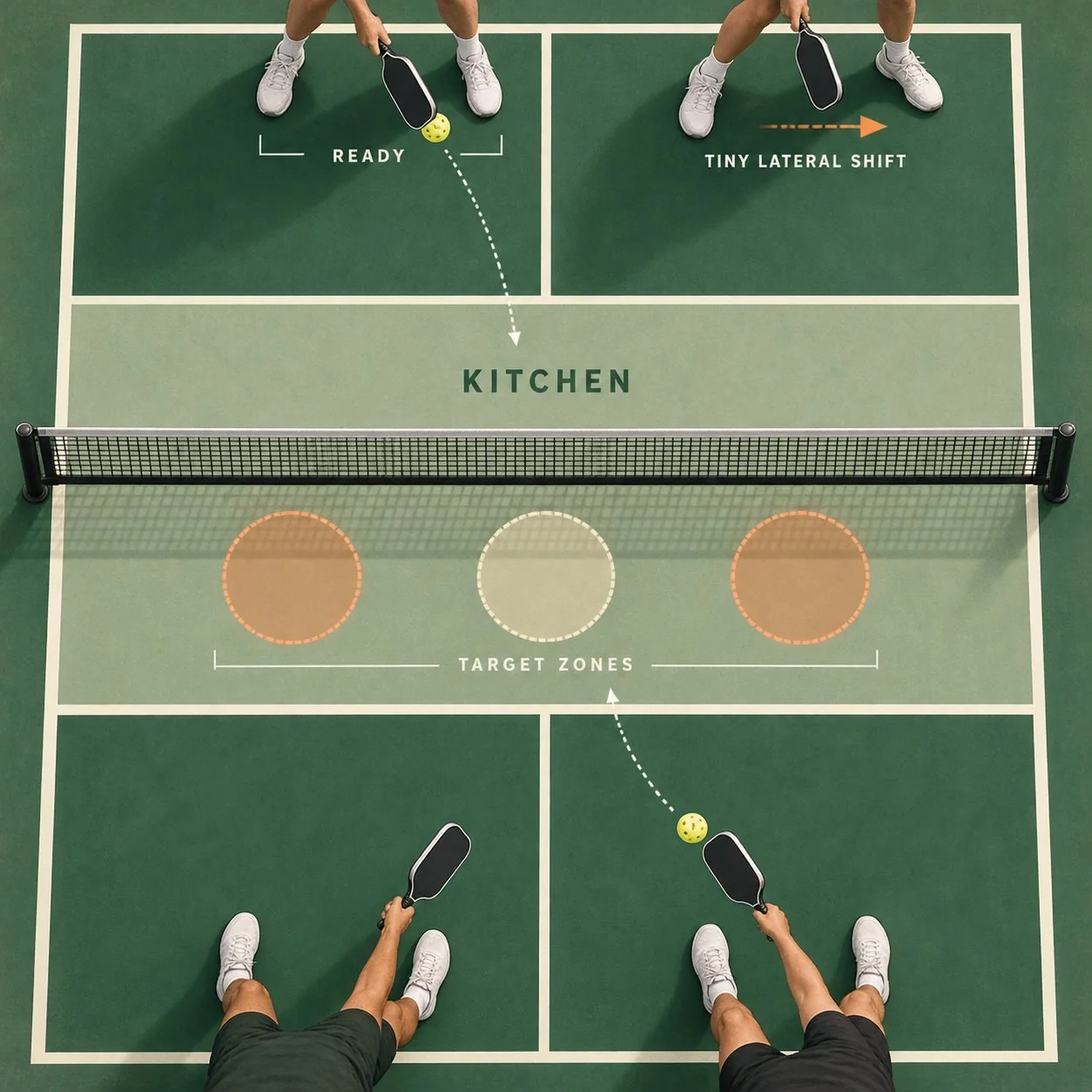
A dink exchange can look quiet while demanding constant movement. At the kitchen line, the best footwork is rarely a dramatic sprint. It is a sequence of small adjustments that keeps your paddle in front, your balance available for the next ball, and your partner’s space protected. The goal is not to stand perfectly still; it is to arrive early enough that the ball can be played without a reach or a lunge.
Start in a position that can move
Stand with your feet about shoulder-width apart, knees softly bent, and your weight slightly forward without tipping onto your toes. Keep the paddle up in front of your torso and let your eyes track the opponent’s contact. A useful ready position leaves room for a short push in either direction. If your feet are touching, your weight is on one heel, or your paddle has dropped beside your thigh, the first adjustment will take longer than the dink allows.
Use a small split-step as the opponent contacts the ball. It does not need to be a jump. Simply unload the feet and land balanced, ready to move toward the ball’s direction. The timing matters more than the size of the movement: land as the ball begins its flight, not long before it.
Move before you reach
When a dink travels to your forehand or backhand side, move the feet first and keep the upper body quiet. A short shuffle is usually the safest choice for a nearby ball because it preserves your orientation to the net and makes recovery simple. Take the smallest step that puts the ball in front of your body. Reaching with the arm may save one step, but it often leaves the paddle face unstable and pulls the shoulder away from the next shot.
For a ball that is wider, use two or three controlled shuffles rather than crossing your feet in a hurry. Keep the chest generally facing the net and finish with a base that can push back toward your original position. If the ball is low or forces you outside comfortable contact, prioritize a soft reset or a high-margin dink instead of trying to manufacture an attacking angle.
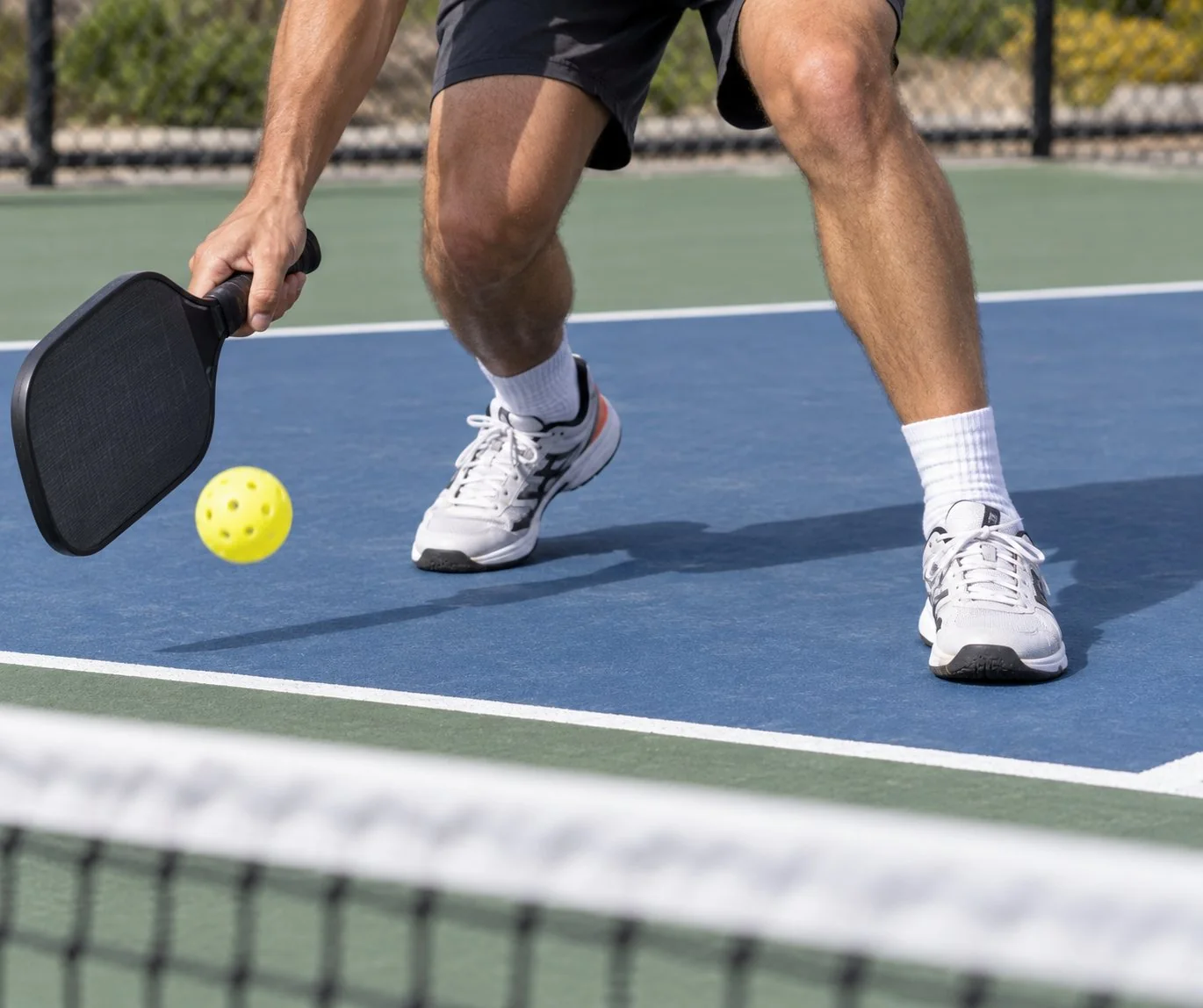
Keep the recovery inside the shot
After contact, do not admire the ball. Recover immediately to a balanced position that covers your half of the kitchen and maintains spacing with your partner. If you moved toward the sideline, recover diagonally rather than drifting straight backward. If you stepped toward the middle, communicate and return to your shared coverage instead of crowding the partner.
A simple cue is “step, hit, replace”: step to create comfortable spacing, hit with a compact motion, then replace your feet under your hips. The cue is more useful than chasing a fixed number of steps because every dink arrives at a different height, speed, and angle.
Build the pattern with progressive drills
Begin with shadow repetitions. Start in ready position, perform a tiny split-step, shuffle one direction, pause in a stable contact position, and recover. Keep the paddle up throughout. Then ask a partner to feed gentle dinks to alternating sides. Your only scoring question at first is whether you moved before reaching.
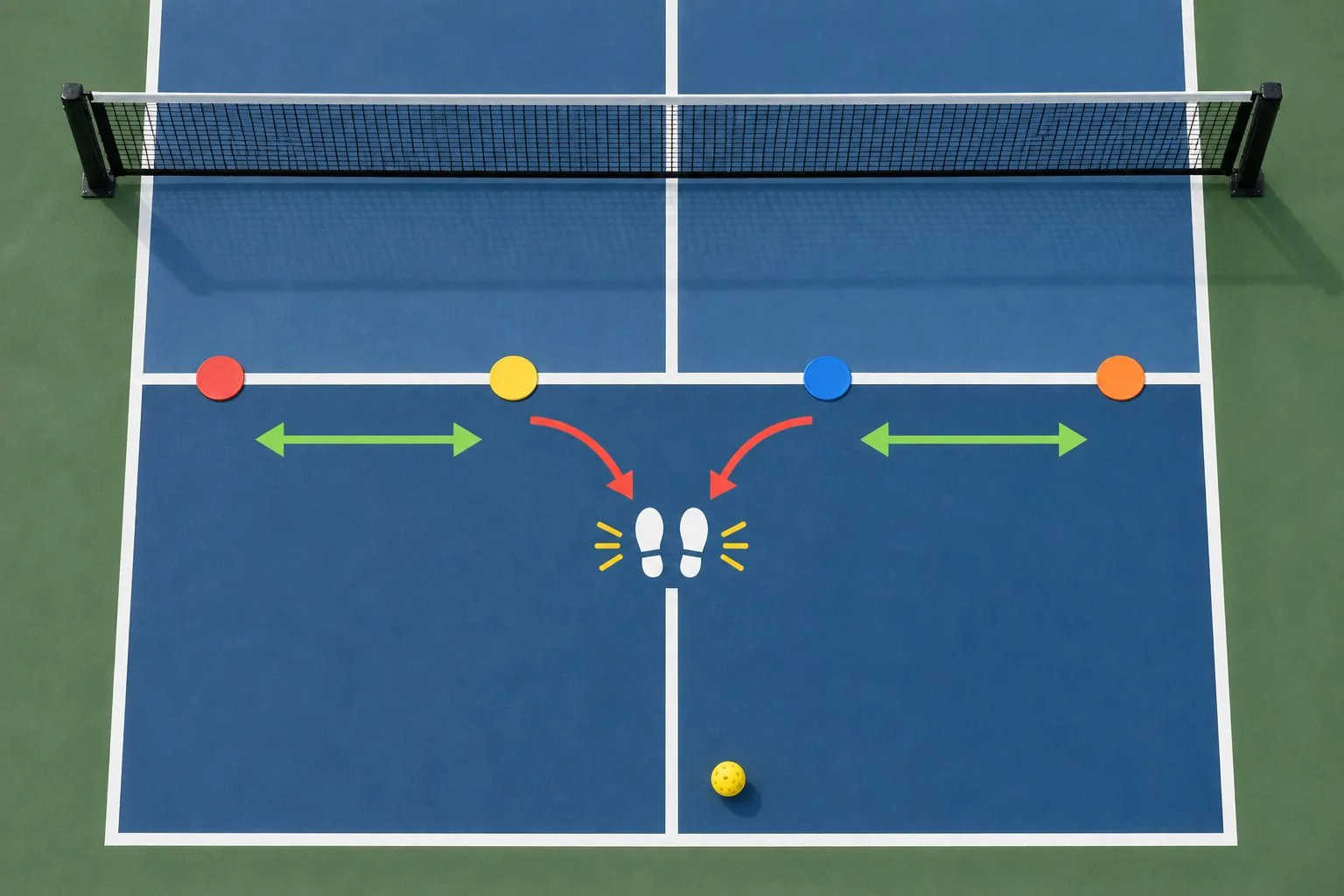
Next, place two or three flat markers just behind the kitchen line and practice landing in balance after each adjustment. Add a decision feed: one ball close enough for a shuffle, one wider ball requiring another step, and one low ball that calls for a reset. The drill should reward a safe choice and a recoverable position, not only a winning shot.
Common errors are easy to recognize. A large backswing often follows late feet. Straight legs make the paddle rise and fall with the body. Crossing the feet during a short lateral move can make recovery awkward. Finally, players sometimes chase the ball so far that they abandon partner spacing. Record a short practice session from the side; if your head surges forward or your feet stop before contact, reduce the target and slow the feed.
Good kitchen footwork is quiet, repeatable, and connected to the next decision. Move early enough to create space, keep the contact compact, and recover before the opponent’s reply becomes urgent.