Pickleball Kitchen Recovery Distance: Hold Space After a Dink
A practical pickleball dink recovery routine for balanced feet, a neutral paddle, middle protection, opponent-contact timing, and progressive drills.
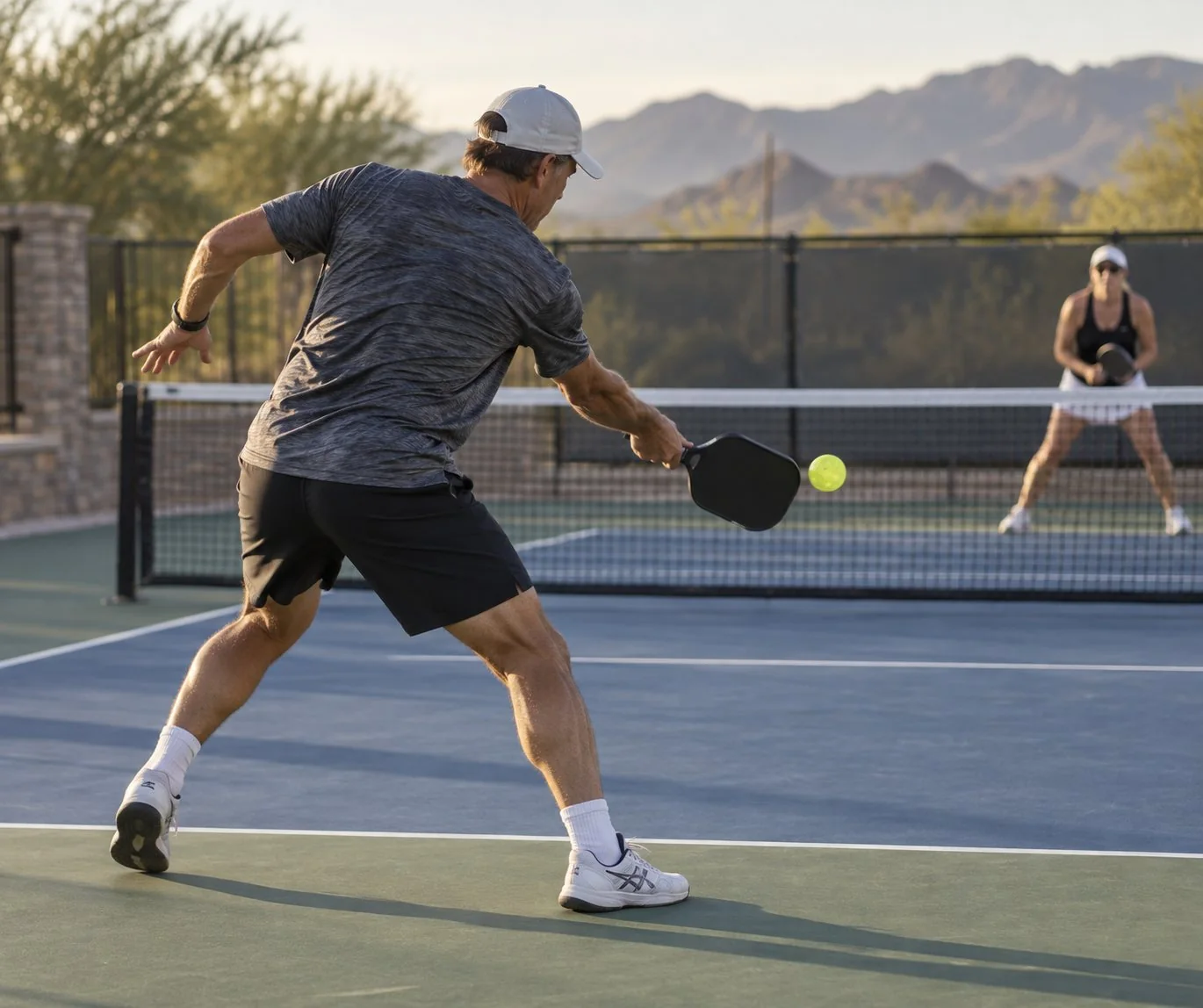
A dink is only half the job. Once the ball leaves your paddle, you still need to arrive in a useful position for the reply. Bring the paddle back, regain your balance, and recover toward the space your opponent is most likely to attack. That small pause after contact is what keeps a soft exchange from turning into a late reach.
Finish the shot with your base intact
Start by making contact in front of your body. Keep the swing short and let the follow-through finish without pulling your chest or feet out of position. As the ball travels, bring the paddle back to a neutral spot in front of your torso. Keep both feet available, bend your knees comfortably, and shift your attention to the opponent's paddle.
Do not interpret recovery as standing still. Finish the stroke, then make the next movement easy. If you dink from a wide position, recover toward the court space that protects the middle while still respecting the sideline you exposed. If the ball gives you time, use a small adjustment step before you settle. Short steps are easier to change than a big lunge.
Let the opponent's contact guide you
Your recovery is a response to the opponent's contact, not just to the direction of your own dink. As the opponent prepares, watch whether the paddle is low and controlled, high enough to speed up, or traveling across the body for an angle. Land your split step as the ball is contacted so you can push either way.
A patient crosscourt dink usually calls for a position that covers the middle without giving the sideline away. When the ball rises, expect a quicker attack and keep the paddle higher. If your own dink has pulled you wide, do not run automatically to the exact center. Recover to the angle that covers the most dangerous lane and keeps the next ball in front of you.
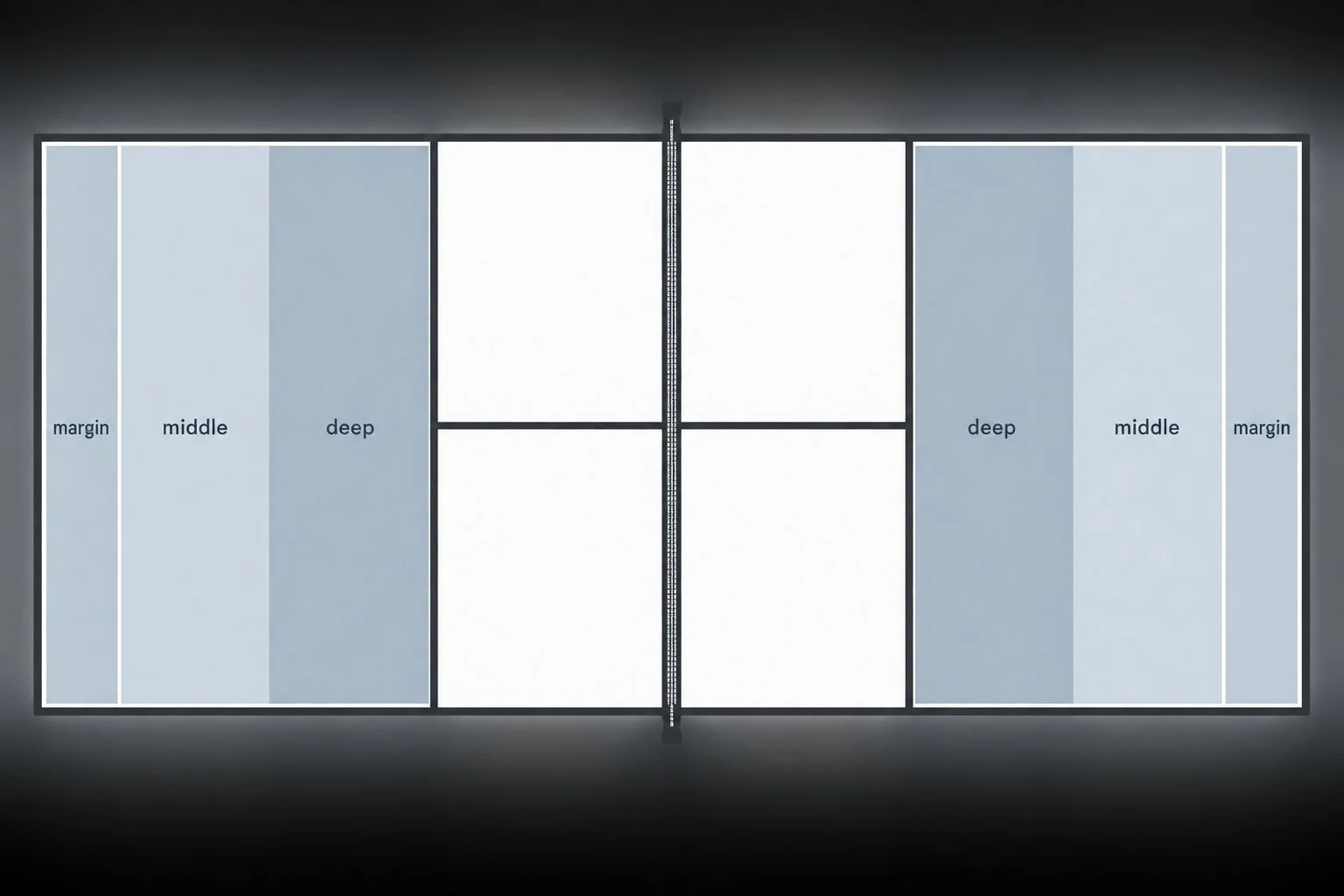
Move the paddle and feet as one unit
One familiar mistake is moving the feet while leaving the paddle behind the body. The opposite mistake is lifting the paddle but crossing the feet so much that the first push comes late. Practise this sequence: make contact, return the paddle to neutral, take one adjustment step, then split as the opponent contacts the ball. It should feel quiet and repeatable.
A low ball is not automatically an invitation to attack. If the ball stays low, a stable reset or another dink may keep your advantage. If it rises into a comfortable attack height, step toward it and speed up with control. Good recovery improves shot selection because balance gives you time to choose instead of forcing a shot while you are falling away.
Build the habit with progressions
Begin with a cooperative crosscourt dink drill. After each contact, the hitter returns the paddle to neutral and makes a small recovery step before the feeder sends the next ball. Count balanced recoveries rather than winners. Then add a random middle ball, asking the player to protect the seam without overcommitting.
Next, vary the height of the feed. On a low ball, repeat the dink and recover. On a higher ball, allow a controlled speed-up. The defender splits on the opponent's contact and keeps the paddle in front. Finish with live points in which the rally earns a bonus only when the player has recovered before the next contact.
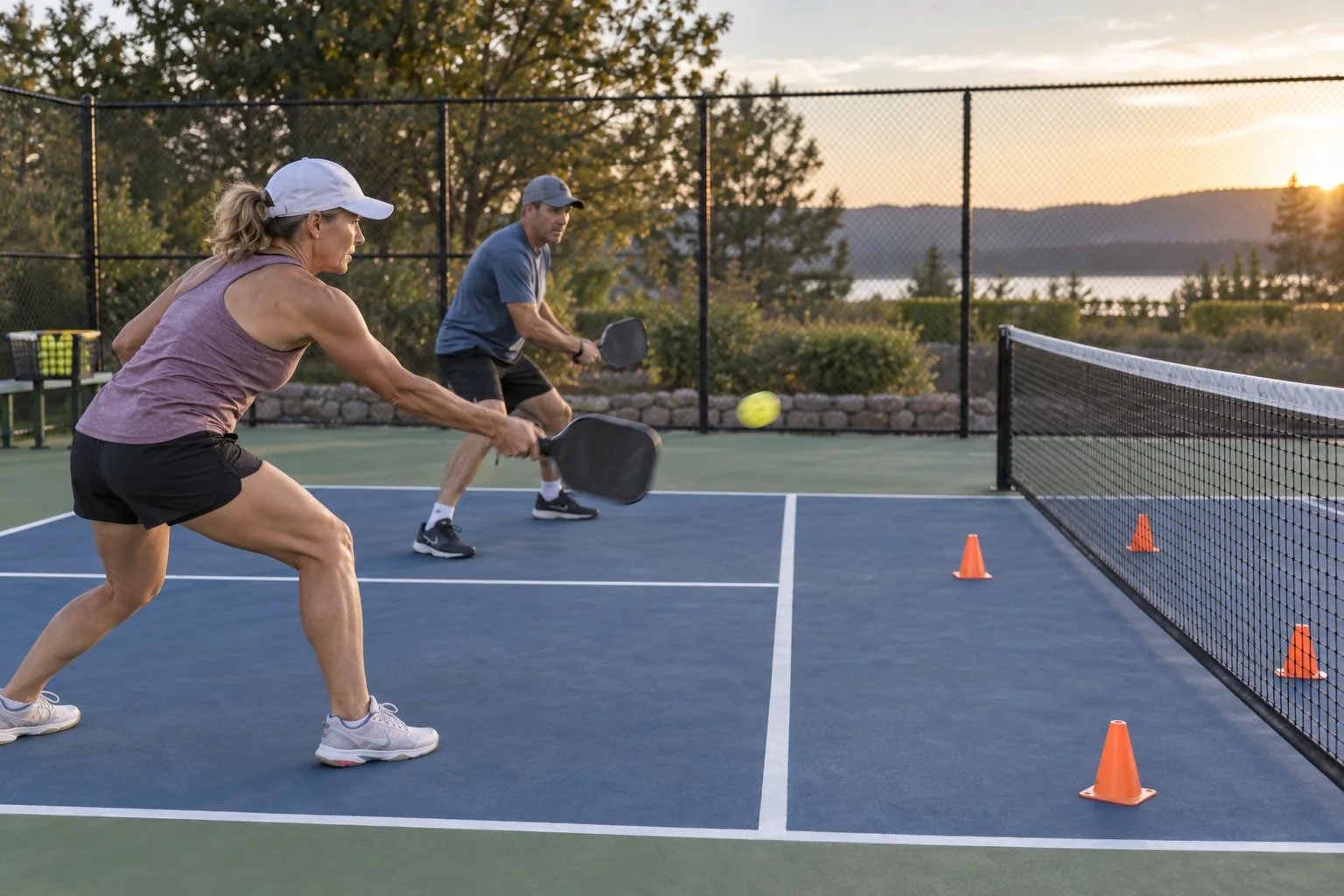
Use one simple cue: finish the shot, find your base, and read the next contact. When that sequence becomes routine, dink exchanges feel less like a race to reach the ball and more like a series of prepared decisions.