Pickleball Kitchen Rules: Enter, Volley, and Stay Legal
A practical guide to the pickleball kitchen, legal entry after a bounce, volley restrictions, momentum faults, and balanced positioning.
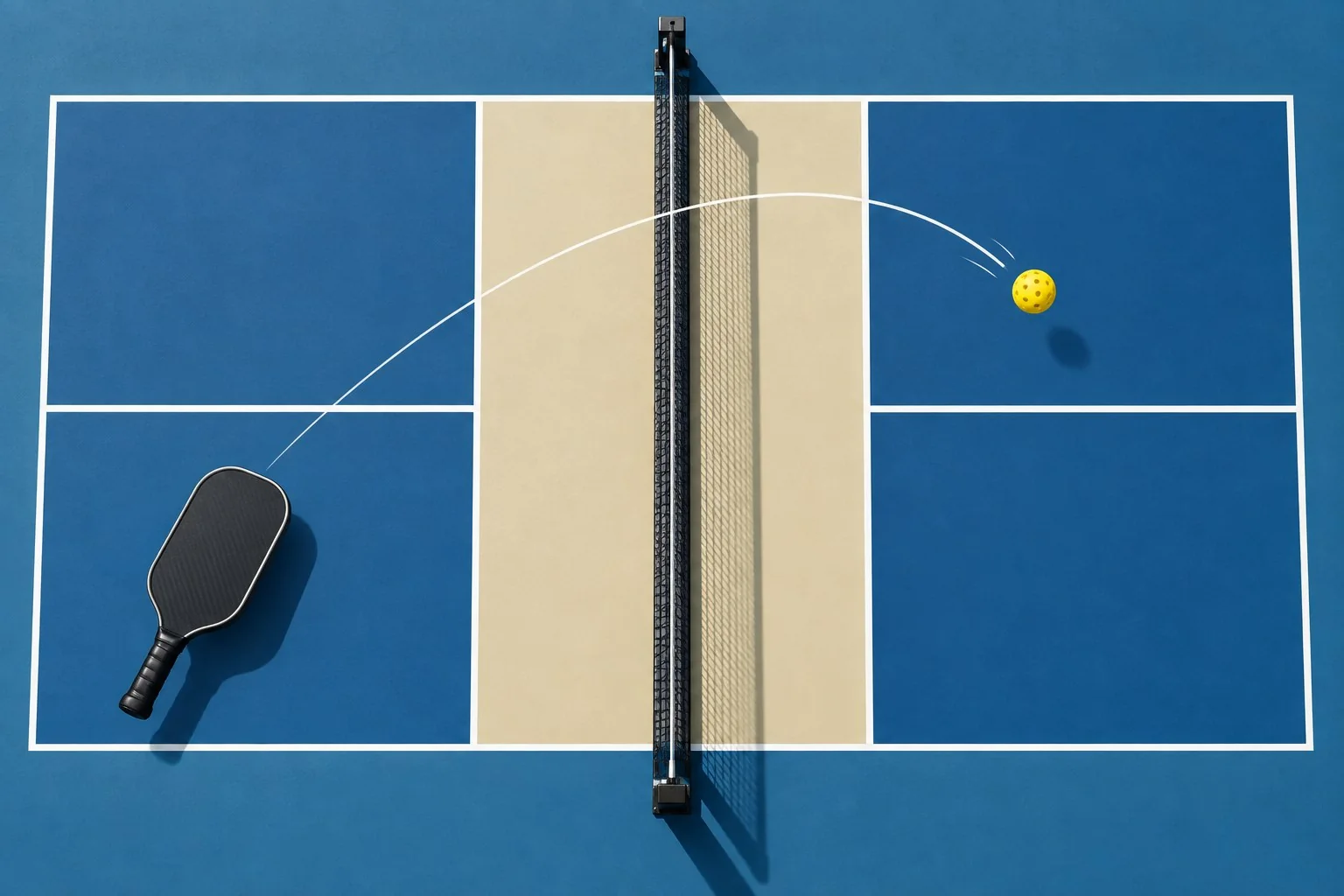
The pickleball kitchen rules are easier to remember when you separate two ideas: where you may stand and what kind of contact you may make. The kitchen is the non-volley zone beside the net. You may enter it, but you cannot volley while standing in it, touching its boundary line, or allowing your momentum to carry you into it after the hit. That distinction shapes both the rules and the safest way to move near the net.
What the pickleball kitchen is
The kitchen is the 14-foot-wide area centered on the net, extending 7 feet back on each side of the court. Its official name is the non-volley zone, or NVZ. The kitchen line is part of this zone, so a player touching that line is treated as being in the kitchen for volleying purposes.
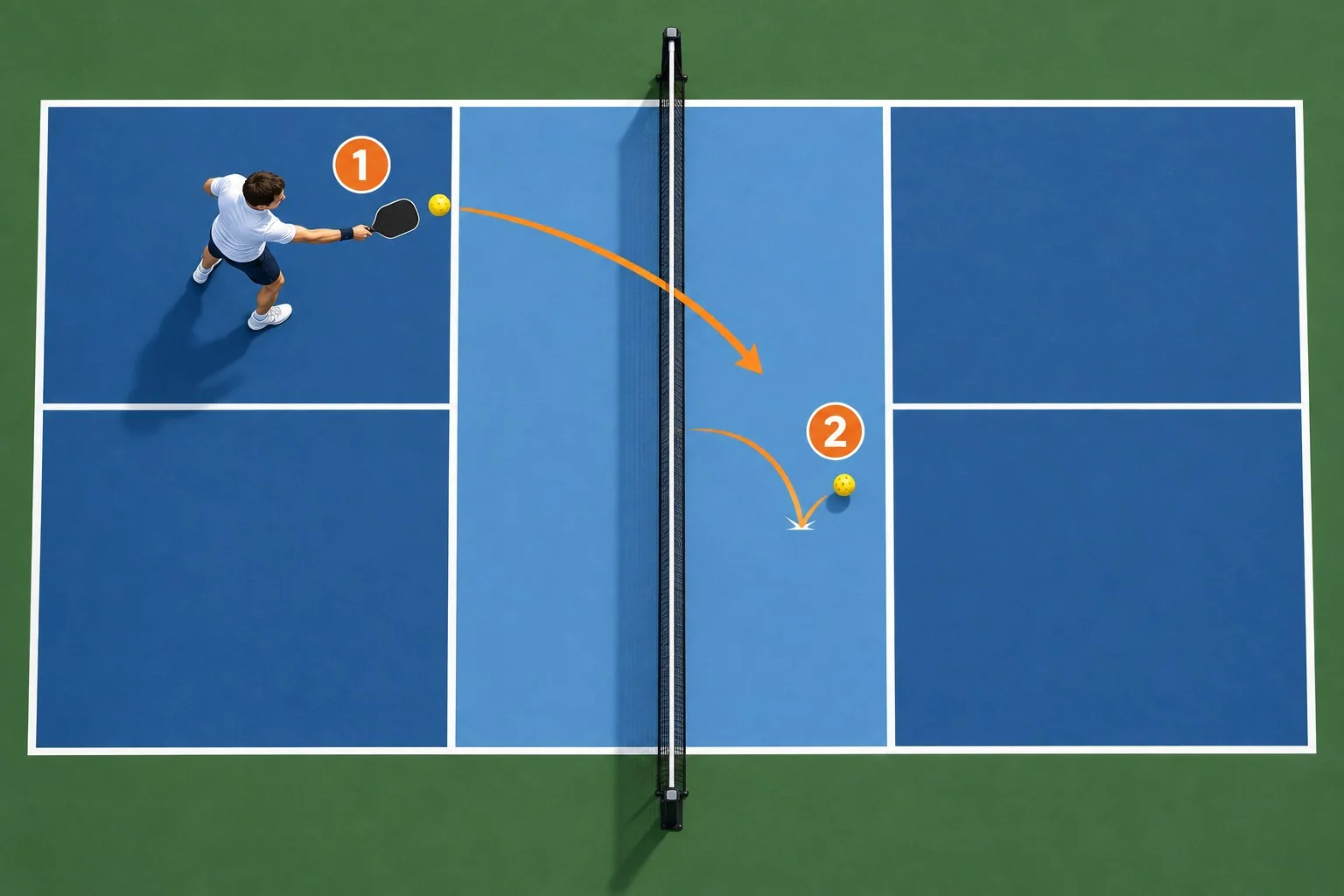
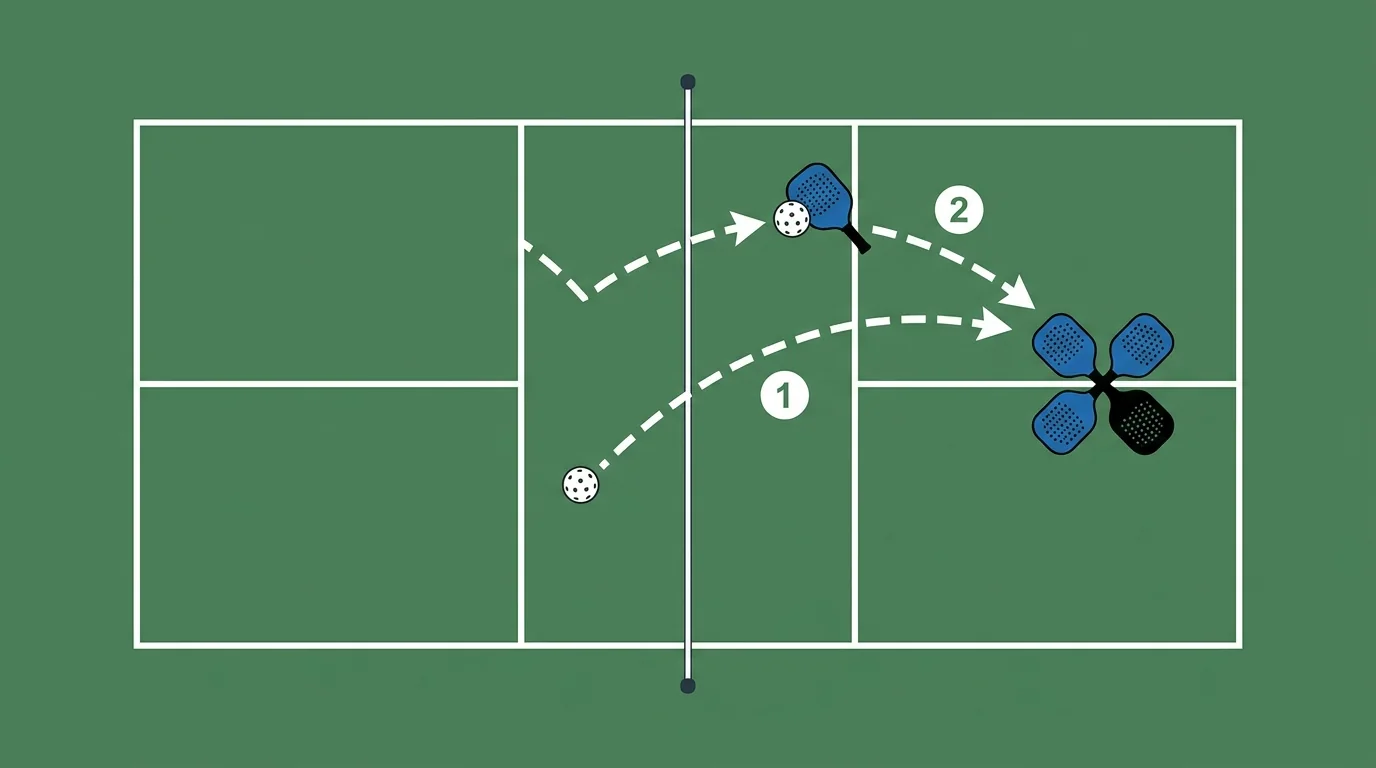
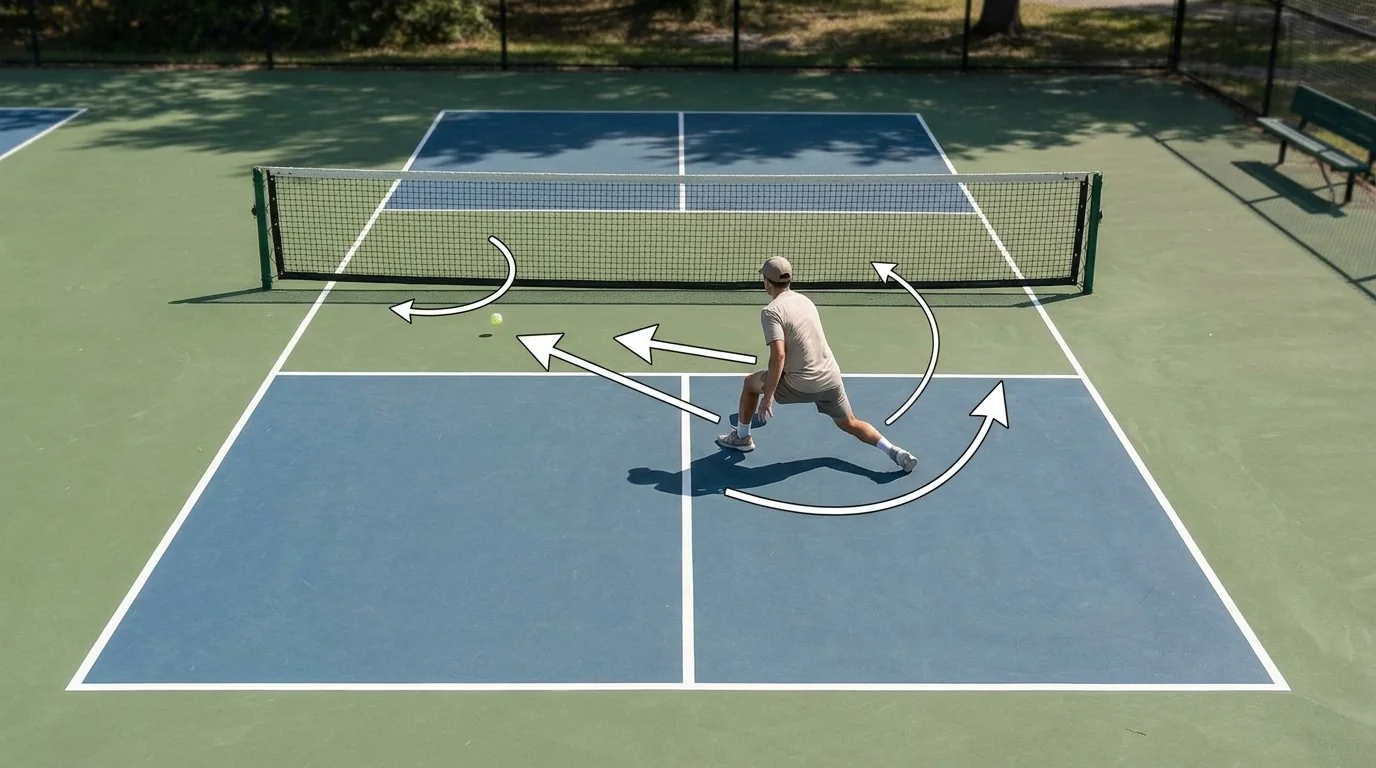
A volley means contacting the ball before it bounces. The restriction applies to that contact, not to simply being in the area. You can step into the kitchen to play a ball after it has bounced, and you can remain there as long as you do not volley. In practical play, however, many players return to the line quickly because standing deep in the zone can make the next ball harder to handle.
The rule makes the space near the net more tactical. Players cannot solve every exchange by standing inches from the net and striking every ball out of the air. Instead, they use soft shots, controlled placement, and patient movement to create a ball that can be attacked legally.
When a kitchen volley becomes a fault
A kitchen fault occurs when you volley while touching the kitchen, touching the kitchen line, or touching something connected to the ground that is inside the zone. The paddle itself may reach over the zone; the restriction concerns the player’s contact with the court and the timing of the ball.
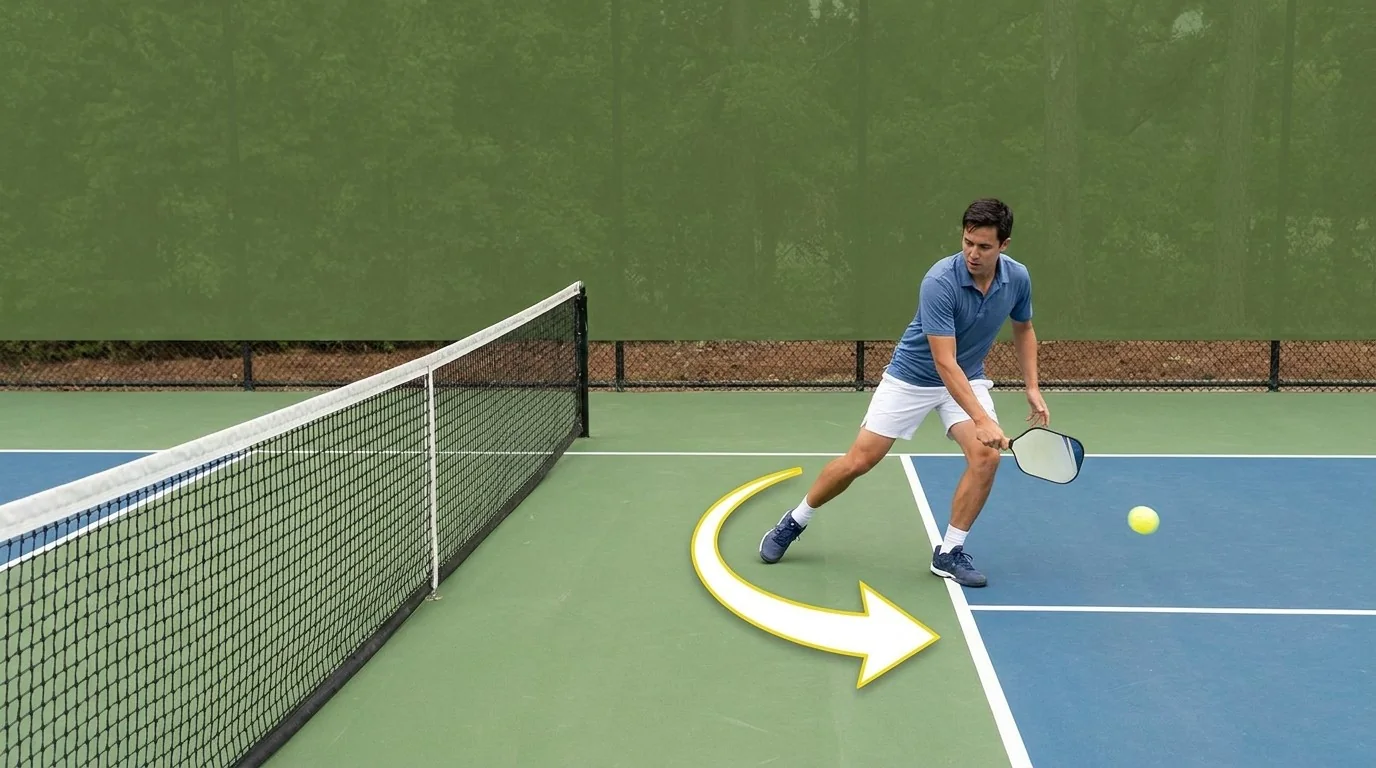
Momentum is the part beginners often miss. Suppose you jump from behind the line, volley the ball, and land in the kitchen. The contact happened outside the zone, but the action is still a fault if your forward movement carries you into the kitchen as part of that volley. The same principle applies if you touch a partner or an object that is grounded inside the zone while completing the action.
After a volley, finish with control. Keep the feet quiet enough to absorb the movement, then recover behind the line if the ball is still live. If the ball has bounced in the kitchen, you may step in and hit it, but you should still prepare to exit or regain a stable position before the next exchange.
How to use the rule during a rally
Do not treat the kitchen as a forbidden area. Treat it as a zone with a specific contact rule. A dink may bounce there, and you may enter to play that bounced ball. A volley taken while your feet are outside the line is legal, provided your momentum does not carry you into the zone.
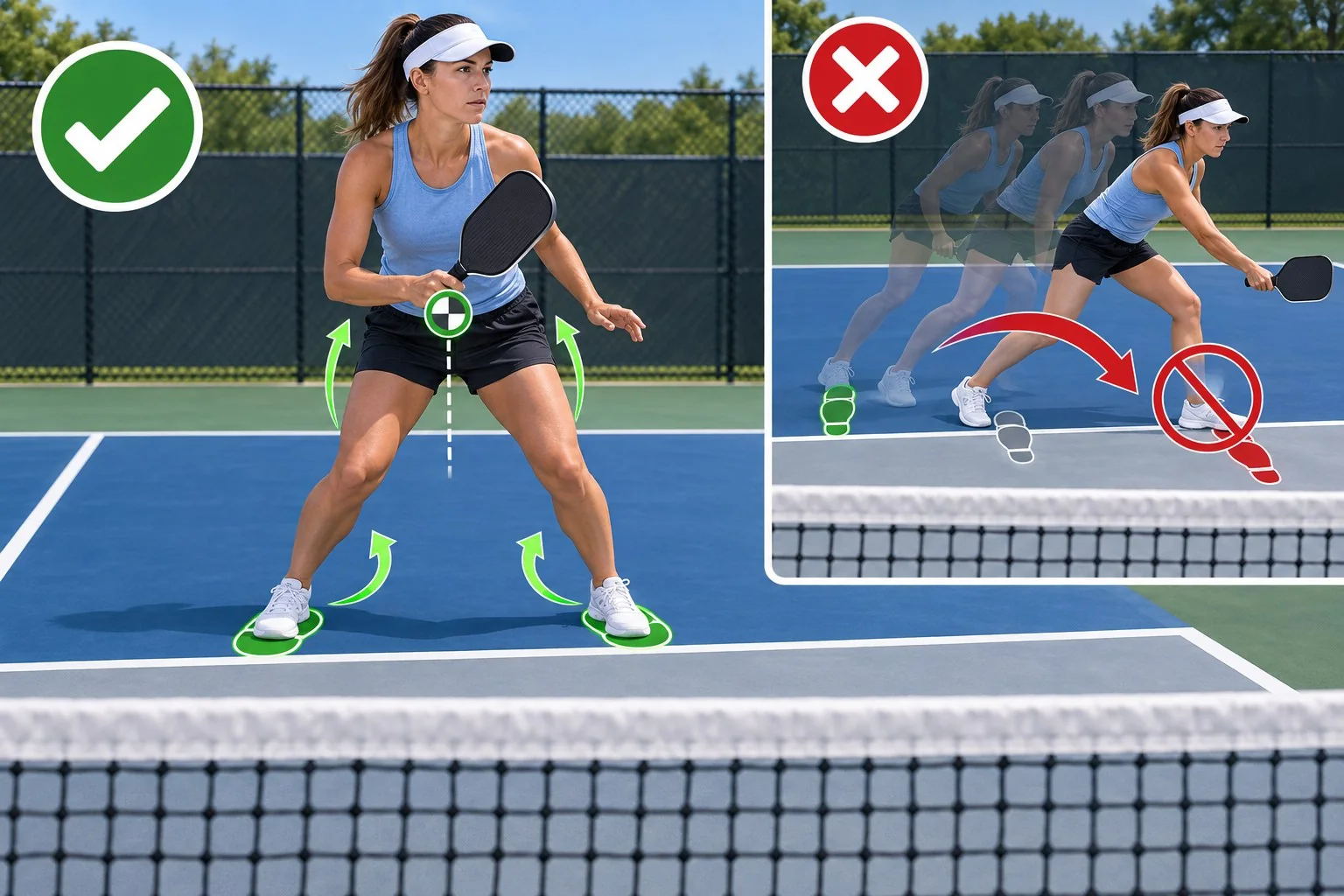
A simple practice drill builds the habit. Stand just behind the kitchen line with a partner feeding gentle balls. Before each volley, check that both feet are stable. After contact, pause instead of drifting forward. Then have the partner send one ball that bounces in the kitchen; step in, let it bounce, play it softly, and recover. This separates the two decisions: volley from outside, or enter after the bounce.
The kitchen rule rewards balance more than reach. Watch the opponent’s contact, keep the paddle ready, and avoid chasing a ball with a desperate step that crosses the line during a volley. With repetition, the boundary becomes a useful reference rather than a source of confusion.